

If you appreciate the clean geometry of the Asscher cut, you may also like the precision of our Hidden Halo Radiant Ring or the dramatic elongation of the Hidden Halo Marquise Ring—all sharing the same refined hidden halo detail in white gold, while offering a different face-up shape and visual rhythm.
Product Overview
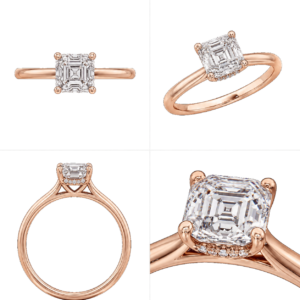
The Hidden Halo Asscher Ring is a lab-grown diamond engagement ring that pairs the geometric precision of an Asscher-cut center stone with the subtle architectural detail of a hidden halo setting. Crafted in white gold, this design offers a clean, modern silhouette with an unexpected flourish of brilliance visible from the side angles.
The Asscher shape brings a vintage-meets-contemporary character with its stepped facets and square outline, while the hidden halo adds a discreet layer of light beneath the center stone without altering the ring’s top-down minimalism. This combination often appeals to buyers who value a calm, structured engagement ring with thoughtful profile detail rather than overt decoration.
Product Details
| Attribute | Details |
|---|---|
| Diamond Shape | Asscher |
| Diamond Type | White Diamond |
| Metal Type | White Gold |
| Setting Style | Hidden Halo |
| Product Category | Engagement Ring |
What These Details Mean
The Asscher cut is distinguished by its square outline, high crown, and step-cut facets that create a hall-of-mirrors effect rather than the scattered brilliance of a round brilliant. This shape tends to emphasize clarity, symmetry, and facet alignment, presenting a more restrained, architectural glow. Buyers often select it for its Art Deco associations and its ability to feel deliberate and geometric on the hand.
A hidden halo sits below the center stone’s girdle, visible from lateral angles rather than from above. This setting direction preserves the solitaire-like simplicity of the top view while adding scintillation and perceived size from the profile. The white gold metal contributes a bright, cool-toned backdrop that reinforces the crisp, clean lines of the Asscher shape without introducing warm color contrast.
As a white lab-grown diamond engagement ring, this product is positioned around a classic colorless aesthetic. Buyers should confirm the specific 4Cs, including carat weight, color, clarity, and cut details, directly because these factors affect how the stone performs in different lighting and how it harmonizes with the white gold setting.
Visual Selection Guidance
The Asscher cut with hidden halo pairing creates a specific visual tension: the center stone’s geometric severity is softened by the hidden halo’s delicate under-glow. This may suit buyers who want a ring that reads minimal from above but reveals more complexity in motion and profile. The white gold setting reinforces a contemporary, cool-toned palette that works well with the Asscher’s linear facet pattern.
Buyers comparing this to a standard solitaire should consider whether they prefer the hidden halo’s added dimension or the uncompromised simplicity of a plain basket. The hidden halo can also influence how the ring pairs with wedding bands, as the lower profile detail, setting height, and basket construction may affect stacking aesthetics and should be reviewed from side-view images or direct specifications when available.
Style and Wearing Fit
The hidden halo setting style adds visual interest without increasing the ring’s overall footprint or top-table complexity. From the wearer’s perspective, this means the ring maintains a relatively streamlined silhouette while offering more to observe from side angles. The Asscher shape’s defined corners and step facets create a distinctive, deliberate look that reads as confident rather than flashy.
This design direction often works well for buyers who appreciate vintage influences but prefer modern execution. The combination of white gold and white diamond creates a unified, monochromatic appearance that can feel both classic and current, especially for someone who wants a diamond ring with clean geometry rather than a heavily embellished top view.
Certification and Documentation
Lab-grown diamond engagement rings may be accompanied by laboratory reports depending on the specific diamond and project. Buyers who require documentation should confirm report availability, the issuing laboratory, and the specific details covered including color, clarity, cut, and measurements. At NUVU, we usually treat the grading report as a starting point for the conversation rather than a substitute for reviewing the stone, setting, and visual fit together.
Customization and Inquiry Options
Buyers may inquire about compatible design variations, metal alternatives, or diamond specification preferences depending on availability and project requirements. Customization can be discussed for settings, proportions, and documentation needs, though specific options should be confirmed directly, including metal purity, ring size, center-stone specifications, and whether the hidden halo profile suits the intended wedding-band pairing.
Project Application
This ring type suits individual engagement purchases as well as retail or private-label jewelry collections seeking a modern classic with subtle differentiation. The hidden halo Asscher combination offers enough design personality to stand apart from standard solitaires while remaining broadly wearable and symbolically appropriate for engagement contexts. For assortment planning or custom jewelry conversations, its key distinction is the balance between a clean face-up view and a more detailed side profile.
Before Ordering
- Confirm the specific diamond grading details including carat weight, color, clarity, and cut if exact specifications are important to your decision.
- Confirm whether a laboratory report is available and which laboratory issued it.
- Verify metal details including karat specification and any rhodium plating or finish considerations.
- Confirm ring size availability and whether sizing is offered before or after purchase.
- Review setting construction, band profile, hidden halo visibility, and any stacking or wedding band pairing guidance.
- Ask for side-profile photos or measurements if setting height, band width, or hidden halo placement will affect your final choice.
FAQ
How does a hidden halo differ from a standard halo?
A hidden halo sits beneath the center stone and is visible from side angles rather than from above. This preserves the clean top-view appearance of a solitaire while adding brilliance and perceived scale from the profile. It offers detail without visual clutter, especially for buyers who want the ring to feel simple at first glance but more intricate in motion.
What should I know about the Asscher shape for an engagement ring?
The Asscher cut features a square outline with stepped facets and a high crown, creating a hall-of-mirrors effect. It tends to emphasize clarity, symmetry, and facet pattern more directly than many brilliant-style shapes, giving it a more architectural and deliberate aesthetic. Buyers often appreciate its vintage associations and structured presence.
What details should I confirm before ordering this ring?
Confirm the specific diamond’s grading information, laboratory report availability if required, metal karat and finish details, ring size options, and whether the hidden halo construction affects wedding band pairing or stacking preferences. If side-view detail is important, also confirm setting height, band profile, and how visible the halo appears from profile angles.
The precise geometry of an Asscher-cut diamond finds a natural complement in a hidden halo setting, creating a ring that is both architectural and quietly radiant from the side. To better understand how the cut, clarity, and setting style influence the overall look of your ring, explore our comprehensive guide to choosing the right stone and setting for more practical buying guidance.
Why This Piece Stands Out
Asscher Geometry With a Clean Face-Up View
The Asscher-shaped white diamond gives this engagement ring a square, step-cut look with a structured visual rhythm. It suits buyers who want a ring that feels architectural and deliberate rather than heavily embellished from above.
Hidden Halo Profile Detail
The hidden halo setting keeps the top view more minimal while adding detail that is best appreciated from side angles. This matters if you want a ring that appears restrained at first glance but shows more dimension in profile.
White Gold, White Diamond Pairing
The white gold metal and white diamond attribute create a cool, cohesive appearance around the Asscher center stone. Buyers should still confirm the exact metal purity and finish details before ordering, since those specifications are not listed here.
Smart Details to Confirm
Because Asscher step facets can make clarity, symmetry, and facet alignment more noticeable, confirm the diamond grading details, report availability, ring size, hidden halo construction, and wedding-band fit before making a final decision.
Known Flaws
- Asscher step facets are worth checking closely in QC photos because this cut can make clarity characteristics, symmetry, and facet alignment feel more visible than in some brilliant-style shapes. For most buyers, this is a moderate consideration rather than a flaw if the selected diamond’s grading details and appearance are reviewed before ordering.
- The hidden halo detail should be inspected from side angles because it is designed to sit below the center stone rather than dominate the top view. This is usually a low-to-moderate concern, but it matters if the buyer expects the halo to be obvious from above or wants very specific profile visibility.
- Metal purity and finish details are not specified on this product page beyond white gold, so buyers should confirm the karat and any finish considerations before ordering. For most buyers, this is a practical specification check rather than a design issue.
- Ring size availability, band width, setting height, and exact measurements are not listed, which can affect comfort, proportions, and how the ring sits on the hand. This is typically a moderate buying check, especially for buyers sensitive to profile height or daily wear feel.
- Wedding-band compatibility should be confirmed because the hidden halo and basket construction may influence how closely another band can sit beside the engagement ring. For most buyers, this is not a serious drawback, but it is important if a flush or tightly stacked bridal set is preferred.
Ways to Consider This Piece
Proposal Planning With a Geometric Center Stone
This lab-grown diamond engagement ring may make sense for a buyer who wants the square outline and step-cut character of an Asscher diamond rather than a more rounded or brilliant-style look. Before moving forward, confirm the center stone’s carat weight, color, clarity, cut details, and any grading report availability.
Choosing Subtle Side-Profile Detail
This ring fits buyers who like a clean top view but want more detail when the diamond setting is seen from the side. The hidden halo should be reviewed in side-profile photos or specifications so the buyer understands how visible the under-stone detail will be in normal wear.
Comparing Against a Plain Solitaire
If the decision is between a plain Asscher solitaire and a hidden halo ring, this piece is useful for evaluating whether the added profile detail supports the overall design goal. Buyers should confirm setting height, basket construction, and wedding-band compatibility before deciding.
Custom Jewelry Design Discussion
This design can serve as a starting point for a custom jewelry design conversation around Asscher proportions, white gold appearance, hidden halo placement, and daily wear expectations. The NUVU team should be asked to confirm metal purity, ring size availability, diamond specifications, and documentation before any final design decision.


Reviews
There are no reviews yet.