 Loose lab-grown diamonds10 shapes · IGI, GIA or NGTC reports
Lab-Grown Diamond Certification Knowledge
What a lab-grown diamond report proves, how IGI, GIA and NGTC differ, and how to check that the report belongs to the stone in front of you.
The Short Version
- A report is an independent lab’s grading of one stone.It confirms the stone is laboratory-grown and records its grades and measurements.
- IGI is the most common lab for lab-grown diamonds.GIA and NGTC are also widely recognized.
- GIA changed its lab-grown reports in October 2025.Colorless stones now get a Premium or Standard assessment, not individual grades.
- Check the treatment comment.IGI writes “As Grown” when it finds no sign of post-growth treatment.
- Look up the number, then match it to the stone.The online record and the girdle inscription should agree with the stone’s weight and measurements.
Why Certification Matters
A diamond’s grades cannot be judged by eye with confidence, even by experienced buyers. A report from an independent lab gives you a common language for comparing stones from different sellers, confirms the stone is lab-grown rather than mined or a simulant, and gives you a number you can check. Lab-grown diamonds sold in the US must be described as laboratory-grown, laboratory-created or with a similar qualifier, and the report makes that explicit.
 A common language for comparing sellers
 Confirms lab-grown, not mined or a simulant
 Like-for-like comparison of grades
 A number you can check online
IGI vs GIA vs NGTC
| IGI | GIA | NGTC | |
|---|---|---|---|
| Market role | Largest grader of lab-grown diamonds (about 65% of the market, per its 2024 IPO filing) | Best-known lab worldwide | China’s national gem testing center |
| Colorless stones | Full color and clarity grades | Premium or Standard assessment since Oct 2025 | Grades per NGTC standard |
| Cut | Cut grade for rounds; polish and symmetry for all | Overall cut grade for rounds; polish and symmetry | Per NGTC standard |
| Treatment | Comment: “As Grown – No indication of post-growth treatment” or “Indications of post-growth treatment” | Not detailed in GIA’s announcement | Ask for the report wording |
| Report number | Starts with “LG” for lab-grown | GIA assessment number, inscribed on girdle with “Laboratory-Grown” | NGTC number |
| Online check | igi.org | gia.edu Report Check | NGTC website |
Which certification is best?
The one your buyers recognize and can check. In most Western retail markets that means IGI or GIA; NGTC is the familiar name for buyers in China. NUVU can arrange IGI, GIA or NGTC reports for the stones you order. For a deeper comparison read IGI vs GIA for lab-grown diamonds.
What changed at GIA in 2025
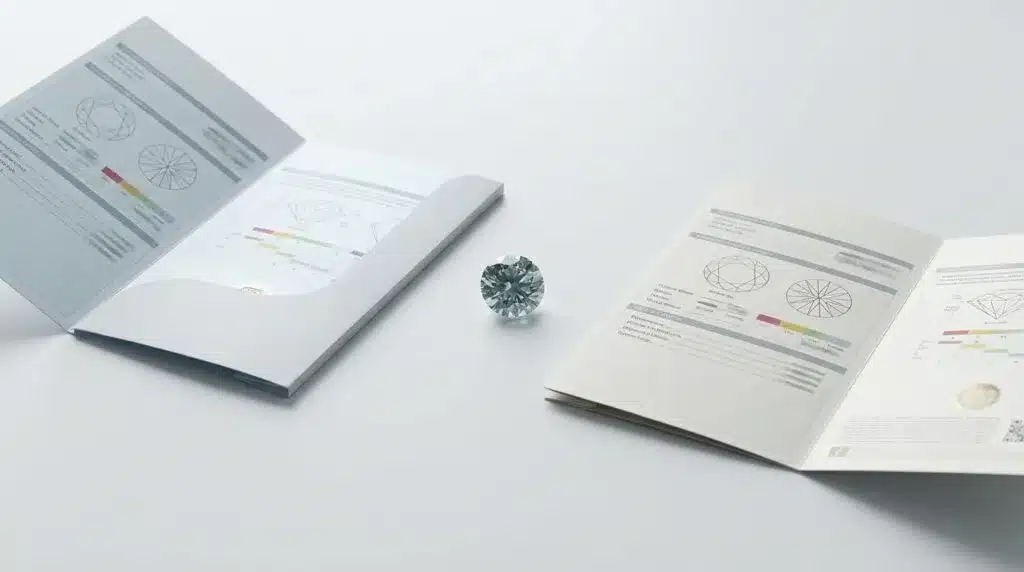
From 1 October 2025, GIA stopped issuing D–Z color and clarity grades for colorless lab-grown diamonds, because more than 95% of lab-grown stones reaching the market fall in a narrow range. Instead:
- D color
- VVS clarity or better
- Excellent polish and symmetry (Excellent cut for rounds)
- E–J color
- VS clarity or better
- Very Good polish and symmetry (Very Good cut for rounds)
- Not assessed
- Minimum size 0.15 ct
How to Read a Lab-Grown Diamond Report
Sample layout
Report number
- What it tells you
- The stone’s ID at the lab
- What to check
- Look it up online; match the inscription
Full field-by-field explanation: lab-grown diamond certificate fields explained.
Verify a Report in Four Steps
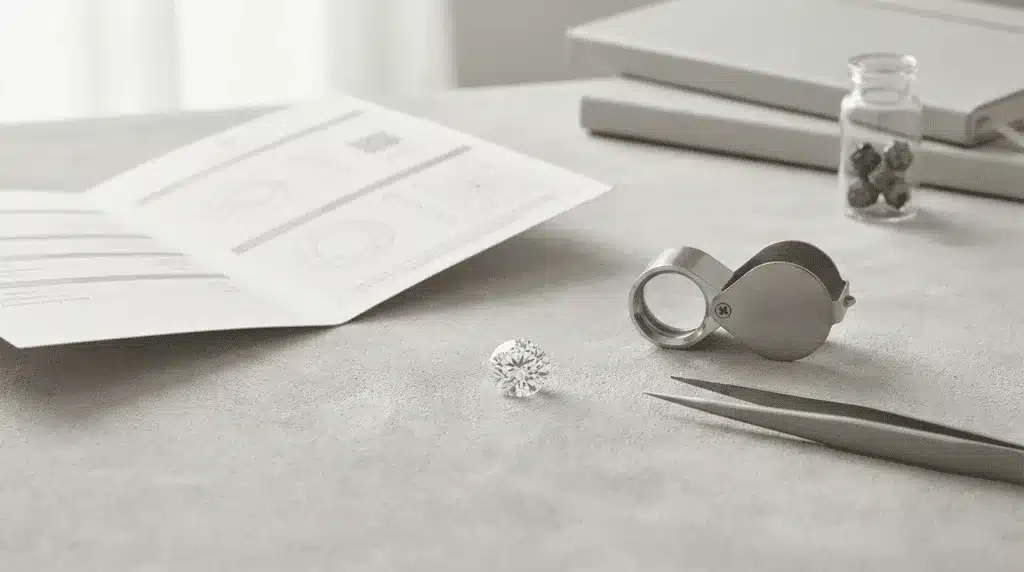
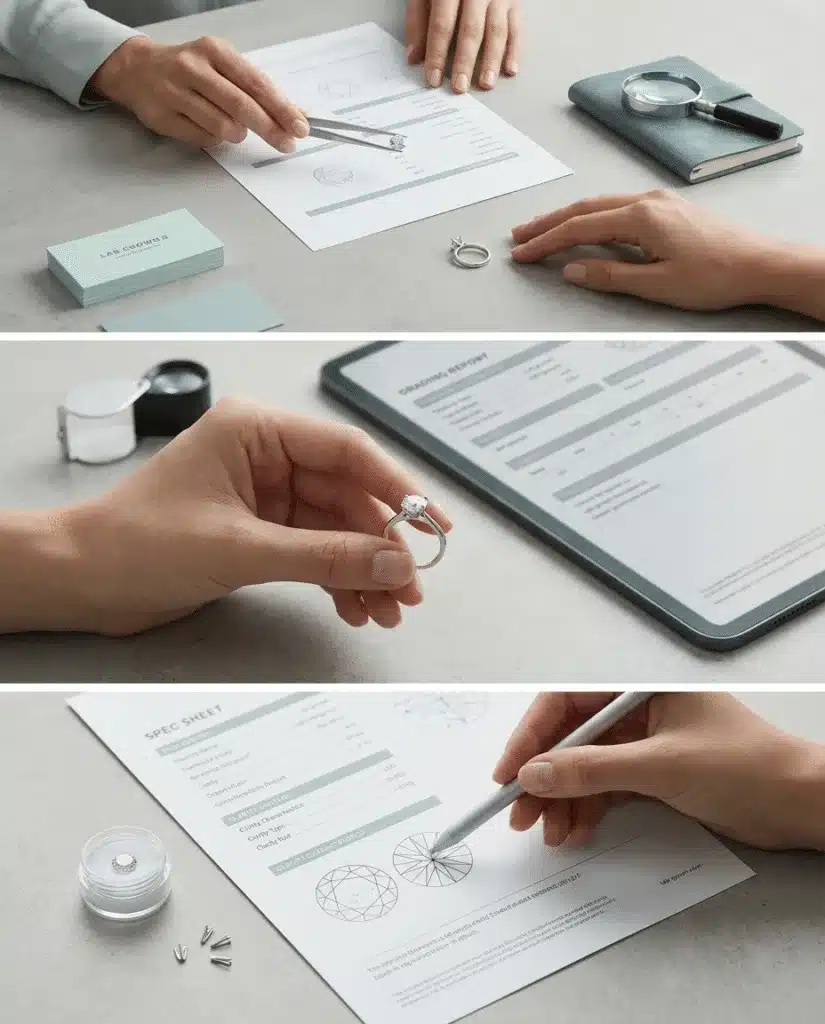
- Look up the numberCheck it on the issuing lab’s website. The online record should show the same weight, measurements and grades as the paper or PDF.
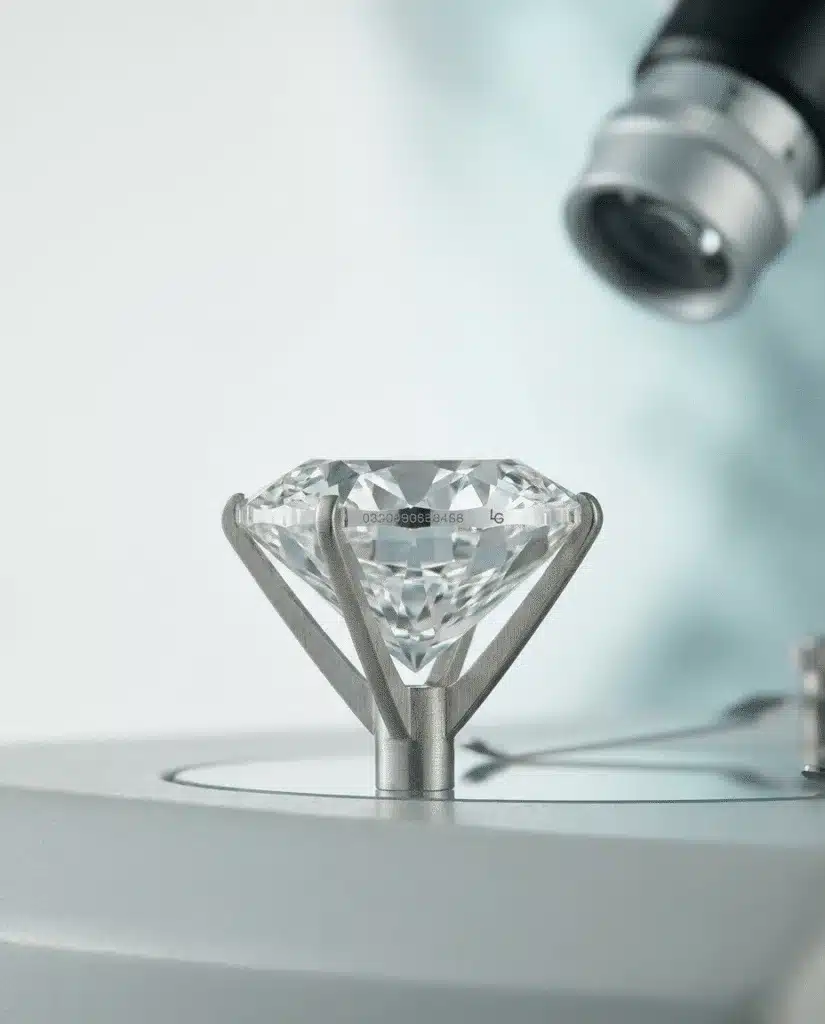
- Match the inscriptionWhere the girdle is laser-inscribed, the number under magnification should match the report.
- Match the stoneOften skippedWeight and millimeter measurements should agree with the report. A jeweler’s loupe and scale settle this quickly.
- Check the commentsGrowth method and treatment wording should match what you were told.
In 2021 GIA examined a 3.07 ct CVD lab-grown diamond whose girdle had been inscribed with the report number of a natural diamond graded by GIA in 2018, and cut to almost the same size. Only lab testing caught it. A valid number on its own proves the record exists, not that this stone is the one in the record. More in how to verify a certificate online.
What a Report Does Not Tell You
How it looks in motion
Brightness, contrast and bow-tie are best judged from video or in person.
How it fits your setting
Measurements tell you, the grade does not.
Price
Two stones with the same report can differ in price because of proportions, demand for the shape or the lab chosen.
Seller reliability
A real report attached to the wrong stone is still the wrong stone.
Read certificate vs actual appearance and certificate red flags to watch for.
How NUVU Handles Certification
- IGI, GIA or NGTC reports arranged for the stones you order, with report numbers shared before you approve.
- As-grown proof on request when your market needs untreated stones.
- Every certified stone checked against its report for number, weight and measurements before it ships.
- Melee and small calibrated stones are normally supplied without individual reports, graded to the range in your order.
Certification Questions
Do all lab-grown diamonds come with a certificate?
Is an IGI certificate good enough?
What does “As Grown” mean on a report?
Can two stones with the same report look different?
Go Deeper
Buy With the Report in Hand
Browse certified loose diamonds, or start a custom piece and we share report numbers before you approve.
Sources: GIA lab-grown diamond services update (2025) · GIA new descriptive terminology (2025) · GIA G&G: CVD diamond with counterfeit GIA inscription (2021) · IGI report verification · JCK on IGI’s IPO (2024) · FTC Jewelry Guides, 16 CFR 23