
Color and clarity grades can change the price of a lab-grown diamond quickly, but higher grades do not always create a better-looking ring. A D color or VVS clarity diamond may look impressive on a certified IGI/GIA grading report, yet many buyers would see little difference once the stone is set, especially in brilliant cuts and everyday viewing conditions.
For the full framework, read Lab-Grown Diamond Price Guide.
This guide helps you decide when premium grades are worth paying for and when a balanced choice gives the same visual result for less. The key is to judge color and clarity in context: diamond shape, carat size, metal color, setting style, facet pattern, and whether inclusions or warmth are actually visible. The goal is not to chase the highest grade, but to choose a diamond that looks white, clean, and well-matched to the finished ring.
Laboratory-grown diamonds should be clearly identified as laboratory-grown, and they should not be presented as mined diamonds. Lab-grown diamonds and natural diamonds have different origins, even when both are evaluated with familiar diamond grading terms such as carat, color, clarity, and cut-related measurements.
| Buying Situation | Usually Smart Range | What to Check Before Paying More |
|---|---|---|
| Round brilliant in most settings | G-H color, VS1-VS2 clarity | Face-up whiteness and eye-clean appearance |
| Large stone or white metal setting | D-F or carefully chosen G | Any warmth visible against the metal |
| Emerald or Asscher cut | VS1 or vetted VS2 | Inclusions under open step facets |
| Oval, pear, or marquise | G-H, sometimes higher | Warm tips, bow-tie effect, center inclusions |
| Warm gold setting | H-I, sometimes J after review | Whether the color complements the design |
| Two diamonds look equally clean and white | Choose the better value | Put savings toward setting, size, or design balance |
Quick Questions Before You Read
Q: Is D color always worth the extra cost?
No. It is most useful for icy-white preferences, larger stones, white metals, or color-sensitive designs.
Q: Do I need VVS clarity in a lab-grown diamond?
Usually not if a VS diamond is eye-clean. VVS can matter more for step cuts, large stones, or personal preference.
Q: Can G-H color still look white?
Yes, especially in well-cut brilliant shapes. It often offers a strong balance of appearance and value.
Q: Are SI clarity diamonds a bad choice?
Not always, but they require careful image or video review to confirm inclusions are not visible.
Why Color and Clarity Upgrades Can Cost More Than They Improve Appearance
The Paper-Grade Trap in Lab-Grown Diamond Shopping
One of the easiest ways to overspend on a lab-grown diamond is to choose the highest color and clarity grades simply because they feel safer. A D color, VVS clarity diamond looks impressive on a grading report. It may also cost noticeably more than a nearby option with slightly lower grades. The problem is that the difference may not be noticeable on the hand, especially once the diamond is set and viewed in normal lighting.
This is the central issue in any useful lab-grown diamond color and clarity price guide: higher grades are not automatically a better purchase. Color and clarity are real quality factors, but they only justify a price jump when they improve the diamond in a way the buyer can actually see or meaningfully value. A grade that is technically higher under controlled grading conditions may not create a ring that looks brighter, cleaner, or more beautiful in daily wear.
Why Higher Grades Are Not Always Higher Value
Lab-grown diamonds make this mistake especially common because buyers often see a wider range of strong-looking options within reach. If a higher grade appears affordable compared with a natural diamond equivalent, it can feel logical to upgrade “just to be safe.” But value is not measured by the highest possible grade. It is measured by what the upgrade changes in the finished piece.
A diamond grade upgrade is worth considering when it solves a specific concern: visible warmth, a noticeable inclusion, a shape that exposes body color, a larger stone where details are easier to see, or a setting that makes color matching more important. It is less compelling when the only improvement is a cleaner-looking report. Paying more for a grade that does not improve everyday appearance can leave less budget for details that may matter more, such as setting design, diamond size, proportions, or overall ring balance.
Prices can change with market conditions, report type, seller channel, and stone-specific details, so exact comparisons should be verified at the time of purchase. A useful comparison should be like-for-like: similar shape, measurements, color, clarity, cut-related proportions, report details, and visual evidence. Without that context, a lower price or higher grade can be misleading.
The Better Question: What Will You Actually See?
The practical question is not “What is the highest color and clarity I can afford?” It is “At what point do higher grades stop changing what I can see?” For many engagement ring shoppers, a strong choice is a diamond that looks white enough, clean enough, and well-proportioned enough for the specific shape and setting. That may be a colorless or very high-clarity stone, but it often is not.
Color and clarity should be judged in context. A round brilliant in a yellow gold setting may tolerate a lower color grade more comfortably than a large emerald cut in platinum. A well-selected VS clarity diamond may look just as clean to the naked eye as a VVS diamond, while a poorly placed inclusion in a lower clarity stone can be distracting. The grade matters, but the placement, appearance, and setting context decide whether the grade matters enough to pay for.
For buyers, the practical point is not just what the report says, but how the stone performs visually and fits the intended design. A grading report is valuable because it documents color, clarity, measurements, and other identifying details, but it should be treated as a starting point rather than a complete beauty judgment. It does not replace side-by-side visual comparison, setting compatibility, or a clear understanding of which tradeoffs the wearer will actually notice.
Evidence Boundary: What the Report Supports and What It Does Not
A grading report is strongest when it is used to confirm the diamond’s documented characteristics: shape, measurements, carat weight, color, clarity, and other listed details. It is weaker when buyers use it as a shortcut for beauty, value, or suitability. Two diamonds with the same color and clarity grades can still look different because proportions, facet pattern, transparency, bow-tie behavior, and setting context are not fully captured by the headline grades.
This is why a defensible buying decision should combine documentation with visual review. The report can help rule out surprises and keep comparisons organized, but it should not be treated as proof that one diamond is automatically prettier than another. When the report and the video point in the same direction, confidence improves. When they conflict, the visual evidence deserves careful attention before paying for the higher grade.
A grading report helps document key characteristics, but it should not be treated as a guarantee of beauty, value, or sourcing ethics. If a seller makes broader claims about sustainability, origin, treatment status, pricing advantage, or after-sales policies, those claims should be supported separately through seller documentation rather than assumed from the color and clarity grades.
When a grading report is available, buyers should verify the report details through the issuing laboratory’s official report-check tool where available and compare those details with the stone’s visual evidence.
What This Means in a Real Purchase
If two lab-grown diamonds look equally white and clean once set, the higher-graded stone is not automatically the smarter buy. It may still be the right choice for someone who values the assurance of premium grades, but it should be chosen knowingly, not out of fear. The strongest buying decisions start with appearance, then use the grading report to confirm that the diamond supports what the eye is already seeing.
How Diamond Color Affects Visible Whiteness
What the Color Scale Really Means for Everyday Wear
Lab-grown diamond color refers to how white or warm the diamond appears, but the visible difference between grades is not always dramatic in real life. Grading reports evaluate color under controlled conditions, usually with the stone loose and compared against master stones. Buyers, however, see diamonds in mixed lighting, mounted in metal, surrounded by skin tone, and often viewed from a normal distance.
This gap between grading conditions and everyday wear is where many buyers overspend. A D color diamond is technically higher than a G color diamond, but the question is whether that difference will be visible in the intended ring. In some designs, yes. In many everyday engagement rings, especially when the diamond is well cut and not compared side by side under bright neutral lighting, many buyers may not notice enough difference to justify a meaningful price increase.
Color also interacts with cut quality and facet style. A lively brilliant cut can return enough light that slight warmth is harder to detect face-up, while a step cut or larger elongated shape may make body color easier to read. This means the same color grade can feel different from one diamond to another, so the useful comparison is the actual stone in realistic viewing conditions, not only the letter grade.
D-F Color: When Colorless Grades Are Worth Considering
D, E, and F color grades sit in the colorless range. These grades make the most sense for buyers who want an icy white appearance, are choosing platinum or white gold, are buying a larger center stone, or are especially sensitive to warmth. They can also be useful when the diamond shape tends to show more body color or when the ring includes side stones that need to match closely.
The main mistake is assuming D color is always visually superior in a way that matters. D color gives strong colorless assurance, but it may not be necessary for every ring. If an F color diamond looks crisp and white in the intended setting, paying more for D may be a preference purchase rather than a performance upgrade. That is perfectly valid if the budget allows, but it should not be treated as the default.
G-H Color: The Practical Sweet Spot for Many Buyers
G and H color lab-grown diamonds often offer strong value for buyers who want a white-looking diamond without paying for the top colorless grades. In many round, oval, cushion, radiant, and princess-cut diamonds, a well-selected G or H can appear bright and white once set, especially when the cut and overall visual performance are strong.
This range is often where the smartest tradeoff happens. The buyer gives up a little on the report but may see very little difference in the finished ring. The saved budget can sometimes be used more effectively elsewhere, such as improving the setting, choosing a better-proportioned stone, or moving into a size range that changes the presence of the ring more noticeably than a one-grade color upgrade.
I-J Color: When Warmth May Be Acceptable
I and J color grades can work, but they require more judgment. These diamonds may show a warmer tone, especially in larger sizes, elongated shapes, step cuts, or white metal settings. For buyers who want a crisp white look in platinum or white gold, this range can become risky unless the specific stone is carefully reviewed.
In yellow gold, rose gold, vintage-inspired designs, or budget-sensitive purchases, a slight warmth may be acceptable or even visually harmonious. The mistake is buying I or J color based only on price and assuming the warmth will disappear once set. It may soften, but it may not vanish. This range is best for buyers who have seen the diamond in video, understand the setting context, and are comfortable with a warmer appearance if it shows.
Color Grade Check Before You Decide
- Choose D-F if you want strong colorless assurance, are using white metal, are buying a larger diamond, or know you are color-sensitive.
- Consider G-H if you want a white-looking diamond with better value and the specific stone performs well visually.
- Review I-J carefully if budget is the priority, the setting uses warm metal, or you are comfortable with possible warmth.
The most useful color comparison is not D versus H in isolation. It is the specific diamond in the specific ring design. Metal color, diamond size, shape, and lighting can all change whether a color grade feels like a smart upgrade or an expensive detail that mostly lives on the report.
Color Evidence to Ask For Before Upgrading
Before paying more for a higher color grade, ask for evidence that helps you judge the actual stone, not just the letter. Useful support can include neutral-light video, side-view footage, comparison against the intended metal color, and images that show whether warmth collects at the tips or body of the diamond. These materials do not replace the grading report, but they make the color decision more practical.
If a seller describes a diamond as “icy,” “bright white,” or “warmer but attractive,” those descriptions should be tested against visual documentation. The safest approach is to treat color language as guidance, then confirm it with the report and images. This protects buyers from paying for a premium grade when the lower-grade stone already delivers the desired look, and it also protects them from choosing a lower grade that appears warmer than expected.
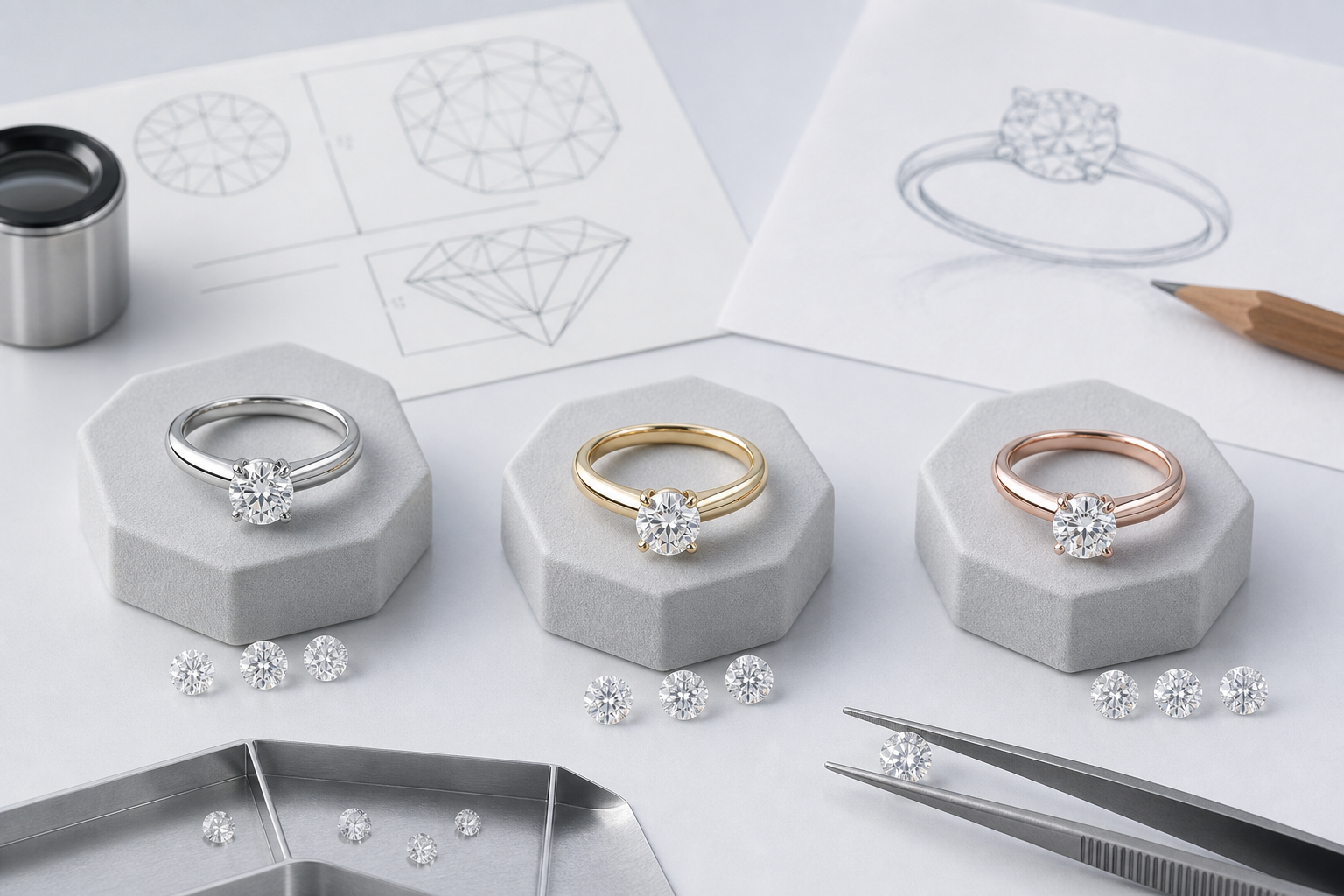
How Diamond Clarity Affects What You Can Actually See
Clarity Grades vs Naked-Eye Cleanliness
Lab-grown diamond clarity describes the presence of internal inclusions or surface blemishes, but buyers should be careful not to confuse magnified clarity with visible cleanliness. Most clarity grading is based on what can be seen under 10x magnification. Engagement rings are usually viewed at arm’s length, in motion, and without magnification. Those are very different tests.
For most buyers, the practical benchmark is an eye-clean lab-grown diamond: a stone with no distracting inclusions visible to the naked eye in normal viewing conditions. This does not mean the diamond is flawless. It means the inclusions do not interfere with the way the diamond looks when worn. That distinction matters because paying for a much higher clarity grade may not improve the appearance if the lower-graded diamond is already clean to the eye.
VVS Clarity: Impressive on Paper, Often Subtle in Real Life
VVS clarity diamonds have very, very slight inclusions that are difficult to see even under magnification. They can be beautiful, and they offer a level of technical cleanliness that some buyers genuinely value. For a buyer who wants a high-grade report, a large diamond, or extra peace of mind, VVS can make sense.
The value question is whether VVS changes what the ring looks like. In many brilliant-cut engagement ring diamonds, the difference between a VVS stone and a well-selected VS stone is not visible without magnification. If the price jump is meaningful and the VS diamond is already clean in video and in normal viewing, VVS may be more about owning a premium grade than improving everyday appearance.
VS Clarity: The Common Value Zone for Eye-Clean Diamonds
VS1 and VS2 clarity often sit in the practical value zone for lab-grown diamond clarity. These grades can include inclusions, but in many stones they are minor enough that they do not show without magnification. For many engagement ring buyers, a well-chosen VS diamond delivers the clean appearance they want without paying for clarity that only matters under a loupe.
The word “well-chosen” is important. Not every VS2 is automatically a safe buy. Inclusion type, size, contrast, and location all matter. A small inclusion near the edge may be hidden by the setting or lost in the sparkle. A dark inclusion near the center of the table can be far more noticeable, even if the report grade looks acceptable. The grade narrows the search, but it does not replace visual review.
SI Clarity: Possible Value, But Requires More Careful Review
SI clarity can offer value in some lab-grown diamonds, but it is less forgiving. Some SI1 stones may appear clean to the naked eye, especially in smaller sizes or brilliant cuts with active sparkle. Others may have inclusions that are visible, distracting, or poorly placed. SI2 requires even more caution and is usually a harder range for buyers who want a lower-risk engagement ring choice.
The main risk with SI clarity is buying from the report alone. A grading report may tell you the grade, but it will not always tell you how distracting an inclusion will be in real life. Magnified images and video are especially important here. If the inclusion is dark, centered, reflected through the facets, or visible in normal viewing, the lower price is not necessarily a better value.
It is also useful to distinguish “eye-clean” from “mind-clean.” Eye-clean means the inclusion is not distracting in normal viewing; mind-clean means the buyer feels comfortable knowing the inclusion exists even if it is not visible. Both are valid considerations, but they are different reasons to pay more. Confusing the two can lead buyers to upgrade clarity because they think it improves beauty, when the real benefit is personal reassurance.
Certificate and Visual Review Check
- Do not pay for VVS automatically if a VS diamond looks equally clean without magnification.
- Review VS2 carefully instead of assuming every stone in the grade is eye-clean.
- Be cautious with SI clarity in larger diamonds, open facet patterns, or stones with inclusions near the center.
- Use the report and visuals together because the report identifies the grade, while images and video show whether the grade creates a real concern.
A clarity upgrade is worth paying for when it removes a visible problem or reduces a real risk. If the diamond already looks clean in the ways the wearer will actually see it, the higher clarity grade may be a technical improvement rather than a better-looking ring.
The Practical Grade Ranges That Usually Offer Better Value
Balanced Value Range: G-H Color and VS1-VS2 Clarity
For many buyers, a strong value range is not D color with VVS clarity. It is often a well-cut G-H color diamond with VS1 or VS2 clarity, especially in round, oval, cushion, radiant, and princess cuts. This combination tends to deliver a white, clean appearance without forcing the buyer to pay for upgrades that may only be obvious on the grading report.
A G VS2 diamond can be a smart comparison point because it sits in a practical middle zone: high enough in color to look bright in many settings, and high enough in clarity to be eye-clean when the inclusions are minor, well-placed, and not dark. The mistake is assuming every G VS2 is automatically a good buy. A poorly cut diamond with strong grades can still look flat, while a carefully selected G-H VS diamond can look better on the hand than a higher-graded stone with weaker visual performance.
This range is especially useful for engagement ring buyers who want the budget to support the whole ring, not just the loose stone. If the saved amount allows for a better setting, a more balanced carat size, or a design detail that the wearer will notice every day, cut quality and price may create more real value than a jump to colorless or VVS.
Premium Appearance Range: D-F Color and VS Clarity or Better
D-F color is worth considering when the goal is a crisp, colorless look with less risk of visible warmth. This is most relevant for larger stones, bright white metals, and buyers who are sensitive to even slight color differences. An F VS1 diamond, for example, can be a strong premium choice because it gives a colorless grade with clarity that is usually more than sufficient for everyday viewing.
The important distinction is that colorless does not have to mean maximum clarity. Many buyers over-upgrade both at the same time, choosing D color and VVS1 clarity because the combination feels safest. In practice, a D-F stone with VS1 or a carefully reviewed VS2 clarity grade may deliver the same visible cleanliness as VVS, while keeping the premium focused on whiteness rather than microscopic clarity differences.
VVS1-VVS2 clarity can still make sense for buyers who value technical purity, are choosing a step cut, or simply want the assurance of a higher clarity grade. But for most brilliant-cut engagement rings, VVS is often a preference rather than a visual requirement. If the diamond is already eye-clean, the jump from VS to VVS may create a meaningful price increase without changing what people see across a dinner table, in office lighting, or outdoors.
Size-Focused Range: Slightly Lower Color or Clarity With Careful Review
If the priority is a larger carat size, the best color and clarity for lab-grown diamonds may shift slightly lower, but only with careful review. H color can be a practical choice in many shapes, especially when the cut is lively and the setting is not icy white from every angle. I-J color may work in yellow gold, rose gold, vintage-inspired designs, or warmer styling preferences, but these grades should not be chosen blindly.
The tradeoff becomes less forgiving as size increases. A small amount of warmth that feels subtle in a one-carat diamond may be easier to notice in a two-carat or three-carat stone because there is more visible body color. This does not mean larger diamonds must always be D-F color, but it does mean buyers should review actual images or video instead of assuming the same grade behaves the same at every size.
Clarity follows a similar pattern. SI1-SI2 diamonds can offer value in some cases, but they require more caution than VS grades. The question is not whether the report says SI; it is whether the inclusions are visible, dark, central, reflective, or distracting. In larger stones, inclusions have more surface area to reveal themselves, and in some shapes they become harder to hide.
When the Lowest Safe Grade Depends on the Specific Stone
The lowest safe grade is not a fixed line. It depends on the diamond’s shape, size, facet pattern, setting metal, and the buyer’s tolerance for warmth or inclusions. A round H VS2 may be a strong value choice, while an emerald cut H VS2 may need closer inspection because step cuts can make both body color and inclusions easier to see.
This is where grade combinations can be misleading. A buyer might assume F SI1 is better than H VS1 because the color grade is higher, but the better choice depends on what is visible. If the F SI1 has a dark inclusion under the table, it may be a worse real-world choice than the slightly warmer but cleaner H VS1. The report helps narrow the search, but it does not decide the purchase by itself.
For value-focused buyers, the goal is to find the lowest grade combination that still looks white, clean, and balanced in the intended ring. Paying below that point creates visible compromise. Paying far above it may buy reassurance, but not always beauty.
Quick Grade Range Reference
- Balanced value: G-H color with VS1-VS2 clarity is often a practical starting range for many lab-grown diamond engagement rings.
- Premium whiteness: D-F color is most useful for large stones, white metal settings, color-sensitive buyers, or designs where matching matters.
- Practical clarity: VS1-VS2 is frequently enough for an eye-clean diamond, provided images and video support the report.
- Premium clarity: VVS1-VVS2 is usually a preference or risk-reduction choice, not a visual necessity for most brilliant cuts.
- Budget stretch: I-J color or SI clarity can work in selected cases, but these choices require stricter visual review and are less forgiving in larger or step-cut stones.
At NUVU, this type of comparison is best treated as a practical selection question rather than a single-grade decision. The report helps narrow the field, but the diamond still needs to make sense visually, physically, and financially for the specific ring. For custom design, measurements and setting style can be just as important as the color and clarity labels, because a stone that looks strong loose may not be the best fit for the intended mounting.
When a grading report is provided, buyers should compare the report details with the issuing laboratory’s verification tools where available.
NUVU’s role in buyer education is to make comparison clearer, especially around grading reports, visual evidence, design fit, and documentation.
When Higher Color Grades Are Actually Worth Paying For
Large Stones Where Body Color Is Easier to Notice
Higher diamond color is more likely to be worth paying for as carat size increases. A small difference between F and H color may be hard to notice in a modestly sized round brilliant, but the same difference can become more apparent in a larger stone because there is more diamond for the eye to read. The bigger the diamond, the less you should rely on grade assumptions alone.
This does not mean every large lab-grown diamond needs to be D color. It means the cost of choosing too low a color grade becomes more visible. If you are choosing a large center stone and want a bright white appearance, D-F color or a carefully selected G color may be a safer range than stretching into lower grades simply to maximize size.
White Metal Settings That Emphasize Whiteness
Platinum and white gold settings can make color differences easier to notice because the metal creates a cool, bright frame around the diamond. In these settings, a warmer stone may stand out more than it would in yellow or rose gold. If the goal is a clean white-on-white look, upgrading color can be a rational use of budget.
The practical question is whether the setting will expose the side view of the stone. A solitaire with an open basket may reveal more body color from the side than a lower-profile or more enclosed design. Buyers often judge diamonds face-up, but rings are seen from many angles in daily wear, and side-view warmth can matter more in white metal than expected.
Shapes That Show Color More Readily
Some shapes make color easier to detect. Ovals, pears, and marquise cuts can show warmth near their tips, especially in larger sizes. Emerald and Asscher cuts may reveal body color through their broad, open facets. Cushions and radiants vary widely because their facet patterns can either break up color or concentrate it in certain areas.
This is why a single “best color” rule does not work across all shapes. A G color round brilliant may look comfortably white to many buyers, while a G color elongated shape may need closer review, especially in white gold or platinum. If the shape tends to reveal warmth, paying for F or even E color may create a visible improvement rather than just a better grade on paper.
Matching Side Stones or Multi-Stone Designs
Color upgrades also become more important when the center diamond must sit next to side stones, a halo, or a matched pair. A center stone that looks white by itself may appear slightly warm when placed beside whiter accent diamonds. The eye is often better at noticing contrast than judging color in isolation.
For three-stone rings, hidden halos, eternity bands, or matching earrings, color coordination matters more than chasing the highest grade. A well-matched F-G layout can look more cohesive than a D center stone paired with noticeably warmer side stones. The smartest choice is not always the whitest individual diamond; it is the combination that looks intentional together.
Stone-to-Setting Color Check
Before paying for a higher color grade, compare the diamond against the actual metal color and design style whenever possible. If the stone is going into platinum or white gold, review whether G-H still looks white enough in that context. If the ring is yellow or rose gold, the setting may soften slight warmth, making a lower color grade more acceptable.
A color upgrade is worth the premium when it prevents visible warmth, improves matching, or supports the exact look the buyer wants. It is less compelling when the diamond already looks white in the intended setting and the upgrade only changes the report.
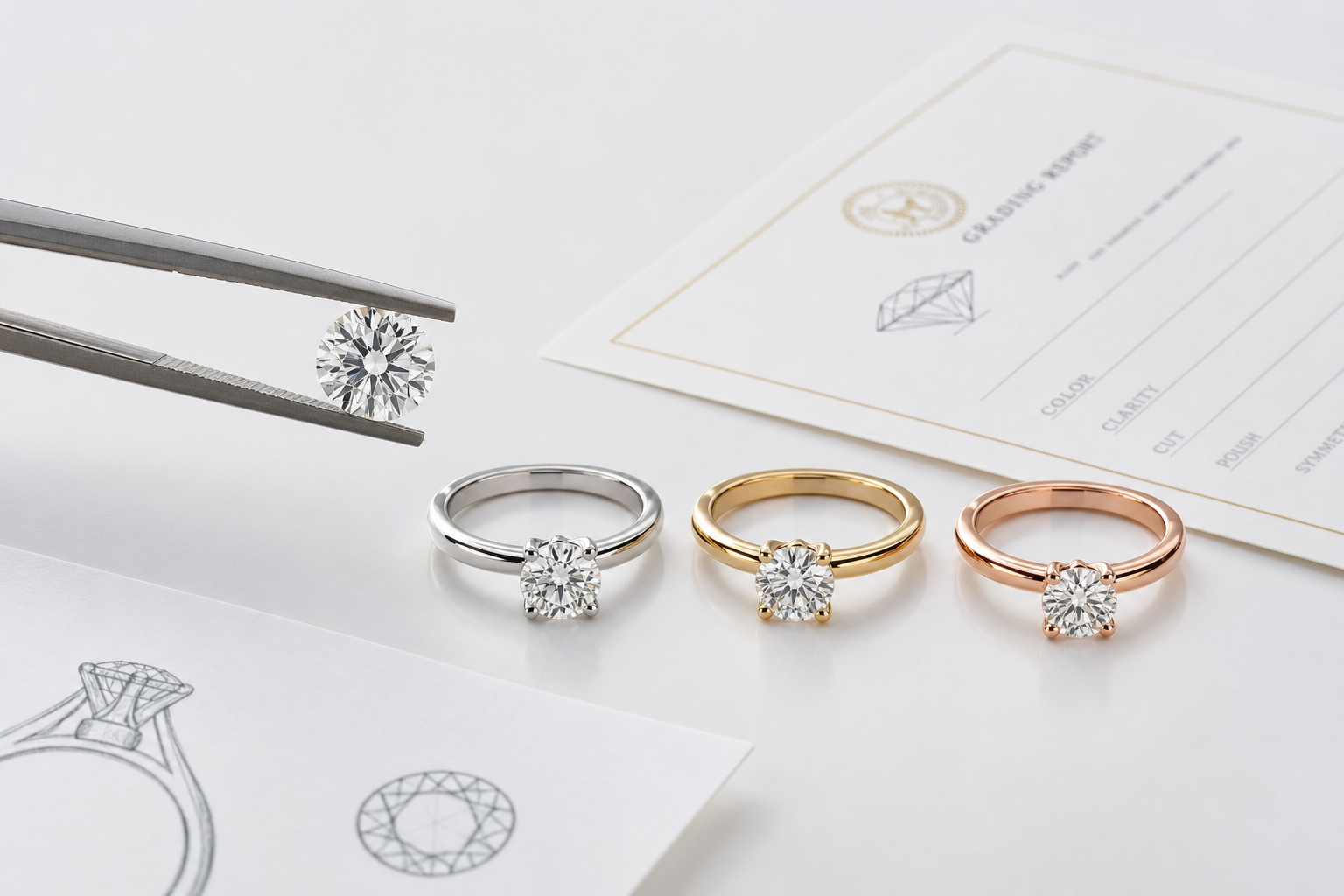
When Higher Clarity Grades Are Actually Worth Paying For
Step Cuts That Reveal Inclusions More Easily
Higher clarity grades are most defensible in step cuts such as emerald and Asscher diamonds. These shapes have long, open facets that act more like windows than sparkle camouflage. Inclusions that might disappear in a round brilliant can become easier to spot in an emerald cut, especially if they sit near the center of the stone.
This does not mean every emerald cut lab-grown diamond needs VVS clarity. A well-selected VS1 can be excellent, and some VS2 stones are clean enough when the inclusions are small, light, and positioned away from the table. But step-cut diamond clarity deserves more caution because the shape gives you fewer places to hide a distracting mark.
Large Diamonds Where Small Inclusions Become Easier to Spot
As diamond size increases, clarity becomes less theoretical. A tiny inclusion that is not noticeable in a one-carat stone may become easier to detect in a larger diamond with a wider table and broader viewing area. This is one reason buyers shopping for larger lab-grown diamonds often move from VS2 toward VS1 or higher.
The risk is paying for VVS automatically instead of identifying the actual visibility problem. If a large VS1 diamond is clean to the naked eye and has no distracting center inclusion, the upgrade to VVS may not improve the ring’s appearance. If the VS stone has a dark mark in an obvious place, however, moving higher in clarity can be money well spent.
Inclusions Under the Table or Near the Center
The location of an inclusion often matters more than the clarity grade itself. An inclusion under the table, near the center, or reflected multiple times through the stone can be more distracting than a higher number of small inclusions near the edge. A lower-graded diamond with well-placed inclusions can look cleaner than a higher-graded diamond with one poorly placed mark.
Dark, high-contrast inclusions deserve extra caution because they can catch the eye more easily than faint or transparent features. This is especially true in shapes with larger tables or less intense sparkle. If an inclusion is visible in normal viewing after you know where to look, it may become something you keep noticing after purchase.
Buyers Who Want Technical Cleanliness, Not Just Eye-Clean Appearance
Some buyers value technical cleanliness even when the visual difference is subtle. For them, VVS clarity may be worth the added cost because the report grade itself provides satisfaction and confidence. That is a valid preference as long as the buyer understands what they are paying for.
The problem starts when VVS is treated as a requirement for a beautiful engagement ring. For many brilliant-cut diamonds, a VS stone that is truly eye-clean will look the same in daily wear as a VVS stone of similar cut, size, and color. In that case, the upgrade is less about visible improvement and more about owning a higher clarity grade.
Visual Clarity Review Check
Before paying more for higher clarity, inspect the diamond beyond the report. Review magnified images, video, and the inclusion plot if available. Look for marks under the table, dark inclusions, reflections, or anything that remains noticeable when the stone is viewed at a normal distance.
A clarity upgrade is worth considering when it removes a visible distraction, reduces risk in a step cut, or supports a buyer’s preference for technical purity. If the diamond is already eye-clean and the inclusions are not affecting appearance, the money may be better used on size, setting quality, or overall design balance.
How Shape, Size, and Setting Change the Best Color-Clarity Choice
The best color and clarity by diamond shape is not a fixed formula. A grade combination that looks excellent in a round brilliant may feel riskier in an emerald cut, and a color grade that looks bright in yellow gold may show more warmth in platinum. Shape changes how light moves through the diamond, size changes how easy it is to notice body color or inclusions, and the setting metal changes what your eye compares the diamond against.
This is where many buyers overspend. They choose the same high color and clarity target for every shape because it feels safer, even when the shape is forgiving enough that the upgrade adds little to the finished ring. A better approach is to decide which risk matters most for the specific diamond: visible warmth, visible inclusions, or a mismatch with the setting.
Round Brilliant Diamonds: More Forgiving Than Many Buyers Expect
Round brilliant diamonds are usually the most forgiving shape for both color and clarity because their facet pattern is designed to return a lot of light. That sparkle can help mask small inclusions and soften slight warmth, especially in normal wear. For many round lab-grown diamonds, G-H color with VS2 clarity can look clean, bright, and well balanced when the stone is properly cut and reviewed visually.
The common mistake is assuming a round diamond needs D color and VVS clarity to look high quality. In many cases, the visible difference between a well-cut G VS2 and a higher-grade stone may be small once the diamond is set. If the budget is limited, money is often better spent on stronger visual performance, better proportions, or a setting that suits the stone rather than chasing a report upgrade that will not be noticed on the hand.
Oval, Pear, and Marquise Diamonds: Watch Color and Center Visibility
Oval, pear, and marquise diamonds need a more careful color and clarity review because their elongated shapes can make certain issues easier to see. Color may concentrate near the tips or ends, and inclusions near the center can be more noticeable than the same inclusion near the edge. These shapes can also show a bow-tie effect, which is not a clarity grade issue but can affect how lively the diamond looks in video.
For an oval lab-grown diamond, G-H color may work well in many sizes and settings, but F-G can be a safer range if the stone is larger, set in white gold or platinum, or if the buyer is sensitive to warmth. Clarity should be judged by placement more than the grade alone. A VS2 with a small off-center inclusion may be a better purchase than a higher-clarity stone with less attractive light performance.
Pear and marquise shapes deserve similar caution. Their pointed ends can reveal warmth, and their long outline draws the eye through the center of the stone. If the diamond is over two carats or will sit in a bright white metal setting, a slightly higher color grade can be more useful than upgrading clarity from VS1 to VVS when both stones are already eye-clean.
Emerald and Asscher Cuts: Clarity Matters More
Emerald and Asscher cuts are less forgiving because their broad, step-like facets act more like windows than glittering mirrors. They do not hide inclusions as easily as brilliant cuts. For these shapes, clarity often deserves more attention than it would in a round or radiant diamond of the same carat weight.
VS1 or better is often the safer clarity target for emerald and Asscher lab-grown diamonds, especially in larger sizes. A carefully selected VS2 can still work, but it should be reviewed closely through magnified images and video. Inclusions under the table, dark crystals, or anything near the center can become much more distracting in a step cut than the same feature would be in a brilliant cut.
Color also deserves a second look in step cuts. Because these diamonds have less scintillation to distract the eye, body color may appear more noticeable. That does not mean every emerald cut needs D color, but it does mean the lowest safe color grade is more stone-specific. If the setting is platinum or white gold, many buyers will feel more comfortable staying around F-G or carefully reviewed G-H rather than pushing too low for size alone.
Cushion and Radiant Cuts: Review the Actual Facet Pattern
Cushion and radiant cuts can be harder to judge by grade alone because their facet patterns vary. Some cushions have a crushed-ice look with many small reflections, while others have broader facets that show color and inclusions more clearly. Radiants can also vary in how evenly they distribute light across the stone.
Because of that variation, the same color and clarity grade can look different from one cushion or radiant another. A G VS2 radiant may look crisp and clean in video, while another G VS2 may show more warmth or a less appealing pattern. For these shapes, video matters more than the comfort of a grade label.
Setting metal should also influence the decision. A cushion in yellow or rose gold may tolerate a slightly warmer color better than the same stone in platinum, while a lab grown diamond price guide can help frame how color, setting choice, and visual tolerance affect overall value. If the design includes a halo or side stones, color matching becomes more important because the center diamond will be compared directly against nearby stones.
Shape-Specific Grade Check
- Round brilliant: Often forgiving enough for G-H color and VS2 clarity, assuming the diamond looks bright and eye-clean in video.
- Oval, pear, and marquise: Review color at the ends, inclusions near the center, and overall light pattern before paying for higher grades.
- Emerald and Asscher: Prioritize clarity more heavily; VS1 or better is often safer, with well-vetted VS2 possible.
- Cushion and radiant: Do not rely on the report alone. Facet pattern, video, and setting color can change the right grade choice.
For custom jewelry, the stone cannot be evaluated separately from the setting. Prong style, basket height, side-stone color, band width, and how much of the pavilion is exposed can all change how color and clarity are perceived. A diamond that is a strong value for a simple yellow gold solitaire may not be the same best choice for a platinum three-stone ring with bright matching accents.
For custom design, trust comes from confirming the practical fit before finalizing the stone: measurements, setting style, prong placement, side-stone matching, and how the wearer expects to use the ring day to day. A stronger report grade cannot correct a stone that is poorly matched to the intended mounting.
For custom jewelry, stone measurements and setting compatibility should be confirmed before finalizing a purchase. This includes checking length-to-width ratio, depth, girdle outline, prong coverage, side-stone proportions, and whether the setting will expose areas where color or inclusions are more noticeable.
A Realistic Buying Scenario: Choosing Between Two Similar Lab-Grown Diamonds
A buyer is choosing a 1.50 carat oval lab-grown diamond for a white gold solitaire. The shortlist comes down to two stones with similar measurements, similar face-up size, and grading reports from recognized labs. On paper, one diamond looks more impressive. In video, the decision becomes less obvious.
Option A: Higher Grades on the Report
Option A is an F color, VVS2 clarity oval. The grades are strong, and the buyer likes the security of a colorless-range stone with very high clarity. If the budget comfortably allows it and the buyer values premium report grades, this can be a valid choice.
The risk is paying for assurance that may not change the finished ring very much. If the diamond has an average light pattern, a noticeable bow-tie, or less attractive proportions, the higher color and clarity grades do not automatically make it the better-looking stone. A report can confirm quality factors, but it cannot show whether the oval has the lively, balanced appearance the buyer wants.
Option B: Slightly Lower Grades With Similar Visual Performance
Option B is a G color, VS1 clarity oval with similar measurements and a stronger-looking video. It faces up white in the white gold setting, and the inclusions are not visible without magnification. The grade drop from F to G and VVS2 to VS1 may sound meaningful on paper, but in this case it may not create a meaningful loss in everyday appearance.
If Option B leaves more room in the engagement ring budget for a better setting, a wedding band, or a custom detail the wearer will actually see every day, it may be the smarter purchase. The key is that the lower grades are not creating a visible compromise. They are simply avoiding a premium for qualities that do not materially improve the ring on the hand.
How the Setting and Video Review Change the Decision
The white gold solitaire setting matters because it gives the diamond a bright metal backdrop. If the G color oval still looks white against that metal in realistic video, the color upgrade to F may not be necessary. If the video also shows a cleaner light pattern and no visible inclusions, Option B has a stronger practical argument than the report alone suggests.
This comparison would change if the G color stone looked warm at the tips, had a dark center, or showed an inclusion under the table. It would also change if the buyer were especially color-sensitive or wanted the psychological confidence of higher grades. The better choice is not always the lower-priced stone; it is the stone where the price difference matches a visible or personal benefit.
What This Means in a Real Purchase
When you compare lab-grown diamonds, do not rank them by color and clarity grades first. Start by asking whether both diamonds look white enough, clean enough, and lively enough for the intended ring. If they do, the higher-grade diamond needs to justify its price difference with something more than a better-looking report.
At NUVU, this is the kind of comparison we treat as a judgment call rather than a simple grade contest. The strongest choice is usually the diamond that fits the design, budget, and visible appearance together, not the one that wins only on paper.
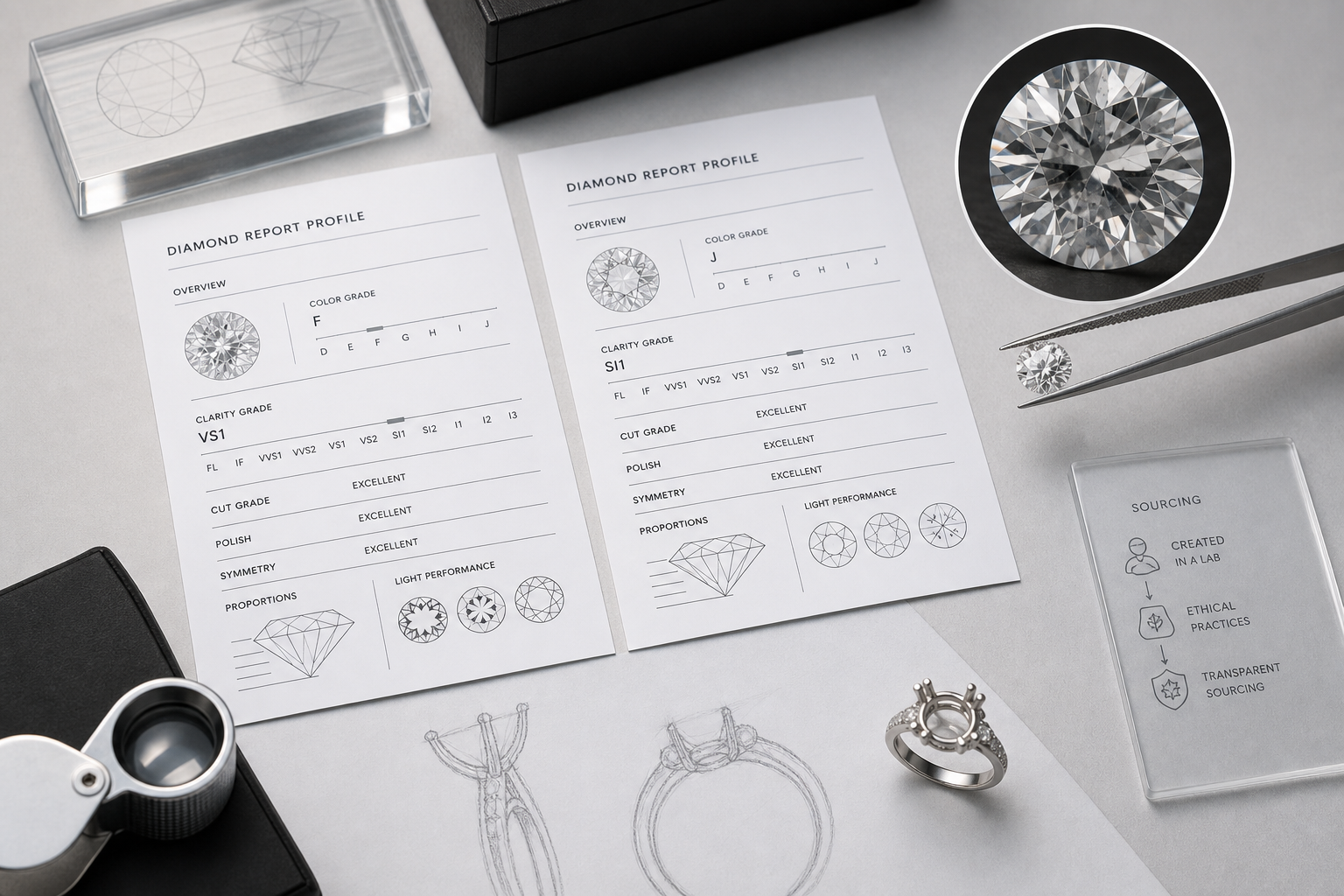
How to Compare Color and Clarity Without Overpaying
The safest way to avoid overpaying is to compare lab-grown diamonds in the right order. Many buyers start with the highest color and clarity grades, then look for a reason to justify the price. That approach often leads to paying for improvements that are technically real but visually minor.
A better process starts with comparable size and visual performance, then checks color and clarity in context. The grading report matters, but it should support what you see rather than replace it.
Compare Similar Sizes Before Comparing Grades
Compare diamonds with similar measurements, not just similar carat weights. Two 1.50 carat diamonds can face up differently depending on depth, spread, and shape. If one diamond looks larger because it has better face-up dimensions, a slightly lower color or clarity grade may be a reasonable tradeoff. If it looks larger because it is too shallow or poorly proportioned, the apparent value may be misleading.
Basic proportion checks can help, but they should not turn the decision into a technical spreadsheet. Use table percentage, depth percentage, and measurements as screening tools, then rely on images and video to judge whether the stone actually looks balanced. A diamond with higher color and clarity but weaker visual presence is not automatically a better buy.
Use Video and Images to Confirm Eye-Clean Appearance
For clarity, the key question is whether inclusions are visible in normal viewing, not whether the report grade sounds impressive. Review magnified images to understand where inclusions are located, then use video to judge whether they matter in real life. Inclusions near the edge are often less concerning than dark or central inclusions under the table.
Do not assume every VS2 is eye-clean, and do not assume every VVS upgrade is visually useful. In a brilliant-cut diamond, a well-placed VS2 inclusion may be practically invisible. In an emerald cut or larger stone, the same grade may need closer review. The grade starts the conversation; the visual evidence should finish it.
Check Color Against the Actual Setting Metal
Color should be judged against the ring you plan to make, not in isolation. A diamond that looks slightly warm on a white background may look perfectly natural in yellow gold or rose gold. The same stone in platinum may call more attention to warmth, especially in larger sizes or elongated shapes.
If you are choosing a white gold or platinum engagement ring, compare color more carefully and consider whether G-H still gives the look you want. If the design uses warmer metal, a lower color grade may be a smart budget move as long as the diamond still looks intentional, not dull or mismatched. The wrong move is paying for D-F color when the setting would have made a well-chosen lower grade look equally appropriate.
Ask Whether the Upgrade Changes the Ring or Only the Report
Before paying for a color or clarity upgrade, ask one practical question: will this change what the wearer sees? If the answer is yes, the upgrade may be worth it. If the answer is only that the report looks stronger, the money may be better used elsewhere.
This is especially important when the saved budget can improve the total ring. A better setting, a more balanced center stone, matching side stones, or a slightly larger eye-clean diamond may create more real-world impact than moving from VS1 to VVS2 or from G to F. Higher grades are worth paying for when they solve a visible issue, reduce a real risk, or satisfy a personal preference the buyer genuinely values.
Verify the Documentation Without Treating It as the Whole Decision
When a diamond comes with a grading report, the buyer should confirm that the details shown by the seller match the document. Check the shape, carat weight, measurements, color, clarity, and any inscription information when available. If the report number can be checked with the issuing laboratory, that step can help confirm that the document corresponds to the listed diamond.
Documentation is not a substitute for preference. A verified report can tell you what the diamond was assessed to be, but it does not decide whether the stone looks best in a specific ring, whether the color feels right against a chosen metal, or whether a clarity feature bothers the buyer. Treat report verification as a trust step, then return to the visual comparison before deciding whether the upgrade is worth paying for.
Confirm Origin, Growth Method, and Treatment Disclosures When Relevant
Because this guide focuses on lab-grown diamonds, the seller description and grading report should clearly disclose laboratory-grown origin. Lab-grown diamonds are not diamond simulants; simulants are lookalike materials that are not diamonds. If a listing does not clearly distinguish laboratory-grown diamond, natural diamond, and simulant terminology, buyers should ask for clarification before comparing price or grade.
HPHT and CVD may refer to lab-grown diamond growth methods. When growth method or post-growth treatment is relevant, buyers should look for clear disclosure in the grading report or seller documentation. Do not assume a diamond has or has not received a post-growth treatment unless that status is documented by the report or seller materials.
Buyer Verification Checklist
- Match the comparison: Compare stones with similar shape, carat weight, measurements, and face-up size before judging grade differences.
- Review video first: Look for brightness, symmetry of appearance, bow-tie behavior in elongated shapes, and overall visual balance.
- Check clarity visually: Confirm whether inclusions are visible without magnification, especially under the table or near the center.
- Judge color in context: Compare the diamond against the intended metal color and any side stones or halo diamonds.
- Verify the report: Use the grading report number with the issuing lab when possible, but remember that the report does not show every real-life viewing condition.
- Measure the upgrade: If a higher grade does not improve the finished ring in a way you can see or confidently value, it may not be the best use of budget.
Documentation is especially important when comparing loose lab-grown diamonds, but it should be read carefully. Confirm that the report details match the stone being offered, including shape, measurements, carat weight, color, clarity, and any inscription information when available. The report supports transparency, but it does not guarantee that the diamond will be the most attractive choice for a particular design or budget.
The Smartest Way to Balance Color, Clarity, and Budget
Spend First on What Changes the Visible Result
The smartest color clarity budget is not built around the highest grades you can afford. It is built around the parts of the diamond and ring that actually change what you see on the hand. A diamond with slightly lower color or clarity can be the better value if it faces up white, looks clean without magnification, has strong visual performance, and fits the setting well.
For most buyers, the first dollars should go toward the overall look: a lively stone, suitable proportions, the right shape, and a setting that supports the design. Color and clarity matter, but they should serve that result. Paying for D color or VVS clarity while compromising the setting, carat spread, or cut-related appearance often creates a ring that is technically impressive but not meaningfully better in daily wear.
A practical test is simple: if two diamonds look equally white and equally clean in normal viewing, the more expensive grade upgrade needs a reason beyond the grading report. If the upgrade does not improve the visible appearance, reduce a concern, or support the design, that money may work harder elsewhere in the ring.
Choose Premium Grades When They Solve a Real Concern
Premium grades are worth considering when they address something specific. Higher color can make sense if the diamond is large, set in platinum or white gold, paired with bright side stones, or chosen in a shape where warmth is easier to notice. Higher clarity can be worth it if the stone has an open facet pattern, visible inclusions near the center, or a size where small clarity features become easier to detect.
The key is that the upgrade should solve a real risk. A D-color diamond can be a good choice for a buyer who is highly color-sensitive or wants an icy white look with no second-guessing. A VVS diamond can be the right choice for someone who values technical cleanliness, especially in a design where inclusions would be distracting. Those are valid reasons. The mistake is treating premium grades as automatic proof of better value.
Lab-grown diamond value is strongest when the grade supports the actual purchase goal. For an engagement ring, that goal is rarely “highest report possible.” It is usually a balanced stone that looks beautiful in the chosen setting, fits the budget, and does not force unnecessary tradeoffs elsewhere.
Choose Value Grades When the Difference Is Mostly on Paper
Value grades are not “settling” when the diamond still performs well visually. A well-chosen G-H color and VS clarity diamond can often deliver the appearance buyers want without the price jump attached to colorless and VVS combinations. The savings can be meaningful if they allow for a better setting, a slightly larger face-up size, a wedding band budget, or a custom design detail that the wearer will notice every day.
The lowest sensible grade is not the same for every diamond, but the decision should always come back to visibility. If warmth is not noticeable in the intended metal, a color upgrade may be unnecessary. If inclusions cannot be seen without magnification, a clarity upgrade may only improve the report. In both cases, the better choice is usually the stone that protects the look while avoiding grade premiums that do not change the experience of wearing the ring.
This is where restraint creates better buying decisions. A grading report is useful for narrowing choices, but it cannot tell you whether the extra money creates a better ring. A strong value lab-grown diamond is one where the grades, appearance, setting, and budget all work together without paying heavily for differences you cannot appreciate.
Be Careful With Claims That Sound Broader Than the Evidence
Buyers should be cautious when any diamond is described with broad claims that go beyond what the report or seller documentation actually shows. A grading report can support characteristics such as color, clarity, measurements, and other listed observations, but it should not be used as proof of overall beauty, investment value, environmental benefit, or universal superiority. Those are different claims and would need different kinds of support.
The same caution applies to price language. A seller may explain why one diamond costs more than another, but exact value depends on the specific stone, report details, seller channel, visual documentation, setting needs, and current inventory. Instead of relying on a single price claim, compare like-for-like stones and ask what the extra cost actually improves. If the higher price is attached only to a grade that will not be visible or personally meaningful, the upgrade may not be the strongest use of the budget.
Environmental and sustainability claims should be specific, documented, and limited to what can be substantiated. Lab-grown diamonds may appeal to buyers looking for an alternative to mined origin, but broad claims such as “eco-friendly,” “conflict-free,” or “carbon-neutral” should be supported by clear information about production practices, energy use, sourcing disclosures, or other relevant documentation.
If a GIA report is provided, the report details can usually be checked through GIA’s official report verification system.
Before purchase, buyers should confirm the seller’s documentation, return policy, resizing terms, and after-sales support in writing.
Final Grade Decision Framework
Start with the visual result, not the grade label. Choose a diamond that looks bright, white enough for the setting, and clean to the naked eye. Then ask whether a higher color or clarity grade would change anything you can actually see or feel confident about in the finished ring.
If the answer is yes, the upgrade may be worth it. If the answer is no, keep the value grade and put the budget where it changes the final piece more clearly. For most buyers, the strongest decision is not the highest color and clarity combination available; it is the combination that avoids visible compromise without paying for invisible perfection.
Disclosure: This article is for general educational purposes only. Diamond grading, pricing, availability, specifications, and seller policies can change, and readers should verify important details through grading reports, official laboratory tools, seller documentation, or qualified professionals before making a purchase decision. Laboratory-grown diamonds should be clearly distinguished from natural diamonds, and environmental or sourcing claims should be supported by specific documentation.