
Launching a jewelry brand under your own label means your diamond supplier is effectively an invisible partner in every piece you sell. The problem is that most lab-grown diamond wholesalers, in custom sourcing for wholesale lab-grown diamonds, operate on a transactional model, shipping whatever stones are in stock regardless of consistency from one order to the next. For a brand that needs repeatable quality across a collection, that approach creates real risk: stones that shift in color grade, vary in diameter by fractions of a millimeter, or arrive with grading reports from different labs can undermine your product’s reliability and your customer’s trust. This article helps you evaluate what a legitimate private label OEM partner should actually be able to support, from pre-batched stone lots and grade consistency to verified sustainability documentation and measurement fit, so you can distinguish a real partnership from a simple bulk transaction.
For the full framework, read Wholesale Lab-Grown Diamonds for Jewelers and Brands.
| Supplier Capability | Transactional Wholesaler | True Private Label Partner |
|---|---|---|
| Stone consistency across orders | Batch-to-batch grade drift accepted | Pre-batched lots; rejects batches over one grade shift or 0.2mm variance |
| Grading report alignment | Mixed labs (IGI, GIA, others) | Single consistent lab (e.g., IGI) |
| Support for multi-SKU collections | One-off inventory recommendations | Reserves consistent stones across all SKUs; reproduces matching re-orders |
| Sustainability documentation | Generic “eco-friendly” claims | Batch-level traceability, production method certificates, third-party audit reports |
| Stone-to-setting fit support | Stones shipped without measurement data | Provides pre-shipment measurements and compatibility checklist |
| Verification method for new partners | Relies on marketing language | Two separate ten-stone sample orders to test consistency |
Quick Questions Before You Read
Q: Can I trust a supplier that offers lower prices but won’t share detailed measurements?
No. A supplier that refuses pre-shipment measurement data or consistent grading reports cannot guarantee fit or quality across multiple orders, regardless of price.
Q: How do I know if my supplier’s “sustainability” claims are real?
Request specific, documentable evidence: batch-level traceability linking stones to growers, production method certificates, and third-party audit reports. If they cannot provide these, the claims are unverifiable.
Q: What is the best way to test a potential private label partner before committing to a large collection?
Order two separate ten-stone sample batches and compare them. If the stones show more than one grade shift or more than 0.2mm diameter variance between orders, the supplier lacks the consistency needed for a branded line.
Q: Does using a single grading lab really matter for my brand?
Yes. Grading standards can vary between labs, and even slight differences in color or clarity grades can confuse your customers or degrade the perceived consistency of your collection. A true partner commits to one lab for all stones.
What Defines a Private Label Lab-Grown Diamond Supply Partner vs. a Standard Wholesaler
The difference between a standard wholesaler and a private label supply partner is not just volume. It is whether the supplier can support a brand’s identity, quality standards, and repeatable collection needs rather than simply fulfilling one-off stone requests. Many brands learn this distinction only after experiencing the mismatch.
Standard Wholesalers Serve Stones, Not Brands
A standard wholesale supplier operates on a transactional model. They have inventory, they quote a price per carat, and they ship what is available. The buyer defines every specification for each order, and there is no continuity guarantee between batches. If you order G-H color stones this month and order the same bracket next month, you may receive stones that look visibly different under the same lighting. The supplier has no incentive to maintain grade alignment across separate orders because their business is built on moving current inventory, not managing a brand’s long-term product consistency.
This model works for one-off purchases. It fails for a brand that needs every ring in a collection to match.
Private Label Partners Support Collection Logic and Repeatable Standards
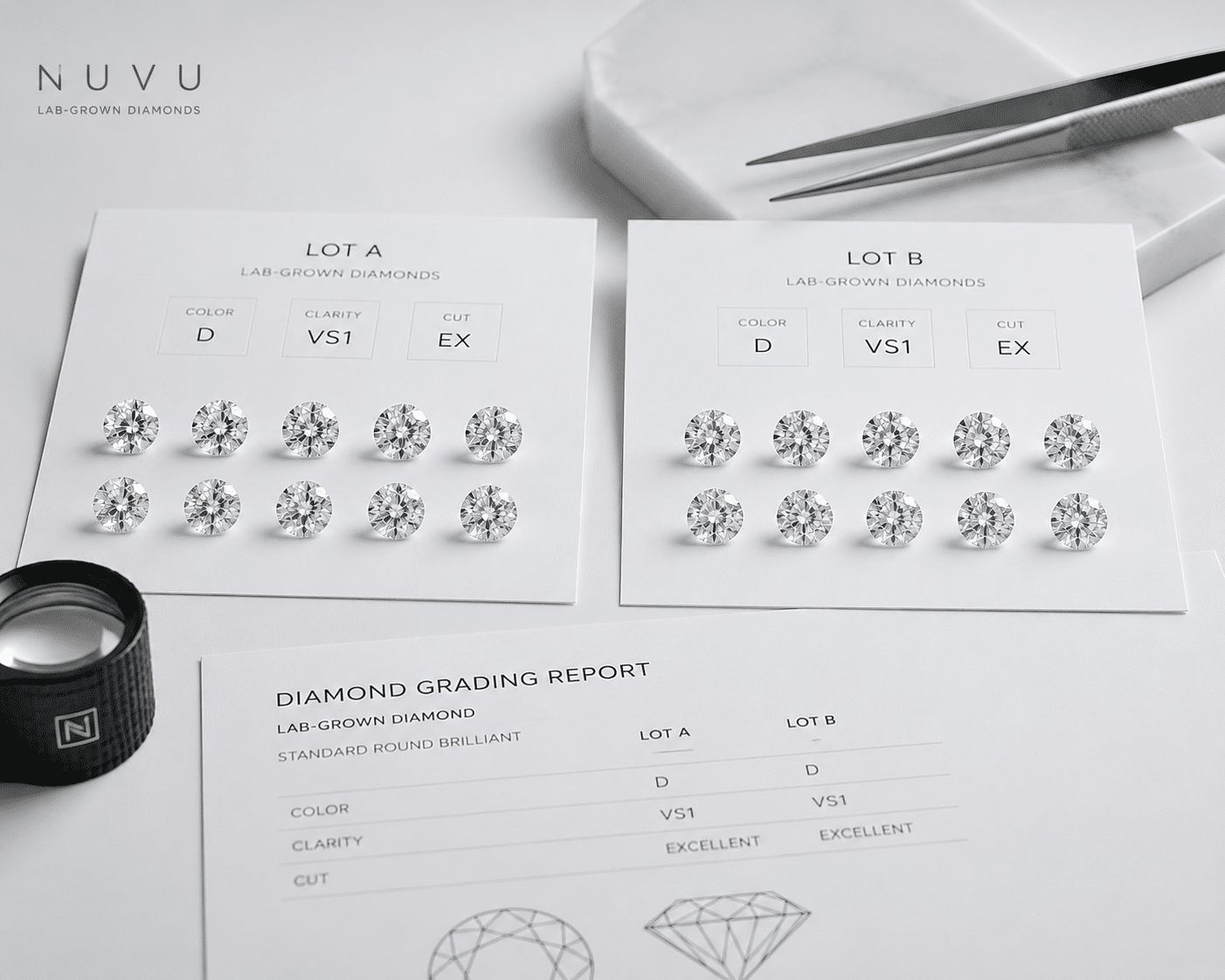
A true OEM partner maintains internal grading consistency across orders. They do not simply pull whatever loose stones are available. They pre-sort inventory into batches grouped by measured proportions, color grades, and clarity clusters. This allows them to fulfill a request for “G-H, VS1-VS2, 6.4–6.6mm rounds” with stones that actually fall within those parameters, order after order.
A private label partner can also support brand-specific selection logic that standard wholesalers cannot accommodate. For example, a brand may want to prioritize visual spread over carat weight for a particular shape, or maintain a tight color bracket for a pavé setting where side stones must match. These are not generic requests. They require coordinated inventory management and the willingness to reserve stones for a specific collection rather than selling to whoever orders first.
The Role of Grading Report Alignment in Private Label Execution
Grading report consistency matters more than most brands initially realize. If a collection contains stones from three different laboratories, each applying slightly different color or clarity interpretations, the visual mismatch undermines product trust. One stone may appear warmer than another with the same letter grade simply because it was graded by a different lab. The U.S. Federal Trade Commission’s Jewelry Guides emphasize that industry-standard grading terms should be used in a way that is not misleading, and that any deviation from common understanding must be clearly disclosed.[1] Relying on a single, consistent lab helps ensure that the grades reported align with your brand’s stated standards, reducing the risk of inadvertent misrepresentation.
A private label supplier should be able to match stones to a brand’s preferred lab and ensure report consistency across every SKU in a collection. Whether the brand standardizes on IGI, GIA, or GCAL, the supplier should verify that every stone in the order comes with a report from that specific lab and that the grade interpretations are consistent within the batch.
What to Check Before You Decide
Request a batch-level consistency report showing grade distribution across ten or more stones within a single bracket. Visually compare two stones from different order dates under the same light. Ask whether the supplier pre-screens stones against your target grade bracket before sending inventory sheets, or whether they present all available stones and expect you to filter. The answer will tell you whether you are talking to a standard wholesaler or a private label partner.
Grading Bracket Consistency: How to Verify a Supplier Can Repeat Your Brand’s Target Specs
The single most common failure point in private label supply is inconsistent quality between orders. A brand builds a collection around a specific grade bracket, and the supplier delivers stones that drift outside that bracket on the second or third order. This section explains why it happens and how to prevent it.
Why Grade Brackets Drift Between Orders Without Quality Control Systems
In standard wholesale, a supplier sources stones from multiple growers and offers whatever inventory is available at the time of the inquiry. This creates grade bracket drift. One order delivers stones at the high end of G-VS2, visually clean and well-cut. The next order, placed weeks later, arrives at the low end of the same bracket with visible inclusions or warmer color. The supplier did not deliberately downgrade the shipment. They simply had a different mix of inventory when the second order was placed.
For a brand selling rings at a fixed price point, this drift creates significant risk. Customers notice when a stone looks different from what was advertised. Return rates increase. Pricing credibility erodes. And the collection no longer presents a uniform visual experience across different production runs.
Pre-Batched Stone Lots vs. Real-Time Sourcing
Suppliers who invest in pre-sorting and batching offer a solution. Instead of sourcing stones in real time for each order, they group inventory into repeatable grade clusters. Stones are sorted by measured proportions, crown and pavilion angles, fluorescence strength, and inclusion type, not just letter grades. This allows the brand to order “Batch A” and receive stones that are visually and dimensionally similar to the previous “Batch A,” regardless of which grower supplied the rough.
Pre-batching requires upfront work from the supplier. It means maintaining inventory that is reserved for repeat orders rather than sold to the first buyer. But it is the only reliable way to guarantee that a restocked SKU matches the original run.
How to Test a Supplier’s Grade Repeatability Before Committing
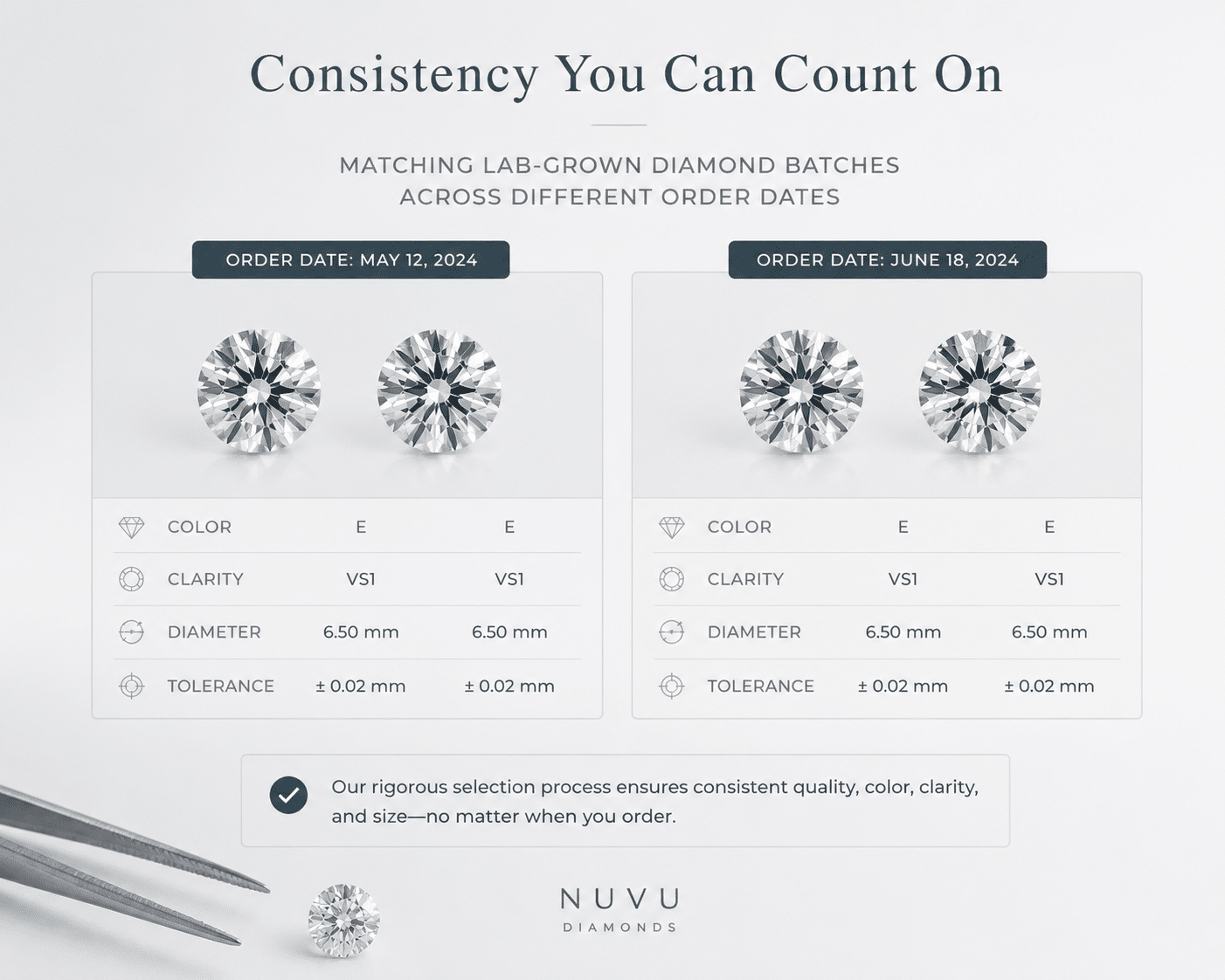
Request a sample order of ten stones at your target spec. Then request a second order of ten stones at the same spec without re-negotiating the bracket. Compare the two batches for color and clarity distribution, measurement variation, and report consistency. A supplier who objects to this test is likely operating a one-off sales model, not a private label operation.
Buyer Verification Checklist
Ask whether the supplier maintains internal batch records. Request a sorting log showing how stones are grouped before being offered. Compare measurements and grades across two separate orders. Reject any batch that shows more than one grade of drift, such as moving from F-G to H-I, or more than 0.2mm variation in diameter for rounds. These tolerances are reasonable and achievable for a properly managed private label supply chain.
The Role of Recognized Grading Reports in Consistency Verification
Brands evaluating supplier consistency should also consider how the grading lab documents the stone’s characteristics. IGI, for instance, provides detailed reports that include measurements, clarity characteristics, and color grade for lab-grown diamonds.[2] This documentation allows a brand to compare a stone’s specifications directly against its collection requirements. When every stone in a batch includes a report from the same recognized lab, which complies with the wholesale lab-grown diamond certification guide, the brand has a standardized baseline for verifying consistency across repeated orders. The supplier’s internal sorting data and the grading lab’s independent documentation together form a more complete picture than either one alone.
Packaging, Branding, and Presentation Coordination for Private Label
The stone itself is only part of the private label equation. How it arrives, how it is presented, and how it fits into the brand’s existing packaging system affects the end customer’s perception and the brand’s operational efficiency.
Standard Packaging vs. Brand-Coordinated Presentation
A standard wholesaler ships loose stones in generic plastic cases or paper envelopes. The packaging is functional and disposable. A private label partner works differently. They coordinate with a brand’s existing packaging system, providing matched box sizes, insert colors, branding stamps, or custom envelopes that carry the brand’s identity.
This matters most for brands that deliver loose diamonds separately from settings, such as in upgrade programs, custom design services, or online loose diamond sales. When the customer receives a branded presentation rather than a bare plastic case, the unboxing experience supports the brand’s positioning rather than undermining it.
Stone Presentation Practices That Support Retail and Online Sales
Private label suppliers should be able to stage stones for photography, video, or showroom display. This includes pre-cleaning stones before shipment, presenting them with consistent orientation in viewing screens or tweezers, and providing uniform lighting references. For brands that photograph their own loose diamonds, the supplier should provide measurement standards and pre-clean each stone so that it is camera-ready upon arrival.
Coordination with Setting and Finished Jewelry Production
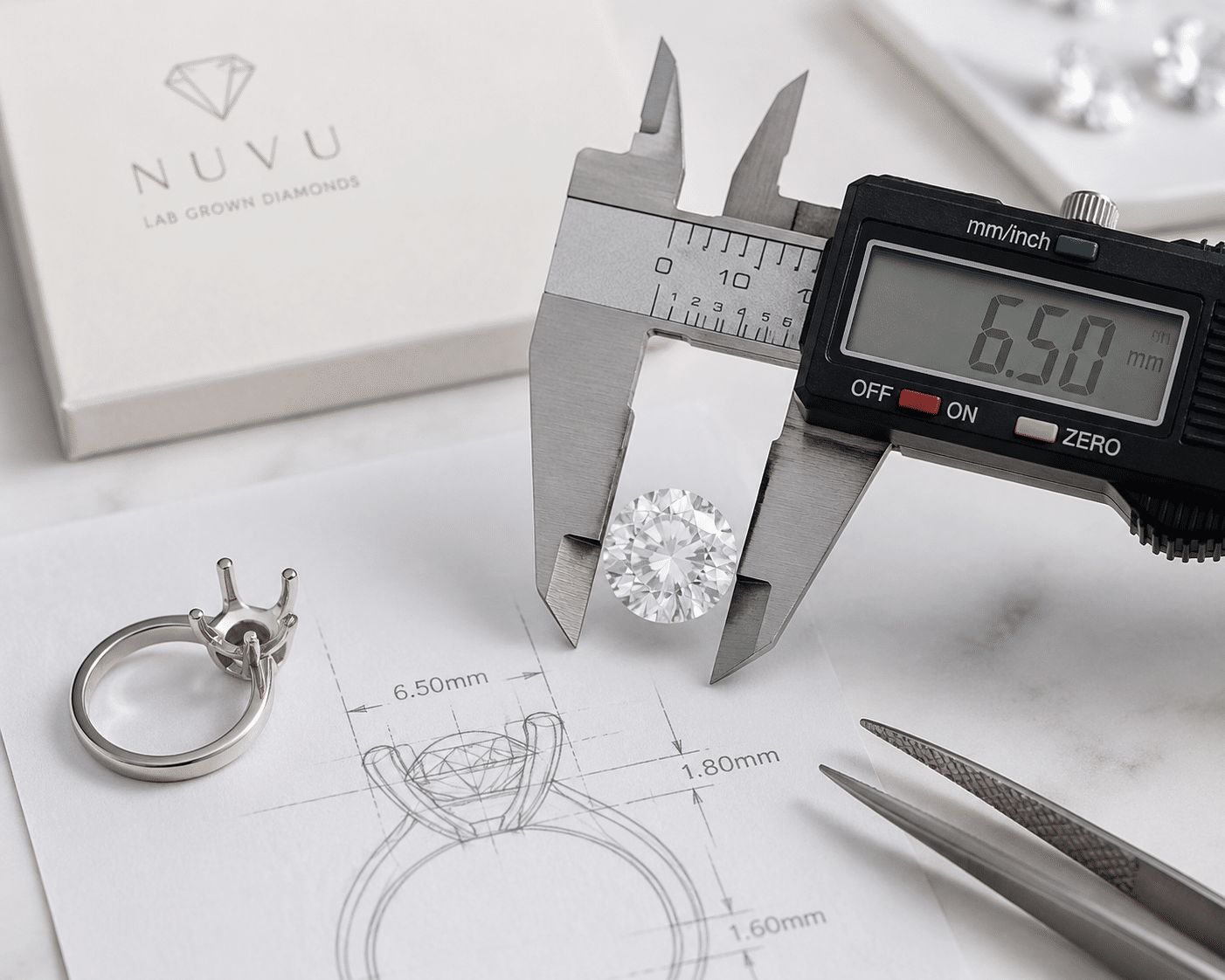
When a brand sets stones into branded jewelry, the supplier must support matched pairing between stone dimensions and setting models. This means providing measurement sheets alongside grading reports and confirming stone-to-setting fit before manufacturing begins. Inconsistent stone diameters or depths create manufacturing delays, increase setting costs, and generate returns.
Stone-to-Setting Fit Check
Before committing to mass production, request a sample setting check using actual stones from the supplier’s batch. Confirm that stone measurements, including diameter, depth, and crown angle, fall within the tolerance of the setting’s prong design. Require measurement data for every stone in the batch, not just the sample. A supplier who cannot provide individual measurements is not equipped for private label coordination.
Collection Planning Support: From Stone Selection to SKU Consistency
A jewelry brand launching a collection of three ring styles in six sizes each across three price points needs more than a supplier with a large inventory list. They need a partner who can secure consistent stones for every SKU combination and plan for re-orders before matching inventory runs out. A standard wholesaler offers what is available today. A private label partner reserves inventory, cross-references grade brackets with your setting designs, and ensures that when a best-selling ring needs restocking, the next batch of stones looks identical to the first.
Stone Selection Logic for Multi-SKU Collections
The real test of a private label partner is whether they can execute complex selection logic at scale. That means enforcing rules like: “All round stones in the 1.0–1.2ct range must be G-H color, VS1-VS2, with diameter within 6.4–6.6mm.” Without this discipline, a collection ends up with some rings carrying stones that look visibly larger or smaller than others at the same price point, which erodes customer trust and creates pricing confusion. A supplier who lacks enough inventory depth to maintain these constraints across multiple SKUs is not ready to support a branded collection.
Handling Re-Orders for Existing Collections
Re-ordering is where most supplier relationships break down. A standard wholesaler sources from multiple growers and may not have the same stone profile available six months later. The result is grade drift: the new batch sits at the low end of the bracket while the original batch sat at the high end, and customers who bought earlier receive a visibly better product. A private label partner who pre-batches stones and keeps detailed records of past order profiles can reproduce a re-order that matches the original without re-negotiating grades or accepting drift. This repeatability is the single most valuable capability a private label supplier can offer.
For brands planning collections over multiple seasons, the practical question is not just whether the supplier can fulfill today’s order, but whether they can reconstruct the same visual and dimensional profile from their records months later. This is where record-keeping and batch management become as important as inventory volume.
When a grading report is available, buyers should verify the report details through the issuing laboratory’s official report-check tool where available. Comparing the report numbers and specifications against the supplier’s batch documentation adds an extra layer of verification before committing to a collection-wide order.
Certificate and Visual Review Check
During collection planning, ask the supplier to provide measurement profiles from the actual stones they intend to fill the order with, not just target specs. A target spec is a promise. A measurement profile is proof. Before approving a re-order, request a side-by-side comparison between the first run and the proposed restock. Reject any batch that shows more than one grade of color or clarity drift, or more than 0.1mm variation in diameter for the same carat weight range.
Custom Design Integration: How a Private Label Partner Supports Loose Diamond Guidance for Bespoke Ring Production
Bespoke ring production introduces variables that do not exist in standard collection orders. Each design is unique, and the stone must fit the setting, not the other way around. A private label partner who understands this can recommend stones based on design logic rather than inventory pressure, reducing costly re-designs and setting modifications before they happen.
Stone Recommendations for Design, Not Just Inventory
A 1.5ct oval performs differently in a three-stone setting than a 1.5ct round. The oval will appear larger face-up, but its narrower profile may leave gaps between side stones that a round would not. A true private label partner recommends stone shapes, sizes, and proportions that align with the brand’s design blueprints, rather than simply pushing whatever is in stock. This saves the brand from discovering fit problems after the stone has been purchased.
Shape-to-Setting Compatibility Planning
Different ring settings require different stone measurements. A solitaire setting has prong flexibility that a channel setting does not. A tension setting depends on precise diameter consistency. A low-profile solitaire may not accommodate a 1.2ct cushion with a deep pavilion without raising the head height, which changes the design entirely. The supplier should provide measurement guides and confirm physical fit before production begins, not after the stone has been ordered and shipped.
Total Project Cost Planning with Stone and Setting
Stone selection directly affects the final piece cost in ways that are not always obvious. A stone that requires a custom setting modification, additional metal weight, or a higher prong design will raise the final price. A partner who flags these tradeoffs during the stone selection phase saves the brand from unexpected production costs and prevents custom pieces from exceeding the quoted budget. The best time to discuss cost impact is before the stone is purchased, not after the setting shop receives it.
In practice, the most useful cost planning comes from understanding that a stone’s proportions—not just its carat weight or grade—determine how it interacts with the setting. A stone that looks like a bargain on paper may require a more complex setting design that eliminates the savings entirely.
Buyer Verification Checklist
During the design intake, ask the supplier for a stone-to-setting compatibility checklist. Request a sample stone mock-up in the actual setting model before committing to a bulk order. Confirm that the supplier can provide measurement data for each stone intended for a custom design, not just the generic spec range. If the supplier cannot offer these checks, the brand should expect a higher rate of setting modifications and production delays.
For custom design, trust comes from matching the stone to the setting, budget, and wearer’s daily use—not from choosing grades in isolation. A supplier who understands this distinction can help a brand avoid mismatches that would otherwise require costly rework after the stone has been set.
Supplier Communication and Transparency Standards for Long-Term Partnership
Consistent manufacturing quality means little if the supplier cannot communicate reliably, document orders properly, or handle issues when something goes wrong. These non-manufacturing elements often determine whether a partnership lasts beyond the first few orders.
Documentation and Report Verification Standards
Every stone should arrive with a digital grading report from a recognized lab—IGI, GIA, or GCAL. The supplier should support report verification directly with the issuing lab and maintain internal consistency records showing that delivered stones match the advance specs provided to the brand. A supplier who hesitates to provide pre-shipment measurement data or lab report numbers before invoicing is creating room for grade drift.
Understanding Terminology and Disclosure Requirements for Lab-Grown Diamonds
A key area where a private label supplier’s transparency matters is in how they describe their stones. Official guidance from the Federal Trade Commission requires that lab-grown diamonds be clearly and conspicuously disclosed in advertising and on graded reports to avoid misleading consumers.[1] For a brand relying on a supplier, this means the supplier’s documentation and labeling must consistently use terms like “laboratory-grown” or “laboratory-created” rather than ambiguous or omitted descriptions. A partner who treats terminology casually creates disclosure risk for your brand. A responsible partner understands the legal importance of accurate terminology at every stage of the supply chain, from the internal invoice to the final grading report.
Communication Response and Order Lead Time
Jewelry brands operate on launch dates, holiday seasons, and custom design timelines that do not tolerate delays. A reliable partner responds to inquiries within one to two business days, provides realistic lead times for batch orders, and notifies the brand early about potential inventory gaps. Delivering a partial order without explanation is not acceptable for a private label relationship.
After-Sales Support for Returns, Exchanges, and Quality Issues
A standard wholesaler may not accept returns for stones that do not match the brand’s visual expectations. A private label partner should have a clear return or exchange policy for grade or measurement mismatch. They should also provide support when a stone is damaged during setting or when an end customer returns a piece. When a brand must carry the cost of every mismatch, the supplier’s low per-carat price stops looking like a bargain.
What to Check Before You Decide
Ask the supplier for their standard sales agreement terms, including return policies, order confirmation documentation, and lead time guarantees; this is a fundamental aspect of B2B diamond supply options. Request a sample order that includes the full documentation package: commercial invoice, grading report, measurement sheet, and packing list. Verify that the supplier can produce documentation in a format suitable for your internal purchase order system. A partner who cannot provide clear documentation upfront will almost certainly be difficult to work with over time.
Note on verifying supplier policies: Business policies—including return terms, warranties, and lead time promises—should be confirmed directly in writing from the supplier before any commitment. General statements about “support” or “flexibility” should not be treated as binding unless documented in a sales agreement or order confirmation.
Sustainability and Transparency Claims: What a Private Label Partner Can Actually Verify
Sustainability and ethical sourcing claims have become standard marketing language in the lab-grown diamond industry. For a jewelry brand building a private label collection, the question is not whether a supplier claims responsibility, but what they can actually prove. Without verifiable documentation, these claims carry the same weight as any other unpromised benefit.
The Importance of Traceability Documentation for Responsible Sourcing
Traceability in the lab-grown diamond supply chain means the ability to link a specific polished stone back to its original rough crystal and the grower who produced it. This level of documentation is not automatic; it requires the supplier to maintain a chain-of-custody record that follows the stone from the growth chamber through cutting, polishing, grading, and final delivery. For brands that market their products with any reference to responsible sourcing, this documentation is the foundation that separates a substantiated claim from an unverifiable one. A supplier who can provide grower-level traceability allows a brand to make specific, documentable statements about the origin of its materials, while a supplier who relies on broad claims forces the brand into a more cautious position.
What Can Be Verified About the Stone’s Origin
Lab-grown diamonds originate from specific growers, and those growers maintain production records. A supplier who invests in traceability can provide batch-level documentation showing which grower produced the rough, what production method was used (CVD or HPHT), and where the rough was cut and polished. This data can be cross-referenced with laboratory grading reports to confirm stone-to-grower matching, but only if the supplier maintains internal tracking systems. Without those systems, the supplier is working from memory, not records.
Understanding the Difference Between HPHT and CVD Growth Methods
When a supplier provides production method documentation, understanding the distinction between the two primary growth methods—High Pressure High Temperature (HPHT) and Chemical Vapor Deposition (CVD)—can help a brand evaluate the information. GIA explains that HPHT replicates the high-pressure, high-temperature conditions under which natural diamonds form, while CVD uses a lower-pressure process where carbon atoms are deposited onto a diamond seed.[3] Both methods produce genuine diamonds, but they can result in different clarity characteristics and post-growth treatments. A supplier who can identify the specific method for each batch enables a brand to make more informed decisions about the stones they are offering, rather than relying on a single generic claim.
What Cannot Be Proven from Marketing Language Alone
Terms like “eco-friendly,” “zero-carbon,” “conflict-free,” and “ethically produced” are not standardized or regulated in the lab-grown diamond industry. Any supplier can include them on a website or in a proposal. The difference between marketing and evidence comes down to documentation. A supplier who cannot provide energy source documentation, carbon offset certificates, or third-party audit reports is making unverifiable claims. A brand that passes these claims to its own customers without verification risks reputational damage if the claims turn out to be unsupported. The FTC’s guidance on environmental marketing claims requires that such claims be substantiated by competent and reliable evidence, meaning that broad “eco-friendly” assertions are especially risky without specific supporting data.[1]
Sustainability claims should be specific and documented. Broad green language is less useful than clear information about production, energy, sourcing, and seller transparency. When evaluating a supplier, brands should prioritize documentation over marketing terminology.
The Distinction Between Laboratory-Grown and Natural Diamonds in Sourcing Claims
In any discussion of traceability or origin, a brand’s internal documentation and customer-facing materials should clearly identify laboratory-grown diamonds as laboratory-grown. This distinction is important because the production path for a lab-grown diamond—from growth chamber to polished stone—differs fundamentally from the geological formation of a natural diamond. A supplier that blurs this distinction in its own documentation or marketing creates compliance risk for the brand. A responsible supplier uses clear and consistent terminology—”laboratory-grown diamond” or “lab-grown diamond”—in all batch records, invoices, and grading report references. This clarity protects the brand from inadvertent misrepresentation and supports accurate communication with end customers.
How Brands Can Ask Better Transparency Questions
The most common mistake brands make is asking vague questions that invite vague answers. Instead of asking “Are your diamonds ethical?,” a brand should ask specific, documentable questions: Which growers supplied the rough for this specific batch? Do you maintain grower-level tracking for every stone? Can you provide a production method certificate for each stone in an order? Is your supply chain audited by any third party, and can we see the audit scope? Specific questions produce specific answers. Generic questions produce generic promises.
How to Verify This Before Buying
Before committing to a supplier, request a sample chain-of-custody document for a stone batch. Ask whether the supplier can identify the grower for each individual stone in a given order. If they cannot, the brand must decide whether a composite “batch origin” claim is sufficient for their positioning. For most private label jewelry brands, batch-level traceability is adequate. But the decision should be intentional, not assumed.
In sourcing or wholesale conversations, documentation, consistency, and communication often matter as much as the headline specification. A grading report can narrow the comparison, but it should be read alongside the stone’s proportions, visual evidence, and intended jewelry use. For NUVU, the goal is to make diamond comparison easier to understand, especially when buyers are weighing report details, visual performance, setting fit, and budget together.
Differentiation Note: How This Article Stays Distinct from Nearby Content
This Article Is Not a General Wholesale Guide
This article is written for jewelry brands that already operate and need evaluation criteria for a private label partner. It does not cover how to source loose diamonds for resale, how to negotiate per-carat pricing, or how to enter the diamond business as a new retailer. The focus is on execution requirements for branded collections, not individual transactions.
This Article Is Not a Consumer Education Page
The reader is a brand owner, product manager, or purchasing decision-maker, not an end consumer. The language, evaluation criteria, and examples are specific to commercial purchasing decisions. This article does not explain what the 4Cs are, how to choose an engagement ring, or how lab-grown diamonds compare to natural diamonds for individual buyers.
This Article Does Not Overlap with NUVU’s Sustainability Content
The sustainability section in this article is limited to what a supplier can verify through documentation. It does not attempt to make absolute claims about the environmental or ethical superiority of lab-grown diamonds over natural diamonds. It does not provide a full sustainability framework or compare carbon footprints. It is a practical evaluation tool for brands assessing supplier claims, not a philosophical comparison of diamond origins.
FAQs: Supplier Evaluation Edition
How many sample stones should I request before committing to a supplier?
Request at least ten stones at your target specification for a first sample order. This gives you enough data to evaluate consistency rather than individual stone quality. A second sample order of ten stones at the same specification, placed separately, lets you test whether the supplier can repeat the grade bracket without drift.
What is a reasonable lead time for a private label batch order of 50 stones?
A lead time of two to four weeks is reasonable for a batch of 50 stones at consistent specifications, assuming the supplier maintains adequate inventory. Longer lead times may indicate the supplier is sourcing stones after the order rather than drawing from pre-batched inventory. Shorter lead times may indicate the supplier is shipping from whatever is currently available rather than matching your exact bracket.
Can a supplier match a specific grade bracket across multiple order dates?
Only if the supplier maintains pre-batched inventory and internal grade records. Most wholesale suppliers cannot guarantee bracket matching across separate order dates because their inventory changes daily. A true private label partner who pre-sorts stones by measured proportions, color, and clarity can produce matching batches weeks or months apart.
What documentation should I expect with every order?
Every order should include a commercial invoice, a grading report from a recognized laboratory (IGI, GIA, or GCAL) for each stone, and a measurement sheet showing diameter, depth, table, and crown angle. For batch orders, request a batch summary showing the grade distribution across all stones, not just individual reports.
How do I test whether a supplier’s “pre-sorted” batches are actually consistent?
Request two separate sample orders at the same specification and compare the stone measurements yourself. Measure diameter variation across the stones in each batch. If the diameter range exceeds 0.2mm for round stones, or if color and clarity drift by more than one grade between batches, the supplier is not truly pre-sorting.
What should I do if a supplier refuses to provide measurement data for every stone?
Consider it a red flag. Measurement data is not proprietary information. Any legitimate private label partner can measure stones with calipers or an optical scanner and provide the results. A refusal to share measurement data usually indicates either that the supplier does not have the data or that they do not want the brand to verify consistency before purchase.
[1] Federal Trade Commission, “Guides for the Jewelry, Precious Metals, and Pewter Industries,” 16 CFR Part 23, available at FTC Jewelry Guides.
[2] International Gemological Institute (IGI), “Laboratory Grown Diamond Report,” available at IGI Lab-Grown Diamond Report.
[3] Gemological Institute of America (GIA), “HPHT and CVD Diamond Growth Processes,” GIA.edu, available at HPHT and CVD Diamond Growth Processes.
Disclosure: This article is for general educational purposes only. Diamond grading, pricing, availability, specifications, and seller policies can change, and readers should verify important details through grading reports, official laboratory tools, seller documentation, or qualified professionals before making a purchase decision. Laboratory-grown diamonds should be clearly distinguished from natural diamonds, and environmental or sourcing claims should be supported by specific documentation.