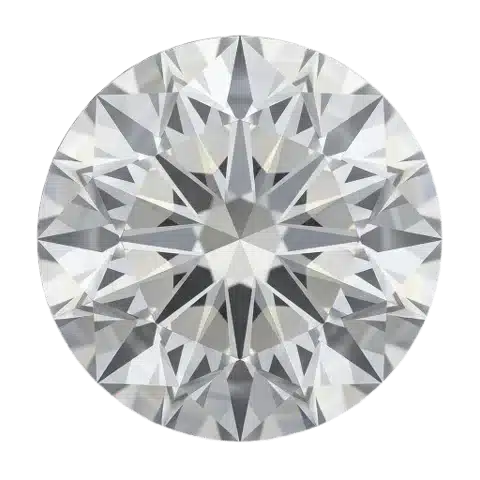
 Loose lab-grown diamonds10 shapes · IGI, GIA or NGTC reports
Lab-Grown Diamond Wedding Bands
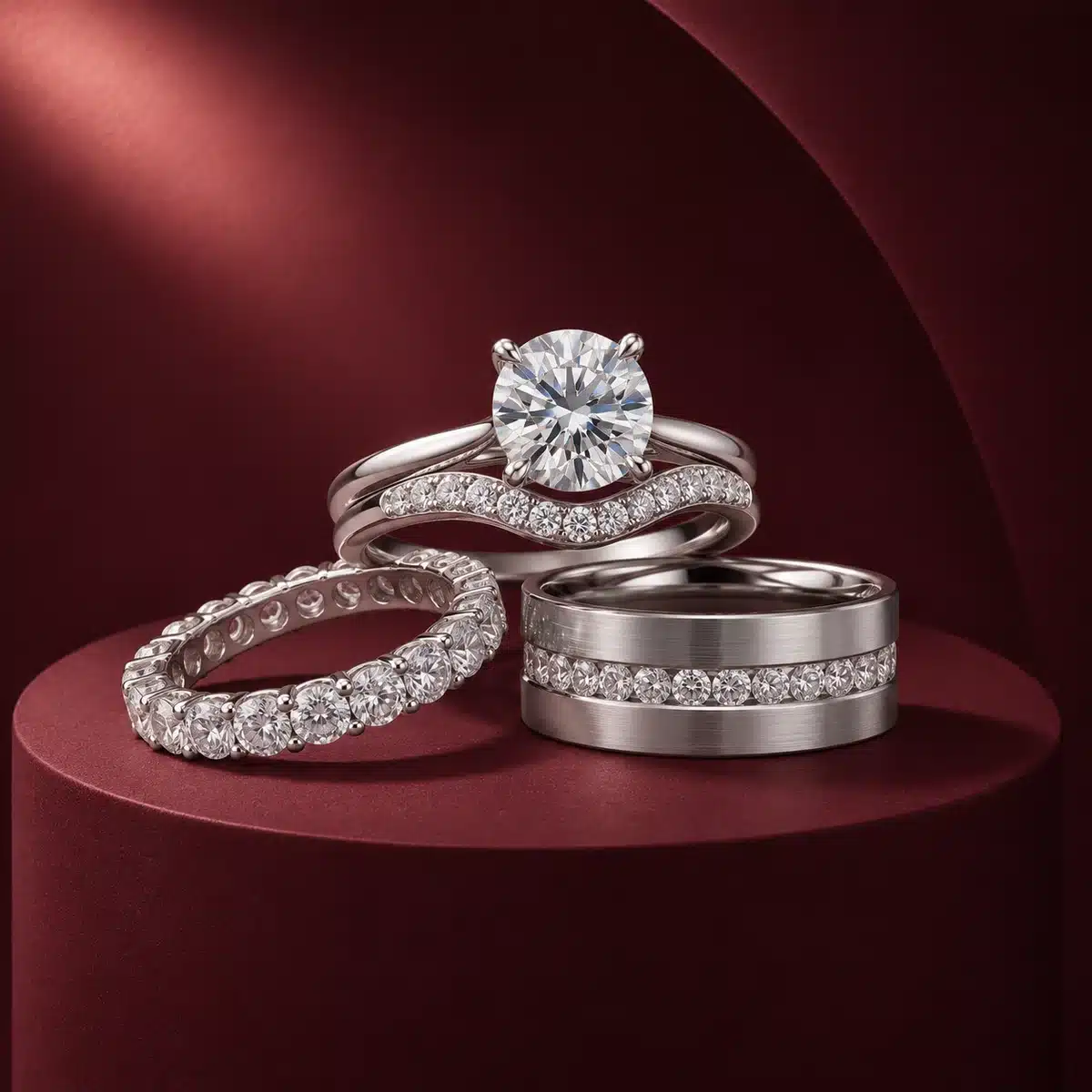
Lab-grown diamond wedding bands and eternity rings: full and half eternity bands, slim pavé bands, curved and chevron bands made to sit against an engagement ring, and men’s diamond bands. Each is made in 10K, 14K or 18K white, yellow or rose gold or in platinum, to your finger size and stone size. Wedding bands are where small stones matter most. Every diamond in a band is chosen to match its neighbors in size and color, so a band is quoted from the stone size, the finger size and the metal you choose. IGI, GIA or NGTC reports are available on request for stones that qualify.
Find Your Band
Choose by how the band will be worn: alone, beside an engagement ring, or for him.
9 bands in the list below; every style is made to your finger size.
All 9 pieces on this page, by name
- Round Lab-Grown Diamond Full Eternity Band
- Round Lab-Grown Diamond Half Eternity Band
- Oval Lab-Grown Diamond Eternity Band
- Pavé Lab-Grown Diamond Wedding Band
- Curved Lab-Grown Diamond Wedding Band
- Marquise Chevron Lab-Grown Diamond Band
- Men’s Channel-Set Lab-Grown Diamond Wedding Band
- Men’s Princess Lab-Grown Diamond Eternity Band
- Men’s Lab-Grown Diamond Signet Ring
Band Styles at a Glance
| Style | Where the diamonds sit | Resizing | Pairs well with |
|---|---|---|---|
| Full eternity | All the way round the band | Made to one size; very limited resizing | Any engagement ring, or worn alone |
| Half eternity | Across the top half; plain metal underneath | Can usually be resized through the plain section | Everyday wear, fingers that change size |
| Pavé band | Small stones set close together across the top | Harder to resize than a plain band | Solitaires and hidden halos |
| Curved (contour) band | Diamonds along a band shaped to follow the engagement ring | Depends on the stone layout | Halo, three-stone and low solitaire rings |
| Chevron band | A V-shape at the center, often with a marquise or pointed stones | Depends on the stone layout | Pear, marquise and oval centers |
| Channel band | Stones held between two metal walls | Harder to resize than a plain band | Men’s bands, active hands |
GIA’s setting guide describes pavé as small stones set closely together for a continuous surface of sparkle, and a channel as a row of stones secured in a narrow groove with little or no space between them.
Matching a Band to Your Engagement Ring
Three questions decide which band fits:
- Does the engagement ring sit low or high? A low solitaire or bezel usually lets a straight band sit flush. A halo, a three-stone ring or a high head often needs a curved or notched band to close the gap.
- What is the center shape? A chevron or V-band follows a pear, marquise or oval; a straight eternity band suits rounds and cushions.
- Which metals? GIA’s stacking guide notes that softer metals like gold can wear more quickly when stacked against platinum, and suggests a buffer ring or matching metals.
Send a photo or the product link of the engagement ring, ideally with a side view, and we suggest a band shape that sits against it.
Eternity Rings: Full or Half?
An eternity ring is often added on a significant anniversary; GIA’s stacking guide describes it worn above the engagement ring, completing a trio for past, present and future. A full eternity band shows diamonds from every angle but is made to one finger size, so measure carefully and, if it will be worn beside an engagement ring, measure with that ring on. A half eternity band keeps the diamonds where they are seen and leaves a plain lower band that can usually be resized later.
Men’s Lab-Grown Diamond Wedding Bands
Our men’s bands are wider, with the stones set flush or in a channel so the surface stays smooth: for example a band with round diamonds held in a channel, a princess-cut eternity band or a diamond signet ring. They come in gold or platinum, in widths and finishes (polished, brushed or matte) quoted to order. A men’s band can be made to match the partner’s band in metal and stone color, and there is a matching men’s tennis bracelet and tennis chain.
How to Choose a Lab-Grown Diamond Wedding Band
Lab-Grown Diamond Wedding Band Questions
Guides:
What is the difference between a wedding band and an eternity ring?
Can a full eternity band be resized?
Will a straight band sit flush against my engagement ring?
Are lab-grown diamond wedding bands durable?
Do you make men’s lab-grown diamond wedding bands?
Can retailers order bands in a run of sizes?
Lab-Grown Diamond Wedding Bands for Retailers and Brands
A wedding band program is a calibration job: dozens of small stones per band, the same look across every finger size. For retail and private label orders we agree per SKU:
- Stone size and tolerance for the calibrated stones, plus the color and clarity range, checked against a reference band.
- Size run: which finger sizes, and how stone count changes with size for eternity styles.
- Bridal sets: bands designed to sit against your engagement ring styles, or ours.
- Terms: samples at cost in 10–15 business days, small batches in 20–35; logo stamp, tags and boxes; NDA available; no fixed minimum order.
Sources: GIA: Ring stacking guide · GIA: Complete guide to engagement ring settings
Thank you
We’ll reply within one business day with price, stone options and delivery time.