
Lab-grown diamond reports can help you narrow the field, but they do not tell the whole story. This article shows how to read a certificate as a verification tool first, especially alongside a lab grown diamond value guide that explains where buyers often overpay in the 4Cs: confirm the lab, report number, shape, measurements, carat, color, clarity, finish grades, and any disclosure notes before judging the stone itself. That matters because two diamonds with similar grades can look very different once you see their size, brightness, overall appearance, and setting fit.
For the full framework, read Lab-Grown Diamond Certification Guide.
You will also see why some details deserve more weight than others. Color and clarity grades matter, but face-up appearance, bow-tie severity, transparency, and actual millimeter size can matter more in a real purchase. The goal is to help you decide which reports are worth further review, which stones need video or seller confirmation, and which diamonds are ready to compare confidently.
Laboratory-grown diamonds should be clearly identified as laboratory-grown, and they should not be presented as mined diamonds. A grading report can help document that origin, but the buyer should still check that the seller listing, report language, and any product description use consistent wording.
| What to Check | What It Helps Verify | Why It Matters |
|---|---|---|
| Lab name and report number | Document authenticity | Confirms the report matches a real stone |
| Measurements vs. carat weight | Visible size and proportions | Carat alone can hide a deep or small-looking stone |
| Color and clarity grades | Basic quality range | Useful for shortlist decisions, not final judgment |
| Cut grade and shape | Likely light performance | Round and fancy shapes need different review standards |
| Images, video, and face-up view | Sparkle, bow-tie, and transparency | Reports cannot show how the diamond actually looks |
| Fluorescence, inscription, and notes | Disclosure and matching details | Helps confirm identity and flag stones for closer review |
Quick Questions Before You Read
Q: Is a lab report enough to choose a lab-grown diamond?
No. It is a starting point for verification, but images, video, and setting fit still matter.
Q: Why does millimeter size matter if the carat is already listed?
Carat measures weight, not how large the stone looks face-up.
Q: Should I care more about IGI, GIA, or another lab?
The lab matters, but the report details, disclosure, and visual performance matter more.
Q: Are fluorescence or treatment notes automatic red flags?
Not always. They call for closer review, not an automatic rejection.
How to Use a Lab-Grown Diamond Certificate Before You Compare Stones
A lab-grown diamond certificate is best understood as a comparison document, not a final judgment of beauty. Buyers often use the word “certificate,” while labs may call the same document a diamond grading report or lab-grown diamond report. The practical question is the same: what does a diamond report show, and how should it affect the buying decision?
A grading report records the lab’s assessment of the diamond’s identity and measurable characteristics. That usually includes the diamond certificate number, shape, measurements, carat weight, color grade, clarity grade, cut-related information, and sometimes notes such as laser inscription, growth method, or post-growth treatment. An IGI report, GIA report, or another recognized lab report gives buyers a shared framework for comparison, which is useful when two stones look similar in a seller listing.
The mistake is treating the report as if it can make the entire decision for you. A reported lab-grown diamond can have strong grades and still look less appealing than another stone with similar or slightly lower grades. The report helps you narrow the field. It does not guarantee sparkle, face-up brightness, resale value, ethical sourcing, environmental impact, or whether the diamond will suit a specific ring design.
For buyers, the practical point is not just whether a diamond has a report, but whether the report, the seller listing, and the actual stone evidence agree with each other. A certificate is strongest when it can be verified, interpreted in context, and checked against visuals rather than treated as a stand-alone approval.
A grading report can narrow the comparison, but it should be read alongside the stone’s proportions, visual evidence, and intended jewelry use. The strongest certificate-aware decision usually comes from combining three checks: whether the document is traceable, whether the visible diamond supports the report details, and whether the stone is suitable for the setting or jewelry style being planned.
A grading report helps document key characteristics, but it should not be treated as a guarantee of beauty, value, or sourcing ethics. If a seller uses broad claims such as “responsible,” “sustainable,” or “conflict-free,” those claims should be supported by specific documentation rather than assumed from the presence of a lab-grown diamond report.
What a Diamond Certificate Can Confirm
A diamond certificate can confirm the basic identity of the stone being described. The report number links the document to a specific diamond, while the shape, measurements, and carat weight establish the physical profile of that stone. These details matter because two diamonds with the same headline grade can still differ in size, outline, and setting fit.
The report also shows the core 4Cs: carat, color, clarity, and, for some stones, cut grade. For round brilliant diamonds, the cut information may be more standardized. For fancy shapes, the report may list polish, symmetry, measurements, and proportions without giving the same kind of complete appearance judgment. A laser inscription, when listed, can also support identity verification because it may match the report number on the diamond’s girdle.
Some lab-grown diamond reports include production-related disclosures, such as CVD or HPHT growth method, or notes about post-growth treatment. These fields are useful for transparency, but they should not be read as simple “good” or “bad” labels. The buyer still needs to judge the actual stone, not just the terminology on the document.
What a Certificate Cannot Show by Itself
A certificate cannot fully show how the diamond performs in normal lighting. It will not tell you whether the stone has lively sparkle across the whole face, whether an oval has a distracting bow-tie, or whether a cushion has dark zones that remain visible when the diamond moves. These are appearance issues, not paperwork issues.
The report also may not reveal whether a diamond looks milky, hazy, glassy, or uneven in person. A clarity grade can describe inclusions under magnification, but it does not always explain how those features affect transparency or face-up appeal. This is where buyers often over-trust grades. A VS1 or VS2 diamond may still deserve close visual review if the inclusion type, placement, or overall appearance raises questions.
For elongated shapes such as oval, pear, marquise, and radiant cuts, visual review is especially important. The certificate can list measurements and finish grades, but it cannot reliably show whether the shape has a balanced outline, attractive facet pattern, or a bow-tie that feels acceptable to the buyer.
The Better Buyer Sequence: Report First, Visual Review Second
The most reliable buying sequence starts with the report but does not end there. First, confirm that the report number matches the seller listing. Then review the 4Cs, measurements, and any cut-related information so you understand what the diamond is supposed to be. After that, compare images or 360-degree video to see whether the stone’s real appearance supports the grades.
This order matters because it prevents two common mistakes. If you start with video alone, you may overlook documentation mismatches or incomplete report details. If you start and stop with the certificate, you may choose the stone that looks best on paper rather than the one that actually looks better in the ring.
At NUVU, we treat the grading report as the starting point for comparison, not the whole decision. The stronger approach is to use the report to eliminate poor matches, then use visual evidence and setting requirements to decide which diamond makes the most sense.
When a grading report is available, buyers should verify the report details through the issuing laboratory’s official report-check tool where available, then compare those details with the seller listing and the stone’s visual evidence.
What to Check Before You Decide
Before shortlisting a lab-grown diamond, confirm that the report number on the document matches the seller listing. If a laser inscription is listed, ask whether it can be verified by the seller or jeweler. When available, use the grading lab’s official report lookup to confirm that the document details match the diamond being offered.
Once the identity checks out, compare the report with actual images or 360-degree video. Look for face-up brightness, visible inclusions, shape outline, bow-tie severity in elongated cuts, and any haziness or dark areas. For an engagement ring or custom design, also confirm that the diamond’s measurements work with the intended setting before making a final decision.
Report Number, Lab Name, and Verification: The First Lines to Check
Before you compare color, clarity, or cut, check whether the document belongs to the exact diamond being sold. The diamond report number, grading lab name, and report type are the first lines that protect you from comparing a listing against the wrong document. An IGI diamond report, GIA diamond report, or report from another lab is only useful if it clearly connects to the stone in the seller’s inventory.
This is documentation integrity, not a lab-ranking exercise. IGI and GIA are both commonly seen in lab-grown diamond shopping, and other labs may also appear. The buyer’s first job is to identify the grading lab, confirm the report number, check the issue date if visible, and understand whether the document is a full grading report or a more limited report format.
Be careful with cropped images, partial screenshots, or listings that hide the report number. A seller may have practical reasons for controlling how documents are displayed, but missing information reduces your ability to verify the stone. If the report is not complete enough for certificate verification, ask for the missing details before treating the diamond as a serious option.
Why the Report Number Matters
The report number is the link between the document and the specific graded diamond. Without it, the report becomes a description that cannot be confidently tied to the stone you are considering. This matters most when online listings show multiple diamonds with similar carat, color, clarity, and shape.
A buyer looking at two 2.00 ct oval lab-grown diamonds may see nearly identical grades in the product titles. The report number is what separates one stone from the other. It helps prevent a practical but costly mistake: using the better-looking report to judge the wrong diamond.
If a laser inscription is listed, the inscription number should typically match the report number or correspond to it according to the lab’s format. Most buyers will not see this inscription unaided because it is microscopic, but seller confirmation or jeweler verification can support confidence before purchase.
How IGI, GIA, and Other Lab Reports May Look Different
Different grading labs use different layouts, terminology, and levels of detail. An IGI report may not look exactly like a GIA report, and a GCAL or other lab document may organize the same information differently. This does not automatically make one report more useful than another in every buying situation.
The essential fields are what matter first: report number, lab-grown disclosure, shape, measurements, carat weight, color grade, clarity grade, and finish details such as polish and symmetry. For round diamonds, the report may also include a cut grade and proportion details that help screen for performance. For fancy shapes, the report may provide enough data to narrow choices but still leave more visual judgment to the buyer.
A clean-looking report with missing core information is less useful than a less elegant report that clearly identifies the diamond and can be verified. The lab logo matters, but it should not distract from the more practical question: does the document give you enough reliable information to compare the stone responsibly?
When to Use the Lab’s Online Report Lookup
Use the grading lab’s official report lookup whenever it is available. To check diamond certificate number details, enter the report number directly on the lab’s website and compare the returned information against the seller listing. The shape, carat weight, measurements, color, clarity, and report type should be consistent.
A matching report lookup supports confidence, but it does not prove that the diamond is visually attractive or still in the same condition after grading. If the report is older, that alone does not make it unreliable. It simply makes seller confirmation more important, especially for a center stone, because the buyer should know that the listed diamond still matches the report and has not been damaged, recut, or confused with another stone.
If the lookup does not work, do not assume fraud immediately. Report databases, formats, and access tools can vary. The right response is to ask the seller for clarification, the full report copy, and confirmation from the issuing lab when appropriate.
In practical buying, verification should be treated as a chain rather than a single click. The report number should connect to the lab record, the lab record should match the seller’s description, and the description should match the stone shown in photos or video. If one link is missing, the diamond may still be legitimate, but the buyer has less evidence and should ask for more before relying on the listing.
Buyer Verification Checklist
Ask the seller for the full report number, a complete copy of the grading report, and confirmation that the diamond being sold is the same stone represented in the report. If the listing only shows a cropped document, request the full version before comparing that diamond against others.
If a laser inscription is listed, ask whether the seller can confirm it or whether a jeweler can verify it before the stone is set. Then compare the seller listing against the report details line by line: lab name, report number, shape, carat weight, measurements, color, clarity, and finish grades. Any mismatch should be resolved before you move on to judging the 4Cs.
Shape, Measurements, and Carat Weight: Reading Size Beyond the Number
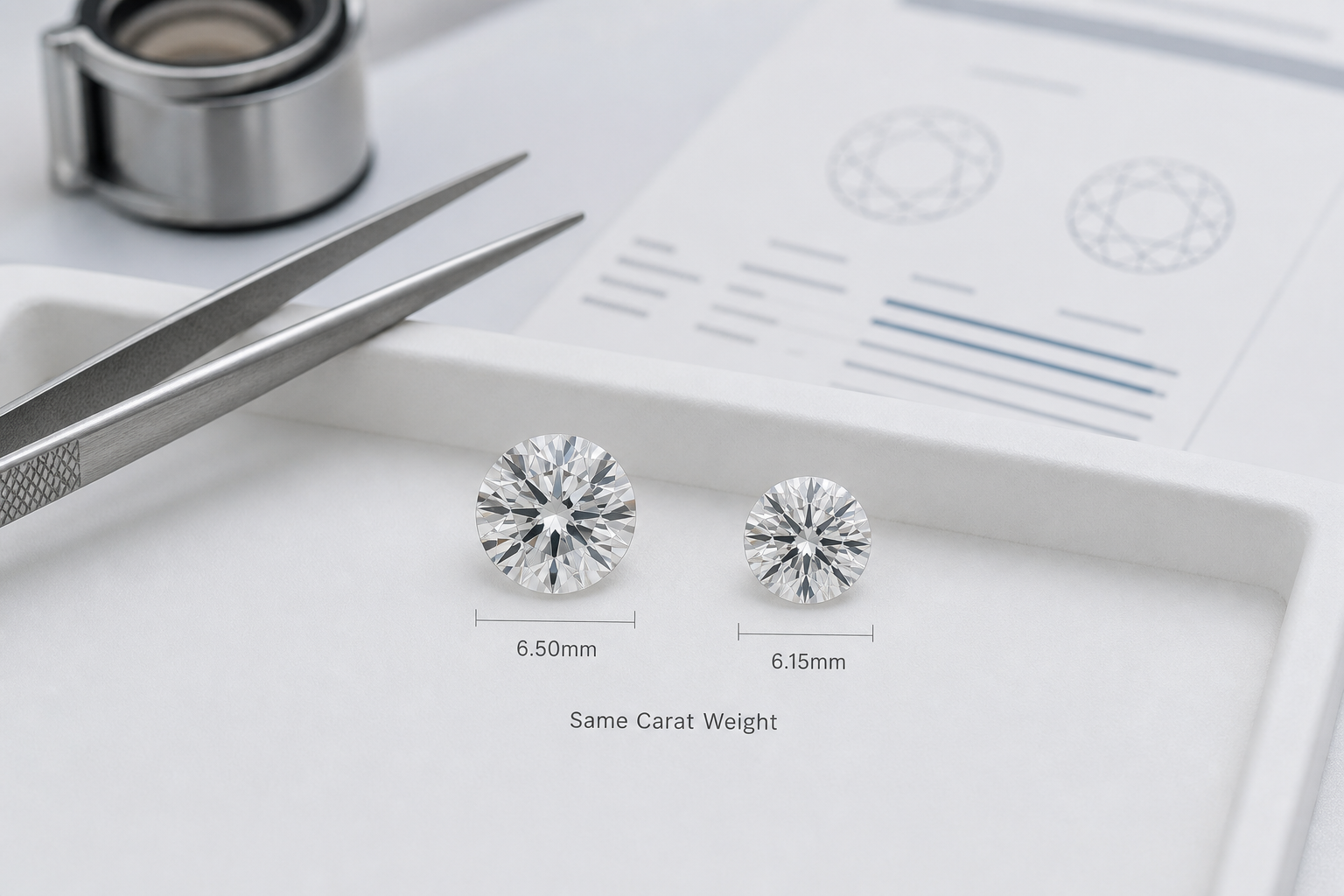
Carat weight is one of the most visible numbers on a diamond grading report, but it is not the same as visible size. Carat measures weight. Diamond measurements show the physical dimensions that affect face-up appearance, setting fit, and shape proportions. If you are comparing stones online, the millimeter size often tells you more about how large the diamond will look than the carat weight alone.
This is why two diamonds with the same carat can look different in real life. A deeper diamond may carry more weight below the girdle, where you do not see it face-up. Another diamond with a better spread may look larger from the top even if the carat weight is nearly the same. The practical risk is paying for weight that does not translate into visible presence.
For round brilliants, a well-cut 1.00 ct diamond often measures around 6.3 to 6.5 mm in diameter, while a well-cut 2.00 ct round often measures around 8.0 to 8.2 mm. These are useful reference ranges, not guarantees. Proportions and cut quality affect spread, and a diamond that looks unusually large for its weight may have tradeoffs in depth, light return, or durability.
Why Carat Weight Is Not the Same as Visible Size
Carat weight tells you how heavy the diamond is, not how wide it appears on the finger. A diamond with excessive depth can hide weight below the surface, making it look smaller than expected when viewed from the top. This matters most when buyers compare diamonds by carat first and assume the larger-looking stone will always be the higher-weight option.
A deeper stone is not automatically bad, but it should earn its place through good visual performance. If a 1.50 ct diamond faces up closer to what you would expect from a smaller stone, the report measurements help you catch that before buying. The better question is not “Which diamond has more carat?” but “How much of that weight contributes to attractive face-up size and light performance?”
How to Read Length, Width, and Depth
Diamond measurements usually appear in millimeters, often in a format such as 8.10 x 6.05 x 3.80 mm. For elongated shapes, the first number is typically the length, the second is the width, and the third is the depth. For round diamonds, the report may show a minimum and maximum diameter followed by depth.
Length and width control the face-up footprint. Depth helps show how the diamond’s weight is distributed vertically. If two ovals are both listed as 2.00 ct, but one measures 10.20 x 7.10 mm and another measures 9.70 x 7.20 mm, they will not look identical. One may appear longer and more slender, while the other may look slightly fuller. Neither is automatically better, but the measurements tell you what kind of visual presence to expect.
Depth percentage can also flag stones that need closer review. A very deep diamond may look smaller than its weight suggests. A very shallow diamond may appear spread out but lose brightness or show unwanted windowing, depending on the shape and cut. Measurements are not just technical data; they are an early warning system for appearance tradeoffs.
Length-to-Width Ratio for Fancy Shapes
For fancy shapes, length-to-width ratio helps describe the outline. It is calculated by dividing the length by the width. An oval with a 10.00 mm length and 7.00 mm width has a ratio of about 1.43, which many buyers would consider attractively elongated. The same ratio logic applies to emerald, radiant, pear, cushion, and marquise shapes.
Oval diamonds often look balanced around 1.30 to 1.45, depending on whether the buyer prefers a softer or more elongated shape. Emerald cuts often fall around 1.30 to 1.50, with lower ratios looking broader and higher ratios looking more slender. Radiant cuts may be nearly square around 1.00 or more elongated around 1.20 to 1.35.
These are preference ranges, not rules. A buyer choosing a solitaire engagement ring may prefer a longer oval because it visually lengthens the finger. A buyer choosing a three-stone ring may need a ratio that works with side stones and prong placement. The wrong ratio is not just a style issue; it can make the finished ring feel unbalanced even if the diamond grades look strong.
For custom design, the stone cannot be evaluated separately from the setting. A millimeter difference that looks minor on a report, especially when assessing diamond 4Cs by shape across round, oval, emerald, radiant, and pear stones, can affect prong position, basket height, halo spacing, and how secure the finished ring feels. This is why a “good size” on paper should still be checked against the intended mounting rather than assumed from carat weight alone.
For custom jewelry, stone measurements and setting compatibility should be confirmed before finalizing a purchase. This is especially important for elongated shapes, low-profile settings, bezels, halos, and any design where the center stone must align precisely with side stones or metalwork.
For custom design, trust comes from matching the stone to the setting, budget, and wearer’s daily use—not from choosing grades in isolation. A diamond with attractive report details may still be a poor match if its outline, depth, or length-to-width ratio creates design compromises that the wearer will notice every day.
Stone-to-Setting Fit Check
Before choosing a setting, confirm the diamond’s actual millimeter measurements, not just its carat weight. Prong placement, halo proportions, bezel fit, and side-stone alignment all depend on the stone’s physical dimensions. A setting designed around a generic “2 carat oval” may not fit every 2.00 ct oval well.
For custom rings, the stone and setting should be considered together. A diamond with beautiful grades can still be the wrong choice if it is too shallow for the design, too elongated for the side-stone layout, or too wide for the intended finger coverage. The report gives the measurements; the setting decision determines whether those measurements actually work.
Color Grade on Lab-Grown Diamond Reports: What the Letter Really Means
The diamond color grade on a lab-grown diamond report tells you how much body color the stone showed under controlled grading conditions. For white diamonds, the scale usually begins at D color, which is considered colorless, and moves downward as warmth becomes more noticeable. This letter is useful because it gives buyers a common comparison point, but it does not tell the full story of how the diamond will look in a ring.
The practical question is not simply “what color grade should I choose for a lab-grown diamond?” It is whether the color will be visible in the size, shape, lighting, and setting you are actually considering. A G color diamond may look crisp and near colorless in one design, while the same grade may show more warmth in a larger stone, an open step cut, or a bright white metal setting.
Where Color Appears on the Report
Color on a diamond certificate is usually listed as a letter grade near the other 4Cs, often beside carat weight, clarity, and cut-related information. For standard white lab-grown diamonds, the familiar D-to-Z scale is commonly used, with D, E, and F considered colorless and G, H, I, and J falling into near-colorless or faint-warm territory depending on the exact grade and viewing situation.
Fancy-color lab-grown diamonds are handled differently and should not be compared against this white-diamond scale in the same way. A pink, blue, yellow, or other fancy-color diamond is judged by color presence and quality rather than the absence of color. If you are shopping for a white engagement ring center stone, stay focused on the standard color grade and how that grade relates to face-up appearance.
Why Shape and Size Affect Color Visibility
Color becomes easier to notice as diamond size increases. A one-carat round brilliant in G or H color may face up very white to many buyers, while a three-carat stone with the same grade may reveal more warmth because there is simply more diamond to look through. This is one reason larger center stones deserve more careful video review instead of relying on the letter grade alone.
Shape also changes how color appears. Round brilliants often hide subtle warmth better because their facet pattern creates strong sparkle and visual movement. Step cuts such as emerald and Asscher cuts are less forgiving because their broad, open facets act more like windows into the stone. Ovals, pears, cushions, and radiants can vary widely, especially near the ends or corners where color may concentrate.
For many buyers, D-F is the safer range when they want a clearly colorless grade and do not want to think much about warmth. G-H is often a practical zone for a near-colorless look, especially when the diamond has strong cut quality and the buyer has reviewed real images or video. I-J should be approached more selectively, not because those grades are automatically poor, but because visible warmth becomes more likely in larger stones, elongated shapes, and white metal settings.
How Metal Choice Changes Color Perception
The setting metal can either highlight or soften the impression of color. Platinum and white gold create a bright white frame around the diamond, which can make warmth easier to notice if the stone is in the lower near-colorless range. This does not mean every diamond in white metal must be D, E, or F, but it does mean buyers who are sensitive to warmth should be cautious with I or J grades for prominent center stones.
Yellow gold and rose gold are more forgiving because their own warmth can make near-colorless diamonds feel harmonious rather than slightly tinted. In some designs, an H color diamond may look balanced and attractive in yellow gold, while the same stone might appear warmer than expected in a platinum solitaire. The tradeoff is personal: a higher color grade gives more visual neutrality, while a slightly warmer grade may work well if the design supports it.
Color judgment is also affected by how the diamond is photographed. Bright studio lighting, dark backgrounds, and strong reflections can make warmth harder or easier to notice depending on the setup. When color sensitivity matters, it is useful to compare stones in similar viewing conditions and, when possible, against the setting metal you plan to use.
What This Means in a Real Purchase
If a buyer is choosing a 2.00 ct oval lab-grown diamond for a platinum solitaire, an F or G color may feel safer, especially if they want a bright white look and know they are sensitive to warmth. Ovals can show color more readily at the ends, and platinum gives the eye a white comparison point, so the margin for visible warmth is smaller.
If that same buyer chooses a yellow gold setting and reviews a clear video showing strong, even brightness, an H color may still look attractive depending on the individual diamond. The report narrows the range, but the final judgment should come from how the stone faces up in realistic viewing conditions.
Clarity Grade and Inclusions: What the Report Says and What Your Eye May See
The diamond clarity grade on a lab-grown diamond report describes internal inclusions and external blemishes seen under magnification. It is not a direct promise that the diamond will look flawless to the naked eye, and it is not a complete description of where an inclusion sits, how dark it is, or whether it affects transparency.
This is where buyers often overpay or under-check. A VVS2 diamond may be extremely clean on paper, but the visible difference from a well-chosen VS1 or VS2 may be impossible to see in normal wear. On the other hand, an SI1 with a dark crystal under the table can be much more noticeable than the grade alone suggests. The useful question is not only “is VS2 good for a lab-grown diamond?” but whether that particular VS2 is eye-clean in the size and shape you are buying.
Where Clarity Appears on the Report
Clarity on a diamond certificate is usually listed as a grade such as Flawless, Internally Flawless, VVS1, VVS2, VS1, VS2, SI1, SI2, or included grades. These grades move from extremely difficult-to-see characteristics under magnification toward inclusions that may become easier to find without magnification.
For many lab-grown diamond buyers, VS1 and VS2 are practical starting points because they often balance clean appearance with sensible value. VVS grades can be worthwhile for step cuts, larger diamonds, or buyers who personally value a very high clarity grade. SI grades require more caution, especially if the seller does not provide strong magnified imagery or 360-degree video.
Why Two VS2 Diamonds Can Look Different
Two diamonds with the same VS2 clarity grade can behave very differently in real life. A small feather near the edge may be hidden by a prong or difficult to see face-up. A dark crystal under the table, even if small, can draw the eye because it sits in the most visible part of the diamond. Location often matters more than the grade name.
Inclusion contrast also matters. White or transparent inclusions may blend into the diamond more easily, while black or reflective inclusions can be easier to notice. Shape plays a role as well. Round brilliant, oval, pear, and radiant diamonds often hide inclusions better because their facet patterns create more visual movement. Emerald and Asscher cuts usually need stricter clarity selection because their long, open facets make internal features easier to spot.
An eye-clean diamond is one where inclusions are not noticeable to the unaided eye in normal viewing. That standard depends on viewing distance, lighting, eyesight, diamond size, and the buyer’s tolerance. A diamond that looks eye-clean in a ring at arm’s length may still show inclusions in a magnified video, and that alone is not a problem unless those inclusions affect normal appearance or transparency.
Clarity Plots and Comments: When They Matter
Some grading reports include a clarity plot showing the approximate location and type of inclusions. Others, especially more compact report formats, may rely more heavily on written comments. A plot can be helpful, but it should not be treated as a perfect visual map of what you will see in person.
Comments deserve attention when they mention clouds, graining, or additional inclusions not shown. These notes are not automatically red flags, but they should prompt closer visual review if the diamond appears hazy, sleepy, or less crisp in video. The mistake is ignoring comments entirely because the main clarity grade looks acceptable.
Certificate and Visual Review Check
Use the certificate to identify the clarity grade, then inspect magnified photos or 360-degree video to see whether inclusions are visible face-up. Do not reject a diamond simply because an inclusion appears under magnification; magnified media is designed to reveal details that may never be seen in normal wear.
For emerald, Asscher, and larger diamonds, ask for extra visual confirmation if the clarity grade is VS2 or lower. These stones leave less room for hidden issues, and a single poorly placed inclusion can matter more than the overall grade suggests.
Cut, Polish, and Symmetry: The Finish Grades That Influence Appearance
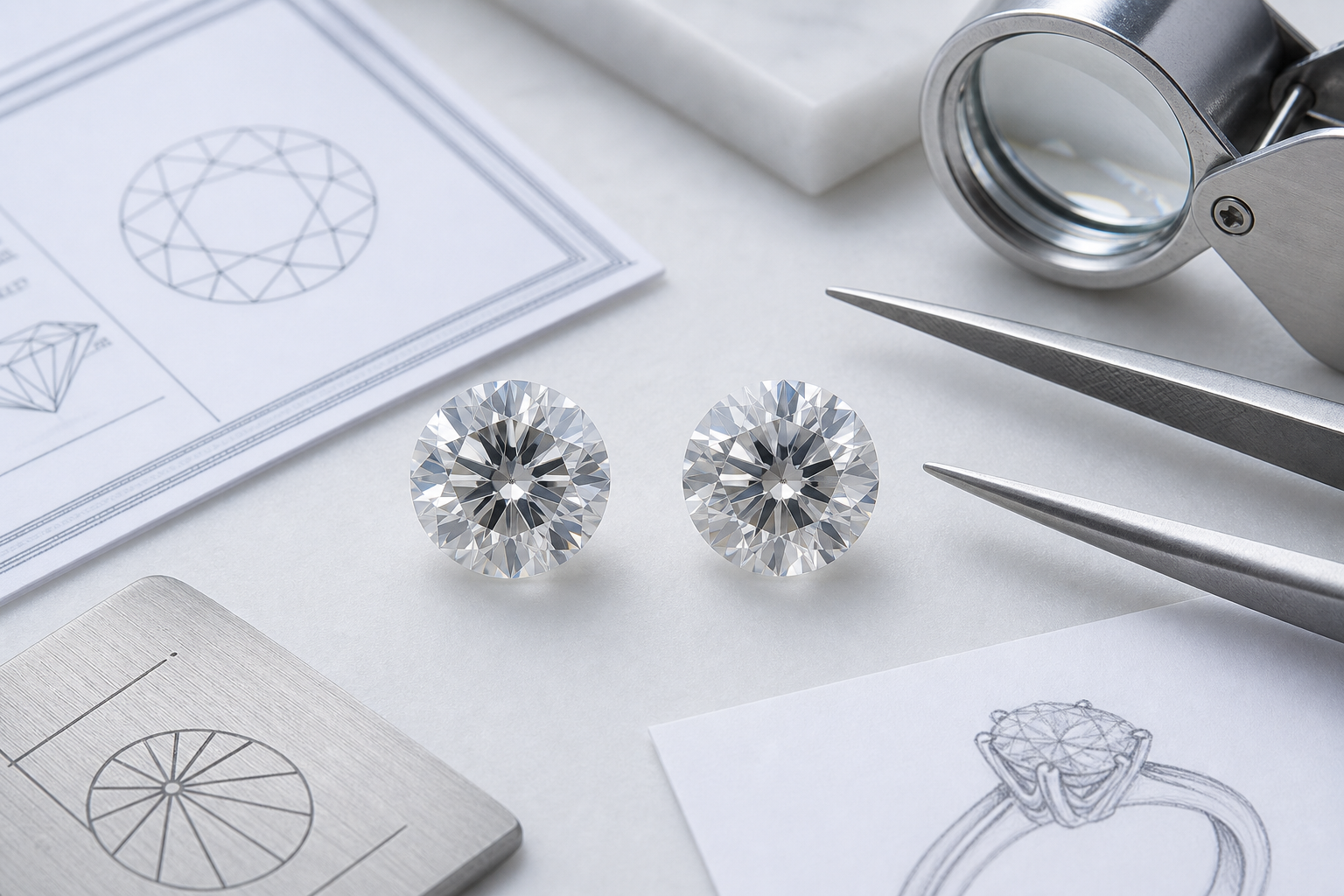
The diamond cut grade is often the report field most closely tied to beauty, but it is also one of the easiest to misunderstand. Cut affects how efficiently a diamond handles light, which influences brightness, fire, contrast, and overall liveliness. In many buying situations, a well-cut diamond with slightly lower color or clarity can look better than a higher-grade stone with weaker light performance.
On a certificate, cut-related information may include an overall cut grade, polish and symmetry grades, proportions, table percentage, depth percentage, and sometimes crown and pavilion angles. These details are useful screening tools, not automatic proof that a diamond will sparkle beautifully in every viewing condition.
How Cut Grade Appears on Round Diamond Reports
Round brilliant diamonds are the shape most likely to receive an overall diamond cut grade, such as Excellent, Ideal, or a similar term depending on the grading lab. The exact terminology can vary between IGI, GIA, GCAL, and other report formats, so buyers should read the actual report rather than assuming every lab uses identical language.
For round diamonds, an Excellent cut or Ideal cut grade is generally a stronger starting point than a lower cut grade, but it should still be checked against proportions. As a screening reference, many well-performing round brilliants fall around a 54 percent to 58 percent table, 60 percent to 62.5 percent depth, 34 to 35 degree crown angle, and 40.6 to 41.0 degree pavilion angle. These ranges are not a guarantee, but they help buyers avoid stones with proportions that may look overly deep, shallow, dark, or less balanced.
Why Fancy Shapes Need More Than Report Grades
Fancy shapes do not always receive the same kind of overall cut grade as round brilliants, and that changes how the report should be used. Ovals, pears, cushions, radiants, emerald cuts, and other non-round shapes need more visual judgment because beauty depends heavily on outline, facet pattern, brightness distribution, and shape-specific effects.
For elongated shapes, the bow-tie effect is a key issue that a report may not fully describe. A mild bow-tie can be normal and even give the stone contrast, but a heavy dark band across the center can make the diamond look dull in motion. For cushions and radiants, buyers should watch for crushed-ice patterns that look busy or uneven if that is not the appearance they want. For emerald cuts, the concern is less sparkle volume and more clean, even flashes with minimal dead zones.
In practical buying, cut is where many comparisons become misleading. A report can show strong finish grades, but the buyer still needs to decide whether the diamond’s light pattern is attractive for the intended style. Some buyers prefer bold flashes, some prefer a more glittery appearance, and some prioritize even brightness; those preferences are not fully captured by one grade.
Polish and Symmetry: Useful, But Not the Whole Story
Polish refers to the quality of the diamond’s surface finishing, while symmetry describes how well facets are aligned and arranged. Excellent polish and symmetry are reassuring because they suggest careful finishing, and Very Good grades may still be acceptable depending on the diamond and the buyer’s priorities.
The common mistake is treating excellent polish and symmetry as proof of excellent light performance. They are finish grades, not a complete cut analysis. A diamond can have excellent polish and symmetry but still have proportions or a facet pattern that produces dark areas, weak brightness, or an unappealing face-up look.
How to Verify This Before Buying
For round diamonds, compare the cut on the diamond certificate with table, depth, crown angle, and pavilion angle when those numbers are available. If the diamond has a strong cut grade but unusual proportions, treat that as a reason to review video more carefully rather than accepting the grade at face value.
For fancy shapes, prioritize clear videos in more than one lighting condition. Look for obvious dark zones, uneven brightness, a distracting bow-tie, an unbalanced outline, or corners that appear too dark. Cut quality is where the report can narrow the field, but the final decision should come from how the diamond actually performs face-up.
Fluorescence, Inscription, Growth Method, and Treatment Notes
Some of the most useful details on a lab-grown diamond report are not part of the main 4Cs. Diamond fluorescence, laser inscription, lab-grown diamond growth method, and treatment notes can all affect how confidently you verify the stone and understand its disclosure history. These fields should not be treated as automatic deal-makers or deal-breakers, but they can tell you when a closer look is needed.
The practical rule is simple: use these fields to confirm identity and transparency, then judge the actual diamond through images, video, and seller documentation. A report may say “None” for fluorescence, list an inscription number, identify a CVD diamond or HPHT diamond, or include a post-growth treatment note. None of that replaces evaluating how the stone looks face-up.
Fluorescence: Why It Is Listed and When to Look Closer
Fluorescence describes how a diamond reacts under ultraviolet light. On many diamond grading reports, this field appears as None, Faint, Medium, Strong, or a similar term depending on the lab. For most buyers, none or faint fluorescence is not something to overthink, especially if the diamond looks bright and clean in normal viewing conditions.
The question “does fluorescence matter in lab-grown diamonds” depends on the degree and the individual stone. Stronger fluorescence deserves more visual review, not immediate rejection. The concern is not the word on the certificate by itself; the concern is whether the diamond appears hazy, oily, or less transparent in photos or video. If the stone looks crisp in multiple lighting environments, fluorescence may have little practical effect. If the images look soft or cloudy and the report shows stronger fluorescence, ask for more confirmation before buying.
Laser Inscription: Matching the Stone to the Report
A laser inscription is a microscopic marking, usually placed on the girdle, that may match the report number on the grading document. This is one of the most useful identity checks because it helps connect the physical diamond to the lab-grown diamond report. It does not improve beauty or value by itself, but it reduces the risk of confusing one stone with another.
Most buyers will not be able to see the inscription unaided. That is normal. The more realistic approach is to ask whether the diamond has a laser inscription, whether the inscription number matches the report, and whether the seller or jeweler can verify it before purchase or setting. If a listing claims the diamond is certified but cannot provide the full report number or confirm the inscription when one is listed, that is a transparency issue worth resolving before moving forward.
CVD, HPHT, and Post-Growth Treatment Notes
CVD and HPHT are the two main growth methods used to create lab-grown diamonds. Some reports identify the lab-grown diamond growth method, while others may vary in how much detail they provide. A certificate may also include report comments about post-growth treatment, depending on the diamond, the grading lab, and the report format.
Buyers often search “CVD vs HPHT on certificate” looking for a simple winner, but that is the wrong way to use the field. A well-selected CVD diamond can look excellent, and a well-selected HPHT diamond can also look excellent. The growth method is a disclosure detail, not a complete appearance grade. What matters more in the final decision is whether the stone has strong visual performance, appropriate color and clarity for the design, clean documentation, and no appearance issues that the certificate alone cannot reveal.
Post-growth treatment notes should be read carefully but not sensationalized. Treatment disclosure helps you understand how the diamond reached its current appearance, but it does not automatically mean the diamond is unattractive or unsuitable. The better question is whether the seller clearly discloses the report details and whether the actual diamond still meets your expectations in video, lighting, and setting fit.
When growth method or post-growth treatment is relevant, buyers should look for clear disclosure in the grading report or seller documentation. HPHT and CVD are commonly used as growth-method terms for laboratory-grown diamonds; HPHT may also appear in treatment contexts in some cases, so the wording on the specific report matters.
Transparency around growth method and treatment is most useful when it is specific. Broad claims about responsibility or sustainability should be supported by clear information rather than assumed from the word “lab-grown” alone. Buyers who care about production context should ask what documentation or disclosure is available and separate those facts from general marketing language.
Environmental and sustainability claims should be specific, documented, and limited to what can be substantiated. Lab-grown diamonds offer a different sourcing path from mined diamonds, but a grading report alone does not document energy use, production practices, carbon claims, or broader supply-chain responsibility.
Seller Questions Worth Asking
- Does the diamond have a laser inscription, and does it match the report number?
- Can the seller confirm that the listed diamond is the exact stone represented by the report?
- Does the report identify the stone as CVD or HPHT?
- Are there any post-growth treatment notes or report comments that should be reviewed before purchase?
- Can the seller provide images, video, or verification support if fluorescence is medium, strong, or visually concerning?
How to Compare IGI, GIA, and Other Lab-Grown Diamond Reports Without Overranking Them
Comparing an IGI vs GIA lab-grown diamond report is common, especially online, but the lab name should not become a shortcut that replaces judgment. IGI reports are widely seen in the lab-grown diamond market, GIA also grades lab-grown diamonds, and buyers may also encounter a GCAL report or documentation from another diamond lab. The useful question is not simply which logo appears at the top. The better question is whether the report gives you enough verified information to compare the actual stone responsibly.
A strong lab-grown diamond grading report should clearly identify the diamond, show that it is lab-grown, list the core grades, provide measurements, include cut or finish information where applicable, and offer a verification path when available. If two diamonds have similar grades but different labs, treat the report as one input. The decision should still include proportions, visual review, seller consistency, and whether the documentation matches the listing exactly.
Why Different Labs Use Different Formats
Diamond reports do not all look the same. One lab may place measurements near the top, another may emphasize the grading summary, and another may include a different level of detail in comments, inscription information, or growth method disclosure. Terminology can also vary, especially around cut grades, report types, and lab-grown disclosure language.
This is why a buyer should learn to find the essential fields rather than expecting every certificate to follow the same layout. A different format is not automatically a problem. A missing identity field, vague lab-grown disclosure, or incomplete measurement information is more concerning than a report that simply looks unfamiliar.
What Matters More Than the Lab Logo Alone
The lab logo matters, but it should not outweigh the document’s usefulness. A report that is complete, verifiable, and consistent with the seller listing gives you more decision value in a lab grown diamond 4Cs guide context than a recognizable logo attached to a cropped image or partial screenshot. For diamond certificate comparison, completeness and traceability are the first priorities.
Look for a clear report number, matching carat weight, matching shape, full millimeter measurements, color and clarity grades, cut or finish grades where available, and an explicit lab-grown identification. Then compare those details against the seller’s listing and the diamond’s actual images or video. If the report supports the visual review, it is doing its job. If the report leaves basic questions unanswered, the lab name alone should not make you comfortable.
When a Report Difference Should Trigger More Questions
Some differences between reports are normal. Some should slow the purchase down. A missing report number, an unclear lab-grown disclosure, incomplete measurements, or a mismatch between the listed carat weight and the report should prompt follow-up. The same applies if the listing says oval but the report says a different shape, or if the seller will not provide the full document.
Questions like “is IGI certificate good for lab-grown diamonds” or “should I buy GIA or IGI lab-grown diamond” are better answered through the specific report in front of you. A complete, verifiable IGI report can be useful. A complete, verifiable GIA report can be useful. A GCAL report or another lab report may also be useful if it clearly identifies the stone and supports comparison. The risk is not choosing the “wrong” well-known lab; the risk is relying on incomplete documentation that cannot be checked against the diamond being sold.
Report Comparison Checklist
- Confirm that the report shows a full report number and, when available, an online verification path.
- Check that the diamond is clearly disclosed as lab-grown.
- Match the report’s shape, carat weight, color, clarity, and measurements to the seller listing.
- Review cut, polish, symmetry, fluorescence, inscription, growth method, and report comments where provided.
- Ask for clarification if the report is cropped, the listing is inconsistent, or the seller cannot provide the full grading document.
Connecting Certificate Data to Real Appearance: A Practical Buyer Scenario
A diamond certificate and appearance can tell two different parts of the same story. The report helps you compare lab-grown diamonds on consistent terms, but the final choice often depends on details that only become obvious in a lab-grown diamond visual review. This is especially true for fancy shapes, where outline, bow-tie effect, and brightness distribution can vary even when the report grades look nearly identical.
Scenario Setup: Two Similar Reports, Two Different Stones
Maya is choosing a center stone for an engagement ring and is comparing two 2.00 ct oval lab-grown diamonds. Both are listed as F color and VS1 clarity. Both have reports from recognized grading labs, both are described as excellent or very good in finish, and both appear strong on paper.
The difference starts with the measurements and video. Diamond A measures 10.25 x 7.10 mm and has a slightly larger face-up spread. In the 360-degree video, however, it shows a darker bow-tie across the center that remains visible as the stone turns. Diamond B measures 10.05 x 7.02 mm, so it is marginally smaller on paper, but the video shows more even brightness through the center and a cleaner outline for the solitaire setting Maya wants.
How the Report Narrows the Choice
The reports still do important work. Maya first confirms that each report number matches the seller listing. She checks that both stones are oval lab-grown diamonds, verifies the carat weight, compares the F color and VS1 clarity grades, and reviews the measurements. The certificates also help her confirm that neither listing is being compared against the wrong document.
At this point in a real purchase, the most useful seller support is not pressure to choose quickly, but careful documentation handling. A buyer should be able to ask for the full report, confirm the report number, and receive a clear answer about whether the video, listing, and grading document all refer to the same diamond. This type of communication is a meaningful trust signal because it reduces confusion without exaggerating what the report can prove.
For buyers working with NUVU on a loose diamond or custom setting, the same certificate-aware process applies: first confirm the lab report and listing details, then review visuals, then check whether the stone’s dimensions fit the design. That sequence helps keep the discussion practical, especially when two stones have similar grades but different face-up personalities.
At this stage, the reports tell her both diamonds are serious candidates. They eliminate obvious mismatches, confirm the basic grade range, and make the comparison more organized. What they do not do is decide which oval will look better in the ring. The certificate can narrow the field, but it cannot fully show the face-up personality of each stone.
How Visual Review Changes the Final Decision
Once Maya compares the certificate versus diamond video, Diamond B becomes the stronger choice for her ring, even though Diamond A has a slightly larger spread. The visible size advantage is not enough to outweigh the darker bow-tie and less even brightness. In normal wear, the center of the diamond will be seen constantly; a persistent dark zone is harder to ignore than a small measurement difference.
This is the kind of decision a report cannot make for you. If the buyer’s priority were maximum finger coverage, Diamond A might still be tempting. For an engagement ring where balanced sparkle and clean face-up appearance matter more, Diamond B is the safer pick. The better diamond is not always the one that looks strongest in one certificate field; it is the one where the report, visuals, proportions, and setting plan work together.
Decision Framework for Similar Certificates
If two lab-grown diamonds look equal on paper, compare them in this order: verified report match, millimeter measurements, shape outline, face-up brightness, visible inclusions, bow-tie or dark zones, and compatibility with the intended setting. The first step protects you from documentation errors. The later steps protect you from choosing a stone that grades well but does not look as strong in real life.
For a center stone, especially an oval, pear, cushion, radiant, emerald cut, or other fancy shape, the visual review should carry real weight. A slightly smaller diamond with better brightness and cleaner proportions can be the better purchase than a larger stone with distracting darkness or an awkward outline.
Common Mistakes Buyers Make When Reading Lab-Grown Diamond Certificates
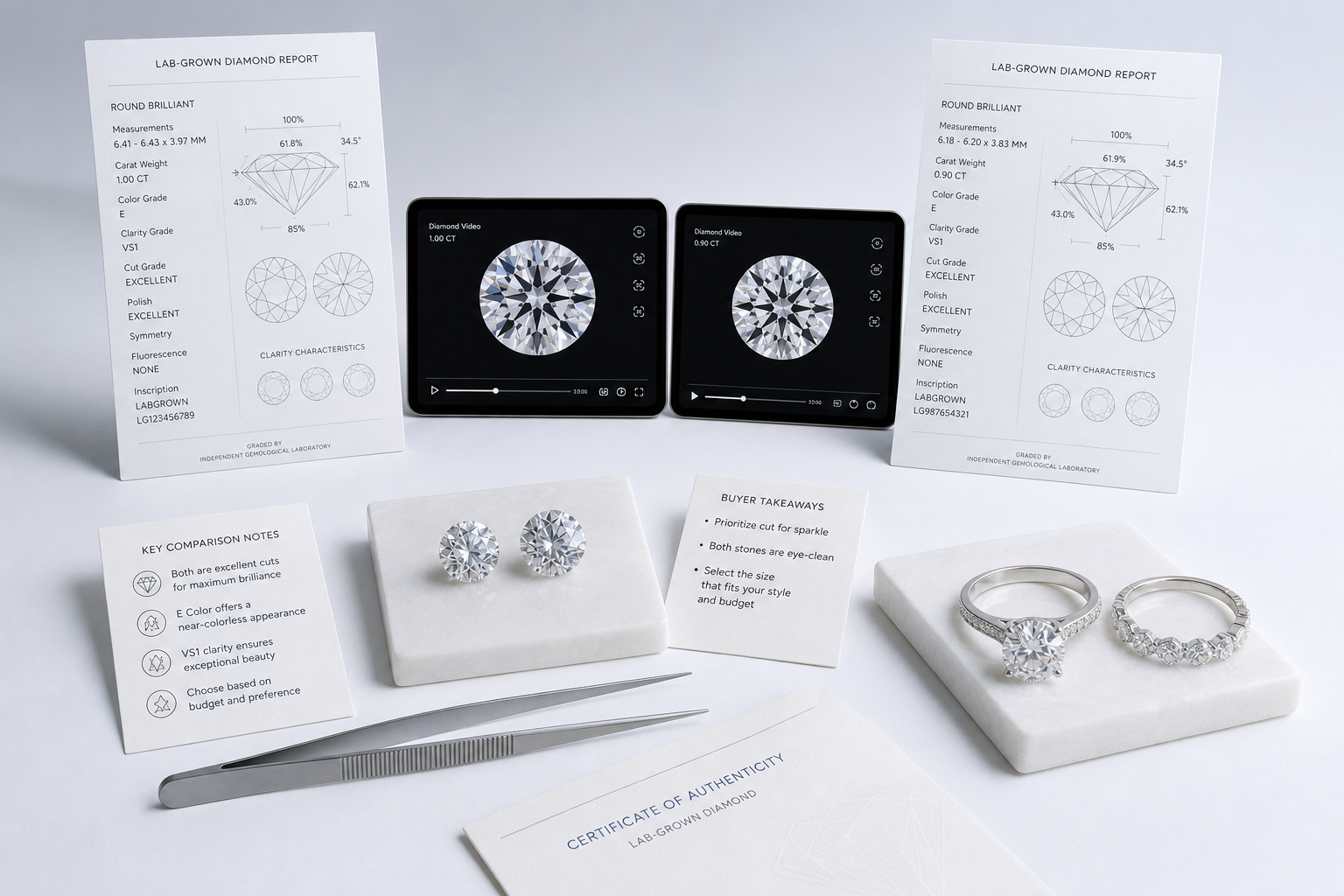
Most diamond certificate mistakes come from treating the report as more complete than it is. A lab-grown diamond report is useful because it gives buyers a shared language for comparing 4Cs, measurements, finish grades, comments, and identity details. The problem starts when a buyer reads one field in isolation and assumes it settles the decision.
The better way to read a diamond report is to use it as a filter. It should help you remove mismatched or poorly documented stones, then point you toward the diamonds that deserve closer visual inspection. If the report, seller listing, images, and measurements do not tell the same story, the safest move is to pause and ask for clarification before buying.
Mistake 1: Treating the 4Cs as the Whole Decision
The 4Cs matter, but they are not the whole diamond. Color, clarity, cut, and carat tell you important graded characteristics, yet they do not fully show face-up beauty, brightness distribution, shape appeal, or whether the diamond works in the setting you want.
This mistake is especially common when two diamonds look similar on paper. A buyer may see the same carat weight, color grade, and clarity grade, then assume the stones are interchangeable. In practice, proportions, measurements, facet pattern, and visual performance can make one stone look more balanced than the other. The corrective action is simple: after checking the 4Cs, compare millimeter measurements, proportions, images or video, and setting fit before making the final choice.
Mistake 2: Comparing Carat Without Comparing Measurements
Carat is weight, not visible size. A 2.00 ct diamond can look slightly larger or smaller than another 2.00 ct diamond depending on how its weight is distributed. If more weight sits in depth rather than spread, the diamond may not appear as large from the top as the carat number suggests.
This is one of the most practical lab-grown diamond buying mistakes because it affects both appearance and design fit. A buyer choosing a center stone for an engagement ring should look at the length, width, and depth in millimeters, not just the carat weight. The seller listing should match the report, and the actual dimensions should be suitable for the intended setting, especially for halos, bezels, side stones, and custom ring designs.
Mistake 3: Assuming Higher Color or Clarity Always Means Better Value
Higher color or clarity grades may be desirable, but they are not automatically the better purchase. A D color or VVS clarity diamond can cost more than a G color or VS clarity diamond, but the visible difference may be small once the stone is set and viewed in normal conditions. Paying for a grade your eye cannot appreciate is not always poor judgment, but it should be a conscious choice rather than an automatic upgrade.
Prices can change with market conditions, report type, seller channel, and stone-specific details, so exact comparisons should be verified at the time of purchase. Buyers should compare like-for-like specifications before treating one diamond as a better value than another.
The better question is whether the grade improves the diamond in a way that matters for your specific purchase. A large emerald cut in platinum may justify stronger color and clarity because warmth and inclusions are easier to notice. A smaller round brilliant in yellow gold may not require the same grade level to look bright and clean. If you want a deeper explanation of how the 4Cs influence buying decisions beyond the report, a full 4Cs guide is the better place to go next.
Mistake 4: Accepting an Unverified or Cropped Report
A cropped screenshot is not the same as a complete diamond grading report. If the diamond report number is missing, the lab name is unclear, the lab-grown disclosure is hidden, or the seller listing does not match the report, the buyer does not have enough information to make a clean comparison.
This does not mean every incomplete image is evidence of a problem. Sometimes listings are formatted poorly or documents are displayed in shortened form. Still, missing identity details reduce transparency. Ask for the full report, confirm the report number, and use the lab’s report lookup when available. If the seller cannot provide the information needed to verify the stone, that is a stronger warning sign than a slightly lower color or clarity grade.
Pre-Purchase Confirmation List
- Confirm that you have the full grading report, not only a cropped image or partial screenshot.
- Check that the diamond report number matches the seller listing and any available lab report lookup.
- Verify that the report clearly identifies the stone as lab-grown.
- Compare the report’s shape, carat weight, measurements, color, clarity, and finish grades against the listing.
- Review available images or diamond video instead of relying on grades alone.
- Check actual millimeter measurements for setting fit, especially for center stones and custom designs.
- Ask for written answers about laser inscription, report comments, setting compatibility, or documentation if anything is unclear.
When a Certificate Is Enough to Shortlist, and When You Need More Information
A lab-grown diamond with a complete, verifiable report can be enough to shortlist a stone. It tells you whether the basic facts line up: identity, lab-grown status, shape, measurements, carat, color, clarity, cut-related grades, and report comments. That is enough to decide whether a diamond belongs in your comparison set.
It is usually not enough to make the most confident final decision by itself. The level of extra review should depend on the risk of the purchase. A small accent diamond may not need the same scrutiny as a 2.50 ct oval center stone. A simple ready-made design may be easier to evaluate than a custom ring where the stone’s exact dimensions and outline affect the entire setting.
Enough to Shortlist: Clear Report, Matching Listing, Strong Basic Grades
A certificate is doing its job when the report is complete, the report number is verifiable, and the seller listing matches the document without unexplained differences. If the diamond has the right shape, size range, color, clarity, and finish grades for your goals, it can move into serious consideration.
This is where a diamond buying checklist should be practical rather than excessive. You do not need to overanalyze every minor field before shortlisting. First remove diamonds with missing documentation, inconsistent measurements, unclear lab-grown disclosure, or no useful visual support. Then compare the remaining options more carefully. A clean report narrows the field; it does not crown the winner.
Need More Review: Large Stones, Fancy Shapes, or Custom Settings
The larger and more visually distinctive the diamond, the more important visual review becomes. Large stones make color, inclusions, transparency issues, and proportion differences easier to see. Fancy shapes such as oval, pear, emerald, cushion, radiant, and marquise cuts also need more attention because the report may not capture outline appeal, bow-tie effect, facet pattern, or uneven brightness.
Custom settings raise the standard again. A diamond can have attractive grades and still be the wrong physical fit for a specific design. Bezel settings need precise dimensions. Halos need the center stone’s outline and size to work with the surrounding stones. Side-stone rings need proportion harmony. For a custom ring or engagement ring setting, the diamond video, millimeter measurements, and design compatibility should be reviewed together.
Questions to Ask the Seller Before Purchase
Before buying, ask questions that close the gap between the report and the actual diamond. The goal is not to interrogate the seller over every technical term; it is to confirm that the stone being sold is the same stone represented in the documentation and that you have enough visual information to judge appearance.
- Can you provide the full grading report and diamond report number?
- Can the report be verified through the grading lab’s online lookup?
- Does the diamond have a laser inscription, and does it match the report number?
- Do the listing details match the report’s carat weight, measurements, color, clarity, and shape?
- Is there a clear diamond video or detailed imagery showing the stone face-up?
- Are there any report comments, treatment notes, or visual features I should understand before purchase?
- For an engagement ring or custom ring, are the diamond’s measurements and shape suitable for the intended setting?
- If the seller publishes inspection, return, or review policies, what do those policies allow after purchase?
At NUVU, this is how we encourage buyers to think about documentation: the report should make comparison easier, while the visuals and design review should make the final decision more reliable.
For wholesale or multi-stone buying, the same logic applies at a larger scale. Consistency across reports, matching documentation, repeatable measurements, and clear communication can matter as much as a single attractive grade. A parcel or matched selection should be reviewed for uniform appearance and documentation alignment, not only for the most impressive individual certificate in the group.
Before purchase, buyers should confirm the seller’s documentation, return policy, resizing terms, and after-sales support in writing rather than assuming those details from the grading report.
Next-Step Buyer Path
Use the report to shortlist, use visuals to choose, and use seller confirmation to finalize. For a loose diamond, focus on report verification, millimeter size, face-up appearance, and whether the stone looks clean and balanced in video. For a center stone or custom ring, request confirmation that the diamond’s measurements, shape, and proportions are appropriate for the intended design before purchase.
If you are comparing lab-grown diamonds with grading reports, look for full report details, matching listings, clear visuals, and enough support to connect the stone on paper with the diamond you will actually wear. That combination is more useful than chasing one impressive grade while overlooking the practical details that decide whether the purchase works.
Reading a Lab-Grown Diamond Report When the Stone Is Already Mounted
When a lab-grown diamond is already set in a ring, the report is still useful, but it becomes only one part of the buying picture. The mounting can hide edges, reduce access to the girdle, and make the diamond harder to inspect for inscription or exact proportions. In that situation, the report helps you confirm identity, while the ring itself helps you judge how the stone looks in its actual setting.
It also helps to separate the different jobs that paper documents can play. A grading report describes the diamond’s measurable characteristics. A retail listing describes the item for sale. An appraisal may serve a different purpose, such as insurance or recordkeeping. Those documents can overlap, but they are not interchangeable, so buyers should not assume one document proves everything about the ring.
How to Compare a Set Stone Against Its Report
If the diamond is already mounted, start with the report number and the visible shape, then compare the stone’s outline, apparent size, and any identifying features to the document. Ask for straight-on photos and a short video if the setting hides the stone’s edge or makes the diamond difficult to inspect. When the mounting is ornate, the setting can make the diamond look larger, smaller, or more color-affected than it really is, so the report and the visual evidence should be read together.
For buyers comparing ready-made rings, the safest approach is to use the report as a starting point and the ring video as the reality check. If the seller cannot provide enough detail to connect the report to the mounted stone, treat that as a reason to slow down rather than a reason to assume the diamond is wrong.
A Simple Report-Reading Workflow for Fast Shortlisting
If you are comparing multiple lab-grown diamonds online, use the same order every time so you do not miss something important. First, confirm the lab name and report number. Second, verify that the diamond is described as lab-grown and that the shape, measurements, and carat weight match the listing. Third, scan color, clarity, cut or finish grades, and any comments or treatment notes. Fourth, check video for brightness, bow-tie, transparency, and shape balance. Fifth, decide whether the stone still makes sense in the intended ring design.
This workflow is especially helpful when several diamonds look similar in the headline listing. A clear process makes it easier to reject stones with poor documentation and focus your attention on the ones most likely to work in real life. It also keeps you from overvaluing one impressive number while ignoring the measurements or appearance clues that would matter more after setting.
What to Save from Each Listing
When you are shopping seriously, save the details that will help you compare stones later: report number, lab name, measurements, shape, carat weight, color, clarity, finish grades, and the seller’s video or photo set. If the seller provides notes about inscription, fluorescence, growth method, or treatment, keep those too. The goal is to build a comparison record that lets you return to the same stone with less confusion.
This is especially useful if you are choosing between several similar diamonds over more than one day. Once the listings start to blur together, the report becomes your anchor. A simple notes file can prevent you from mixing up one oval, one radiant, or one emerald cut with another that looked almost identical at first glance.
Compliance-Safe Report Reading: What Not to Assume
A lab-grown diamond report is useful because it records graded characteristics, but it should not be stretched beyond what it actually documents. It does not prove that the diamond is the right choice for every buyer, that the seller’s policies are favorable, that the stone has a particular resale outcome, or that broader sourcing and environmental claims are true. Those points require separate information.
When comparing laboratory-grown diamonds with natural diamonds, keep the origin distinction clear. Both may be diamonds, but they have different origins, and the product description should not blur that difference. Diamond simulants, such as non-diamond lookalikes, are a separate category and should not be described as lab-grown diamonds.
If a listing makes claims about price advantage, sustainability, sourcing, warranty, returns, resizing, or after-sales support, confirm those claims directly with the seller and review the written terms. Prices can vary because of cut precision, report type, seller channel, size, shape, availability, and documentation. Seller policies can also vary, and they are not established by the grading report itself.
FAQ: Lab-Grown Diamond Certificates, IGI Reports, GIA Reports, and the 4Cs
Do lab-grown diamonds come with certificates?
Many lab-grown diamonds come with grading reports, especially loose diamonds and center stones used for engagement rings. Common labs include IGI, GIA, GCAL, and others, depending on the seller and the stone. Buyers often call these documents certificates, though many labs use the term diamond grading report. Smaller accent diamonds or finished jewelry pieces may not always include individual reports for every stone, so availability depends on the product. For a major center stone, a complete lab-grown diamond certificate or grading report is strongly preferred because it gives you a clearer basis for comparison.
Is an IGI report good for a lab-grown diamond?
An IGI lab-grown diamond report can be useful when it is complete, verifiable, and consistent with the seller listing. IGI reports are common in the lab-grown diamond market, so many buyers will encounter them while comparing loose stones or engagement ring center diamonds. The key is not to rely on the lab name alone. Check the report number, lab-grown disclosure, measurements, 4Cs, finish grades, comments, and available visuals. A useful report helps you compare, but it still should be paired with images, video, and seller confirmation before purchase.
Does GIA grade lab-grown diamonds?
Yes, GIA does issue reports for lab-grown diamonds. A GIA lab-grown diamond report can provide important information such as the diamond report number, lab-grown identification, measurements, carat weight, color, clarity, and other grading details depending on the report format. Buyers should read the specific report rather than assuming the lab name answers every question. The most reliable approach is to verify the report when possible, compare the document with the seller listing, and review the actual diamond’s appearance before deciding.
Can a certificate prove a diamond will sparkle?
A certificate cannot fully prove sparkle. A diamond grading report may show cut-related information, proportions, polish, symmetry, and sometimes additional performance-related details depending on the lab, but sparkle is also affected by facet structure, light return, contrast, and how the stone looks in real viewing conditions. For round diamonds, cut information can be especially helpful as a screening tool. For fancy shapes, video review becomes even more important. If sparkle matters to you, do not judge from the certificate alone; compare the report with clear face-up visuals.
Should I buy a diamond if I only have the certificate but no video?
For an important purchase such as an engagement ring center stone, buying from the certificate alone is not ideal. A report can confirm graded details, but it does not show every visual issue a buyer may care about, including bow-tie strength, dark zones, transparency, outline balance, or whether inclusions are noticeable face-up. Video or detailed imagery is strongly recommended for larger diamonds and fancy shapes. If no video is available, ask for additional images or seller confirmation before buying, especially if the stone is expensive or intended for a custom setting.
What is the most important part of a lab-grown diamond report?
There is no single most important field for every buyer. Start with report verification: the lab name, diamond report number, and whether the document clearly matches the seller listing. Then evaluate the 4Cs, measurements, finish grades, and any comments, inscription details, fluorescence, growth method, or treatment notes. The right priority depends on the stone. For a round brilliant, cut information may carry more weight. For an emerald cut, clarity and visual transparency may deserve closer review. The strongest buying decision comes from reading the full report and comparing it to the actual diamond.
Disclosure: This article is for general educational purposes only. Diamond grading, pricing, availability, specifications, and seller policies can change, and readers should verify important details through grading reports, official laboratory tools, seller documentation, or qualified professionals before making a purchase decision. Laboratory-grown diamonds should be clearly distinguished from natural diamonds, and environmental or sourcing claims should be supported by specific documentation.