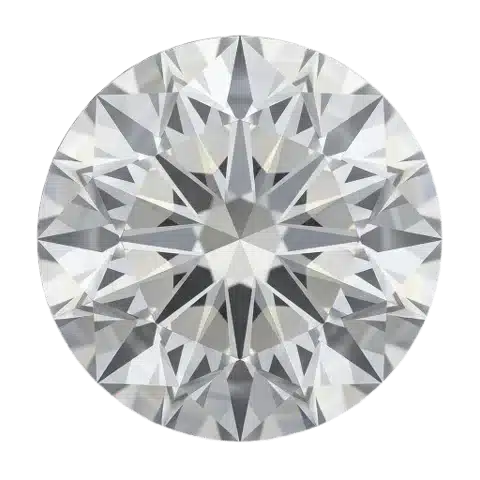
 Loose lab-grown diamonds10 shapes · IGI, GIA or NGTC reports
Lab-Grown Diamond Bezel Engagement Rings
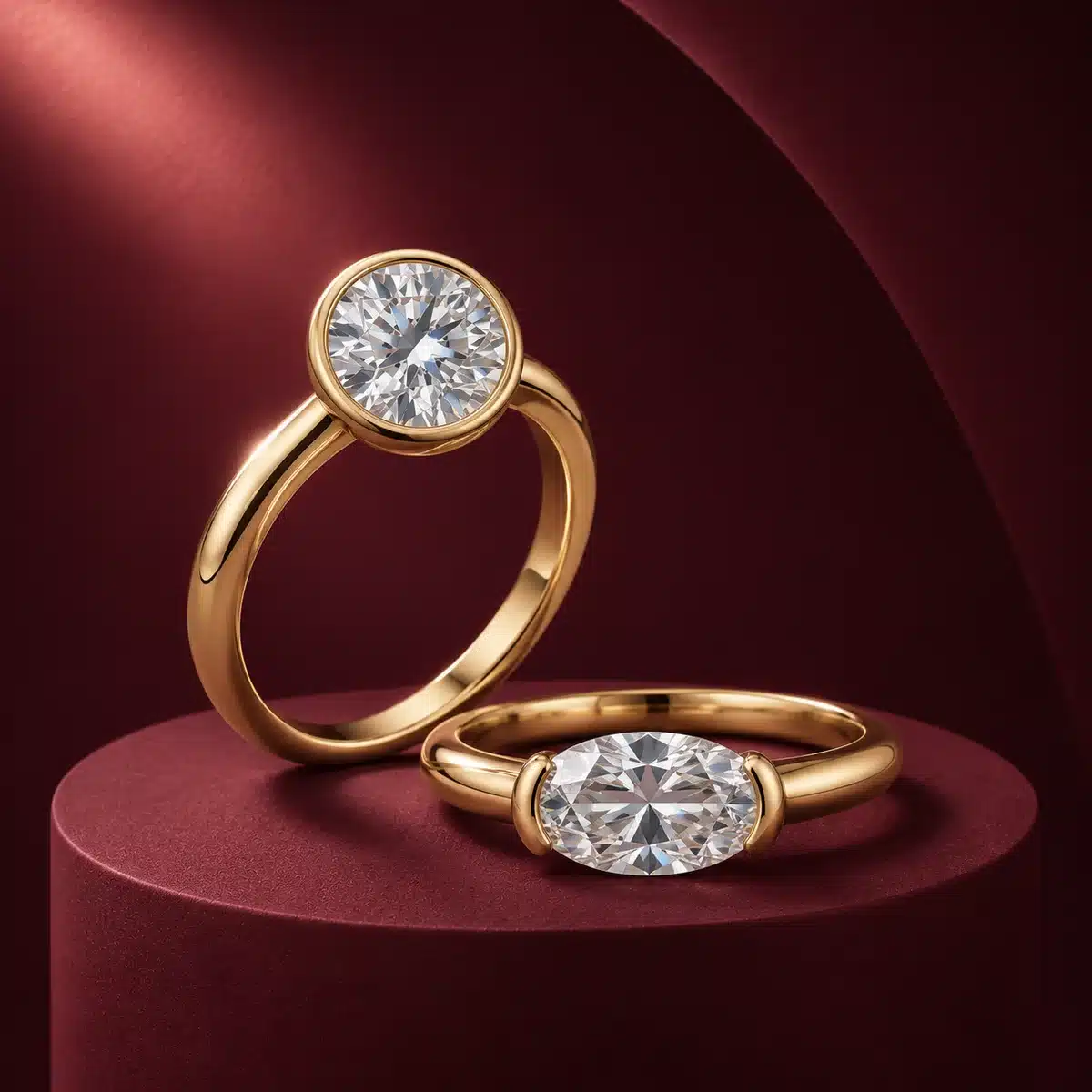
Lab-grown diamond bezel engagement rings hold the center stone in a thin rim of metal instead of prongs. We make them with round, oval, emerald and pear centers, and as an east-west oval turned sideways across the finger, in white, yellow or rose gold or in platinum. Each ring is built around the center stone you choose and quoted with it. A bezel can wrap the whole stone or only part of it. A full bezel gives the smoothest, most secure edge; a partial bezel leaves the sides open to more light. Pick the style below, tell us the stone, and we quote the ring. IGI, GIA or NGTC reports are available on request for the center stone.
Get a Quote · Ring setting styles compared · All engagement rings
Choose Your Bezel
A bezel is defined by how much of the stone the rim covers and how wide the rim is.
Full Bezel or Partial Bezel?
| Full bezel | Partial (half) bezel | |
|---|---|---|
| How it holds the stone | Metal rim around the entire girdle | Metal at two ends or two sides; the rest of the girdle is open |
| Look | Clean, modern outline with a metal border | Lighter, shows more of the stone's side |
| Light | Less light enters from the side | More light than a full bezel |
| Wear | The edge is covered all the way round; nothing to catch on knitwear | Covers the ends that take the knocks; sides need a little care |
| Good for | Active hands and a low profile | Ovals, marquise and pear shapes where the ends matter most |
GIA's setting guide describes the full bezel as the option that completely encircles the stone's edge, and the partial bezel as one that leaves sections exposed while still adding security. Its semi-mount guide adds the trade-off: a bezel protects the edge of the stone from bumps but can reduce brightness.
Bezel by Center Shape
- Round: an even rim all round; a thin knife-edge bezel keeps the border slim.
- Oval: a full bezel gives a smooth, pebble-like outline; turned east-west, it sits low across the finger.
- Emerald: the rim follows the cut corners, covering them where a prong would sit.
- Pear: a full bezel covers the point as well as the rounded end; a partial bezel can wrap the point only.
- East-west oval: made for a sideways stone, often paired with a plain or pavé band.
Fancy-color centers work in a bezel too. A yellow gold rim around a yellow diamond, or a white rim around a blue one, keeps the color reading clearly.
Rim Width, Metal and Brightness
The rim is part of the design. A thin rim shows more stone and reads delicate; a thicker rim adds a bold border and a little more protection. White metal around a colorless stone keeps the edge visually quiet, while a yellow gold rim frames the stone in a warm line. Because a bezel lets in less side light than prongs, put the budget into a well-cut stone.
How to Choose a Lab-Grown Diamond Bezel Engagement Ring
Bezel Engagement Ring Questions
Guides:
What is a bezel on a ring?
Is a bezel less sparkly than prongs?
Is a bezel more secure than prongs?
Can a bezel ring be resized?
Can I choose a bezel for a marquise or emerald diamond?
Do you supply bezel rings to retailers?
Bezel Engagement Rings for Retailers and Brands
A bezel has less room for error than prongs: the rim is made to the stone's measurements, so a head for a 7 × 5 mm oval will not fit a 7.3 × 5.2 mm stone. For retail and private label orders we agree per SKU:
- Stone size and tolerance each bezel is made for, in millimeters as well as carats.
- Full or partial bezel, rim width and metal on the approved sample.
- Matched center stones or calibrated stones for your own setting.
- Branding: logo stamp, tags and boxes; NDA available; no fixed minimum order; samples at cost, 10–15 business days.
Sources: GIA: Complete guide to engagement ring settings · GIA: How to build your own engagement ring (semi-mounts) · GIA: Oval cut diamond buying guide
Thank you
We'll reply within one business day with price, stone options and delivery time.