

If you appreciate the clean geometry of the Solitaire Asscher Ring, you may also like the Solitaire Radiant Ring for its brilliant crushed-ice sparkle, or the Solitaire Marquise Ring for an elegantly elongated silhouette—both offer distinct alternatives within our collection of refined solitaire settings.
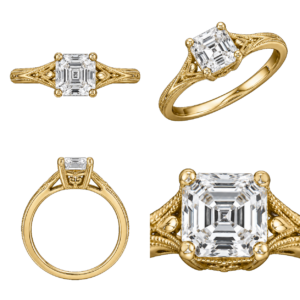
The Solitaire Asscher Ring is a lab-grown diamond engagement ring featuring a geometric Asscher-cut center stone set in a clean, white gold solitaire mounting. The Asscher shape’s step-cut facets and squared silhouette create a mirror-like, architectural appearance that draws attention through precision rather than dispersion. Set in white gold, the design emphasizes clarity and modern restraint, keeping the viewer’s focus on the center diamond’s square outline, cropped corners, and controlled reflections. Buyers interested in this ring should confirm center stone specifications, setting details, and any documentation needs directly before purchase.
Product Details
| Attribute | Details |
|---|---|
| Product Category | Engagement Ring |
| Diamond Shape | Asscher |
| Diamond Type | White Diamond |
| Metal Type | White Gold |
| Setting Style | Solitaire |
Attribute Interpretation
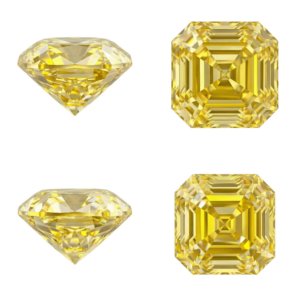
Asscher Shape: The Asscher cut is a square step-cut diamond with cropped corners and concentric geometric facets. It produces a hall-of-mirrors effect with broad, flat planes rather than the brilliant sparkle of a round or oval cut. This shape tends to emphasize clarity, face-up symmetry, and cut precision, making the stone’s internal characteristics more visible to the eye. Buyers often select this shape for its Art Deco associations and understated, intellectual character.
White Gold: White gold provides a cool, silvery backdrop that complements the icy transparency of a white diamond. It creates a seamless visual flow between metal and stone, reducing contrast and allowing the Asscher’s geometry to command full attention. The metal tone here supports a modern, minimal aesthetic, especially for buyers who want the diamond ring to feel crisp rather than warm-toned.
Solitaire Setting: A solitaire mounting isolates the center stone without additional accent diamonds. This approach demands confidence in the single stone’s visual presence and requires the setting itself to be proportioned correctly for the Asscher’s square dimensions and depth. For an Asscher diamond, the fit between the stone, prongs, and mounting should be checked carefully so the cropped corners and straight sides remain visually balanced.
Visual Selection Guidance
The Asscher shape’s squared outline and step-cut faceting reward buyers who appreciate structured, deliberate design over high brilliance. In a solitaire setting, the stone becomes the entire visual statement, so proportion, symmetry, and face-up balance matter significantly. The white gold mounting reinforces this clarity by eliminating warm metal contrast.
This combination may suit buyers who prefer vintage-influenced or architecture-inspired aesthetics. The step-cut’s broad facets can make color, clarity, windowing, and proportion choices more apparent to the naked eye than in brilliant cuts, so buyers should confirm the specific stone’s characteristics and how they will read in person. At NUVU, we usually treat the grading report as a starting point rather than the whole decision, because an Asscher-cut stone should also be judged by how its reflections, outline, and setting fit appear together.
Style and Wearing Fit
The solitaire Asscher ring presents a low-profile, geometric presence on the hand. Its squared corners and step facets create a more understated sparkle compared to brilliant cuts, which can feel appropriate for professional or everyday wear rather than purely ceremonial occasions. Buyers who want a quieter engagement ring style may prefer this controlled step-cut appearance, while buyers looking for maximum fire may want to compare it against more brilliant diamond shapes.
The white gold tone contributes to a contemporary, streamlined impression. Buyers transitioning between vintage inspiration and modern execution often find this combination workable. The setting style keeps attention fixed on the center stone’s cut quality and proportions rather than decorative metalwork.
Certification and Documentation
Lab-grown diamond documentation varies by specific stone and project. Buyers should confirm whether laboratory report details, measurements, and grading information are available for the center diamond in this ring. If a grading report is available for the selected Asscher diamond, review the 4Cs, measurements, and shape information alongside the actual face-up appearance of the stone. NUVU may support recognized lab reports depending on the specific product or inquiry, though this should be verified directly before ordering.
Customization and Inquiry Options
Buyers may inquire about compatible design directions, diamond specification preferences, metal tone alternatives, or documentation needs. Customization can be discussed depending on availability and project requirements. Final stone selection, setting proportions, and metal details should be confirmed during the inquiry process, especially when the buyer wants a specific Asscher outline, depth profile, or visual balance in white gold.
Project Application
This ring format suits direct-to-consumer retail, custom engagement projects, or private label collections where geometric, understated design is positioned as a differentiated offering. The Asscher solitaire translates well across markets that value clarity of design, step-cut visual identity, and transparent sourcing communication. In wholesale or custom jewelry discussions, consistent documentation language and clear center-stone specifications help keep expectations aligned before production or ordering decisions are made.
Before Ordering
- Confirm the center stone’s specific measurements, color, and clarity details if exact grading is important to your decision.
- Verify whether laboratory report documentation is available and which grading institution issued it.
- Ask how the Asscher diamond reads face-up in the setting, including outline symmetry, step reflections, and any visible windowing.
- Confirm metal karat and alloy details for the white gold mounting.
- Discuss ring size availability and whether sizing adjustments are supported.
- Clarify whether this item is for retail purchase, custom design, or wholesale project use.
FAQ
How does an Asscher cut differ visually from an emerald cut?
Both are step cuts, but the Asscher is square with cropped corners rather than rectangular. This creates a more compact, symmetrical face-up appearance with a tighter geometric pattern and smaller table relative to overall dimensions.
Why might a solitaire setting work particularly well with an Asscher shape?
The solitaire format removes visual competition, allowing the Asscher’s distinctive faceting and mirror-like reflections to dominate. Additional accents can fragment the step-cut’s deliberate, architectural effect.
What should I confirm about the white gold used in this ring?
White gold alloy composition, rhodium plating status, and metal karat should be confirmed, as these affect long-term color consistency and maintenance expectations.
Is this ring style suited to custom center stone selection?
Yes, solitaire mountings are typically evaluated for specific stone dimensions. Buyers should confirm whether the setting is fitted to a particular stone size or adaptable to selected Asscher proportions.
To better understand how the Asscher cut compares with other shapes and what to look for when matching a precision-cut stone with your setting, explore our complete guide to choosing the right lab-grown diamond and setting together.
Known Flaws
- Step-cut visibility is worth checking: Asscher cuts use broad, mirror-like facets that can make inclusions, body color, windowing, and uneven reflections easier to notice than in many brilliant cuts. This matters because the solitaire setting leaves the center stone fully exposed; for most buyers, it is a moderate inspection point rather than a reason to avoid the ring.
- Face-up symmetry should be reviewed in photos or QC views: the squared outline, cropped corners, and concentric step pattern are central to the look of this Solitaire Asscher Ring. If the outline or reflections appear off-center, the ring may feel less precise; for most buyers, this is important because the Asscher shape is chosen specifically for controlled geometry.
- Center stone specifications are not listed here: carat weight, measurements, color grade, clarity grade, cut details, and report information are not specified on this product page. These details matter more for step cuts because small differences can be more visible face-up; for most buyers, this is a high-priority confirmation before ordering.
- White gold details should be confirmed: the page identifies the metal as white gold, but metal karat, alloy details, and rhodium plating status are not provided. This matters for color consistency, maintenance expectations, and skin-contact preferences; for most buyers, it is a practical medium-level check.
- Setting fit and ring sizing need verification: exact prong construction, stone seat, setting height, ring size availability, and resizing support are not specified. These points affect comfort, security, and how balanced the Asscher stone looks on the hand; for most buyers, they are routine but necessary ordering checks.
Confirm the Asscher Details Before You Decide
For the Solitaire Asscher Ring, the next step is to review the center stone specifications, available documentation, white gold details, and setting fit together so you can judge the square step-cut outline and mirror-like reflections with confidence.

Reviews
There are no reviews yet.