

If you prefer this three-stone emerald design with a rosier metal tone, consider the Three-Stone Emerald Ring – Rose Gold. For a different center shape and a generally livelier light pattern, explore the Vintage Round Ring – Yellow Gold.
Product Overview
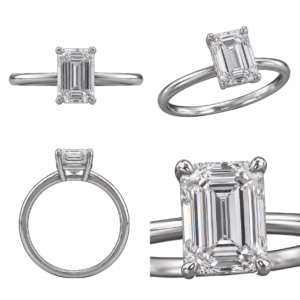
The Three-Stone Emerald Ring in Yellow Gold features an emerald-cut lab-grown center diamond framed by two additional stones. The three-stone arrangement extends the design horizontally, while the warm yellow gold provides contrast to the center stone’s clean, step-cut geometry.
This proportion-led engagement ring suits buyers who prefer an elongated center shape and broad, restrained reflections rather than the faster scintillation associated with brilliant cuts. Because an emerald cut has long, open facets, the relationship between the center diamond, framing stones, and setting alignment is an important part of the ring’s face-up appearance.
Product Details
| Attribute | Details |
|---|---|
| Product Category | Three-Stone Ring |
| Diamond Shape | Emerald |
| Diamond Type | White Diamond |
| Setting Style | Three Stone |
| Metal Type | Yellow Gold |
What These Details Mean
The emerald shape is a rectangular step cut with trimmed corners and long, linear facets. Instead of producing the rapid sparkle of a round brilliant, it creates broader flashes and a more open view through the stone. That visual character can make body color, inclusions, windowing, persistent dark areas, and uneven proportions easier to notice, so the center diamond should be considered both by its stated specifications and by its face-up appearance.
The two framing stones broaden the three-stone silhouette and place additional emphasis on scale, alignment, and spacing. Their shape, diamond type, grades, and measurements are not provided in the listing and should be verified rather than inferred. Yellow gold gives the composition a warmer visual frame, but the metal color does not establish the center diamond’s laboratory color grade.
The White Diamond attribute is a product descriptor, not a substitute for a stated color grade. The supplied description identifies the emerald-cut center diamond as lab-grown; it does not confirm whether the two side stones are also lab-grown. Some buyers also attach personal meaning to a three-stone arrangement, although that symbolism is separate from the ring’s verified design specifications.
Visual Selection Guidance
When reviewing this ring, begin with the face-up relationship between all three stones. The center diamond should appear aligned with the band, while the side stones should read as a matched pair with consistent positioning and spacing. Consider whether their visual scale supports the emerald-cut center or competes with it, since small changes in center-to-side-stone proportion can noticeably alter the balance of a three-stone ring.
Inspect the emerald-cut center for an even step pattern, a pleasing outline, and a clear view across its face. Windowing, concentrated dark zones, visible inclusions, or body color are evaluation points for emerald cuts generally; they should not be assumed to be present in this particular diamond without suitable images, video, measurements, and grading information.
At NUVU, we usually treat a grading report as a starting point rather than the entire decision. The 4Cs and measurements provide useful reference information, but the center stone’s face-up proportions and its visual relationship with the two framing stones are especially relevant to this design.
Style and Wearing Fit
The three-stone emerald ring creates an elongated center line and a wider face-up presentation than a minimal solitaire silhouette. Its quieter step-cut light pattern may appeal to buyers seeking a structured engagement ring, milestone ring, or right-hand statement ring without an ornate overall appearance.
The yellow gold tone adds warmth around the linear stone arrangement. Wearability and physical fit, however, depend on details that are not supplied, including ring size, band width and thickness, profile height, setting construction, and stone-security features. These points should be confirmed before deciding whether the ring suits the wearer’s hand, lifestyle, and intended frequency of use.
Certification and Documentation
No product-specific grading laboratory, report number, or grading document is identified in the supplied information. If documentation is important to the purchase decision, request the available report and confirm that it corresponds to the exact center diamond being offered. Relevant details may include carat weight, color and clarity grades, measurements, proportions, polish, symmetry, fluorescence, and any other information actually recorded for that stone. Documentation for the side stones should be requested separately if required.
Customization and Inquiry Options
Use a product inquiry to request the exact center-diamond specifications, side-stone shapes and details, yellow gold karat, ring size, band and overall dimensions, profile height, and available grading documentation. Any change to the listed stone selection, metal, sizing, or construction should be treated as a request for confirmation rather than an available option unless NUVU verifies it for this ring.
Project Application
This design may suit an engagement, anniversary or milestone occasion, or statement wear when the buyer prefers an elongated step-cut center and a broader three-stone presentation. It may be less suitable for someone seeking maximum scintillation, a minimal solitaire profile, or a fully specified ring that can be evaluated without additional proportion, sizing, metal, and documentation details.
Before Ordering
- Confirm the center diamond’s carat weight, color grade, clarity grade, measurements, proportions, polish, symmetry, fluorescence, and available grading documentation.
- Verify the side stones’ shapes, diamond types, measurements, grades, and visual matching criteria; do not assume the lab-grown description applies to them.
- Review straight-on imagery for center-stone alignment, side-stone symmetry, consistent spacing, center-to-side-stone scale, and overall face-up balance.
- Review profile imagery, if provided, for profile height, setting alignment, and the relationship between the stone arrangement and band.
- Check the emerald-cut center for visible windowing or persistent dark areas while recognizing that photographs alone may not show its full light behavior.
- Confirm the yellow gold karat, exact ring size, band dimensions, overall ring dimensions, and any available construction or stone-security details.
FAQ
How does the emerald cut differ from a round brilliant cut in appearance?
An emerald cut uses long step facets that produce broad, orderly reflections and a more open appearance. A round brilliant typically creates more rapid scintillation. This ring is therefore better aligned with buyers who prefer defined geometry and quieter light movement.
What should I consider when choosing an emerald-cut diamond for this ring?
Review the stated color and clarity grades, carat weight, measurements, proportions, and available grading report, then consider the diamond’s actual face-up appearance. For this three-stone design, also examine windowing, dark areas, outline, alignment, and the visual scale between the center and side stones rather than evaluating the center diamond in isolation.
Is this ring available in other metal colors?
Yellow Gold is the verified metal type for this listing, and a separate rose gold version is linked above. Other metal options for this specific product are not confirmed. The yellow gold karat and any alternative-metal requests should be verified directly before ordering.
Understanding how a diamond shape and setting work together can help clarify the final proportions you prefer. Discover more in the engagement ring guide to review additional considerations for pairing a center stone with a setting.
Why This Piece Stands Out
Emerald-Cut Center Focus
The lab-grown center diamond is identified as emerald cut, giving the ring a longer, more structured face-up look with broader step-cut reflections rather than the faster sparkle of a brilliant cut.
Three-Stone Proportion Check
Two stones frame the emerald-cut center, so the ring should be reviewed for center-to-side-stone scale, alignment, spacing, and overall horizontal balance before a buyer commits to the design.
Warm Yellow Gold Frame
The verified metal type is yellow gold, which gives the three-stone composition a warmer visual frame around the clean emerald shape without implying a diamond color grade or metal karat.
Clear Buying Checkpoints
Because carat weight, grades, measurements, side-stone details, yellow gold karat, ring size, and grading documentation are not supplied, this listing is best evaluated by requesting those exact details.
Known Flaws
- Emerald-cut visibility: Step facets can make windowing, persistent dark areas, body color, or inclusions easier to notice than in many brilliant cuts. These are important inspection points, but their seriousness depends on the exact center diamond and should be assessed through clear imagery and verified specifications.
- Three-stone alignment: Center-stone alignment, side-stone symmetry, and consistent spacing can affect the ring’s face-up balance. Minor variation may be acceptable to some buyers, while obvious misalignment would be a more significant concern worth checking in QC photos.
- Center-to-side-stone scale: The side-stone shapes and dimensions are not specified, so it is unclear how strongly they frame the emerald-cut center. This is usually a preference issue, but disproportionate or poorly matched stones can materially change the intended three-stone silhouette.
- Incomplete diamond details: The center diamond’s grades, carat weight, measurements, proportions, and grading documentation are not provided. This is a meaningful information gap for most buyers because the supplied description alone cannot establish the stone’s exact appearance or specifications.
- Unconfirmed fit and profile: Ring size, band dimensions, profile height, setting construction, and stone-security details are not specified. This is moderately important because these details influence comfort, fit, and suitability for the buyer’s intended frequency of wear.
- Metal and side-stone clarity: The listing identifies yellow gold but does not state its karat, and it does not confirm whether the two framing stones are also lab-grown. These points may not affect the visual design, but they should be verified when material composition or matching diamond type matters to the purchase.
Confirm the Details Behind This Three-Stone Design
Before choosing the Three-Stone Emerald Ring in Yellow Gold, ask NUVU to confirm the exact center-diamond specifications, side-stone details, yellow gold karat, ring size, dimensions, and any available grading documentation so the proportions and materials can be reviewed clearly.



Reviews
There are no reviews yet.