
There is no single “lab-grown diamond price.” A meaningful comparison starts with the same shape, similar measurements, comparable 4Cs, equivalent report status and the same buying channel. Two stones can look similar in a listing and still carry different prices because the underlying specifications, inventory risk and service are different.
| Price driver | What it changes | Buyer question |
|---|---|---|
| Carat weight and measurements | Material, size thresholds and face-up spread | Are the millimeter measurements suitable for the setting? |
| Shape and proportions | Cutting yield, demand and visual appearance | Am I comparing the same shape and a similar outline? |
| Color and clarity | Graded rarity, visible appearance and buyer preference | Would a lower grade still look right in this metal and light? |
| Report and disclosure | Comparability, verification and documentation effort | Can I verify the report and match it to this stone? |
| Channel and service | Selection, inspection, setting, packing and after-sales work | What is included in the quoted price? |
Compare equivalent stones before judging the price
“Same carat” is only one data point. A round stone and an elongated cushion at the same carat weight do not have the same outline, cutting behavior or market demand. Even within one shape, depth, table, length-to-width ratio, girdle, polish and symmetry can change how large and bright the stone looks.
Build a comparison row for each candidate: shape, carat weight, length and width, color, clarity, cut grade where applicable, polish, symmetry, fluorescence or comments, growth method or treatment disclosure when supplied, report laboratory, report number, price and what the price includes. This turns a scrolling exercise into an actual comparison.
How the 4Cs influence cost
Carat is a weight, not a complete size description
Carat weight affects the material in the stone and can create threshold effects in a quote. It does not tell you the face-up dimensions or whether the depth is helping or hurting the visual spread. Check the measurements before assuming that a heavier stone will look larger in the setting.
Shape changes demand and cutting economics
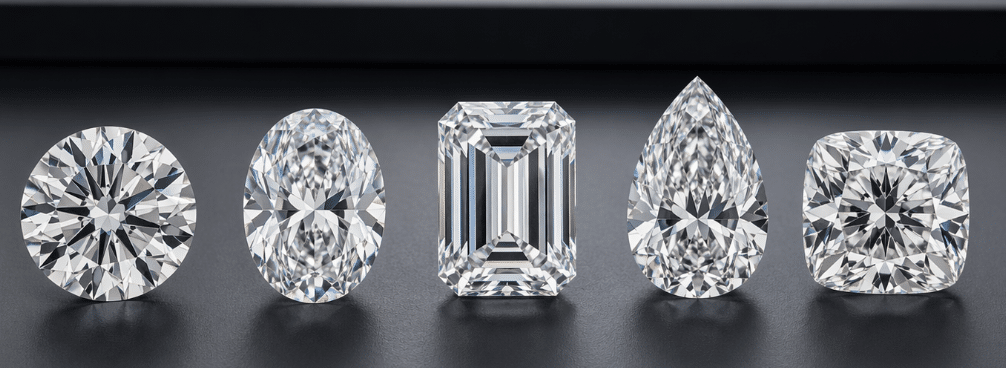
Round brilliants often carry a different market position from fancy shapes. Fancy shapes can provide a generous outline for a budget, but the comparison still depends on bow-tie behavior, symmetry, corner protection, length-to-width ratio and the finished design. Compare like shapes before drawing conclusions about a “discount.”
Color and clarity are visual decisions as well as grade labels
Higher grades can change a price, but a higher number is not automatically a better use of every budget. Color is perceived differently in white, yellow and rose metal and under different lighting. Clarity should be judged by the type, position and visibility of characteristics, not by the grade alone. A buyer who wants an eye-clean appearance may have a different sensible target from a buyer building a fully documented premium assortment.
Cut quality affects what the price buys you
Cut-related information helps explain light performance, but a laboratory grade is not a substitute for viewing the actual stone. Review proportions, polish and symmetry with photographs or video where possible. Two stones with similar headline grades can still create different visual impressions.
Reports improve comparison, but they do not set a universal price
A report makes a stone easier to identify and compare. Verify the report number through the issuing laboratory when a lookup is available, and make sure the report details match the stone, listing, invoice and parcel label. A report does not guarantee that one seller’s price is fair, that the stone will fit a particular setting or that it will retain a specified future value.
Screening and inventory standards also affect the offer. One supplier may present a narrow, pre-screened selection with media and matching support. Another may list a broader inventory with less selection work included. The lower price may reflect a different service scope or more buyer effort rather than a hidden bargain.
Retail, supplier and custom prices answer different questions
A retail price may include merchandising, customer service, payment processing, returns, setting, warranty administration and local operating costs. A supplier quote may separate the loose stone from inspection, packaging, shipping, taxes or custom work. A custom project can add CAD, sample approval, metal, setting labor and revision control.
Ask for the commercial scope in writing. Confirm whether the quoted amount covers one stone, a parcel, finished jewelry or a sample; whether a report is included; which substitutions require approval; and what delivery and after-sales terms apply. For a NUVU quote, include the intended use and required documentation so the price covers the work you need.
China and manufacturing scale: useful context, not a shortcut
For a buyer considering China-based lab-grown diamond or jewelry supply, “made in China” does not describe one quality level or one service model. The buyer still needs to distinguish owned processes from order-specific sourcing, confirm the responsible legal entity and check what evidence accompanies the actual parcel.
For wholesale or private-label buying, price efficiency becomes useful when specifications are repeatable, records are clear and receiving checks are practical. For a one-off urgent stone, a closer source with immediate selection may be worth more than a lower unit quote.
A comparison worksheet for real buying decisions
- Write the finished use first: center stone, matched pair, calibrated parcel, custom design or inventory replenishment.
- Set the non-negotiables: shape, minimum and maximum measurements, report requirement, origin disclosure and setting constraints.
- Compare two or more stones using the same fields, not the headline price alone.
- Review media and report data, then ask what is included in inspection, packing and delivery.
- Record any substitution or tolerance in writing before approval.
- Recheck the stone and documents on receipt before adding it to stock or setting it.
Where to continue
Use the 4Cs guide when you need to prioritize cut, color, clarity and carat. Compare available inventory through loose lab-grown diamonds. If you are buying for a retail or private-label program, review wholesale lab-grown diamond supply and private-label and OEM jewelry. For a finished piece, start with custom ring design and send the target specifications through contact NUVU.
Disclosure: Prices and availability change by item, market, quotation and order scope. This article does not promise a price range, savings level, resale outcome, MOQ or delivery time. Verify the current quote, report and terms before purchase.