- Shop
Diamonds & Jewelry
Loose Lab Diamonds Yellow Lab Diamonds Pink Lab Diamonds Blue Lab Diamonds Engagement Rings Fine Jewelry Shop All Loose lab-grown diamonds10 shapes · IGI, GIA or NGTC reports
- Wholesale
- Custom Design
- Education
- About
Lab-Grown Diamond Engagement Ring Budget Guide: How to Balance Stone Size, Quality, and Setting Cost
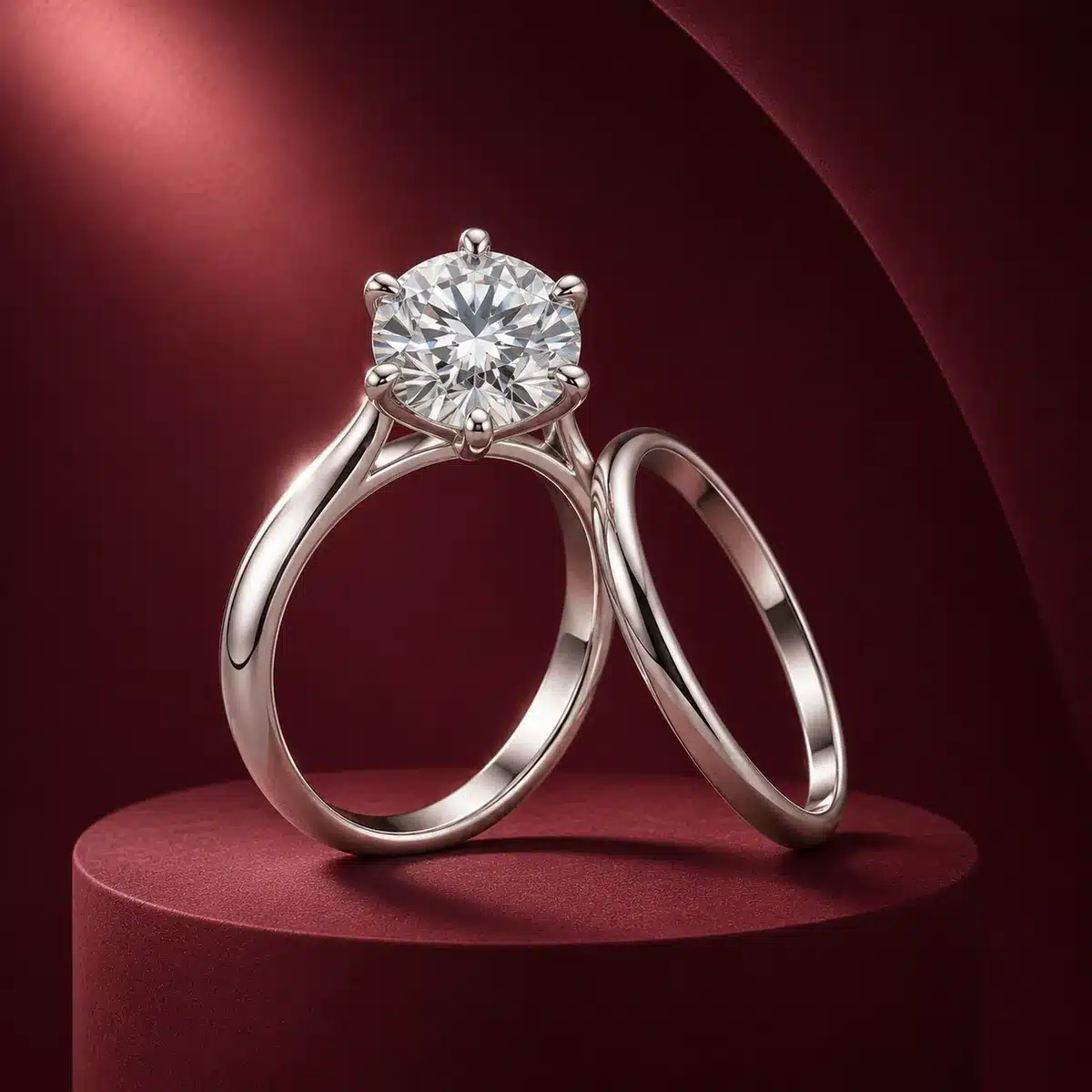
With a mined diamond, the center stone usually takes most of an engagement ring budget, and the setting is what is left. With a lab-grown center stone the balance shifts. The stone costs much less, so a platinum head, a hidden halo or a three-stone design can become a large share of the total, sometimes the larger one. Buyers who plan only the stone are often surprised by the final quote.
Budget for the finished ring, not the loose stone. The total is the center stone, the setting design, the metal, any side stones or pavé, the workmanship, and the costs around the ring: sizing, shipping, insurance. Spend first on cut and a secure, well-made setting. Save on color and clarity where the eye cannot see the difference, and on carat just below the whole and half sizes.
What makes up the total
The stone: where to spend and where to save
GIA’s buying advice makes the same points: prices jump at “magic sizes” such as 1.00 ct, stones of H or better look colorless in white metal while J–K can look fine in yellow or rose gold, and most SI stones are eye-clean, though each needs checking. Before moving up in size, make sure the cut is excellent and the setting is built to hold the larger stone.
How the setting moves the budget
Swipe the table to see more →
| Setting | Relative setting cost | Why |
|---|---|---|
| Plain solitaire | Lowest | Least metal and labor |
| Solitaire with pavé band | Medium | Small stones and setting work |
| Hidden halo | Medium | Accent stones under the head |
| Halo | Medium to higher | More stones and labor |
| Three-stone | Medium to higher | Two matched side stones |
| Vintage, milgrain, engraved | Higher | Hand finishing |
Metal
- 14K gold: durable and the most cost-efficient of the three.
- 18K gold: more gold and a richer color; costs more and is softer.
- Platinum: denser and priced higher per gram, so the same design weighs more and costs more. Naturally white.
See best metal for engagement rings.
Three ways to weight the same budget
Swipe the table to see more →
| Priority | Stone | Setting and metal | A typical choice |
|---|---|---|---|
| The largest stone | The larger share | Plain solitaire in 14K | A larger oval or round, G–H, VS2 |
| Balanced | About even | Hidden halo or pavé, 14K or 18K | A mid-size round, F–G, VS1–VS2 |
| Design first | The smaller share | Three-stone, vintage or platinum | A moderate center in a detailed setting |
These show direction, not prices. The split on the day depends on stone and metal prices.
If something has to give
Give way in this order:
- Carat: drop just below the whole or half size.
- Clarity: move to an eye-clean lower grade.
- Color: one grade lower, especially in yellow or rose gold.
- Setting extras: less pavé or engraving.
Keep cut quality and the security of the setting to the end.
Prices move
Lab-grown prices have fallen for several years. Edahn Golan’s wholesale price data, reported by JCK in July 2026, showed lab-grown wholesale prices down 26% across 2025 and 13% year on year in the second quarter of 2026, with some signs of stabilizing, while gold and platinum move daily. Two practical consequences: quotes are valid for a limited period, and a lab-grown stone is a purchase to wear, not to resell.
What a quote should show
A quote with each of these on its own line shows where the money goes and what to adjust.
Costs people forget
- Resizing, especially after delivery.
- Shipping, insurance and import duties on international orders.
- Engraving.
- Replating white gold over the years.
- Insurance premiums once the ring is worn.
For how a custom piece is costed in more detail, see the custom jewelry budget guide.
Budget questions
How much should I spend on a lab-grown diamond engagement ring?
There is no rule. Set a total you are comfortable with, then split it between stone and setting by what you care about more.
Can the setting cost more than a lab-grown stone?
Yes, especially a detailed setting in platinum, because lab-grown stones cost much less than mined ones.
What should I never compromise on?
Cut quality and the security of the setting.
Why do lab-grown diamond prices keep changing?
Production has grown fast and wholesale prices have fallen for several years. Gold and platinum prices also move daily.
Price a ring around your budget
Send your total budget, the shape and size range you have in mind, the metal and setting style, and we will suggest how to split it. Our quotes list the center stone, setting, metal, side stones and reports line by line. Send your requirements or message us on WhatsApp / WeChat at +86 19118403930.
Sources

11+ years supporting global clients with lab-grown diamond product consultation and market analysis.
About NUVU. NUVU is the international brand of New Perspective Superhard Materials Co., Ltd. in Zhecheng, Henan, China. We grow HPHT lab-grown diamonds in-house and cut, polish and match stones in our own workshop.
Related Guides
How to choose an engagement ring
How to choose a lab-grown diamond engagement ring: are they a good choice, choosing the center stone, shape, setting…
Read more →PriceLab-grown diamond price guide
What sets lab-grown diamond prices: carat thresholds, shape, cut, color and clarity, reports, treatment and where…
Read more →ShopEngagement rings
Lab-grown diamond engagement rings in solitaire, halo, hidden halo, three-stone and vintage styles.
Read more →