 Get a Quote
 Loose lab-grown diamonds10 shapes · IGI, GIA or NGTC reports
Carbon Neutral Lab-Grown Diamonds: Useful Claim or Jewelry Greenwashing?
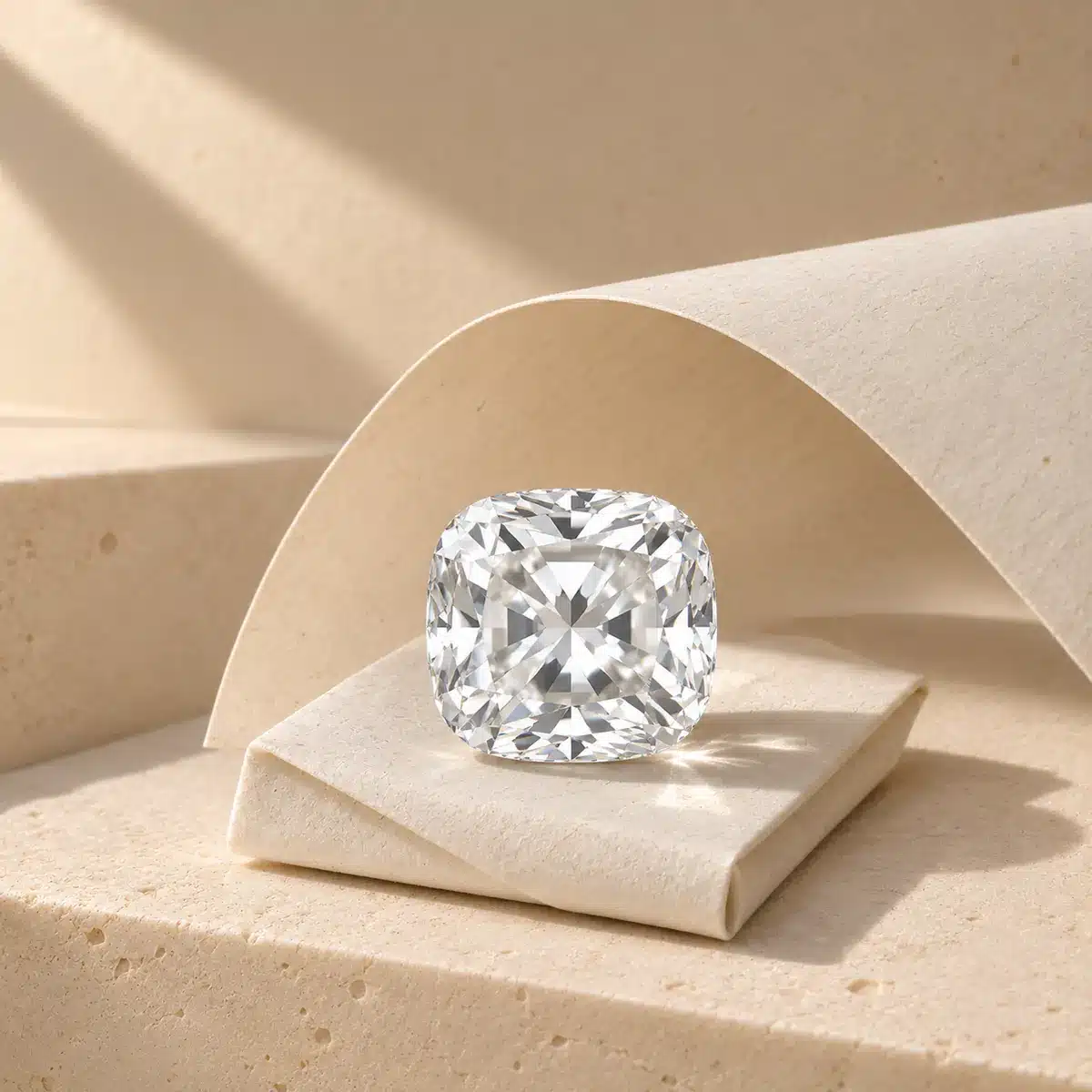
A brand that sells lab-grown jewelry in Germany prints “climate-neutral diamond” on its boxes, backed by forestry credits bought for every stone. Until September 26, 2026 that was a question of whether the credits were any good. Since September 27, 2026 it is no longer allowed at all: EU Directive 2024/825 bans product claims of a neutral, reduced or positive climate impact that rest on offsetting.
“Carbon neutral” means the emissions linked to a product have been measured, reduced where possible, and the rest balanced by offsets or removals. It can be a useful claim when the producer shows the footprint, the boundary, the reductions and the offsets, with an independent verifier. It is greenwashing when it rests only on purchased offsets with no data, covers only part of the process, or uses low-quality offsets. Reductions, especially cleaner electricity, count for more than offsets.
What a credible claim includes
Where a lab-grown diamond’s emissions come from
- Growth: the largest share for most producers; electricity for HPHT presses or CVD reactors.
- Cutting and polishing: electricity and labor; often in a different country.
- Grading, packaging and shipping.
- Setting: metal mining or recycling, casting and finishing.
The electricity source is the biggest variable. China, which grows about half of the world’s lab-grown diamonds, still made 56% of its electricity from coal in the first half of 2025, according to Ember. The same process on hydro, wind or solar power emits far less.
Reduction vs offset
Swipe the table to see more →
| Reduction | Offset | |
|---|---|---|
| What it is | Emitting less (cleaner power, efficiency) | Paying for emissions to be reduced or removed elsewhere |
| Reliability | Direct | Depends on project quality |
| What to ask | What changed and by how much | Project type, registry, retirement, vintage |
What the FTC Green Guides say
Section 260.5 of the US Green Guides asks for competent and reliable accounting behind any offset claim, so the same reduction is not sold more than once, and a clear disclosure when the reductions will not occur for two years or longer. Section 260.4 warns against broad claims such as “eco-friendly” without qualification.
Red flags
- “Carbon neutral” with no footprint number.
- Offsets with no registry or retirement records.
- A boundary that excludes cutting and shipping without saying so.
- “Climate positive” or “zero impact” language.
- Old certificates or a certificate held by a different company.
Questions to ask
Selling in the EU
Under Directive (EU) 2024/825, which applies from 27 September 2026, a product claim of a neutral, reduced or positive climate impact based on offsetting is an unfair commercial practice. Offsets can still be reported as a company’s own climate action, but not turned into a “carbon-neutral diamond”. What remains open is a specific, measured statement, for example the share of renewable electricity used at a named facility in a named year. Brands selling into the EU should check packaging, product pages and ads, and take legal advice for their market.
Removal vs avoidance offsets
Avoidance offsets pay for emissions that would otherwise have happened elsewhere, such as protecting a forest or funding renewable power. Removal offsets take carbon out of the atmosphere, such as reforestation or direct air capture. Removals are generally considered more robust for “neutral” claims, but quality varies within both types. Ask for the project, the registry and proof that credits were retired for your product.
Carbon-neutral questions
Are carbon neutral lab-grown diamonds better?
They can be, if the claim rests on measured reductions and verified offsets.
Is carbon neutral the same as zero emissions?
No. Emissions still occur; the rest are balanced by offsets or removals.
Can a mined diamond be carbon neutral?
A producer can make the claim with the same evidence requirements.
Can I sell “carbon neutral” lab-grown diamonds in the EU?
Since 27 September 2026, EU rules treat product climate-neutral claims based on offsetting as unfair. Use specific statements about measured reductions instead.
Make a claim you can support
If you want to say something about the climate impact of stones you sell, start from the records the producer can show for your order, not from the label. Send us your order details and the claim you have in mind, and we will tell you what records exist. Send your requirements or WhatsApp / WeChat +86 191 1840 3930.
Sources

9+ years optimizing HPHT & CVD growth recipes and overseeing large-scale lab-grown diamond manufacturing.
About NUVU. NUVU is the international brand of New Perspective Superhard Materials Co., Ltd. in Zhecheng, Henan, China. We grow HPHT lab-grown diamonds in-house and cut, polish and match stones in our own workshop.
Related Guides
Renewable Energy in Lab-Grown Diamond Production
Why power source decides a lab-grown diamond's carbon footprint: HPHT vs CVD energy use, grid mix,…
Read more →SustainabilityGreenwashing in Lab-Grown Diamond Marketing
Greenwashing red flags in lab-grown diamond and jewelry marketing: eco-friendly, guilt-free, carbon…
Read more →SustainabilityAre Lab-Grown Diamonds More Sustainable?
Are lab-grown diamonds more sustainable than mined?
Read more →