- Shop
Diamonds & Jewelry
Loose Lab Diamonds Yellow Lab Diamonds Pink Lab Diamonds Blue Lab Diamonds Engagement Rings Fine Jewelry Shop All Loose lab-grown diamonds10 shapes · IGI, GIA or NGTC reports
- Wholesale
- Custom Design
- Education
- About
Sustainable Jewelry Buying Guide: How to Think About Sustainability Beyond Marketing Claims
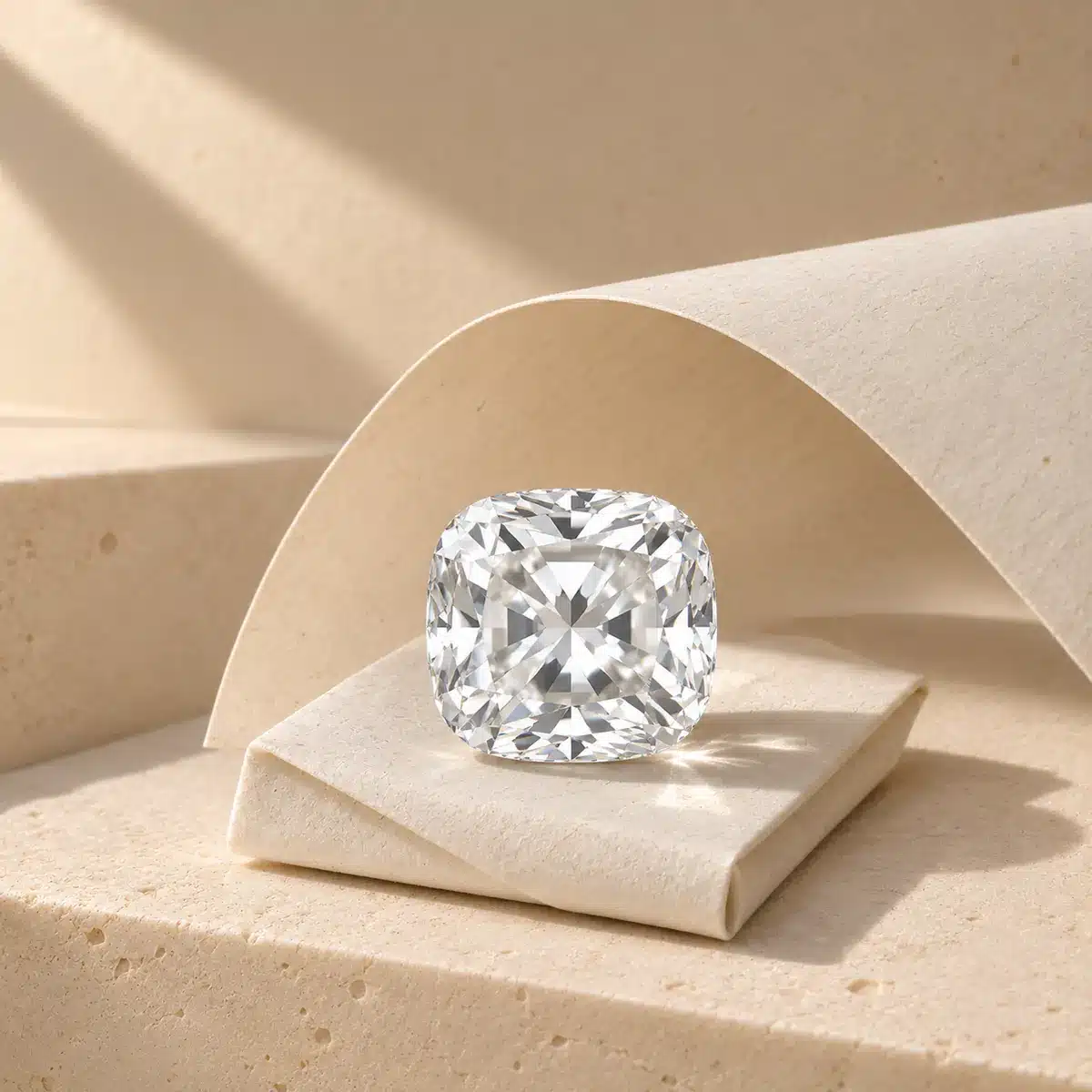
Two ring boxes arrive. One is printed “eco packaging”. The other says “box made from 100% recycled paperboard”. The first tells you nothing you can check. The second names a material and a share, which is exactly what the FTC Green Guides ask of a recycled-content claim. Most sustainability claims on jewelry can be sorted the same way.
Sustainable jewelry is a set of choices, not a label. Look at four parts of the piece: the stone (origin, energy, traceability), the metal (recycled or responsibly sourced), how it is made (made-to-order, waste, labor standards) and how long it will be worn. Treat broad words like “eco-friendly” or “sustainable” as a starting point for questions. Prefer specific claims backed by records you can check.
The four parts of a piece
Decoding common claims
Swipe the table to see more →
| Claim | What it should mean | What to ask |
|---|---|---|
| Eco-friendly | A specific environmental benefit | Which benefit, and what records? |
| Sustainable | A broad set of practices | Which practices, measured how? |
| Conflict-free | For mined diamonds, Kimberley Process plus warranties; not a full ethics check | What else is covered, such as labor and community? |
| Ethical | Labor, safety, community standards | Which standard, audited by whom? |
| Recycled gold | Gold refined from scrap or used jewelry | Percentage and documentation |
| Carbon neutral | Emissions measured, reduced and offset | Calculation, offsets, verifier |
| Traceable | Records linking stages of the supply chain | Which stages, and can you see the records? |
The FTC Green Guides (section 260.4) say broad, unqualified environmental claims are hard to interpret and hard to substantiate. In 2019 FTC staff warned eight jewelry companies not to use unqualified “eco-friendly” or “sustainable”. In the EU, generic environmental claims have been banned since September 27, 2026 unless the trader can show recognized excellent environmental performance.
Lab-grown, mined or both?
Lab-grown avoids mining but uses a lot of electricity; mined diamonds vary by mine. Neither is automatically more sustainable. See are lab-grown diamonds more sustainable?.
Certifications and standards
Certifications cover specific scopes: a facility, a company, a product line or a single stone. Always check the scope, the holder and whether it is current. See which certifications matter.
Made-to-order and longevity
Made-to-order production avoids unsold stock and lets you choose exact stone sizes. Durable, repairable designs that you wear for decades are often the most sustainable choice of all. See sustainable custom jewelry.
Questions to ask before you buy
For retailers and brands
Your own marketing claims have to be substantiated. Get the supporting records from suppliers for each claim, keep them on file, and qualify claims clearly in listings. See the claims checklist for brands.
Repair, resize and reuse
Jewelry that can be repaired, resized and reset stays in use longer. Ask whether the maker offers repairs and resizing, and whether old stones or metal can be reused in a new design. A piece worn for decades usually does more for sustainability than any label.
Packaging and shipping
Packaging is a small share of a jewelry piece’s footprint compared with the stone and metal, but it is visible. Specific claims (“box made from 100% recycled paperboard”) beat general ones (“eco packaging”). Under section 260.13 of the FTC Green Guides, a partly recycled item should state the recycled share by weight.
Sustainable jewelry questions
What makes jewelry sustainable?
Responsible sourcing of stones and metals, responsible manufacturing, and a design you will wear for a long time, with records behind each claim.
Is “conflict-free” the same as ethical?
No. Conflict-free usually refers to the Kimberley Process for rough diamonds. Ethical sourcing covers more.
Is recycled gold better?
It avoids new mining for that gold. Ask for the recycled percentage and documentation.
Are certifications reliable?
They are useful when you check the scope, holder and validity with the issuer.
Check the claims on your order
Before you buy, list the claims you want to make about the piece, and ask the supplier which records exist for each. Send us the list with your order details and we will tell you which ones we can support. Send your requirements or WhatsApp / WeChat +86 191 1840 3930.
Sources

9+ years optimizing HPHT & CVD growth recipes and overseeing large-scale lab-grown diamond manufacturing.
About NUVU. NUVU is the international brand of New Perspective Superhard Materials Co., Ltd. in Zhecheng, Henan, China. We grow HPHT lab-grown diamonds in-house and cut, polish and match stones in our own workshop.
Related Guides
Greenwashing in Lab-Grown Diamond Marketing
Greenwashing red flags in lab-grown diamond and jewelry marketing: eco-friendly, guilt-free, carbon…
Read more →SustainabilityRecycled Gold and Lab-Grown Diamonds
Why the metal matters in sustainable jewelry: what recycled gold is, pre- vs post-consumer, how claims…
Read more →NUVULab-Grown Diamond Fine Jewelry: Earrings & Necklaces
Lab-grown diamond earrings, pendants, necklaces and bracelets in gold and platinum.
Read more →