
Every lab-grown diamond buyer faces the same crossroads: Should you pay extra for a certification report, or skip it and rely on your own judgment? The decision matters because a grading certificate changes what you actually know about the stone, lab grown diamond certification red flags, its exact color, clarity, and cut quality, versus what you can only guess at. For a center stone, the wrong choice can mean overpaying for hidden flaws or losing resale value. For small accent diamonds, paying for individual reports is often money wasted.
For the full framework, read Lab-Grown Diamond Certification Guide.
This article gives you a clear framework for deciding when certification is worth the cost and when it isn’t. You will learn how to evaluate uncertified stones with confidence, understand the real resale difference, and match your choice to the stone’s size, role, and your long-term plans.
For buyers, the practical point is not just what the report says, but how the stone performs visually and fits the intended design. A grading report helps narrow the shortlist, but it does not replace visual review. Understanding this distinction is the first step toward making an informed choice.
Laboratory-grown diamonds should be clearly identified as such, and their grading reports reflect this distinction. A report for a lab-grown diamond documents its specific characteristics but also states its laboratory-grown origin, providing an independent record distinct from marketing descriptions. This clarity helps buyers compare options accurately and avoids confusion with natural diamonds.
| Stone Size / Role | Certification Recommended? | Key Reason |
|---|---|---|
| Center stone, over 1 carat | Yes, essential | Protects against undisclosed flaws; preserves resale and trade-in value |
| Center stone, 0.5–1 carat | Yes, strongly recommended | Needed for accurate comparison and insurance appraisal |
| Side or accent stones, 0.05–0.5 carats | No, bulk summary sufficient | Individual reports are too costly; verify color/clarity range instead |
| Tiny melee, under 0.05 carats, pave | No, skip entirely | Cost of certification exceeds stone value; rely on seller trust |
| Unusual cut or unique stone | Yes, even if small | Low-cost certificate provides independent proof of grade |
| Bulk purchase of small stones | No, but require bulk summary | Individual reports are impractical; inspect for consistency |
Quick Questions Before You Read
Q: Can I trust an uncertified lab-grown diamond if I inspect it myself?
Yes, but only for smaller accent stones or melee. For any center stone over 0.5 carats, visual inspection cannot replace a report that measures exact proportions and clarity characteristics.
Q: Does an uncertified diamond have any resale value?
Much less than a certified one. Certified stones typically retain 50% more trade-in value; uncertified stones lack the infrastructure for reliable resale and often require separate appraisal for insurance.
Q: Do I need a certificate for every small accent diamond in a ring?
No. Individual reports for stones under 0.5 carats are impractical. A bulk summary from the seller confirming they match a stated color and clarity range is sufficient for wedding bands and side settings.
Q: What is the single most important factor in deciding whether to certify?
Whether you might ever need to prove the stone’s grade in the future—for insurance, a trade-in, inheritance, or resale. If yes, choose certified.
Certified vs. Non-Certified Lab-Grown Diamonds: When Does a Grading Report Actually Matter?
Not every lab-grown diamond on the market comes with a grading report. Some do. Some don’t. And the difference is rarely explained in a way that helps a buyer decide what actually matters for their purchase.
The short answer is that certification follows value. The more a single stone costs, the more important it is to have documented, third-verified specifications. But for small decorative stones used in pave settings or channel-set bands, paying for individual reports on every stone would inflate the cost without adding proportional protection. Understanding where that line falls is what makes certification logic useful rather than confusing.
What a Grading Report Confirms (and What It Doesn’t)
A standard report from IGI, GIA, or GCAL confirms carat weight, color grade, clarity grade, and for round brilliants, a cut grade. It may also note polish and symmetry. These are measured parameters, not opinions. They give you a reliable baseline for comparing one stone to another. GIA, for instance, explicitly states that its grading reports for laboratory-grown diamonds identify the stone as “Laboratory-Grown” and document its specific characteristics, providing an independent record distinct from marketing descriptions. [1]
What a report does not confirm is equally important. It does not quantify energy impact, carbon footprint, or any broader sustainability claim. Environmental and sustainability claims should be specific, documented, and limited to what can be substantiated. And a certificate alone does not guarantee that a stone looks beautiful. Two diamonds with identical grades can perform very differently under natural light. The report captures the measurements, not the visual experience.
A Note on Report Scope: A grading report helps document key characteristics, but it should not be treated as a guarantee of beauty, value, or sourcing ethics. Buyers should read the report alongside visual evidence, measurements, and the intended jewelry use to form a complete picture of what they are purchasing.
When Certification Is Essential: Center Stones and High-Value Purchases
For any center stone over one carat, a grading report from a recognized lab is effectively non-negotiable. The buyer needs verified specifications to compare options across different sellers, to confirm that the price reflects the actual quality, and to have documentation if the stone underperforms. Without a report, the buyer is relying entirely on the seller’s internal assessment, with no independent recourse if the stone contains inclusions that were not disclosed or if the color is noticeably lower than stated.
For a diamond engagement ring, where the center stone represents most of the jewelry’s value, skipping certification introduces unnecessary risk. The small cost of grading is outweighed by the protection it provides.
What to Check Before You Decide
For any center stone over 0.5 carat, require a grading report from a recognized lab — IGI, GIA, GCAL, or AGS. Verify the report number online to confirm it matches the stone. Compare the plotted inclusions against a high-resolution image or 360-degree video. If the seller cannot provide both a live view and a verifiable certificate, treat this as a warning sign.
When a Certificate Is Recommended but Not Mandatory
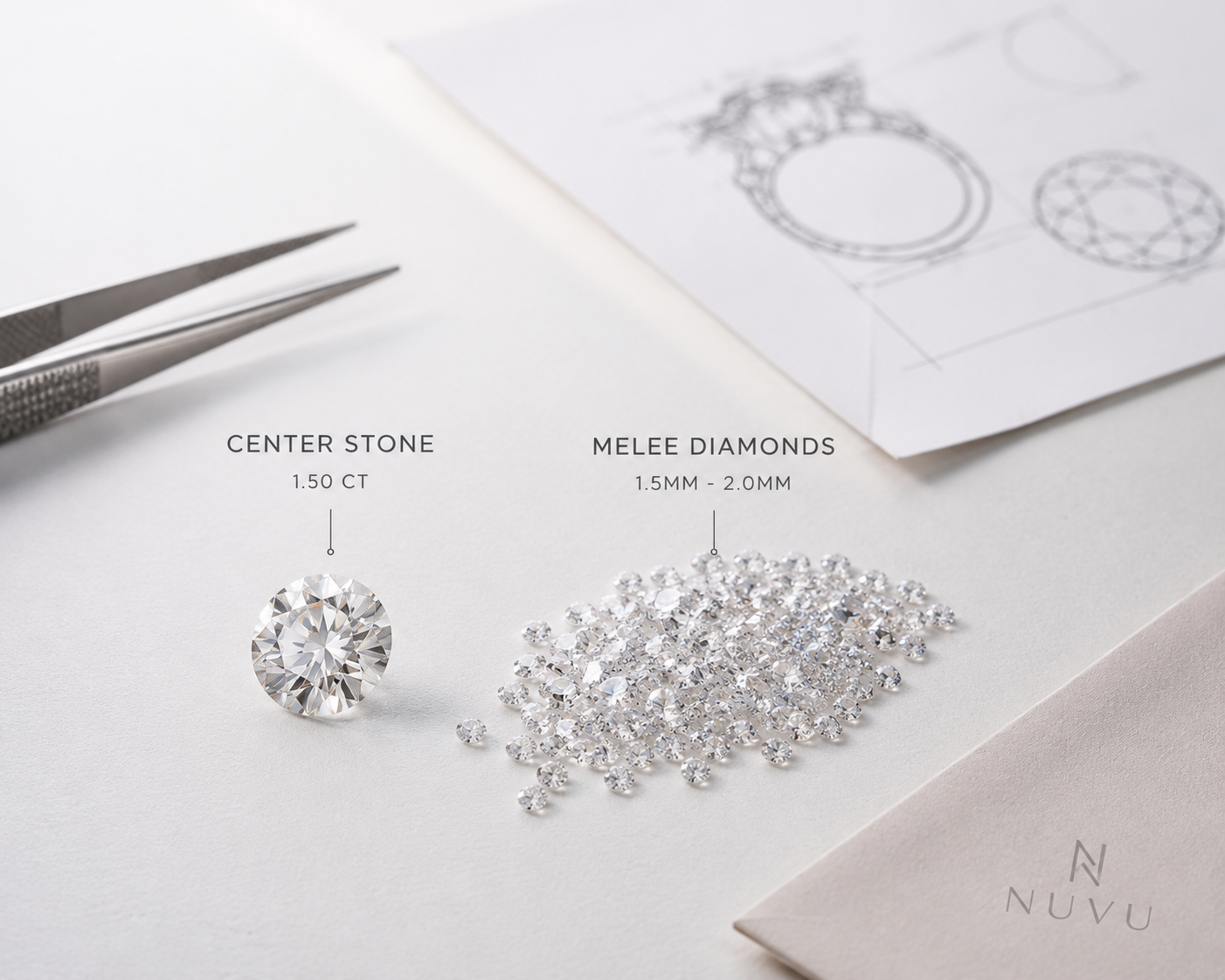
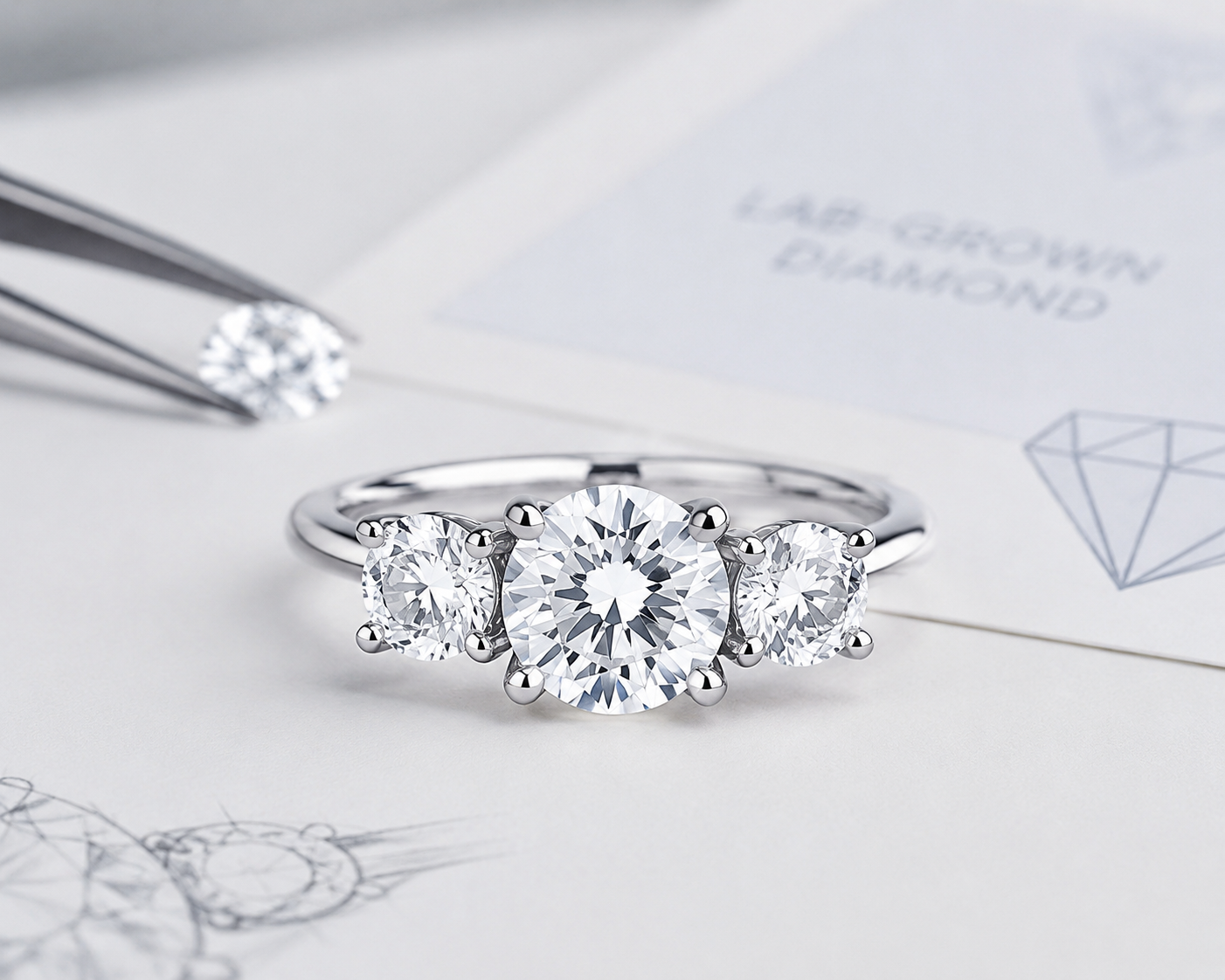
For accent stones in a multi-stone setting — such as side stones in a three-stone ring or diamonds in a halo — individual reports for each small stone are rarely practical. The cost of grading ten or twenty tiny diamonds can exceed the value of the stones themselves. However, a bulk grading certificate or a summary report covering the matched set can confirm that all stones fall within a consistent color and clarity range. This is a reasonable middle ground.
Buyer Verification Checklist
If you are buying a set of small accent stones, ask the seller whether the stones are matched for color and clarity within a specified range. Request a photo or video of the stones side by side under consistent lighting. To ensure accuracy beyond the report, confirm the documentation with attention to lab-grown diamond certificate vs actual appearance, and also clarify return terms, resizing policies, and after-sales support directly with the seller. A simple mismatch in color between a center stone and its side stones is one of the most common buyer complaints, and it is entirely avoidable with a few upfront questions.
When Certification Is Usually Unnecessary (and Why That’s Okay)
For decorative melee diamonds used in pave settings, channel bands, or accent work under 0.05 carats, individual certification does not make economic sense. The cost of grading a single tiny stone would be greater than the stone’s material value. In these cases, the buyer’s protection comes from the seller’s reputation, a clear quality description, and visual inspection of the finished piece.
This is not a corner being cut. It is a practical adjustment to the reality that grading has a fixed cost regardless of stone size. Applying the same certification standard to a 0.02-carat melee stone as to a two-carat center stone would multiply the final price of the jewelry without adding meaningful assurance.
What This Means in a Real Purchase
If you are buying a diamond band with thirty tiny stones, do not expect or request thirty individual reports. Instead, confirm the overall quality range — for example, G-H color and VS clarity — and ask for a single summary statement from the manufacturer or supplier. Compare the finished band against similar items from other sellers to gauge whether the quality description is accurate. A good setter will ensure the stones are visually consistent. A summary report confirms the baseline you are paying for.
How to Evaluate an Uncertified Lab-Grown Diamond: Practical Buyer Steps
Buying a lab-grown diamond without a grading report shifts the responsibility for quality assessment from a third-party lab to you. That does not mean it cannot work, but it does mean you need a clear process for evaluating what you are getting before you commit.
Visual Inspection: What to Look for Without a Report
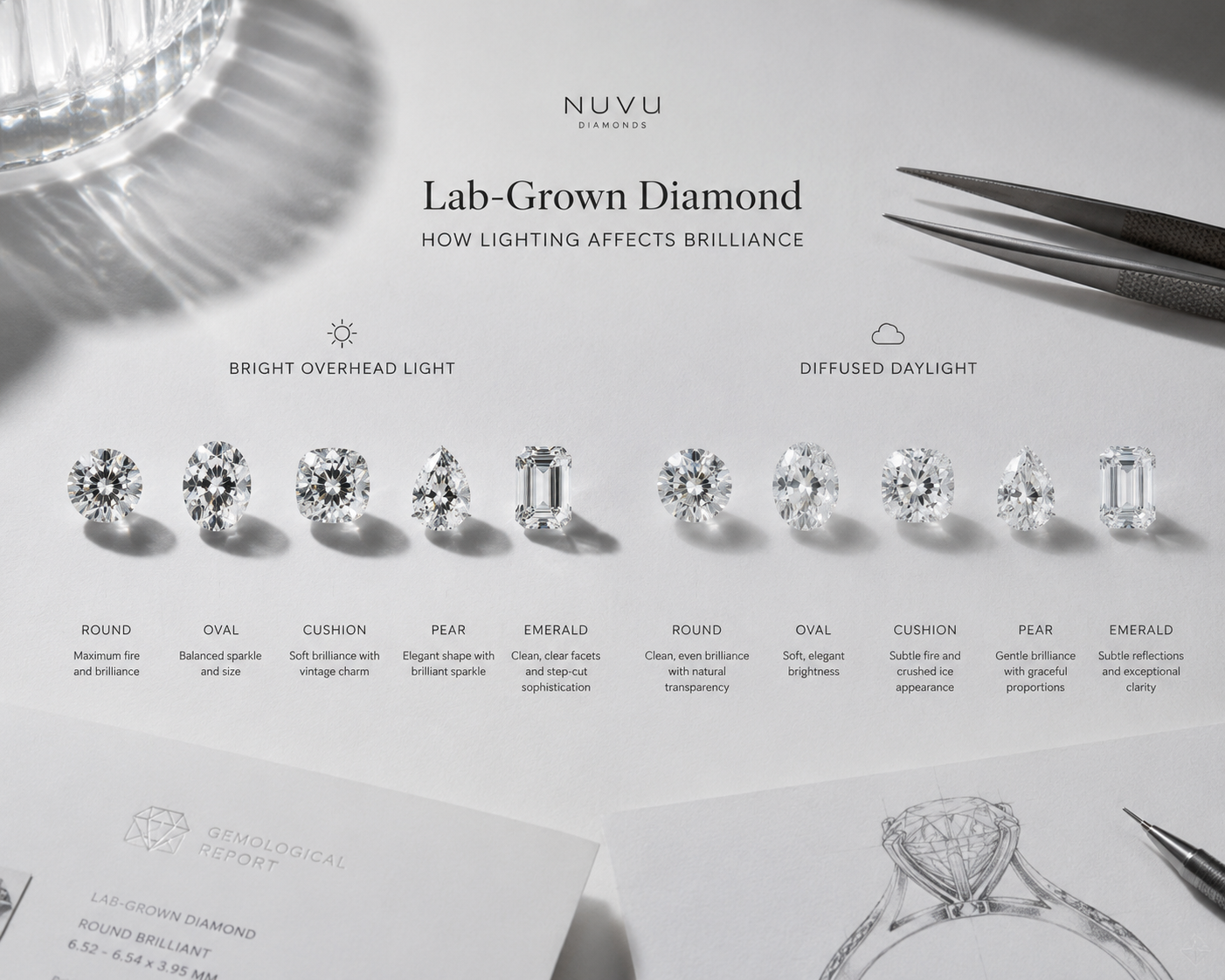
Start with lighting. View the stone under three different conditions: bright overhead light, diffused natural daylight, and a direct spotlight. Each reveals different aspects of the diamond’s performance. Bright overhead light shows overall sparkle and light return. Diffused daylight reveals transparency and any haziness. Direct spotlight exposes contrast, brilliance, and how the stone handles strong directional light.
Look for transparency first. A lab-grown diamond should look clear, not milky or hazy. Then assess brightness and contrast. The stone should have distinct bright and dark areas, not a washed-out or glassy appearance. Check for visible inclusions by looking through the crown and from the side. With fancy shapes, pay attention to outline symmetry and the bowtie effect. A prominent dark bowtie in an oval or pear shape may be acceptable depending on your preference, but you want to see it before purchase.
Using Digital Tools: Photos, Videos, and Measurement Comparisons
High-resolution photos can reveal details that are hard to see in person. Look for polish lines, surface blemishes, and growth lines along the girdle or pavilion. A 360-degree video is more useful than a static image because it shows how the stone returns light from different angles. The pattern should be even, not blocked or patchy.
If the seller provides the stone’s weight and dimensions, compare them against online proportion calculators. For round brilliants, depth percentage between 59% and 62.5% and table percentage between 54% and 58% are strong indicators of good cut quality. For fancy shapes, the length-to-width ratio matters: 1.35 to 1.45 for ovals and pears, 1.50 to 1.70 for marquise. These are not hard rules, but they help you flag stones that may perform poorly.
Asking the Right Questions: Seller Communication as a Quality Filter
The seller’s willingness to answer specific questions is itself a quality signal. Ask for the exact measurements: length, width, and depth in millimeters. Ask for table percentage and depth percentage. Ask about the growth method, CVD or HPHT, and whether any post-growth treatment was applied, such as HPHT color enhancement. When growth method or post-growth treatment is relevant, buyers should look for clear disclosure in the grading report or seller documentation. A straightforward answer suggests the seller knows the stone and is confident in its quality. Vague or evasive responses are a warning. The Federal Trade Commission (FTC) has emphasized that the use of terms like “laboratory-grown” must be clearly communicated to consumers, and that advertisers cannot omit qualifying information that could influence a purchasing decision. [2] A seller who cannot clearly answer basic questions about a stone’s genesis may be inconsistent with these disclosure standards.
Stone-to-Setting Fit Check
If you are buying an uncertified stone for a ring setting, confirm the exact dimensions with the jeweler who will set it. Carat weight alone is not enough. A stone that is too shallow may sit too low in the head. A stone that is too deep may not fit the prongs at all. For custom jewelry, stone measurements and setting compatibility should be confirmed before finalizing a purchase. Request a photo of the stone with calipers showing the millimeter measurements as visual proof. This single step prevents costly setting mistakes.
Accent Stones, Melee, and Decorative Diamonds: A Different Certification Logic
The certification conversation changes when the stones themselves are small. Expecting individual grading reports for every tiny diamond in a pave band or halo setting is neither practical nor economical. The logic of certification must match the role the stone plays in the finished piece.
Why Individual Reports for Small Stones Are Rarely Practical
Grading a 0.02-carat melee stone costs more than the stone itself is worth. Even a 0.10-carat accent stone costs $15 to $30 to grade, which is a significant fraction of its value. In a pave setting with thirty or forty stones, the total grading cost would rival or exceed the cost of the diamonds themselves. For channel bands, beaded settings, and hidden halos, individual certification simply does not make financial sense.
For buyers, the practical distinction is worth noting: a summary report for a batch of small stones can confirm a quality range, but it does not guarantee that every individual stone meets that range. The batch may contain a few stones that fall slightly below the stated floor. Visual inspection of the finished piece is the buyer’s final verification.
Bulk Grading and Summary Reports: What They Cover
Some manufacturers provide a summary report for a matched batch of melee diamonds. This document states the color and clarity range for the entire group, such as G-H color, VS clarity. It does not grade each stone individually, but it confirms that the batch has been sorted for consistency. This is a practical compromise. It gives you a verifiable baseline without multiplying the cost of per-stone grading.
How to Verify Small Stone Quality Without Individual Reports
Inspect the finished jewelry under magnification with a jeweler’s loupe or a magnifying glass with at least 10x power. Look for consistent color across all stones. A single stone that appears noticeably yellow or brown next to its neighbors will stand out immediately. Check for dark or cloudy stones that look dull compared to the rest. Verify that each stone is securely set and not visibly tilted or loose. Compare the overall sparkle and uniformity against known-quality pieces from reputable sellers. If the piece looks even and bright, the batch quality is likely fine.
What to Check Before You Decide
Before purchase, ask the seller or manufacturer what color and clarity range they use as their baseline for accent stones. Request a photo or video of the loose stones laid out together before they are set. If the piece is already made, examine it in person under bright light with magnification. A single off-color stone in a halo will be noticeable, and once set, replacing it requires unsetting and resetting the entire section. Better to catch it before the piece ships.
How Certification Affects Resale Value and Trade-In Options
Certification does not only matter at the point of purchase. It also determines what options you have later, whether you want to upgrade, trade in, or resell the stone. Many buyers overlook this until they try to move a stone and discover the limitations of an uncertified diamond.
Why Certified Stones Retain More Resale Infrastructure
Trade-in programs, upgrade policies, and secondary-market platforms almost always require a certificate to verify the stone. A certified diamond can be identified by its report number, which links to an independent record of its weight, color, clarity, and cut. An uncertified stone has no such record. The next buyer must spend time and money to get it graded, adding friction and risk to any transaction. This makes uncertified stones harder to sell and less attractive to most buyers.
What the Buyer Loses Without a Certificate at Trade-In
Most retailers that offer trade-in programs for lab-grown diamonds will only accept stones with a certificate from a recognized lab. If your stone is uncertified, the trade-in value will likely be based on material cost alone, not on its graded quality. That can reduce the trade-in value by 30 to 50 percent or more compared to an equivalent certified stone. What you saved by skipping the grading report at purchase may be dwarfed by what you lose when you try to trade up.
It is worth checking the specifics of a seller’s trade-in policy before assuming a certificate guarantees full value. Some programs apply a percentage discount regardless of the certificate, while others set a fixed credit amount. The certificate is a prerequisite, but the exact value still depends on the seller’s terms.
When Certificate Ownership Matters for Estate or Long-Term Holding
Even if you plan to keep the stone indefinitely, a certificate provides a baseline record that matters for insurance, appraisal, and inheritance. Without a certificate, an insurance company may value the stone conservatively or require a separate appraisal before issuing a policy. For inheritance purposes, a certificate gives your family a clear, third-party document of what the stone is and what it was worth at the time of grading. This can simplify estate settlement and avoid disputes over value. The FTC’s guidance on product claims reinforces the importance of documentation, as detailed in the lab grown diamond certification guide, for any specific claim — a certificate is one of the clearest forms of such documentation regarding a diamond’s characteristics.
What to Check Before You Decide
If you anticipate upgrading or trading in your lab-grown diamond within the next five to ten years, a certificate is strongly recommended. Confirm the seller’s trade-in policy in writing before you buy. Ask whether they accept third-party certificates from IGI, GIA, or GCAL, or whether they require their own internal grading. If the trade-in process depends on a specific certificate type, you want to know that upfront. A written policy protects you if your plans change later.
Report Verification as a Practical Step
When a grading report is available, it is worth checking the details through the issuing laboratory’s official verification system. Both GIA and IGI offer online report-check tools that allow a buyer to confirm the report number, the listed specifications, and whether the report matches the stone in hand. This verification step does not replace visual inspection, but it does confirm that the document is genuine and that the grade has not been altered. For buyers comparing multiple certified stones, this is a straightforward way to add confidence before making a final choice. A report that cannot be verified through the lab’s own system should raise a question, even if the stone itself appears fine.
When a grading report is provided, buyers should verify the report details through the issuing laboratory’s official report-check tools where available.
How to Choose Between Certified and Uncertified for Your Specific Purchase
The decision to buy certified or uncertified comes down to a few basic questions: how large is the stone, what role will it play in the piece, and what do you plan to do with it later. Most buyers fall into a predictable pattern once they understand where the value lies.
Decision Matrix: Stone Size, Value, Use Case, and Buyer Experience
For a center stone over 0.5 carat, certification is not optional. You are spending enough money that a grading report is the only reliable way to compare options, confirm what you receive, and preserve recourse if the stone does not perform as expected. Between 0.3 and 0.5 carat, certification is still strongly recommended, especially if the stone will be set as a solitaire or worn as a standalone piece. For accent stones in the 0.1 to 0.3 carat range, a bulk report or written matching statement from the seller is usually sufficient. Individual grading for each small stone adds cost without proportional benefit. For melee under 0.1 carat, individual reports are impractical. Visual inspection, seller reputation, and setting consistency carry the weight here.
Before purchase, buyers should confirm the seller’s documentation, return policy, resizing terms, and after-sales support in writing. These details affect the decision to buy certified or uncertified more than any single grade.
When to Pay for Certification Even on a Smaller Stone
Exceptions exist. If the smaller stone is an unusual shape, a rare color, or will be set as a visible standalone piece like a 0.3-carat stud earring, the extra cost of a certificate is small insurance. A grading fee of $25 to $50 is negligible compared to the peace of mind it provides for insurance valuation and future trade-in. If there is any chance you will need to prove the stone’s grade to someone else later, paying for the report upfront is the cheaper option.
When Going Uncertified Makes Practical Sense
There are legitimate reasons to skip certification. For a large lot of melee, a rush custom order, or a low-cost decorative piece that will never be traded in, the savings are real and the risk is manageable. The buyer must understand the tradeoff clearly and must be working with a seller whose judgment they trust. This is not a route for a first-time buyer purchasing a center stone sight unseen. It works best when the buyer can inspect the goods, has a clear quality baseline, and does not need third-party documentation.
What to Check Before You Decide
Before purchasing any lab-grown diamond, ask yourself: “Will I ever need to prove this stone’s grade to someone else—my insurer, a future buyer, a family member?” If the answer is yes, buy certified. If you are confident in the seller and will never need third-party verification, uncertified may be fine.
Additional Guidance on Pricing: Prices for lab-grown diamonds can vary with market conditions, report type, seller channel, and stone-specific details. The cost of a grading report should be weighed against the potential value it provides in documentation, insurance, and future options. Exact comparisons should be verified at the time of purchase, as availability and pricing can shift.
Real Buyer Scenarios: Certified vs. Uncertified with Actual Outcomes
The logic of certification becomes clearer when you see it play out in real purchases. Three common scenarios show how the same decision leads to different outcomes depending on the buyer’s situation.
Scenario One: The 1.5-Carat Solitaire Engagement Ring
A buyer purchases a 1.5-carat, IGI-certified lab-grown round brilliant for an engagement ring. Six months later, they decide to upgrade to a 2-carat stone. Because the original purchase includes a third-party grading report, the retailer accepts the trade-in at the stone’s graded value. The buyer’s insurance policy also uses the certificate to set accurate replacement cost. Without the report, the trade-in would have been valued at material cost only, reducing the credit significantly. The certificate paid for itself the moment the buyer decided to upgrade.
Scenario Two: The Three-Stone Halo with 30 Tiny Accents
A buyer commissions a custom three-stone ring with 0.03-carat melee in a hidden halo. The manufacturer provides a summary report stating all melee falls within G-H color and VS clarity. After receiving the finished ring, the buyer inspects under a loupe and finds one stone that appears slightly yellow compared to the rest. Because the summary report established a measurable standard, the seller replaces the stone under warranty without dispute. The report did not cost much, but it gave the buyer a documented benchmark to enforce.
In custom design, this kind of scenario reinforces why a documented range matters even for small stones. It creates a shared reference point between buyer and seller, reducing the room for subjective disagreement about whether the finished piece meets expectations. For some buyers, the approach is to treat the comparison as a selection question: the report narrows the field, but the final decision still depends on visual performance, measurements, and design fit.
Scenario Three: The Wholesale Buyer for Multiple Jewelry Pieces
A small jewelry brand buys uncertified 0.15-carat stones in bulk for a new collection. They save roughly 25 percent on material cost compared to certified equivalents. The team visually inspects each batch and rejects about 5 percent for color mismatch. The savings from buying uncertified still outweigh the reject rate, making this approach profitable for their specific business model. The tradeoff works here because the buyer can evaluate the goods directly and has a process to handle the small percentage that does not meet their standard. A retail buyer without that capability would face a different outcome.
For wholesale buyers, consistency often matters as much as the headline price. A batch that requires rejecting 5 percent of stones for mismatch still needs a process to manage that waste. Even when individual reports are skipped, a summary baseline for color and clarity helps the buyer set a measurable quality standard and hold the supplier to it. This is a practical example of how documentation supports trust without needing per-stone grading. In sourcing conversations, documentation, consistency, and communication often matter as much as the headline specification.
Wholesale and Sourcing Considerations: China-linked supply chains can offer manufacturing depth and scale in some categories, but buyers still need to evaluate consistency, documentation, communication, and quality control. The decision to buy certified or uncertified in bulk should factor in the supplier’s reliability and the buyer’s ability to verify quality independently.
[1] GIA, “GIA Laboratory-Grown Diamond Reports,” Gemological Institute of America, accessed 2025. https://www.gia.edu/gia-laboratory-grown-diamond-reports
[2] Federal Trade Commission, “Guides for the Jewelry, Precious Metals, and Pewter Industries,” 16 CFR Part 23, 2018 revision. https://www.ftc.gov/legal-library/browse/rules/guides-jewelry-precious-metals-pewter-industries
Disclosure: This article is for general educational purposes only. Diamond grading, pricing, availability, specifications, and seller policies can change, and readers should verify important details through grading reports, official laboratory tools, seller documentation, or qualified professionals before making a purchase decision. Laboratory-grown diamonds should be clearly distinguished from natural diamonds, and environmental or sourcing claims should be supported by specific documentation.