
When you buy a lab-grown diamond, the most important number isn’t the price — it’s the report number. Many buyers assume a grading certificate guarantees they’re getting the exact diamond they selected, but that’s only true if the number on the document matches the tiny inscription on the stone itself, as described in the laser inscription guide. Without this verification, you could receive a different diamond with lower color, clarity, or cut quality than what you approved. This guide explains how to use the report number as your primary verification tool, how to check it before purchase and after delivery, and what red flags to watch for at every step. You’ll learn a simple process that protects your purchase from inventory errors and mismatched stones.
For the full framework, read Lab-Grown Diamond Certification Guide.
| Verification Step | How to Do It | Why It Matters |
|---|---|---|
| Check listing for laser inscription | Look for report number in the description or image | Missing number is a common red flag |
| Verify online before purchase | Enter report number at IGI or GIA website | Confirms the grading record exists and matches listing |
| Compare at delivery | Magnify the diamond’s girdle; match to certificate | Ensures you received the exact graded stone |
| Cross-check with online record | Re-enter number after receiving the diamond | Catches document tampering or expired records |
| Keep record for resale or insurance | Save certificate and photo of inscription | Prevents disputes over identity later |
Quick Questions Before You Read
Q: What happens if the inscribed number doesn’t match the certificate?
You may have received a different diamond than what was graded. Do not accept delivery — return or exchange immediately.
Q: Do all lab-grown diamonds have a report number?
No. Only certified diamonds have a report number. Uncertified stones lack a verifiable grading record, so you cannot independently confirm their specifications.
Q: Can the laser inscription be copied or faked?
Altering an existing inscription damages the stone, and forging a number on a certificate renders the document invalid. A verified online record protects against this.
Q: Is the report number the same as the certificate number?
Yes. These terms are interchangeable — both refer to the unique identifier issued by the grading lab.
Why the Lab-Grown Diamond Report Number Is the Most Overlooked Buying Tool
Most buyers shopping for a lab-grown diamond focus on the four Cs — carat, cut, color, clarity — and then glance at the grading report to confirm the numbers. The report number itself rarely gets a second look. That is a mistake. The report number is the single most reliable link between the physical diamond in your hand, the document on your screen, and the lab’s official record. Treating it as a minor detail leaves a gap in your verification process that no other information can fill.
The Difference Between a Certificate Number and a Report Number
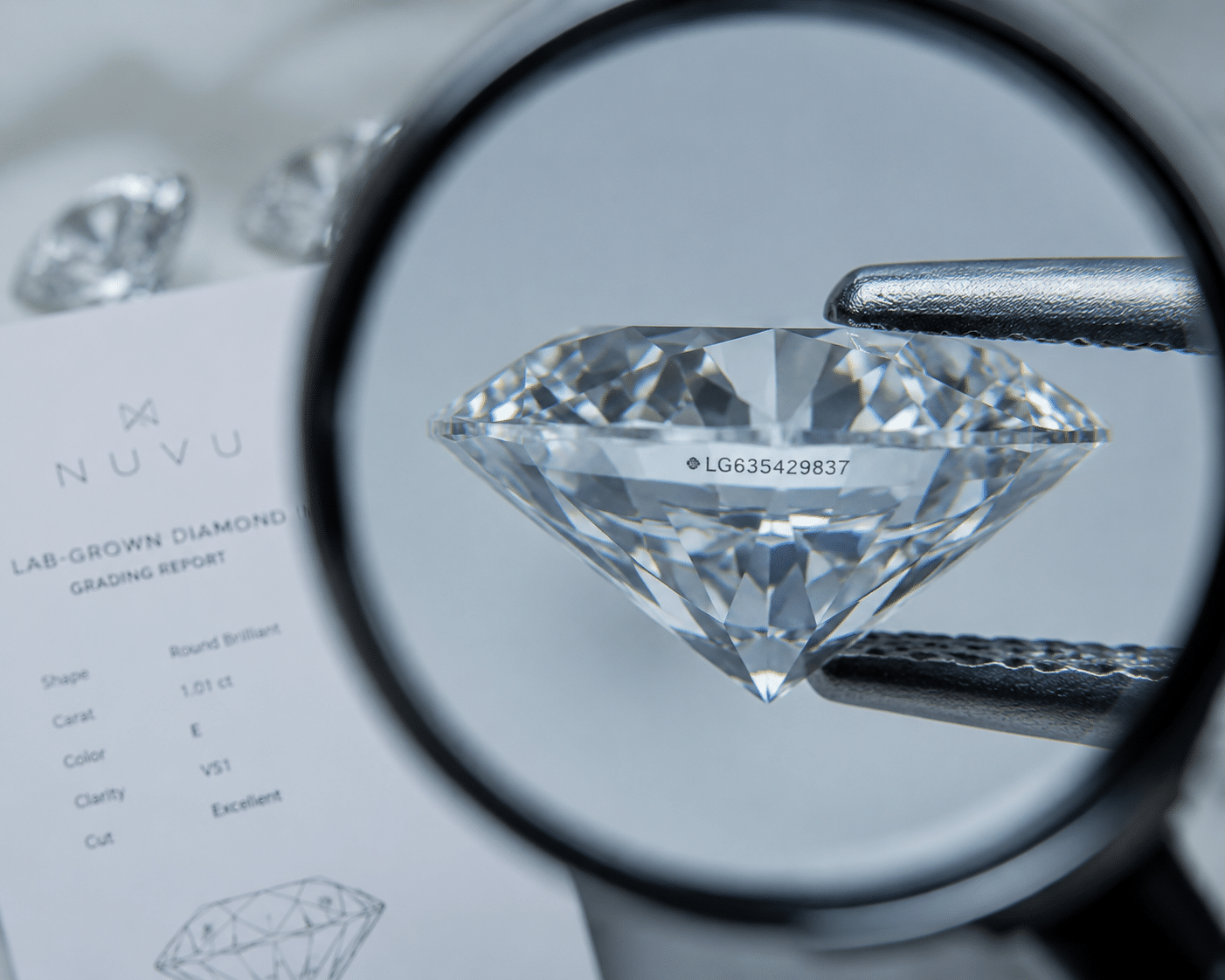
These two terms are often used interchangeably, but they refer to different things. A certificate number is the generic identifier printed on a grading document by the lab. A report number is the unique identification number laser-inscribed on the diamond’s girdle. Both IGI and GIA assign unique report numbers that serve as the stone’s permanent ID. The number inscribed on the diamond must match the number printed on the report exactly. A mismatch of even a single digit creates a documentation gap that cannot be resolved without returning the stone for re-grading — a process that takes time and costs money. Buyers should confirm that both numbers are identical before committing to a purchase.
Why Labs Laser-Inscribe the Report Number
The laser inscription is applied after the grading process is complete. Its purpose is straightforward: it physically anchors the diamond to its grading report. Without an inscription, a loose diamond is visually indistinguishable from thousands of other stones with the same 4Cs range. Two diamonds can share identical grades on paper while being completely different in visual performance, clarity characteristics, or proportions. The inscription eliminates that ambiguity. It is permanent, micro-sized, and placed along the girdle so it does not affect the stone’s appearance or interfere with setting. Once set, it remains readable under magnification for the life of the diamond.
A Practical Distinction for Buyers: Report Number vs. Vendor SKU
It is worth noting that a report number is different from a vendor SKU or internal stock number. A seller may assign its own code to a diamond for inventory purposes, but that code is not linked to any grading lab database. The report number, by contrast, is the only identifier that connects directly to an independent, third-party grading record. When comparing two stones from different sellers, the report number allows you to bypass each seller’s internal system and look at the same type of objective data. This distinction matters because some listings may prominently display a vendor code while burying the report number in fine print — a practice that can make side-by-side comparison harder than it needs to be.
The Report Number as a Consumer Protection Tool for Independent Verification
For buyers, the ability to independently verify a diamond using its report number is a form of consumer protection that operates entirely outside the seller’s control. When a seller provides the report number, the buyer can access the full grading record directly from the issuing laboratory’s database. This means the buyer is not dependent on the seller’s description, photo, or marketing copy to evaluate the stone’s specifications. The same record is visible regardless of which retailer lists the diamond. This independence is especially valuable when a buyer is comparing stones across multiple sellers, because it allows them to confirm that the diamond listed by each seller matches the same verified grading record. A grading report that can be checked independently reduces the information gap between buyer and seller, and it provides a documented baseline that both parties can refer to if a dispute arises over the stone’s identity or characteristics after purchase.
When a grading report is provided, buyers should verify the report details through the issuing laboratory’s official report-check tool where available. The online record serves as an independent reference that does not rely on the seller’s description.
How Buyers Can Verify a Lab-Grown Diamond Using the Report Number
Verification is not a complicated process, but it requires one specific piece of information: the report number. With that number, a buyer can independently confirm what the seller is telling them.
The Online Verification Portal Step
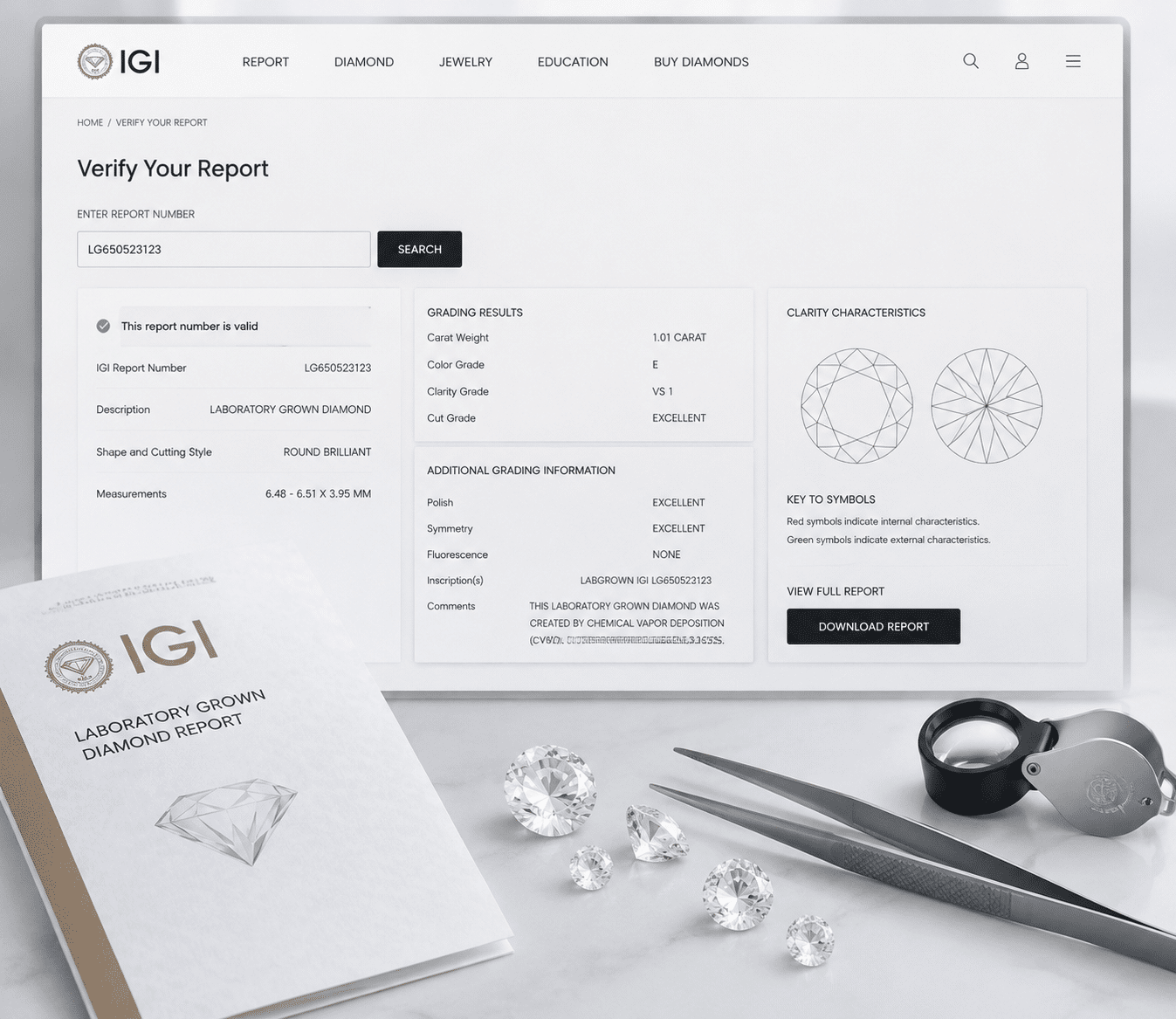
Both IGI and GIA maintain public online databases where any buyer can enter a report number and retrieve the full grading record. That record includes the 4Cs, proportion measurements, clarity plot, and any laser inscriptions or comments. The process takes less than a minute. After entering the number, the buyer should compare every detail on the portal against the physical report they received. If the online record shows different specifications, a different clarity plot, or no match at all, that is a serious red flag. A stone whose report number returns a mismatched or missing record should not be accepted without written clarification from the seller.
What to Check When the Report Number Is Missing from the Listing
Some online sellers omit the report number from their listings. That omission may be an oversight, or it may be an intentional barrier to comparison shopping. Without the report number, the buyer cannot independently verify the stone’s specifications or compare it against other diamonds in the same price and quality range. The only way to do a side-by-side check — lab grown diamond certificate verification — is to request the full report number directly from the seller before making any purchasing decision. A seller who is unwilling to provide it — or who offers only a partial number — should be viewed with skepticism. The report number costs nothing to share, and its absence creates an unnecessary information gap.
The Role of Disclosure in Lab-Grown Diamond Advertising
The use of clear, accurate terminology in diamond listings is not just a matter of good practice — it is also aligned with guidance from the Federal Trade Commission (FTC) on jewelry advertising. The FTC advises that sellers should not make misleading claims about diamonds, including the use of terms that could confuse lab-grown diamonds with natural diamonds.[1] When a seller prominently displays the grading report number and properly identifies the diamond as lab-grown, it helps ensure the buyer is making an informed decision based on verifiable documentation rather than ambiguous or promotional language. Buyers who encounter listings that obscure the report number or avoid clear identification of the stone’s origin should treat this as a potential compliance concern.
How Report Number Verification Links to Sourcing Traceability
The report number also serves as the starting point for understanding a diamond’s sourcing history. While the grading report itself does not typically include a full production log, the report number creates a documented baseline that can be cross-referenced with supplier records, invoices, and shipping documents. For buyers who are interested in knowing more about where and how a lab-grown diamond was produced, the report number is the identifier that allows them to ask specific questions of the seller — such as the growth method used, the laboratory of origin, or whether the stone was part of a specific production batch. In sourcing and wholesale conversations, documentation, consistency, and communication often matter as much as the headline specification. The report number makes it possible to connect those details to a specific stone, rather than relying on general descriptions that could apply to any diamond in a seller’s inventory.
Common Ways the Report Number Protects Against Buying Mistakes
The report number is not just a reference for the initial search. It is the primary safeguard against receiving the wrong stone, confusing similar diamonds, or accepting a diamond with unstated characteristics.
Receiving a Diamond That Differs from the Listing
The first verification step when a loose diamond arrives is to compare three things: the laser inscription on the girdle, the report number on the grading document, and the online record. If all three match, the buyer can be confident they received the exact stone they paid for. If the inscription does not match the report number, one of two things happened: the seller sent a different diamond, or there was an inventory mix-up. In either case, the stone should not be accepted until the discrepancy is resolved in writing. This step is especially important when buying from a marketplace or a seller with a large loose diamond inventory, where mix-ups are more common than buyers expect.
Comparing Multiple Diamonds Without Confusion
When evaluating several loose diamonds, buyers often rely on memory or saved links to keep track of which stone is which. That approach leads to mistakes. Two diamonds with similar grades and prices can have completely different proportion sets, clarity characteristics, or visual performance. Using the report number as the primary reference eliminates the confusion. Each stone has a unique identifier that links directly to its full grading report. Side-by-side comparison of proportions, clarity characteristics, and measurements becomes precise and unambiguous. A buyer who keeps a list of report numbers can quickly pull up the official record for each diamond without flipping through tabs or guessing which link belongs to which stone.
Buyer Verification Checklist
Before purchase: confirm the report number is listed on the seller’s page. Visit the grading lab’s verification portal. Confirm the online record matches the 4Cs and inscription details shown in the listing. After receiving the stone: inspect the laser inscription under magnification. Confirm it matches the report number on the grading document. If any detail differs, do not accept the stone until the discrepancy is resolved in writing.
Why Wholesale Buyers and Sourcing Teams Rely Heavily on Report Numbers
For wholesale buyers and sourcing professionals, the report number is not a helpful extra. It is the central tool for tracking, verification, and inventory control throughout the procurement process. A loose lab-grown diamond may change hands three or four times before reaching a retailer. Each transfer creates risk of misidentification, substitution, or documentation drift. The report number is what keeps that risk contained.
Traceability Across the Supply Chain
In wholesale transactions, the report number functions as the diamond’s passport. When a stone moves from a manufacturer to a distributor, then to a wholesaler, and finally to a retailer, the report number is the single consistent identifier that survives every handoff. A diamond whose report number cannot be verified against its physical laser inscription creates an immediate problem. The buyer receiving that stone has no way to confirm it is the same diamond listed on the invoice. Without that confirmation, the stone may be rejected during inspection, returned to the supplier, or flagged as unverifiable inventory that cannot be resold with confidence.
Lot Mixing and Inventory Management
Wholesale buyers frequently purchase lots or parcels containing multiple loose diamonds. Without individual report numbers, mixing stones from different lots becomes nearly impossible to correct. If two diamonds with similar 4Cs from separate orders end up in the same container, the buyer has no way to reassign them to the correct invoice. The report number solves this. It is the only reliable method to separate individual stones from a bulk purchase, confirm each diamond’s exact specifications against its grading record, and manage returns or exchanges when a stone does not meet the buyer’s requirements. In wholesale operations where margins depend on accuracy, the report number is what prevents small inventory errors from becoming costly disputes.
Documentation Consistency Across Batches
Wholesale buyers also benefit from report numbers when dealing with multiple batches from different suppliers. Two suppliers may each provide diamonds with identical-looking grades on paper, but the reports themselves come from different grading labs or different grading sessions. The report number helps the sourcing team track which batch performed well in visual inspection and which did not. Over time, this creates a pattern: certain labs, report series, or production periods may correlate with more consistent proportions, fewer clarity surprises, or better setting performance. Without the report number as a reference, that kind of pattern recognition is lost in generic grade data.
The Role of Report Numbers in Wholesale Documentation and Dispute Resolution
In wholesale transactions, the report number is also a critical reference for documentation and dispute resolution. When a buyer receives a shipment and identifies a discrepancy — such as a stone with a different clarity grade, a missing inscription, or a report that does not match the invoice — the report number is the first piece of information the buyer and seller will exchange to identify the problem. Without it, both parties are left describing a stone by its 4Cs, which may be shared by multiple diamonds in the same shipment. The report number allows both sides to point to the exact same record. This makes the resolution process faster and more objective, because it removes ambiguity about which stone is being discussed. For wholesale buyers who manage ongoing relationships with multiple suppliers, maintaining a log of report numbers for each transaction provides a documented history that can be referenced if questions arise about past orders.
Limitations of the Report Number and Certificate System
The report number is a powerful verification tool, but it has clear limits. Buyers who treat it as a complete guarantee of value or quality are likely to overestimate what it actually proves. Understanding these boundaries prevents over-reliance and keeps the buying process grounded.
What a Matching Report Number Does Not Prove
A matching report number confirms that the physical stone in your hand is the same stone that was graded by the lab. That is all it confirms. It does not verify that the grading itself is accurate. Grading involves human judgment, and two graders may assign slightly different color or clarity grades to the same diamond. It does not confirm that the stone has no post-grading damage. A diamond can chip or develop a fracture after the report was issued, and the certificate will not reflect that change. It does not guarantee that the seller’s pricing is fair. A matched report number says nothing about market value, markup, or whether the same stone is available for less elsewhere. The report number is a verification tool for identity, not a guarantee of quality, condition, or fair pricing.
The Boundaries of Grading Report Accuracy: Human Judgment and Lab Standards
It is also important to recognize that diamond grading, while systematic, involves professional judgment. GIA, IGI, and other established labs apply rigorous standards, but the process is not purely mechanical. Two trained graders may arrive at slightly different color or clarity conclusions for the same stone, particularly at grade boundaries. A D color stone near the E boundary or a VS1 clarity stone near VS2 may receive different grades from different labs or even within the same lab across different sessions.[2] The report number confirms which stone was graded and links to that specific grading record, but it does not eliminate the inherent variability in the grading process itself. Buyers should use the report number to verify identity, but they should still compare visual evidence — particularly for cut quality — rather than treating the certificate grade as an absolute measure of a stone’s appearance.
What to Do When the Report Number Is Too Small to Read
Laser inscriptions on very small diamonds are not always easy to read. Stones under half a carat, or diamonds with certain facet arrangements near the girdle, can make the inscription extremely difficult to see under standard magnification. A buyer who cannot confirm the inscription has a verification gap. The safest approach is to request a close-up photo or video showing the inscription clearly before accepting delivery. If the seller cannot provide a readable image, the inscription may be worn, damaged, or missing entirely. In that situation, the report number on the grading document becomes harder to trust because the physical anchor is no longer verifiable.
The Certificate Date and Its Practical Relevance
One additional limitation worth checking is the date on the grading report. A recently issued certificate indicates that the diamond was graded under current lab standards. An older certificate, particularly one issued several years ago, may reflect grading practices that have since been refined. This does not mean the older grade is wrong, but it means the buyer should compare the stone’s visual performance and measurements, as outlined in a lab diamond certification guide, against current expectations, not just rely on the historical grade. For lab-grown diamonds, the production technology also evolves. A stone produced several years ago may have different growth characteristics compared to a modern equivalent. The report number links to the grading record, but it does not tell you how production standards have changed since that grading took place.
HPHT and CVD: How Growth Method Influences Grading Documentation
Another layer of nuance is the growth method used to create the lab-grown diamond. High Pressure High Temperature (HPHT) and Chemical Vapor Deposition (CVD) are the two primary methods for producing lab-grown diamonds, and they create different growth environments. GIA’s educational resources explain that while both methods produce diamonds with the same crystal structure and optical properties as natural diamonds, the growth conditions can lead to different types of inclusions or trace-element distributions.[3][4] A grading report that includes a lab-grown diamond identification statement will often note the growth method, but this detail is separate from the report number itself. The report number does not tell you the growth method — you must check the report’s comments section or identification field. For buyers comparing stones, understanding whether a diamond was produced via HPHT or CVD can be relevant because it can affect the types of inclusions visible under magnification and, in rare cases, the stone’s response to certain testing equipment. The report number remains the key to pulling up the full grading record, but the buyer should read the full record, not just the summary grades.
What This Means in a Real Purchase
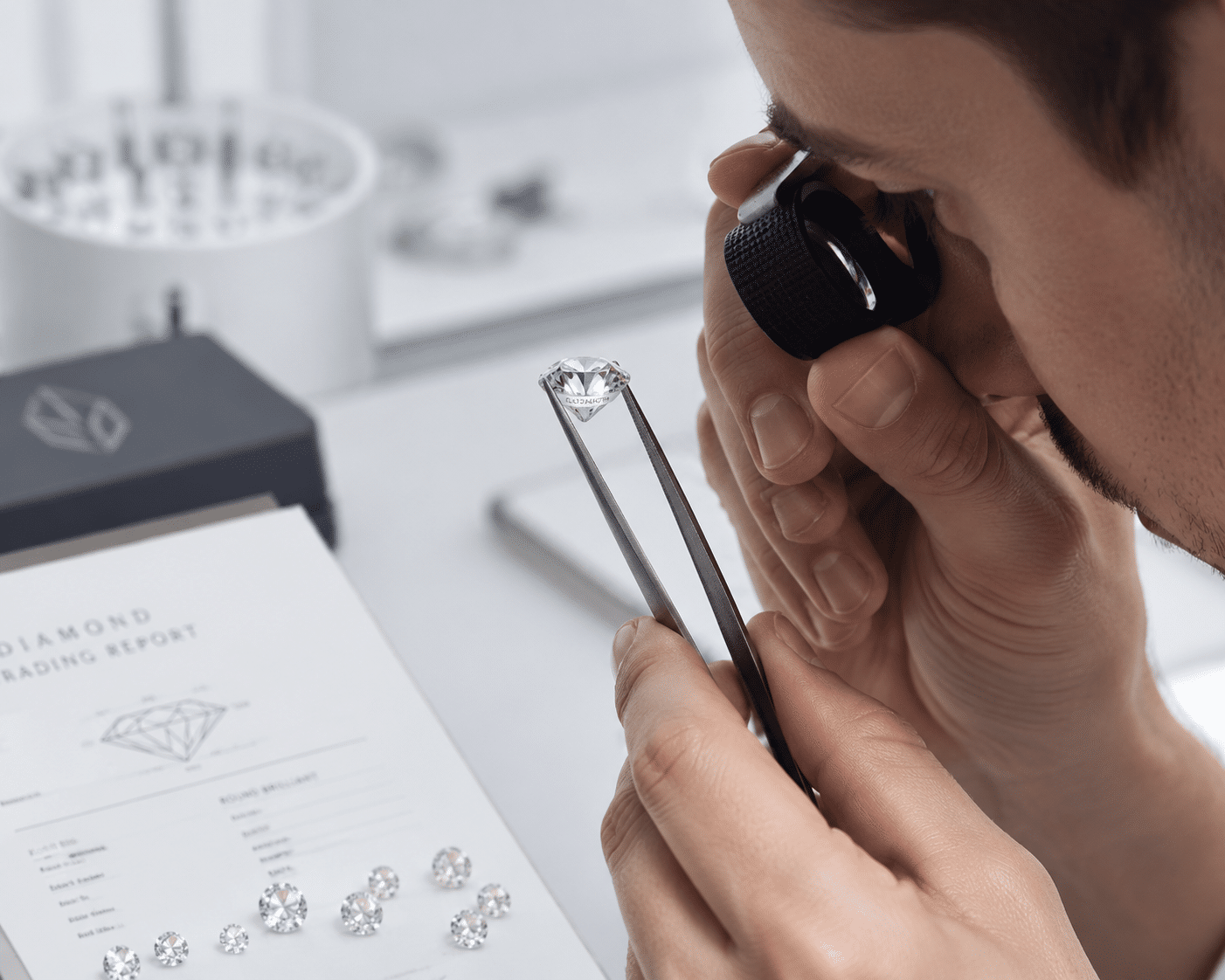
When you receive a loose diamond, check the inscription first. Use a jeweler’s loupe or ask a local jeweler to confirm the number matches the report. If you cannot read it, pause the transaction until the seller provides clear documentation. If the inscription is absent on a stone that was supposed to have one, request immediate clarification. A missing inscription is grounds for return or exchange, because it removes the primary means of verifying the diamond’s identity.
A Note on Sustainability and Production Documentation
For buyers who are interested in the sustainability context of their lab-grown diamond purchase, it is worth understanding the limits of what the report number can reveal. The grading report does not typically include detailed energy-use data, carbon footprint calculations, or production facility information. Sustainability claims should be specific and documented. Broad green language is less useful than clear information about production, energy, sourcing, and seller transparency. A buyer who encounters sustainability claims in a listing should ask the seller for specific documentation — such as a description of the production process, energy source, or any third-party verification — rather than relying on the grading report alone. The report number confirms the stone’s identity and grading, but it does not independently verify environmental or production claims. Responsible buying means looking for substantiated information beyond what the certificate shows.
How NUVU Builds the Report Number into Its Buying Process
For a brand focused on transparency, the report number is not an afterthought. It is built into the buying process from the first listing through final delivery. This approach removes the friction of requesting documentation separately and gives the buyer control over verification at every stage.
Report Numbers on Every Listing
Every loose diamond on NUVU’s product pages includes its full report number. This means a buyer can copy the number, enter it directly into the grading lab’s verification portal, and confirm the stone’s full grading record before making any decision. There is no need to request the number through a contact form or wait for a response. The buyer gets independent confirmation from the very start of the search, which makes comparison shopping more efficient and reduces the risk of selecting a diamond based on incomplete or unverifiable information.
Verification Support for Custom Design and Setting
When a loose diamond is selected for a custom ring or jewelry piece, the report number becomes the tracking mechanism through the setting process. It ensures that the stone set into the final piece is the same diamond the buyer selected, not a substitute or a mix-up from inventory. After the piece is completed, the report number remains accessible through the buyer’s NUVU account. This provides a permanent record for future reference, whether the buyer needs the number for insurance documentation, resale preparation, or simply to confirm the diamond’s identity years later. For custom design, trust comes from matching the stone to the setting, budget, and wearer’s daily use — not from choosing grades in isolation.
Frequently Asked Questions About Lab-Grown Diamond Report Numbers
Can the Report Number Be Removed or Altered?
The laser inscription on a diamond’s girdle is permanent. Removing it would require grinding down or repolishing the girdle, which alters the stone’s weight, proportions, and symmetry. That process effectively ruins the diamond and would require a full re-grading to establish a new identity. On the grading document itself, the report number is printed as part of the certificate. Any alteration to the printed number voids the document. A buyer who encounters a report number that appears tampered with, or an inscription that does not match the certificate, should treat the stone as unverifiable.
Do All Lab-Grown Diamonds Have Report Numbers?
No. Uncertified lab-grown diamonds may have no grading report and no laser inscription. Without a report number, the buyer loses the ability to independently verify the stone’s specifications, compare it against other diamonds, or trace its grading history. For smaller, low-cost stones, skipping certification may be a practical choice. But for any significant purchase, a graded and inscribed diamond is the safer option because the report number gives you a verifiable identity for the stone you are buying.
Is the Report Number the Same as the IGI or GIA Reference Number?
Yes. Different grading labs and sellers may use slightly different terminology, including report number, certificate number, or reference number. They all refer to the same unique identifier assigned by the grading lab when the diamond was evaluated. The function is identical regardless of the term used. When a seller provides a number, use it directly to search the grading lab’s online database. If the number returns the correct grading record, the terminology does not matter.
How Does the Report Number Clarify the Distinction Between Lab-Grown and Natural Diamonds?
Laboratory-grown diamonds should be clearly identified as laboratory-grown, and they should not be presented as mined diamonds. For buyers who want confirmation of a diamond’s origin, the grading report’s identification field is where the growth method is typically noted. The report number links to that full record, including whether the stone is classified as laboratory-grown. A buyer who enters the report number into the grading lab’s online portal can often see this designation directly, separate from the seller’s product description. This provides an additional layer of verification that the diamond’s origin is documented by an independent third party, rather than relying solely on the seller’s marketing language. When a listing does not provide the report number, the buyer loses the ability to independently verify this origin information.
[1] Federal Trade Commission, “Guides for the Jewelry, Precious Metals, and Pewter Industries,” FTC, 16 CFR Part 23, updated 2018. Available at: FTC Jewelry Guides. See §23.11 for guidance on diamond terminology and the distinction between natural and laboratory-created diamonds in advertising.
[2] GIA, “GIA Diamond Grading: An Overview of the 4Cs and Grading Process,” GIA, n.d. Available at: GIA Diamond Grading. See also GIA’s discussion of grading subjectivity and quality assurance procedures.
[3] GIA, “HPHT Lab-Grown Diamonds,” GIA, n.d. Available at: HPHT Lab-Grown Diamond Identification.
[4] GIA, “CVD Lab-Grown Diamonds,” GIA, n.d. Available at: CVD Lab-Grown Diamond Identification.
Disclosure: This article is for general educational purposes only. Diamond grading, pricing, availability, specifications, and seller policies can change, and readers should verify important details through grading reports, official laboratory tools, seller documentation, or qualified professionals before making a purchase decision. Laboratory-grown diamonds should be clearly distinguished from natural diamonds, and environmental or sourcing claims should be supported by specific documentation.