
Diamond Education
Understand lab-grown diamonds beyond basic grades, from certification and cut quality to the details that actually affect beauty, value, and long-term satisfaction.
A grading report helps narrow the field, but it does not explain everything a buyer will actually see or feel. Cut proportions, visual performance, shape outline, setting compatibility, and daily wear all influence how a diamond performs once it becomes jewelry.
This education hub was built to help modern buyers compare lab-grown diamonds with more clarity before making a final decision.
Start with certification, cut quality, or the practical differences that matter most to your purchase.
Start with the Questions That Shape a Diamond Decision
Diamond education is most useful when it helps buyers compare real choices. These guides focus on the questions that often shape a purchase: how quality affects appearance, what certification can and cannot explain, and how lab-grown diamonds compare with natural diamonds in origin, value, and buying logic.
4Cs Guide
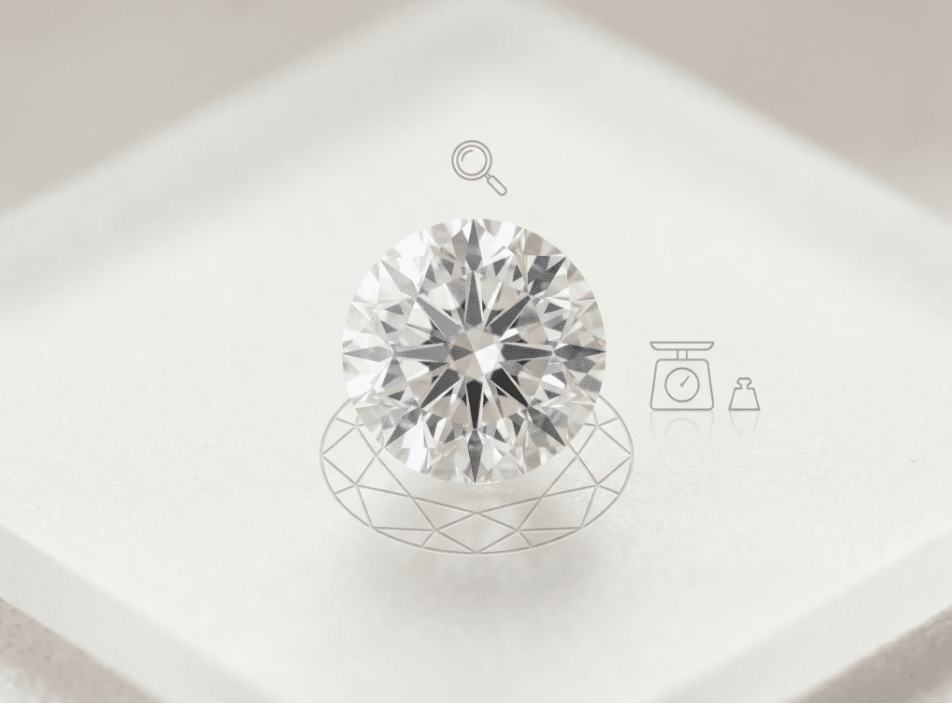
Learn how cut, color, clarity, and carat weight work together, and why the highest grade is not always the most practical choice for every buyer.
A useful 4Cs comparison should help you balance beauty, size, budget, and the way the diamond will look once it is set into jewelry. Cut often has the strongest effect on visible performance, while color and clarity should be judged by how noticeable they are in the chosen shape and setting.
Certification Knowledge
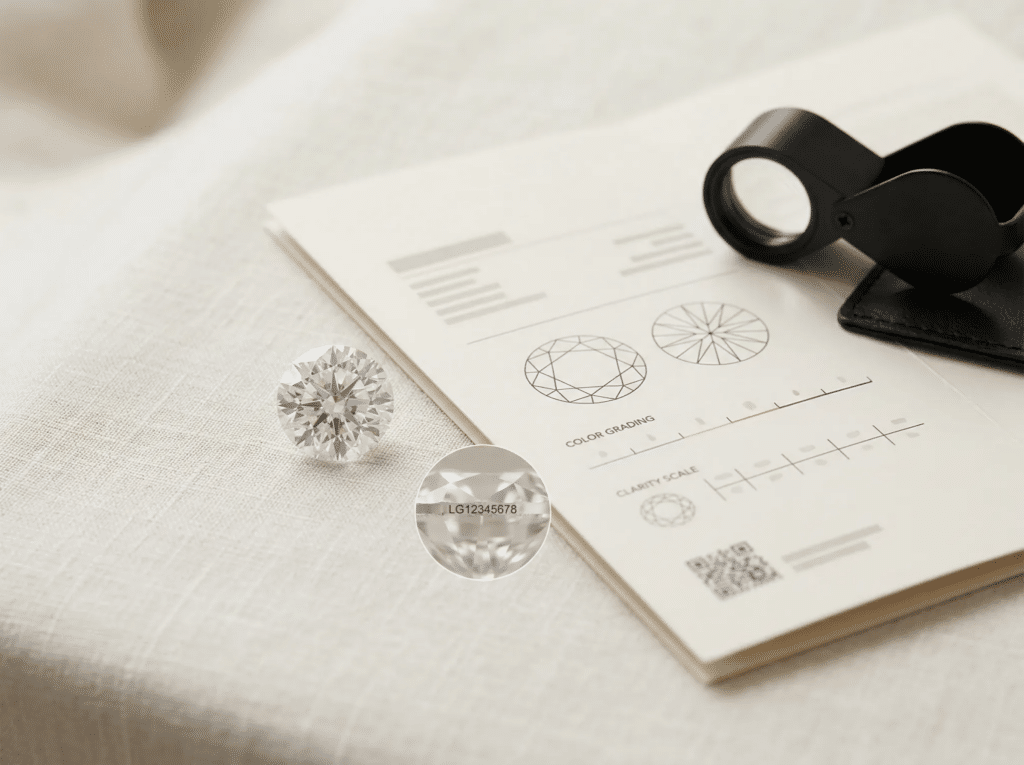
Understand what IGI, GIA, and grading reports can clarify before purchase, including cut, color, clarity, measurements, and identifying details.
A certificate helps reduce uncertainty, but it does not show every visual difference. Buyers still need to compare proportions, videos, setting fit, and how the diamond appears in real use.
Lab vs Natural Comparison
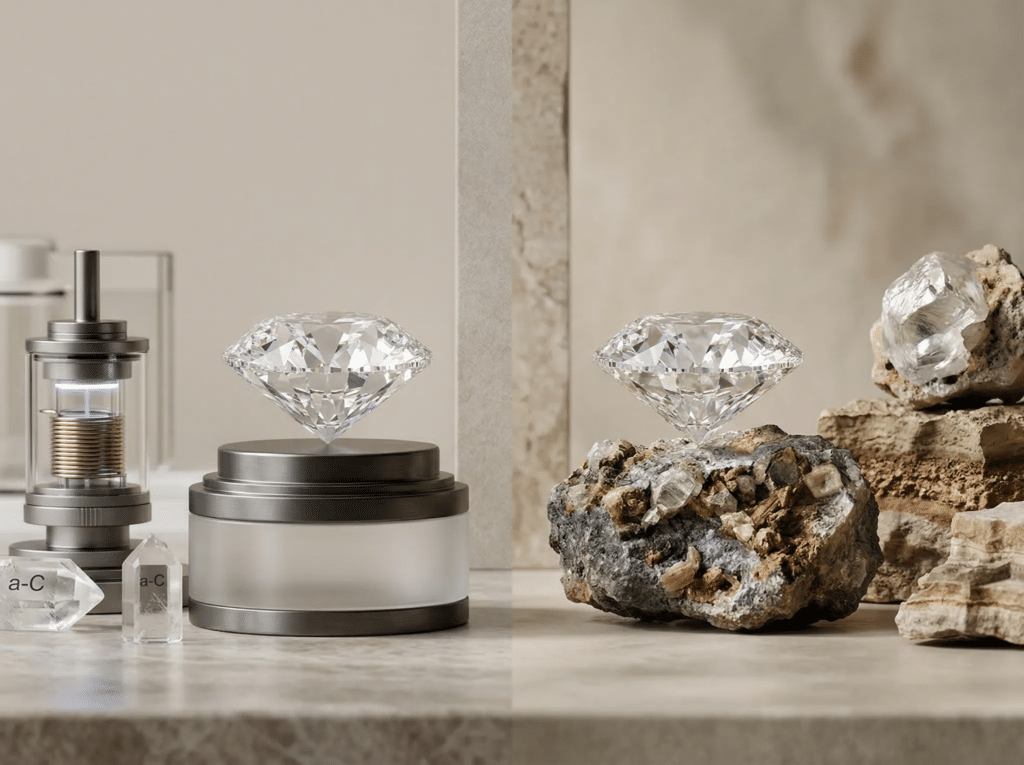
Compare lab-grown and natural diamonds through origin, appearance, pricing logic, environmental pressure, and long-term buying priorities.
This guide avoids simple slogans. The goal is to help buyers understand what is physically the same, what is different, and why those differences may matter depending on the purchase.
Why NUVU Starts with Education
Lab-grown diamonds have made larger sizes, custom jewelry, and more flexible pricing accessible to more buyers, but they have also created more comparison points. Many customers now look at certificates, proportions, videos, shape outlines, setting styles, and price differences at the same time, often without knowing which details matter most.
At NUVU, we treat education as part of the buying process, not as separate content added for marketing. A grading report can narrow the field, but it does not explain everything a buyer will actually see once a diamond is worn in real life.
Cut quality, light performance, shape balance, setting compatibility, and daily wear all influence how a diamond finally feels as jewelry.
Transparency First
Transparency matters because two diamonds with similar grades can still look very different once they are viewed in real lighting or placed into different settings. Clear comparison helps buyers understand what actually affects appearance and value.
Better Buying Logic
A better diamond purchase is not only about choosing the highest grade or the largest size. Buyers often balance sparkle, shape, setting style, budget, certification, and long-term wear together.
A More Considered Choice
For many modern buyers, lab-grown diamonds offer more flexibility in how beauty, size, budget, and sourcing priorities are balanced together. The decision is often more personal and more practical than traditional diamond marketing suggests.
If Sustainability Matters Most to You, Start Here
For many modern buyers, sustainability is not a separate issue from quality, transparency, or value. If that perspective matters to you, these are the best places to begin.
Compare Lab vs Natural
Start with the bigger picture.
If sustainability is one of your priorities, understanding the differences in origin, transparency, pricing logic, and sourcing perspective is the clearest first step.
Understand Certification Before You Decide
A more thoughtful purchase is also a more informed one.
Certification helps you understand what is being graded, how to compare stones more clearly, and where transparency becomes practical.
Shop Loose Diamonds or Start a Custom Design
Once you understand the sourcing perspective and the grading basics, the next question becomes practical: do you want to compare loose stones directly, or create something more intentional through a guided custom process?
A sustainability-minded diamond decision usually begins with comparison, becomes clearer through certification, and turns practical when you know whether to shop loose stones or build around a custom design.
Quick Answers
Clear answers to the questions most shoppers ask before choosing a lab-grown diamond.
Q1 Are lab-grown diamonds real diamonds?
Yes. Lab-grown diamonds have the same chemical composition and crystal structure as mined diamonds. The more useful buying question is not whether they are real, but how to compare cut, color, clarity, carat weight, certification, and visual performance before choosing one.
Q2 Is a diamond certificate enough to choose a diamond?
A certificate is important, but it should not be the only decision point. A grading report can show measurements, color, clarity, cut information, and identifying details, but it cannot fully show how a diamond looks in different lighting, how inclusions appear to the eye, or how well the stone fits a specific setting.
Q3 What should I learn first before buying a lab-grown diamond?
Start with the 4Cs, but do not stop there. Cut quality, shape, certification, and setting style usually affect the final result more than buyers expect. A practical comparison should connect the diamond’s grades with how the stone will actually look and wear as jewelry.
Q4 Are lab-grown diamonds always more sustainable?
Lab-grown diamonds avoid traditional mining, which is an important difference, but sustainability should be discussed carefully. Energy use, production method, documentation, cutting, polishing, packaging, and transport can all affect the final environmental picture. NUVU treats sustainability as a specific conversation, not a slogan.
Q5 Why does NUVU focus so much on diamond education?
Because modern diamond buying involves more comparison than many people expect. Buyers often compare certificates, videos, proportions, shapes, settings, price differences, and sourcing claims at the same time. Education helps turn those details into a clearer decision instead of a confusing list of specifications.
Q6 Which 4C matters most for sparkle?
Cut typically has the strongest impact on sparkle, light return, and overall visual life.
Q7 Is lab-grown diamond good for engagement rings?
Yes. Many buyers choose lab-grown diamonds for engagement rings because they offer real diamond beauty with more flexibility in size, quality, and budget.
Need help choosing?
Explore our 4Cs Guide, compare lab vs natural, or start designing your ring with a clearer understanding of what matters most.
Now that you know what matters, explore with more confidence.
Whether you’re comparing loose stones, planning an engagement ring, or starting a custom design, a better decision begins with clearer information.