
Lab-grown diamonds are diamonds created through a controlled growth process instead of geological formation in the earth. They are not cubic zirconia or moissanite. The useful buying distinction is origin: a lab-grown diamond and a natural diamond are both diamond material, while their growth histories are different.
| Question | Short answer | What to verify |
|---|---|---|
| Is a lab-grown diamond a real diamond? | Yes. It is diamond material grown in a laboratory environment. | Check the report’s laboratory-grown disclosure and report number. |
| Can it look like a natural diamond? | Yes. Appearance depends mainly on cut, proportions, color, clarity, lighting and setting. | Review measurements, video or photographs and the finished setting. |
| Is it automatically the same value? | No. Origin, quality, demand, supply and the buying channel affect value expectations. | Compare like-for-like stones and decide which origin fits your priorities. |
What a lab-grown diamond actually is
A diamond is a crystalline form of carbon. In nature, diamond formation takes place under geological conditions over a very long period. A laboratory-grown diamond is made by recreating the conditions needed for diamond growth in an engineered process. The finished stone can then be cut, polished, graded and set in jewelry in much the same way as a natural diamond.
The phrase “lab-grown” describes origin. It does not mean “fake,” “plastic,” or “a diamond-look stone.” A simulant is a different material that imitates some visual qualities of diamond. Moissanite and cubic zirconia are examples of simulants; they should be disclosed by their correct names.
What stays the same, and what changes
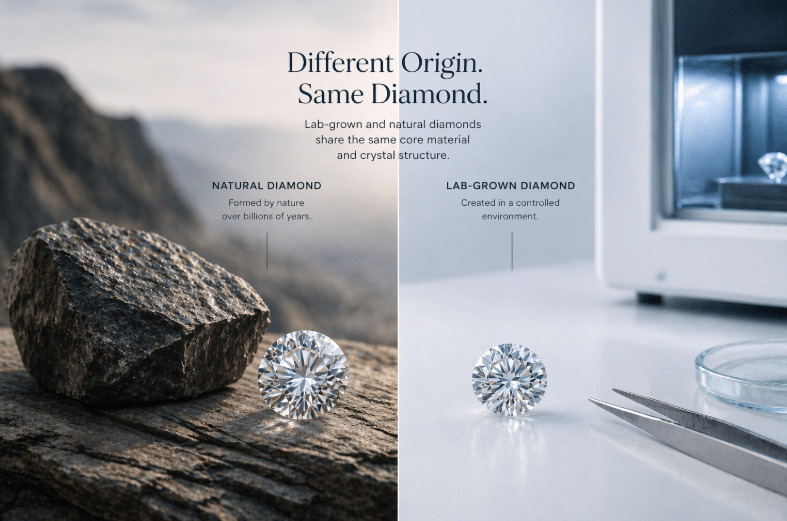
Lab-grown and natural diamonds can share the same basic diamond material, crystal structure, optical behavior and durability. That is why an unaided visual inspection often cannot establish origin. A well-cut stone can be bright and attractive regardless of whether it was grown in the earth or in a production system.
Origin still changes the buying decision. Natural diamonds have a geological origin and a market history built around rarity and mining. Lab-grown diamonds have a manufactured origin and a supply model that can scale differently. Neither origin makes every stone identical. Cut quality, proportions, clarity characteristics, color, shape, treatment disclosure and documentation remain stone-specific.
How HPHT and CVD fit into the explanation
Two common growth routes are HPHT and CVD. HPHT uses high pressure and high temperature to create a diamond-growth environment. CVD deposits carbon from a gas mixture onto a prepared substrate in a controlled chamber. Both are production methods, not quality grades by themselves.
A report or supplier record may identify the growth method and any post-growth treatment. That information can be useful when a buyer has a specific disclosure, sourcing or inventory requirement. For most consumers, it should be considered alongside the stone’s graded characteristics and visual evidence rather than treated as a shortcut for beauty or value.
NUVU’s operating model includes owned HPHT production and order-specific CVD sourcing. Ask which route applies to the stone you are considering, and confirm relevant disclosures in its laboratory report. The company background explains the distinction between the brand and production roles.
Why lab-grown diamonds are often priced differently
Prices reflect more than whether a stone is “real.” Lab-grown supply can be produced through repeatable manufacturing systems, so the market does not use the same scarcity assumptions as natural diamonds. Competition, inventory, cutting yield, shape demand, grading, treatment, channel costs and customer service also affect the final offer.
A lower price can create room for a larger stone, a more elaborate setting or a different budget allocation. It does not remove the need to compare equivalent specifications. A lab-grown diamond with a weak cut, unclear report or poor fit can be a worse purchase than a better-documented stone at a higher price.
What a grading report can and cannot tell you
A grading report is a useful identity and quality record. Depending on the laboratory and report type, it can list shape, measurements, carat weight, color, clarity, cut-related fields, polish, symmetry, fluorescence or comments, along with a laboratory-grown disclosure and report number.
The report is not a complete buying decision. It does not choose the best stone for your setting, prove every environmental statement, or guarantee future resale value. Use the issuing laboratory’s report-check tool where available, then match the report to the stone, measurements, inscription or parcel records supplied for your order.
Choose the origin that fits your priorities
Lab-grown diamonds may suit buyers who want diamond material, a clear manufactured origin and more budget flexibility. They can also suit designers, retailers and private-label teams that need repeatable specifications or a documented sourcing conversation.
Natural diamonds may suit buyers who value geological origin, rarity traditions or a specific natural-stone narrative. A buyer can prefer either origin without treating the other as deceptive. The responsible choice is to state the origin clearly and compare the stone on the qualities that matter to the intended use.
A practical verification checklist
- Decide whether origin is a requirement, a preference or an open question.
- Compare shape, measurements, carat weight, color, clarity and cut-related information together.
- Verify the report number with the issuing laboratory when a report is supplied.
- Review a video, photographs or in-person view under more than one lighting condition when possible.
- Confirm that the stone fits the setting, design brief, budget and delivery terms.
- Keep the quote, report, approved specifications and written disclosures with the order record.
Continue with the right next step
For a broader education path, visit the lab-grown diamond education hub. To compare origin questions in more detail, read the lab-grown versus natural diamond guide. If you are ready to compare available stones, start with loose lab-grown diamonds; for a made-to-order piece, review custom ring design and send the relevant specifications through contact NUVU.
Disclosure: This article is general education. Grading, availability, pricing, treatment, delivery and seller policies are item- and order-specific. Verify important details in the applicable report, quotation and written order records.