
Lab-Grown Diamond Ring Setting Styles
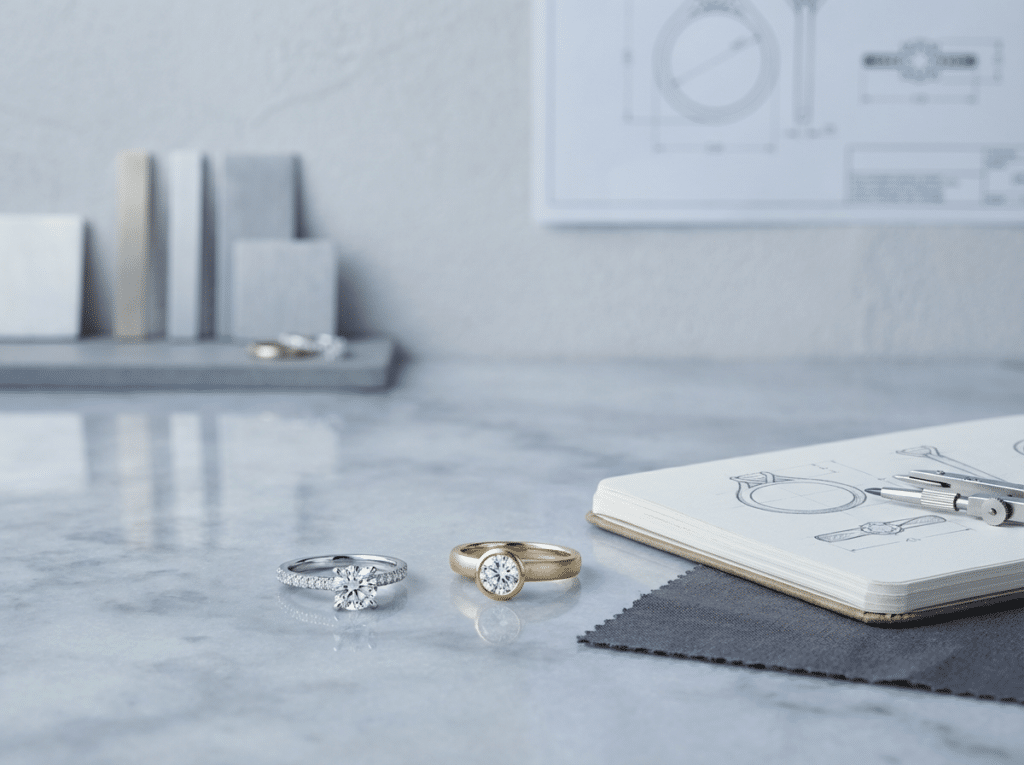
Different setting styles can change the overall character of a ring, even when the center stone stays the same.
This section helps you understand which style best matches your taste, lifestyle, and design direction.
Compare classic, modern, and detail-focused ring settings in a clearer way.
The Setting Shapes More Than the Stone
Why Setting Style Matters
When people choose a ring, they often focus first on the diamond shape.
However, the setting plays an equally important role in defining the final look.
It affects how minimal or decorative the ring feels, how much visual presence it has, and how the center stone is framed from different angles.
A solitaire setting keeps the design clean and diamond-focused.
A halo design adds extra brilliance around the center stone.
A three-stone setting creates balance and structure, while vintage-inspired designs bring softer detail and character.
Setting style also changes how the ring feels in daily wear.
Some designs feel light and simple, while others feel more detailed, expressive, or substantial on the hand.
This is why setting style should be chosen early in the design process. It defines the ring’s overall direction, mood, and visual personality.
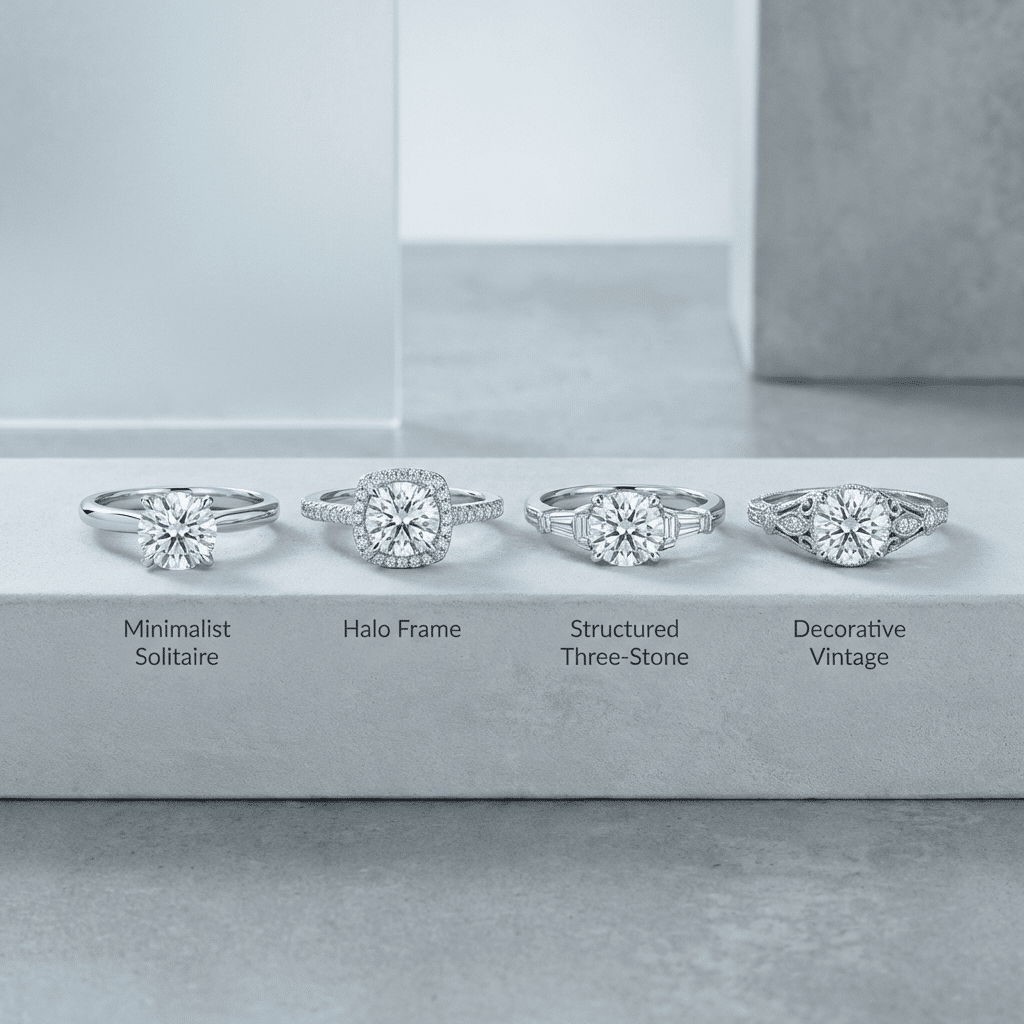

Overall Style
The setting influences whether the ring feels clean, dramatic, classic, or detailed.

Stone Presentation
Different settings frame the center diamond in distinct ways.

Daily Wear Feel
Some settings feel more understated, while others create a stronger visual statement.
Five Popular Setting Directions
These five styles cover the most common directions customers explore when designing a custom lab-grown diamond ring.

Solitaire
A solitaire setting keeps the focus on the center stone with a clean, minimal structure.
It feels timeless, refined, and easy to pair with different diamond shapes.

Halo
A halo setting surrounds the center stone with smaller diamonds, creating a brighter and more eye-catching appearance.
It enhances visual presence and can make the center stone appear larger.

Hidden Halo
A hidden halo adds detail beneath or around the center stone, often visible from angled views.
It keeps the top view clean while adding subtle complexity.

Three-Stone
A three-stone setting uses side stones to frame the center diamond and create a structured composition.
It feels balanced, dimensional, and visually complete.

Vintage Inspired
Vintage-inspired settings introduce decorative details such as milgrain edges and intricate accents.
They feel expressive, detailed, and more character-driven than modern styles.
The Same Diamond Can Look Very Different
Even when the diamond shape and size are the same, the setting can still change the overall look of the ring.
Some settings create a cleaner outline, while others increase visual width, brightness, or decorative detail.
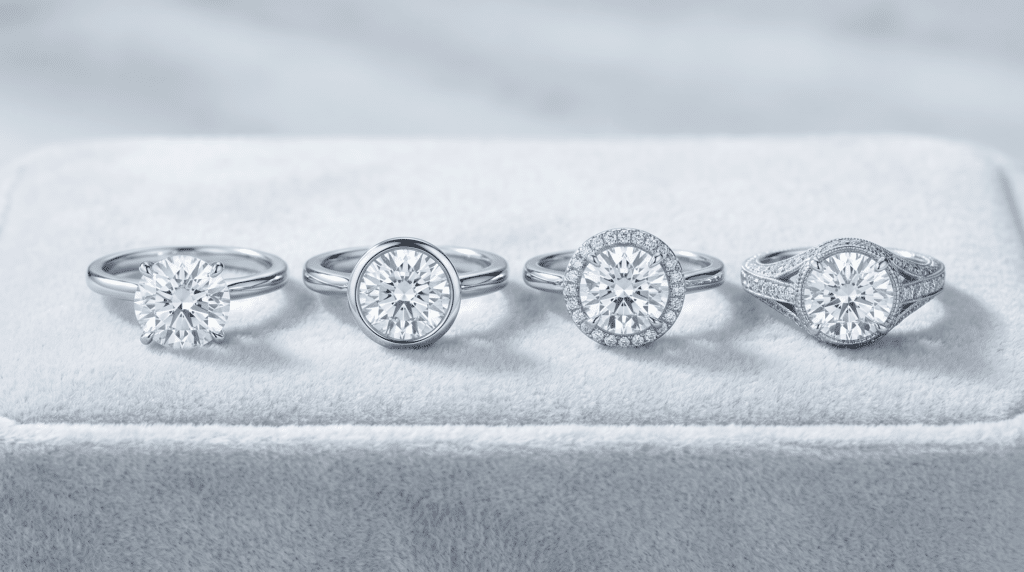
Top View Impact
Some settings make the center stone feel more open, while others add more framing around it.
Side Profile Detail
Certain styles add more visual detail when viewed from the side angle.
Finger Coverage
Wider or more structured settings can create a fuller appearance on the hand.
Design Personality
Minimal, bold, soft, intricate, or vintage-inspired effects often come from the setting, not just the diamond itself.
Not Sure Which Style Fits You Best?
You do not need to know the exact setting style before starting.
Many custom projects begin with only a general preference.
A few simple questions are often enough to help narrow the direction.
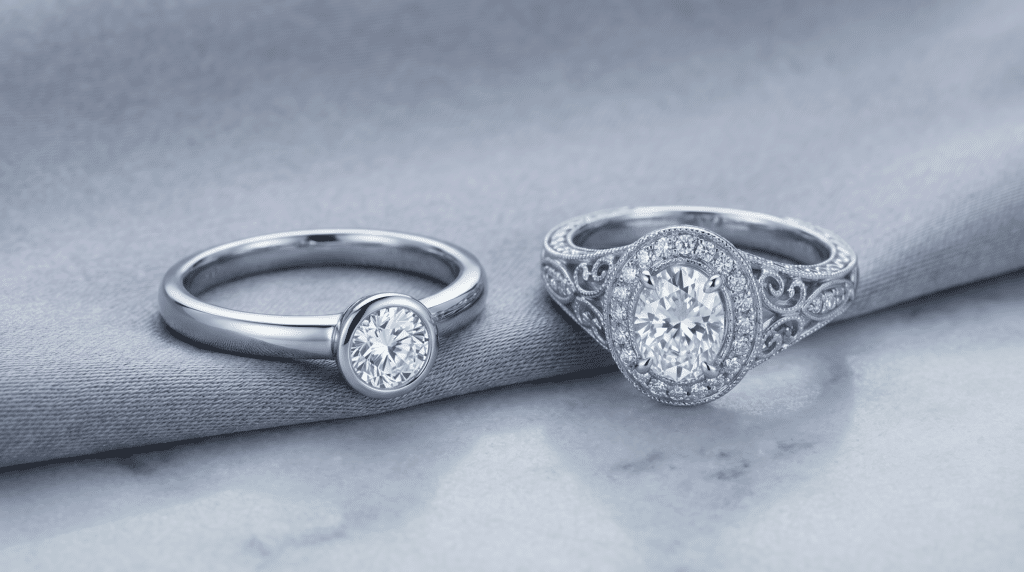
Do you prefer a minimal or more decorative look?
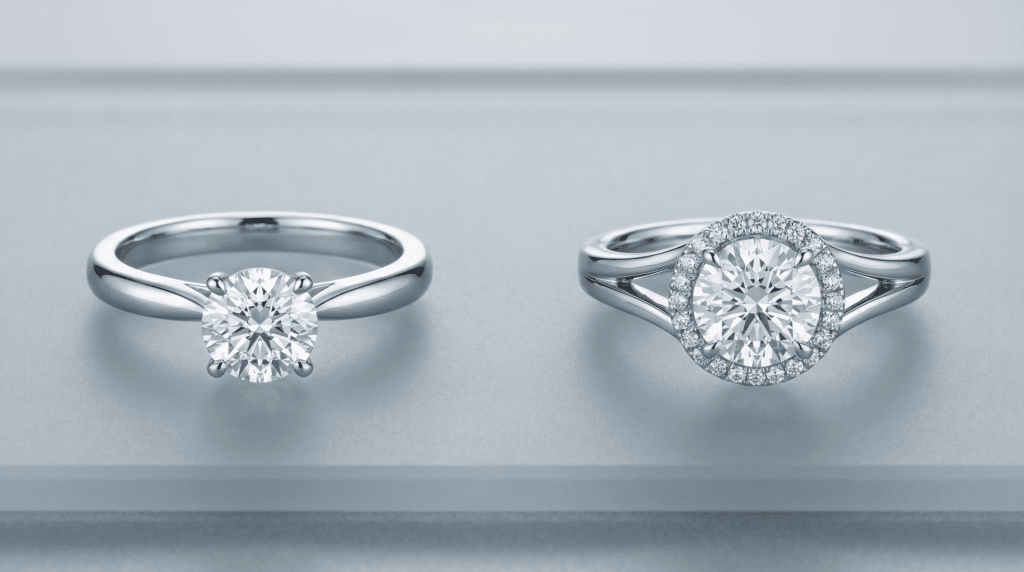
Do you want the center stone to stand alone or feel more framed-in?
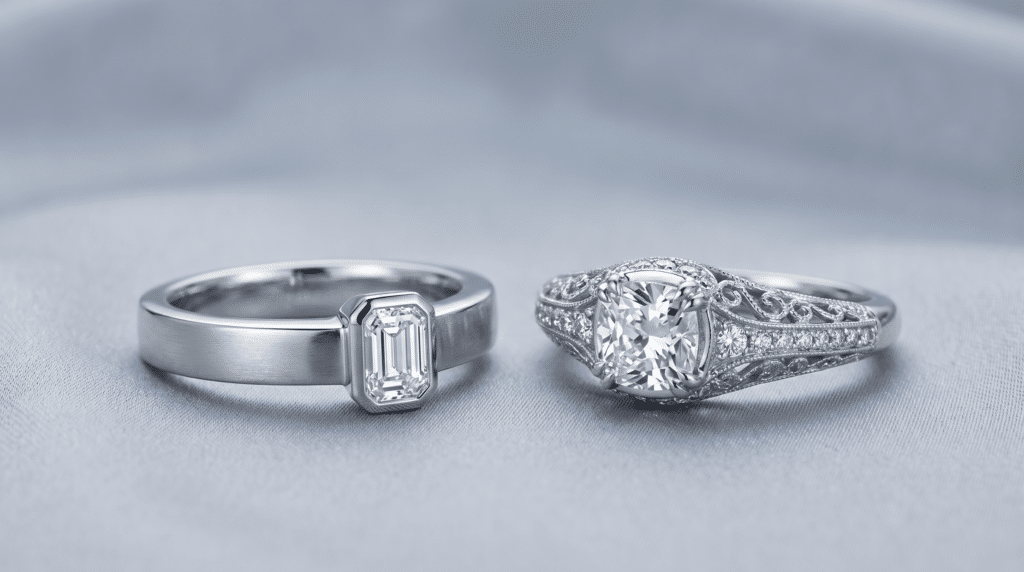
Do you prefer clean modern lines or more intricate detailing?
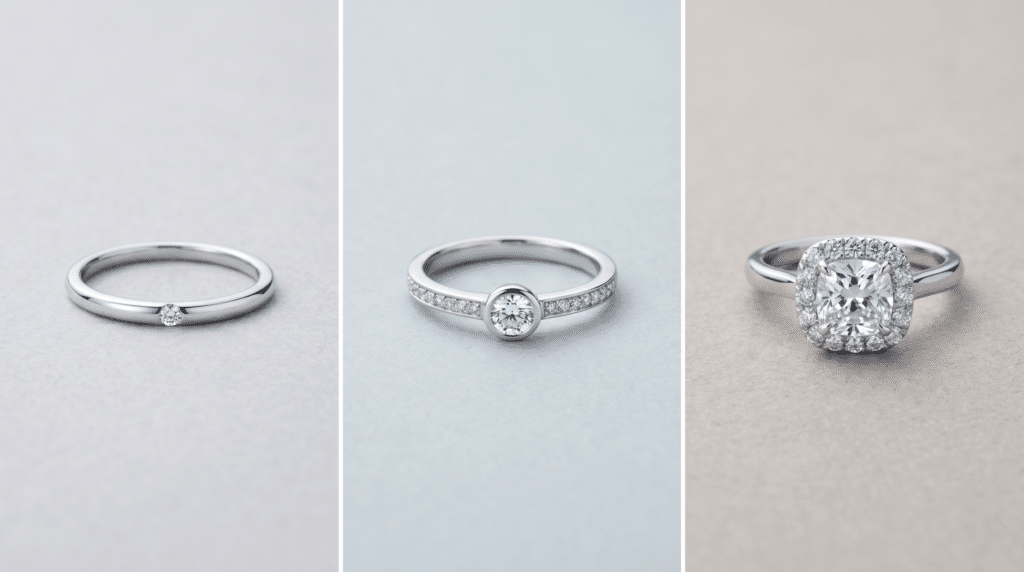
Do you want a ring that feels subtle, balanced, or more expressive?
Based on your answers, we’ll guide you toward a matching design direction.
Once you have a clearer sense of the setting style you prefer, the next step becomes much easier. You can continue exploring combinations in Design Your Ring or begin a custom inquiry with your preferred direction.
Ready to Turn a Style Direction Into Your Ring?
A clear preference helps, but you don’t need a fully finalized idea to begin.