
Choosing the right metal for your lab-grown diamond engagement ring is not just about color preference but also about round oval emerald cushion diamonds, and it directly affects how the diamond appears, how much maintenance you can expect over the years, and what your total cost will be over a decade. Many buyers focus only on the stone and overlook that the wrong metal choice can make a beautiful diamond look tinted, require regular replating visits, or stretch the budget unnecessarily.
For the full framework, read Lab-Grown Diamond Engagement Rings Guide.
This article breaks down the real trade-offs, focusing on how each metal interacts with diamond color grades, how often you will need to service the ring, and what the long-term cost difference actually looks like. By the end, you will know exactly which metal suits your diamond grade, lifestyle, and budget priorities.
| Metal | Key Advantage | Hidden Cost or Risk to Know |
|---|---|---|
| Platinum | Never needs rhodium; strongest prong security | 40–60% higher upfront cost; soft surface scratches over time |
| White Gold | Lowest initial price; bright white finish | Rhodium replating every 6–18 months; $500–$1,000 over 10 years |
| Yellow Gold | No plating needed; masks warm tones in G–J diamonds | Does not match white stones; 10k can feel less rich |
| Rose Gold | No plating; unique warm look | D–E color diamonds can reflect a pinkish tint |
| Mixed Metal (e.g., platinum prongs + gold band) | Combines security of platinum with look of gold | Higher custom design cost; confirm prong metal in writing |
| 14k vs 18k Gold | 14k is harder and more scratch-resistant for daily wear | 18k is softer and more expensive; 10k looks paler |
Quick Questions Before You Read
Q: Can a yellow gold setting make a lower-color diamond look whiter?
Yes. Yellow gold masks warm tones in the diamond, so G–J color stones appear brighter and more colorless than they would in white metal. This can save budget for larger carat weight or better cut.
Q: Does platinum require less maintenance than white gold?
Yes. Platinum does not need rhodium replating and only requires occasional polishing. White gold needs replating every 6 to 18 months to maintain its bright white color, adding significant cost over time.
Q: Will D-color diamonds look okay in rose gold?
Be cautious. A D-color (completely colorless) stone can pick up a pinkish tint when set in rose gold. Most jewelers suggest G or H color for rose gold to avoid an unintended color cast.
Q: Is one metal clearly stronger for holding large lab-grown diamonds?
Platinum is the strongest for prongs, especially for large center stones or angular shapes like emerald or princess cuts. A mixed-metal setting uses platinum prongs for security with a gold band for appearance and cost savings.
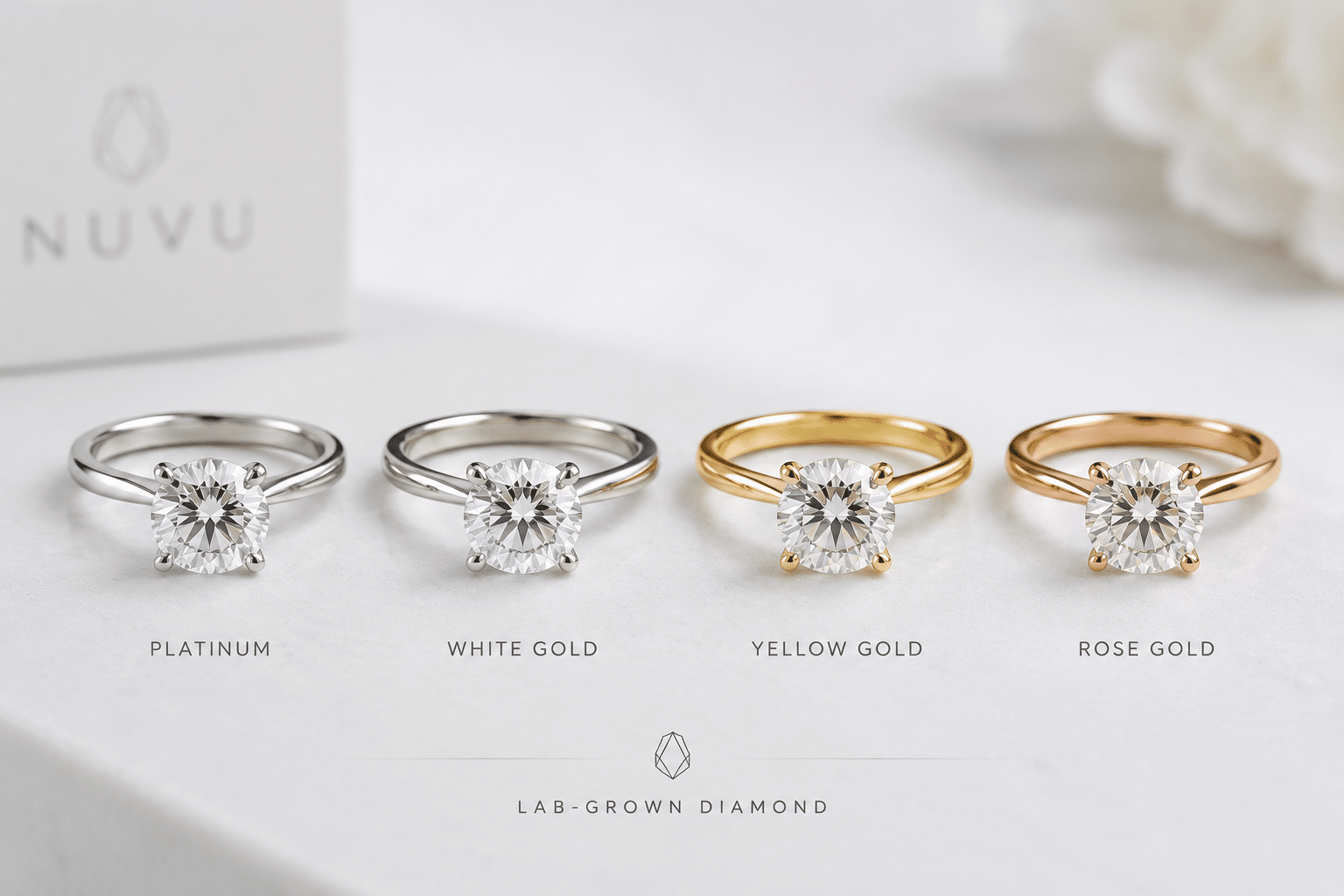
Best Metal for Lab-Grown Diamond Engagement Rings: White Gold, Yellow Gold, Rose Gold, or Platinum?
Why Metal Choice Matters More for a Lab-Grown Diamond Ring
Most buyers spend weeks comparing diamond cut, color, and carat weight, then treat the metal as a last-minute style choice. That order is backward. The metal you choose changes how your lab-grown diamond actually looks on your finger, how much maintenance your ring will need over the next decade, and what proportion of your total budget goes to the setting versus the stone.
Lab-grown diamonds are optically identical to natural diamonds. Their brilliance, fire, and scintillation are the same. What changes is the buying equation. Because the stone costs less than a natural equivalent, the setting represents a larger share of the total ring cost. A decision about metal is also a decision about how your money is allocated. And because lab-grown diamond buyers tend to be more value-conscious, understanding which metal delivers the best long-term return on that investment matters.
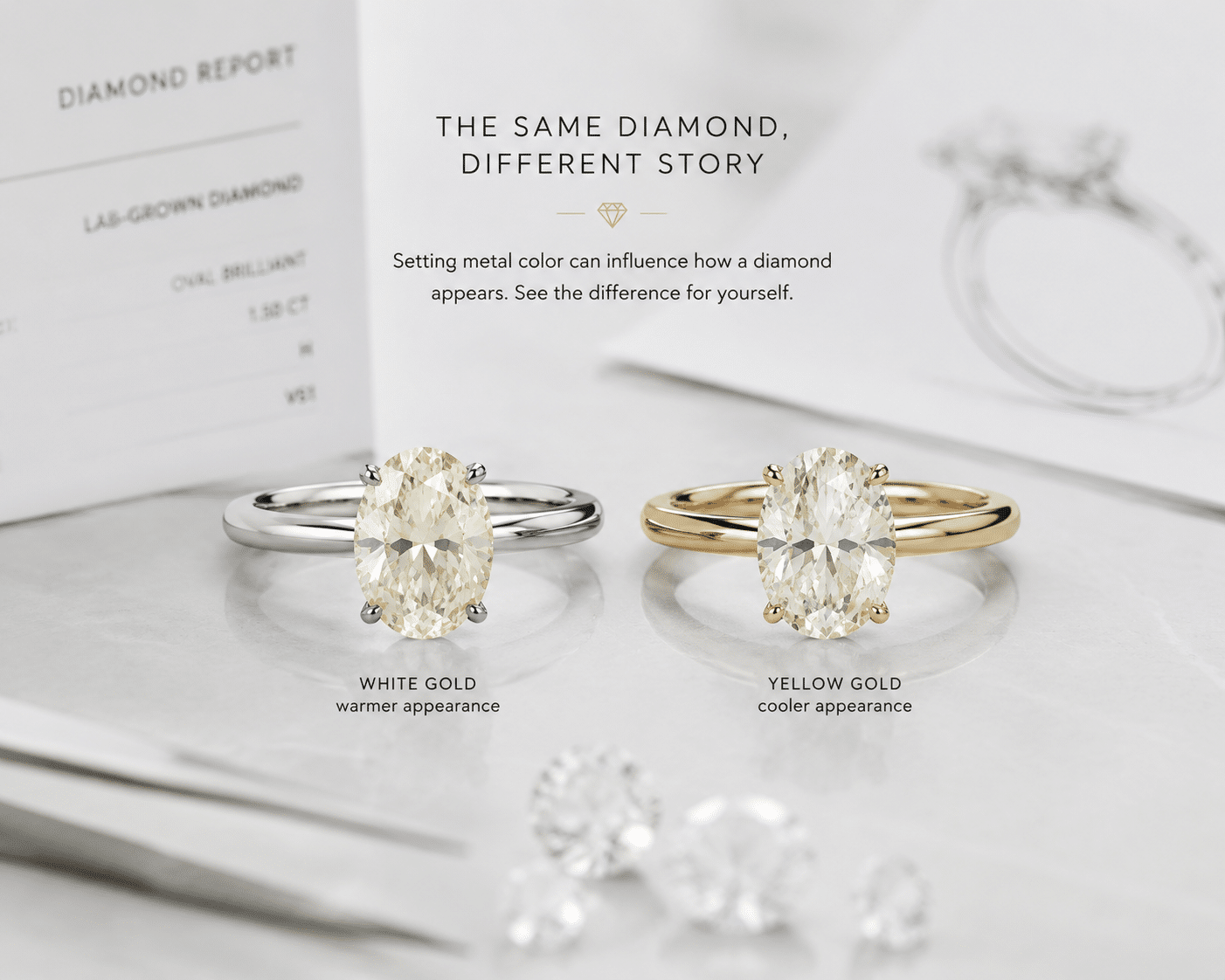
Metal also directly affects perceived diamond color. A near-colorless stone that looks slightly warm in a white gold setting can appear perfectly white in yellow gold. A D-color diamond that looks crisp in platinum can pick up a pinkish tone in rose gold. These are not subtle effects. They change what you see every time you look at the ring.
For buyers, the practical point is to treat the metal selection as part of the diamond evaluation, not as a separate afterthought. A grading report for the stone provides the color grade, but the metal determines how that grade translates into the everyday appearance of the ring. Two identical diamonds set in different metals can look like different stones.
This article treats metal as a structural and visual decision, not a decorative preference. Each option trades off upfront cost against long-term maintenance, and color performance against durability. The right choice depends on your diamond, your lifestyle, and how much maintenance you are willing to live with.
Why Metal Color Affects Diamond Appearance: The Scientific Basis
The effect of metal on diamond color perception is grounded in basic color science rather than subjective preference. A metal surface reflects its own body color back into the diamond, altering the viewer’s perception of the stone’s body tone. This is not a matter of diamond grade inaccuracy but of visual interaction. The Gemological Institute of America explains that the mounting metal can influence the apparent color of a diamond, particularly for near-colorless grades.[1] For D to F color diamonds, the cool white of platinum or freshly rhodium-plated white gold reinforces the stone’s lack of color. For G to J color diamonds, warm yellow or rose gold metal introduces a complementary hue to the eye, making slight yellow warmth less detectable. Understanding this interaction helps explain why a G-color diamond can appear colorless in a yellow gold setting while looking slightly warm in a white gold one.
How the Four Precious Metals Compare at a Glance
The table below gives a fast orientation across the four primary engagement ring metals. Prices are directional ranges rather than exact figures, because setting complexity and jeweler markup vary.
| Metal | Natural Color | Density | Scratch Resistance | Maintenance Needs | Price Level (vs. white gold) |
|---|---|---|---|---|---|
| Platinum | Bright white, slight gray tone | Heavy — ring feels noticeably denser | Moderate — scratches develop patina rather than wearing away | Polishing every 12-24 months; no plating needed | +40% to +60% |
| White Gold | Warm yellow-gray before plating | Medium | Good — harder than platinum but plating wears | Rhodium replating every 6-18 months | Baseline |
| Yellow Gold | Rich warm yellow | Medium | Good at 14k; softer at 18k | Polishing as needed; no plating required | Similar to white gold |
| Rose Gold | Pink-copper | Medium | Good — slightly harder than yellow gold due to copper content | Polishing as needed; no plating required | Similar to white gold |
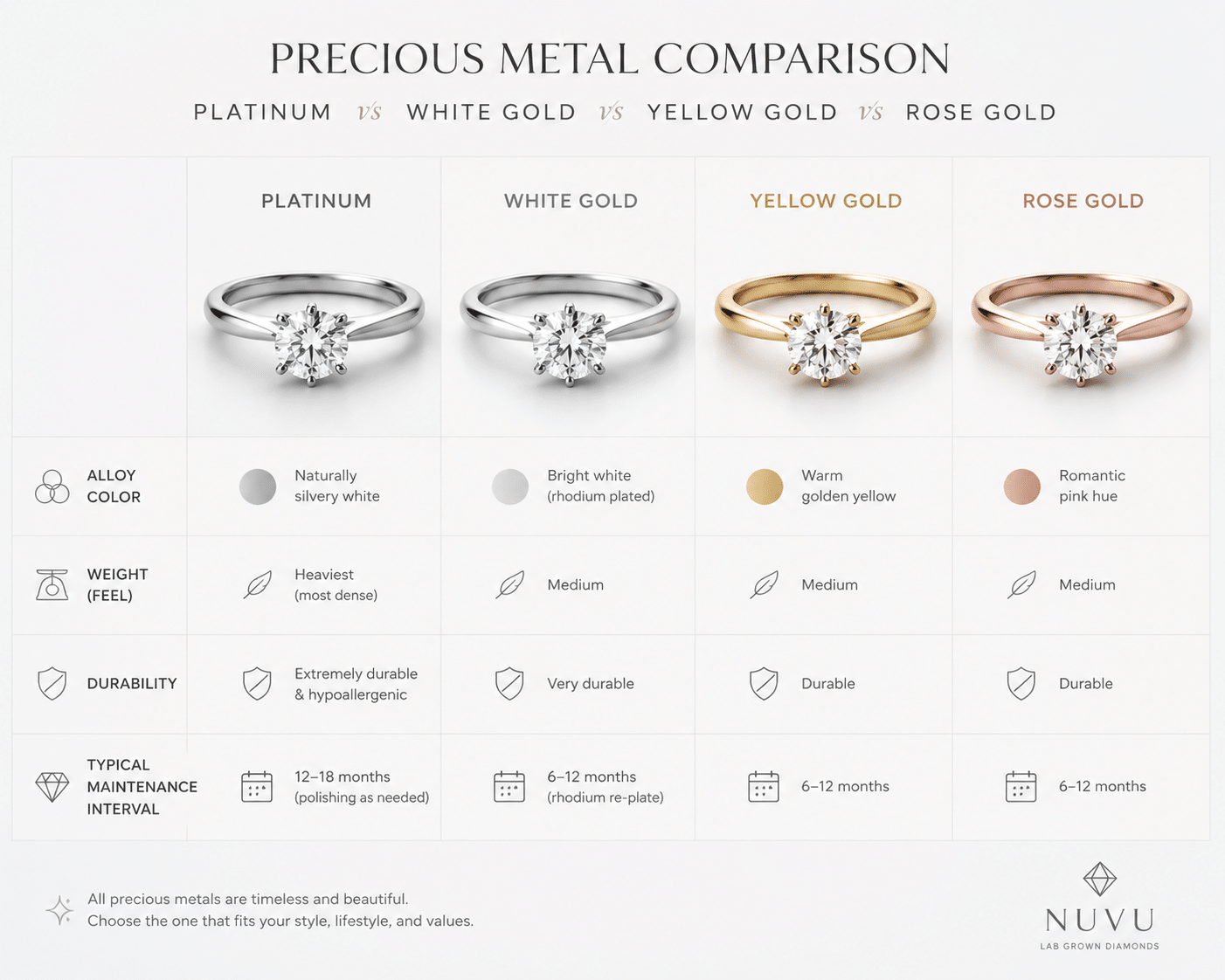
The takeaway for a lab-grown diamond buyer is straightforward. Platinum offers the lowest ongoing maintenance and the most stable white color, but at the highest upfront cost and a heavier ring. White gold gives you the lowest entry price but requires periodic replating that adds cost and inconvenience over time. Yellow gold and rose gold require the least maintenance and give you the most flexibility on diamond color grade, but only if you are comfortable with a warm metal tone. Each choice involves a real tradeoff, and the best one depends on where you draw the line between initial cost, daily comfort, and long-term effort. A useful starting point, however, is to look past the metal’s surface appeal and examine how it interacts with a specific diamond’s documented characteristics and the wearer’s routine.
Yellow Gold for Lab-Grown Diamond Rings: Warmth, Contrast, and Diamond Color Tolerance
Yellow gold has moved in and out of favor over the decades, but its current resurgence is not just a style cycle. For lab-grown diamond buyers, yellow gold offers a practical advantage that white metals cannot match: it changes how the diamond itself reads to the eye. That shift has real budget consequences.
Why Yellow Gold Allows You to Save on Diamond Color Grade
The primary reason to choose yellow gold is color tolerance. Yellow gold reflects warm tones upward into the diamond. When a near-colorless stone in the G to J range sits in a yellow gold setting, the warm metal reflection masks the faint yellow body color that would be visible in a white metal setting. The same stone that looks slightly warm in white gold looks colorless in yellow gold. This is not a trick of perception. It is how adjacent colors interact in normal viewing conditions.
The practical implication is straightforward. Buyers who choose yellow gold can select a lower color grade without a visible penalty and redirect that budget toward carat weight or cut quality. For many buyers, that tradeoff produces a more impressive ring. A 2-carat G-color diamond in yellow gold often looks whiter and performs better visually than a 1.5-carat D-color diamond in platinum — at a lower total cost.
Contrast Effect: Making Lab-Grown Diamonds Look Larger and Brighter
Yellow gold creates a stronger contrast against a brilliant white stone than white gold or platinum does. The human eye registers greater separation between a warm metal surface and a bright white diamond, which makes the diamond appear more prominent within the setting. This contrast effect is particularly noticeable in solitaire settings where the metal band frames the stone without distraction.
This is not about making the diamond look larger through an optical illusion. It is about eliminating competition. When the metal is slightly darker and warmer, the diamond reads as brighter by comparison. The same stone set in white gold and yellow gold will appear to have more sparkle in the yellow gold setting because the eye is not dividing its attention between two similarly colored surfaces.
Durability, Scratching, and Alloy Differences (10k vs 14k vs 18k)
Yellow gold is available in three common karat weights, and the choice matters more for daily wear than most buyers expect.
14k yellow gold, which contains 58.5% gold alloyed with copper, silver, and zinc, is the most practical choice for an engagement ring. It offers a warm gold color without being too soft. It resists scratching better than 18k and holds prongs securely over years of wear.
18k yellow gold has a richer, deeper color because it contains 75% gold. But higher gold content means lower hardness. 18k is noticeably softer and will scratch more easily. For a ring worn daily, those scratches accumulate visibly. lab grown diamond engagement ring budget guide The color payoff is real, but so is the maintenance cost if you prefer a polished finish.
10k yellow gold is harder and more scratch-resistant than either 14k or 18k, but its color is visibly paler because it contains less gold. The lower gold content also means a higher proportion of alloy metals, which can increase the risk of skin reaction for sensitive wearers. For most engagement ring buyers, 10k saves money but sacrifices the warm look that made yellow gold the choice in the first place.
Stick with 14k yellow gold for daily wear. It balances color, durability, and cost better than the alternatives.
Stone-to-Setting Fit Check for Yellow Gold
Before committing to yellow gold, confirm the karat with your jeweler and request side-by-side comparison photos of your selected stone in both white gold and yellow gold settings. This is the only reliable way to assess how the warm metal changes the diamond’s apparent color.
If you are choosing a near-colorless stone in the G to J range, verify that the diamond does not have strong brown or gray undertones. Yellow gold masks yellow warmth well, but it does not neutralize brown or gray body tones. A diamond with a brownish tint will still look muddy in yellow gold, not whiter. Stick with diamonds that have a standard yellow warmth if you plan to rely on the metal for masking.
Rose Gold for Lab-Grown Diamond Rings: Color Interaction, Allergens, and Modern Styling
Rose gold occupies a narrower space in the engagement ring market than white or yellow gold, but it has a dedicated following for good reason. The pink-copper tone is distinctive and flattering on many skin tones. But the color interaction with the diamond is more complex than most buyers assume.
Rose Gold’s Copper Composition and Diamond Color Masking
Rose gold masks warm diamond color in the same way yellow gold does, but with an important difference. The warm reflection from rose gold carries a pink tint, which can alter how the diamond reads in certain lighting conditions.
For near-colorless stones in the G to I range, rose gold works well. The warm metal reflection neutralizes any faint yellow in the diamond without creating an obvious color shift. The result is a diamond that appears colorless within the setting, even if its grade is technically slightly warm.
The risk comes with very colorless diamonds in the D to E range. In rose gold, these stones can pick up a faint pinkish cast from the metal under direct or warm light. Some buyers like this effect. Others find it distracting. The safest approach is to pair rose gold with a G or H color stone and avoid the highest color grades unless you have seen the combination in person.
Alloy Variations: Why 14k Rose Gold Is the Most Practical Choice
Rose gold gets its color from copper. The higher the copper content, the pinker and harder the metal. But higher copper content also increases the risk of skin reaction in a small percentage of wearers.
14k rose gold is the standard for engagement rings because it balances color saturation with wearability. At this karat, the copper content is high enough to produce a distinct pink tone without making the alloy too hard for a jeweler to work with or too reactive for daily wear.
Rose gold develops a patina over time, just like platinum, but the visual effect is different. The metal darkens slightly and takes on a warmer, richer tone. Some buyers prefer this aged look. Others prefer to restore the original pink color through occasional polishing. Unlike white gold, no plating is involved, so the patina develops evenly and can be maintained or removed based on preference.
Fashion Cycles and Resale Considerations for Lab-Grown Diamond Buyers
Rose gold is fashion-driven. Its popularity has grown significantly over the past decade, especially in engagement rings and fine jewelry. But fashion cycles shift. If you view the ring as a long-term piece meant to look current for decades, rose gold carries more stylistic risk than white or yellow gold.
For lab-grown diamond buyers, resale value is already limited by the category itself. The metal choice does not meaningfully change that reality. But if you ever plan to reset the diamond into a new setting, a rose gold setting is harder to repurpose than a neutral white gold or platinum one. The pink tone limits the range of future design options.
What This Means in a Real Purchase
Ask your jeweler whether the rose gold contains copper only or includes other alloy metals that could affect color consistency. Some lower-cost rose gold alloys use zinc or nickel to reduce copper content, which produces a paler, less consistent pink tone.
Request photos of the rose gold setting under both natural daylight and warm indoor lighting to see how the metal color interacts with your diamond. If you are choosing a D or E color stone, ask specifically whether the rose gold will create an unwanted pink tint. The answer depends on the alloy composition and the lighting conditions you wear the ring in most often.
Documentation and Consistency in the Metal Selection Process
When purchasing a lab-grown diamond engagement ring, the documentation trail extends beyond the diamond’s grading report. Buyers should request a clear written specification for the metal, including the karat, alloy composition, and any plating details. For custom designs, this documentation ensures that the metal delivered matches the metal ordered. In sourcing or wholesale conversations, consistency between the quoted alloy and the final piece matters as much as the headline karat weight. Documentation helps avoid surprises, such as a lighter 10k alloy being used when 14k was specified, or a nickel-containing white gold being set for a buyer with metal sensitivities.
Metal Compatibility with Setting Styles and Prong Design
Metal choice is not just about color and maintenance. It also determines how the ring is built, how securely it holds the diamond, and how it feels on the finger. These structural considerations become more important as the stone size increases.
Prong Metal and Diamond Security Across Platinum and Gold Alloys
Platinum prongs are stronger than gold prongs. They are less likely to bend out of shape under pressure, which makes them more secure for large stones or shapes with vulnerable corners. If you are setting a lab-grown diamond over two carats, or a square shape like princess or Asscher, platinum prongs reduce the risk of the stone shifting or popping loose.
Gold prongs are easier for jewelers to work with and simpler to retip when they wear down. But they require more frequent inspection. The tradeoff is clear: gold prongs are more serviceable, platinum prongs are more secure.
Mixed-metal settings are a practical solution. Platinum prongs with a gold band give you the security of platinum at the contact points and the color or cost advantage of gold for the rest of the ring. This approach is common and should not cost significantly more than an all-gold setting, provided the jeweler is comfortable working with both metals. It is a good example of how metal choice can be optimized rather than settled on a single option.
Why Prong Integrity Matters: The Role of the Grading Report in Verification
When a lab-grown diamond is set into a ring, the prongs become the primary mechanical anchor for the stone. Regular prong inspection is a safety practice that applies regardless of metal choice. The GIA recommends periodic professional checks to verify that settings remain secure and that no damage has developed around the girdle.[2] For lab-grown diamonds accompanied by a grading report, the report documents the stone’s dimensions and girdle condition at the time of grading, providing a useful baseline for later comparison. Platinum’s inherent stiffness reduces the frequency of prong adjustment, but it does not eliminate the need for visual checks. For all metals, having the original grading report available can help a jeweler confirm that the stone matches its documented specifications if questions arise about fit or security after setting.
Band Width, Comfort Fit, and Metal Weight
Platinum is roughly 60% denser than 14k gold. A platinum ring of the same dimensions will feel noticeably heavier on the finger. Some buyers like the substantial feel. Others find it uncomfortable for daily wear, especially with wider bands.
For buyers who prefer a lighter feel, 14k gold in any color is the better choice. Band width and profile also affect perceived weight. A comfort-fit band with a rounded interior distributes weight more evenly and reduces the sensation of heaviness regardless of metal. If you prefer platinum but are concerned about weight, a thinner band profile can compensate. If you want a wider band but find platinum too heavy, 14k gold gives you more room to adjust the design without discomfort.
Stone-to-Setting Fit Check
For stones over two carats or shapes with pointed corners, ask your jeweler about prong metal specifically. Do not assume the band metal and prong metal are the same. Mixed-metal settings are a standard option, as detailed in the lab grown diamond engagement rings guide, and should be discussed before the ring is fabricated.
Request confirmation of band thickness and width in millimeters. A thin band in platinum may be more durable than the same design in gold, but a thin band in either metal increases the risk of bending over time. Know the dimensions before committing to a design.
Maintenance Comparison: What Each Metal Requires Over 10 Years
Your metal choice will determine how much time and money you spend keeping the ring looking new. The differences between platinum, white gold, yellow gold, and rose gold are not just cosmetic. Each metal has a distinct maintenance profile that affects your long-term ownership cost. Understanding these differences upfront prevents surprises a few years into wearing the ring.
Platinum: Polishing, Patina, and Professional Care
Platinum requires no plating because its natural color is a bright gray-white that does not fade or yellow over time. The metal does develop a patina, a soft satin finish caused by microscopic surface scratches from daily wear. This patina appears within 6 to 12 months and is not damage. Some buyers prefer the understated look. Others want a high-polish finish restored periodically.
Restoring platinum to its original shine requires professional polishing. The process removes a negligible amount of metal, so platinum does not thin out significantly over time. Cost per service is moderate, typically ranging from $75 to $150. Because no plating is needed, platinum sees a jeweler less frequently than white gold. Over 10 years, you will likely visit the jeweler two to four times for polishing and prong inspection, depending on how much wear the ring sees and whether you prefer the polished or patinated look.
White Gold: Rhodium Replating Schedule and Costs
White gold naturally has a warm yellow-gray tint and is coated with rhodium to achieve its bright white finish. That rhodium layer wears off over time, especially on the underside of the band and around the prongs where contact is constant. Replating frequency depends on wear patterns. Daily wear with frequent hand contact typically requires replating every 6 to 12 months. Lighter wear or desk-free lifestyles can stretch that to 18 to 24 months.
Each replating session costs between $50 and $100. A 10-year estimate for a daily-wear ring is $500 to $1,000 in replating costs, plus the inconvenience of sending the ring out for service. For a value-focused lab-grown diamond buyer, this recurring cost warrants consideration. The upfront savings of white gold compared to platinum can be partially offset by long-term maintenance. If you are comfortable with the schedule and cost, white gold remains a practical choice. If you prefer zero ongoing metal care, platinum may be worth the higher initial investment.
Yellow Gold and Rose Gold: Polishing and Refinishing Needs
Neither yellow gold nor rose gold requires plating. Both can be polished to restore original color and shine, but they develop a natural patina that many buyers find attractive. Yellow gold develops a slightly warmer, softer glow over time. Rose gold darkens subtly, becoming richer and deeper. If you prefer the original bright finish, periodic polishing can restore it.
Polishing cost for yellow or rose gold is similar to platinum, typically $50 to $100 per session. Because no plating is involved, the 10-year cost is lower than white gold but higher than platinum if you polish several times. Most yellow and rose gold owners polish once every few years or not at all if they prefer the aged look. Total 10-year cost for these metals is the most flexible, because you decide how often to restore the original shine.
For buyers, the maintenance schedule is not just a matter of cost. It is also a matter of convenience. A ring that needs to be sent away for replating every six months is a ring that is not on your finger for part of that time. Platinum, yellow gold, and rose gold each offer a more hands-off ownership experience, though for different reasons. Understanding your own tolerance for service visits is as important as understanding the metal’s physical properties.
When a grading report accompanies the diamond, buyers should verify the report details through the issuing laboratory’s official report-check tool where available. The report documents the stone’s color grade, but as this article explains, the final perceived color depends on the metal interaction as well. Comparing the report with visual observation under the intended setting metal is the most reliable approach to confirming appearance.
Buyer Verification Checklist for Long-Term Maintenance
Ask your jeweler for a written maintenance policy before purchase. For white gold, confirm replating costs and turnaround time so you know what to expect. For platinum, ask about prong retipping costs, because platinum wears differently than gold and prongs may require rebuilding rather than simple tightening. Request clarity on whether your setting design allows for easy prong repair. Some intricate settings make prong work more difficult and expensive.
How Documentation Supports Custom Design Decisions
For custom engagement rings, the grading report for the diamond serves as a reference point for multiple decisions. It confirms the diamond’s exact measurements, which must align with the setting’s prong placement and basket dimensions. It also records the color grade, which is useful when choosing a metal to complement or mask that grade. For NUVU, providing this documentation as part of a buyer’s package supports a more transparent comparison process. When a buyer has both the report and a clear understanding of how the metal interacts with the stone’s characteristics, they can make a more informed choice about the ring’s final appearance. For custom design, trust comes from matching the stone to the setting, budget, and wearer’s daily use—not from choosing grades or metals in isolation.
Frequently Asked Questions About Lab-Grown Diamond Ring Metals
Can I mix metals in one ring?
Yes, mixed-metal settings are common and practical. A yellow gold band with platinum prongs gives you the warm contrast of gold with the security of platinum at the contact points. This approach balances cost, durability, and appearance. Mixed-metal designs also work well for buyers who want the color of rose gold but prefer stronger prongs for a larger stone.
Does the metal type affect the diamond’s sparkle?
Metal color affects how the diamond appears, not how it performs optically. A diamond’s sparkle comes from cut quality and light return within the stone itself. The metal can enhance or reduce perceived brilliance by reflecting warm or cool tones into the stone, but it does not physically change the diamond’s optical performance. The setting’s structural design, such as prong height and open or closed basket, has a larger impact on light return than the metal color. This distinction is worth keeping in mind when comparing different rings in a showroom.
Which metal is best for a large lab-grown diamond (over 2 carats)?
Platinum or mixed-metal with platinum prongs is the strongest choice for larger stones. Heavier diamonds place more stress on prongs, and platinum holds its shape better than gold alloys under load. If you prefer gold for the band color, use platinum prongs to secure the stone. Regardless of metal choice, a large diamond requires thicker prongs and more frequent inspection.
Is rose gold less durable than yellow gold?
At the same karat, rose gold is slightly harder than yellow gold because of its copper content. At 14k, both are practical for daily wear with similar durability. At 18k, rose gold is harder than yellow gold, making it more scratch-resistant but still soft enough for a jeweler to work with. The copper in rose gold does not weaken the alloy. It makes the metal more rigid.
Should I match my ring metal to my partner’s other jewelry?
Consider the wearer’s existing jewelry collection. If they wear mostly silver-toned pieces like stainless steel watches, white gold or platinum will match more naturally. If their wardrobe leans toward warm tones and gold jewelry, yellow or rose gold will integrate better. The engagement ring does not need to match every piece, but consistency with daily-wear items makes the ring feel more cohesive. It is a practical detail that can make the ring sit more comfortably with the wearer’s overall style.
Your Next Step: Choosing the Right Metal for Your Lab-Grown Diamond Ring
How Your Metal Choice Affects Your Total Ring Budget
Metal choice shifts the total project cost significantly. Platinum adds $300 to $800 or more compared to an equivalent white gold setting. Yellow gold and rose gold settings are similar in price to white gold, usually within $50 to $100 of each other. The real cost difference is in long-term ownership. White gold requires ongoing replating at $50 to $100 per session over the life of the ring. Platinum has minimal ongoing costs but a higher upfront price. Yellow and rose gold have the lowest long-term maintenance cost if you are comfortable with natural patina.
Matching Your Metal to Your Diamond’s Color Grade
The relationship between metal and diamond color is straightforward. D-F color diamonds look cleanest in platinum or freshly plated white gold, where the cool metal tone reinforces the stone’s lack of color. G-I color diamonds are versatile and work well with any metal. They look especially good in yellow or rose gold, where the warm metal masks any slight tint in the stone. J+ color diamonds should be set in yellow or rose gold. The warm metal tone neutralizes visible color and makes the diamond appear whiter than it would in a cool metal setting.
It is worth noting that these color guidelines are practical starting points, not rigid rules. The final appearance also depends on the specific hue of the alloy, the lighting conditions where the ring is worn most often, and the wearer’s visual sensitivity to color. A G-color diamond in platinum may look perfectly white to one person while appearing slightly warm to another. Confirmation through direct comparison remains the most reliable approach.
When to Start the Conversation with a Jeweler
Decide on your metal type and color first. Then discuss setting design, prong metal, ring size, and timeline with your jeweler. If you are ordering a custom design, metal choice affects fabrication complexity and lead time. Platinum takes longer to work with than gold due to its density and tooling requirements. Mixed-metal designs also add fabrication steps. For loose diamond buyers, order the stone first and then work with a jeweler who can accommodate your preferred metal. Having the stone in hand lets the jeweler verify the physical fit before finalizing the setting.
What to Confirm Before Ordering
Confirm metal type with specific alloy details, such as 950 platinum or 14k yellow gold. For white gold, confirm whether the alloy is nickel-free if allergies are a concern. Request photos or videos of the setting with a stone similar in color to yours so you can evaluate the visual interaction. Confirm prong metal if it differs from the band material. Confirm maintenance costs and schedule in writing, including replating or polishing fees. Get all confirmations documented before making payment.
[1] Gemological Institute of America, “GIA Diamond Quality: Color,” GIA, 2025. GIA Diamond Color
[2] Gemological Institute of America, “How to Take Care of Your Diamond Ring,” GIA, 2023. GIA Diamond Ring Care
Disclosure: This article is for general educational purposes only. Diamond grading, pricing, availability, specifications, and seller policies can change, and readers should verify important details through grading reports, official laboratory tools, seller documentation, or qualified professionals before making a purchase decision. Laboratory-grown diamonds should be clearly distinguished from natural diamonds, and environmental or sourcing claims should be supported by specific documentation. The guidance provided here on metal compatibility and maintenance costs reflects common industry observations and may vary based on individual jeweler practices, wear patterns, and market conditions.
Last updated: May 2025