
Round lab-grown diamonds are popular because they offer a highly predictable path to bright, balanced sparkle, but buyers comparing them with fancy shapes often use an oval diamond ratio guide to understand how outline, bow tie, and visual spread can change face-up appearance, and that does not mean every round stone is a strong buy. Two laboratory-grown diamonds with the same carat weight and grading-report grade can look different in person because cut proportions, face-up diameter, polish, symmetry, and real video performance all affect how the stone handles light.
For the full framework, read Lab-Grown Diamond Shapes Guide.
This guide helps you judge a round brilliant beyond the headline grades. You will see when paying more for a round shape may make sense, where you can save without sacrificing visible beauty, and how to match the diamond to a setting, metal color, lifestyle, and total ring budget. The goal is not to chase the highest grades, but to choose a stone that looks lively, well-sized, and well-balanced for the money.
Laboratory-grown diamonds should be clearly identified as laboratory-grown, and they should not be presented as mined diamonds. They have the same diamond crystal structure as natural diamonds, but their origin is different, and that origin should be disclosed in the grading report, seller description, or other documentation.
| Buying Question | What to Check | Common Mistake to Avoid |
|---|---|---|
| Will it sparkle well? | Cut grade, table, depth, crown and pavilion angles, video | Trusting “Excellent” or “Ideal” without checking proportions |
| Is the size worth the price? | Millimeter diameter and face-up spread | Choosing carat weight alone, especially at milestone sizes |
| Can I save on grades? | Eye-clean clarity and color suited to the metal | Overpaying for VVS, IF, or color grades you will not notice |
| Is the setting a good match? | Prong count, band width, setting height, accent stones | Ignoring comfort, upkeep, and total ring cost |
| Should I consider a fancy shape? | Style preference, length, bow-tie risk, uneven light | Assuming fancy shapes are easier to judge than rounds |
Quick Questions Before You Read
Q: Are round lab-grown diamonds always the sparkliest option?
They are the most standardized for sparkle, but performance still depends on cut quality and proportions.
Q: Is a higher carat weight always better?
No. A slightly smaller diamond with better cut and diameter can look brighter and better balanced.
Q: Do I need D color and flawless clarity?
Usually not. Many buyers get better value with suitable color and eye-clean clarity.
Q: Can a certificate tell me everything I need to know?
No. Use it with measurements, proportions, images, video, and setting considerations.
Why Round Lab-Grown Diamonds Are the Safest Choice for Sparkle
A round lab-grown diamond is usually the safest shape for sparkle because the round brilliant cutting style is highly standardized, its light behavior is better understood, and its proportions are easier to compare across grading reports, images, and videos. That does not mean every round diamond performs well. It means buyers have clearer tools for judging whether a specific stone is likely to deliver strong brilliance, fire, and scintillation before they pay for it.
For buyers who want a sparkle-focused lab-grown diamond shape with fewer visual surprises, round brilliant remains the most reliable starting point. Fancy shapes can be beautiful, larger-looking, or more distinctive, but they often require more judgment from the buyer. A round brilliant lab-grown diamond gives you a more predictable framework: cut grade, diameter, table, depth, crown angle, pavilion angle, symmetry, and visual performance all work together in a way that is easier to evaluate than many elongated or step-cut shapes.
For buyers, the practical point is not that round is automatically superior. It is that round brilliant gives you more comparable evidence to work with. The report can narrow the shortlist, but the final choice should still be checked against the stone’s actual appearance, measurements, and the design it will be set into.
Traceability also begins with comparison discipline. When the listing, grading report, inscription information where available, measurement data, and visual media all point to the same stone, the buyer has a stronger basis for decision-making. If any detail is missing or inconsistent, it is worth pausing to clarify before treating the diamond as a serious candidate.
The Short Answer Buyers Need First
Round brilliant is the safest default for buyers who want strong sparkle without needing to become diamond experts. The modern round brilliant is designed around a standardized facet arrangement, and those facets are arranged to return light in a balanced way. The goal is not only brightness, but a combination of white light return, rainbow flashes, and lively contrast as the diamond moves.
This is why a round lab-grown diamond for engagement ring shopping often feels less risky than many other shapes. The shape has been refined around light performance for a long time, so there is less guesswork in how a well-cut stone should behave. The main mistake is assuming “round” automatically means “sparkly.” A poorly cut round diamond can still look flat, dark, or leaky, especially if the proportions are outside a strong performance range.
Compliance-Safe Comparison: What “Lab-Grown” Does and Does Not Mean
A lab-grown diamond is not a diamond simulant. Diamond simulants, such as materials that imitate the look of diamond, are different from laboratory-grown diamonds and should be described separately. When comparing stones, make sure the listing clearly states whether the center stone is laboratory-grown, natural, or a non-diamond simulant.
Growth method can also appear in seller information or grading reports. HPHT and CVD are commonly used as diamond growth methods for laboratory-grown diamonds. When growth method or post-growth treatment is relevant, buyers should look for clear disclosure in the grading report or seller documentation rather than assuming treatment status from the method name alone.
Why “Safest” Does Not Mean “Cheapest”
Safest means easier to evaluate and more visually predictable, not automatically lower-priced. Round brilliant diamonds often cost more than some fancy shapes with similar carat weight and grades because demand is strong, cutting expectations are high, and the shape can involve less efficient use of rough material. Buyers should treat the higher price as something that needs to be justified by performance, not just by popularity.
The practical question is not whether round diamonds are “worth more” in a general sense. The better question is whether the specific stone earns its price through strong diamond cut quality, attractive round diamond proportions, a good face-up diameter, and convincing video performance. If a round diamond costs more but shows mediocre light return or carries weight in a way that makes it look smaller, the safer shape has not translated into better value.
Where Round Brilliant Outperforms Fancy Shapes
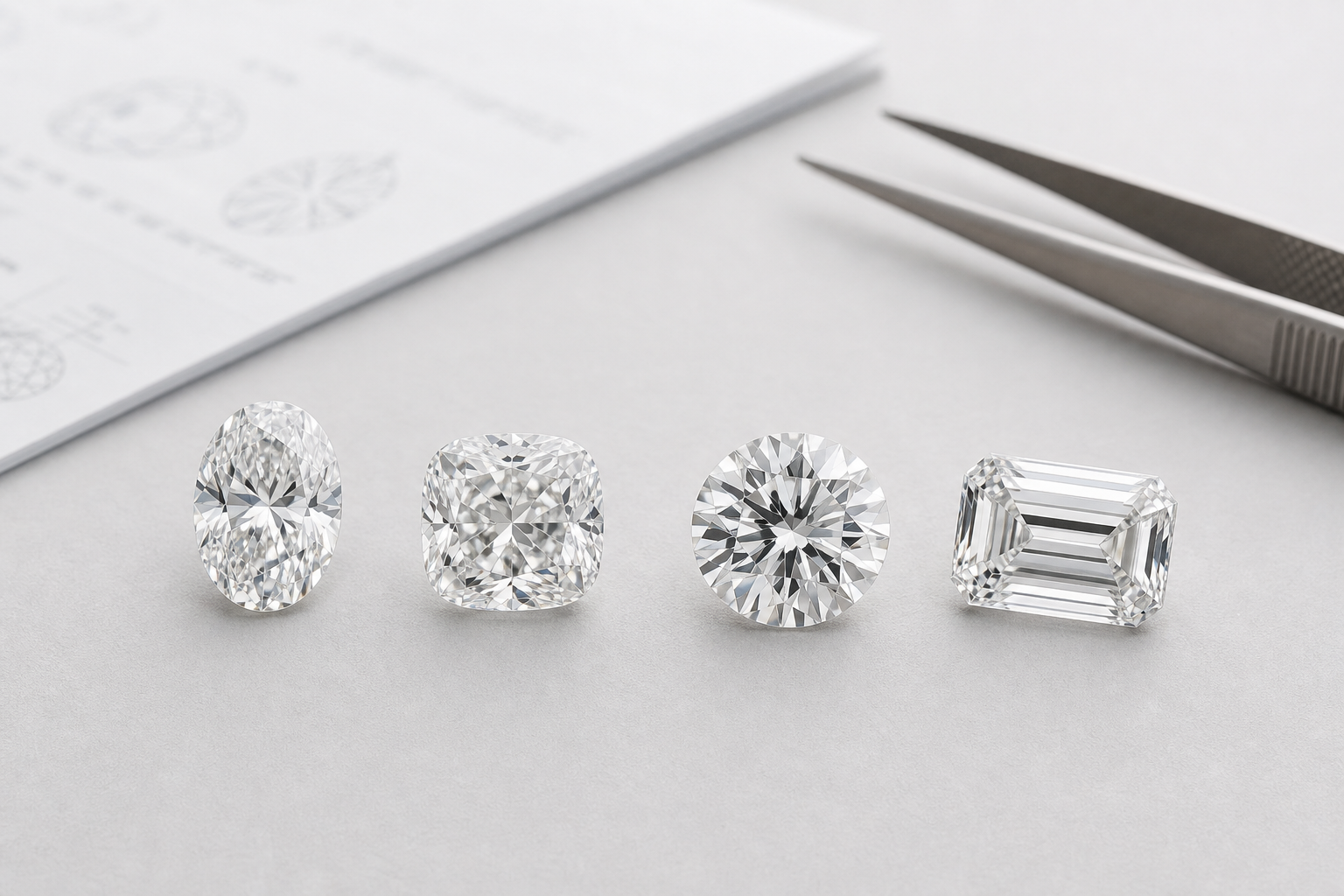
Round brilliant outperforms many fancy shapes in evaluation reliability. Oval and pear diamonds can show bow-tie effects through the center. Emerald cuts can reveal windowing or make inclusions easier to see. Cushion and radiant cuts vary widely in sparkle style, from chunky flashes to crushed-ice patterns, which makes two stones with similar grades look very different in person. With round diamonds, the comparison is more controlled because the shape, facet arrangement, and grading language are more consistent.
This does not make fancy shapes inferior. It means they ask more from the buyer. An oval may look longer on the finger, a cushion may feel softer, and an emerald cut may offer a cleaner architectural look. But if the priority is lab-grown diamond sparkle that can be judged with less uncertainty, round brilliant has the advantage. The risks are fewer and easier to identify: weak cut, poor proportions, smaller-than-expected diameter, or a visual appearance that does not match the report.
What This Means in a Real Purchase
A buyer choosing between a 1.50 ct round lab-grown diamond and a 1.70 ct oval lab-grown diamond may notice that the oval looks larger from the top because of its elongated spread. That can be a smart choice if finger coverage matters most. But the round will often be easier to judge for balanced sparkle because its performance cues are more standardized and its outline does not introduce the same bow-tie or length-to-width questions.
The tradeoff is simple. The round may cost more per carat, while the oval may offer more visible size for the budget. If the buyer wants the safest sparkle-first decision, the round is usually the stronger choice. If the buyer wants more length, more finger coverage, or a less traditional silhouette, the oval can make sense, but it should be reviewed more carefully for symmetry, bow-tie strength, and even light distribution.
How Round Brilliant Cut Creates Reliable Light Performance
The round brilliant cut is associated with reliable light performance because its facets are arranged to return light toward the viewer instead of letting too much escape through the bottom or sides of the diamond. A round lab-grown diamond cut well can look bright, lively, and balanced across different lighting environments. A poorly cut one may still have excellent color or clarity on paper, but it will not deliver the same visual energy.
For a sparkle-focused buyer, cut is the main filter. Color and clarity affect appearance, but they do not create the flash and movement people usually mean when they talk about sparkle. Useful proportions for round lab-grown diamond selection are not magic numbers by themselves; they are screening tools that help you avoid stones with obvious performance risks before you review the actual image or video.
Brightness, Fire, and Scintillation in Plain English
Brightness is the white light a diamond returns to your eye. Fire is the colored rainbow flash you see when light splits through the facets. Scintillation is the on-off sparkle that appears as the diamond, the light, or the viewer moves. A strong round brilliant cut is designed to balance all three rather than overemphasize one at the expense of the others.
This balance matters because a diamond can look bright but not lively, or fiery in certain lighting but dark in others. For a round diamond, the best visual result usually comes from a controlled relationship between the crown and pavilion. If the pavilion angle is off, light can leak. If the crown and table relationship is poorly balanced, the stone may lose fire or appear less crisp. This is where a simple “Excellent” or “Ideal” label needs to be checked against the actual proportions.
Why Cut Quality Matters More Than Color or Clarity for Sparkle
A high color grade cannot rescue weak light return. Neither can a very high clarity grade. A D-color, VVS round diamond with poor cut quality can look less impressive than a lower-color, eye-clean stone with stronger proportions and better optical balance. For buyers who care most about sparkle, cut should come first, then color and clarity should be adjusted around the budget and appearance preference.
This is one of the most common places buyers overspend. They pay for a color or clarity upgrade that is hard to appreciate once the diamond is set, while accepting a cut profile that affects the stone every time it is worn. If sparkle is the goal, the smarter move is to protect cut quality before chasing prestige grades.
Useful Proportion Ranges for Round Lab-Grown Diamonds
Useful screening ranges for an ideal cut round lab diamond are best treated as a comparison framework rather than as a universal rule. Buyers should review table percentage, depth percentage, crown angle, pavilion angle, girdle description, polish, and symmetry together because these details interact. A single number that looks attractive on its own may not produce the same result when paired with less compatible surrounding proportions.
The caution is that numbers interact. A pavilion angle that works well with one crown angle may not work as well with another. A slightly wider table is not automatically bad, and a stone just outside a preferred range is not automatically weak. But if several numbers are drifting in the wrong direction, the risk increases. A diamond that looks like a deal because of carat weight may be priced that way because the proportions are less desirable.
Symmetry and polish also matter, though they should not be treated in isolation. Strong symmetry supports a cleaner pattern of light and contrast, while good polish helps the facets behave as intended. If the certificate shows strong numbers but the video looks dull, hazy, or uneven, the visual evidence should not be ignored.
Certificate and Visual Review Check
Before choosing a round lab-grown diamond, confirm the cut grade, polish, symmetry, table, depth, crown angle, pavilion angle, measurements, fluorescence if listed, and the inscription or report number. These details help you screen out weak candidates and compare stones more fairly, especially when two diamonds look similar by carat, color, and clarity.
The next step is visual review. A clear photo or 360-degree video can reveal liveliness, contrast pattern, dark zones, and overall personality in a way the report cannot. The certificate can tell you whether a stone deserves attention. It cannot fully show whether you will like the way that diamond moves in real light.
A grading report also should not be asked to prove more than it documents. It can record measurable characteristics and identify the stone as lab-grown, but it does not guarantee beauty, long-term value, sourcing ethics, or whether the diamond is the best match for a specific setting. Treat the report as evidence, then compare it with video, seller communication, and the physical requirements of the ring design.
When a grading report is available, buyers should verify the report details through the issuing laboratory’s official report-check tool where available, then compare those details with the listing, inscription information, measurements, and visual evidence.
Evidence Check: What the Report Can and Cannot Support
When you compare round lab-grown diamonds, separate documented facts from seller interpretation. The report can support claims about listed grades, measurements, proportions, and whether the stone is described as laboratory-grown. It should not be used as proof that the diamond is automatically the most beautiful option, the best value, or the most responsible choice for every buyer.
This distinction protects you from overreading the paperwork. If a listing says a stone has a certain color, clarity, cut grade, or measurement, the report should match that statement. If a listing makes broader claims about rarity, investment value, sustainability, or ethical superiority, ask for specific documentation that supports those exact claims rather than assuming the grading report covers them.
Why Round Lab-Grown Diamonds Are Easier to Compare Than Fancy Shapes
It is easier to compare round lab-grown diamonds because the shape is more standardized. The outline is symmetrical, the cutting style is more consistent, and grading reports usually give buyers more useful cut information than they do for many fancy shapes. For anyone learning how to compare round lab-grown diamonds online, that standardization reduces the chance of comparing two stones that look similar on paper but behave very differently in person.
This is one reason round brilliant is often the easiest diamond shape to buy online. You still need a grading report, measurements, proportions, and visual comparison, but the decision path is clearer. With many fancy shapes, the report leaves more unanswered questions about outline appeal, length-to-width preference, bow-tie visibility, and the exact style of sparkle.
Round Diamonds Usually Receive a More Useful Cut Grade
Round brilliant diamonds are commonly assigned a cut grade by major grading labs, which gives buyers a more practical starting point. Fancy shapes are often graded for polish and symmetry, but they may not receive the same standardized cut evaluation. That difference matters because cut quality is the main driver of sparkle, and a round diamond certificate usually gives buyers more data to work with.
The cut grade should still be treated as a filter, not a final verdict. Two round diamonds with the same cut grade can have different proportions, different contrast patterns, and different visual character. But compared with many fancy shapes, the round brilliant diamond guideposts are clearer, which makes poor decisions easier to avoid.
Measurements Are More Predictable
Round diamonds are easier to compare by diameter because the outline is symmetrical. If two 1.50 ct round diamonds have different millimeter measurements, the buyer can quickly see which one faces up larger and whether one may be carrying extra weight in depth. That is harder with elongated fancy shapes because length, width, ratio, and outline all affect the face-up impression.
For example, two oval diamonds with the same carat weight can look noticeably different if one is longer and narrower while the other is shorter and wider. Neither is automatically better, but the choice depends more on personal taste and visual review. With round diamonds, diameter gives a more intuitive comparison, making it easier to spot when a stone is not delivering good spread for its weight.
Visual Risks Are Easier to Spot
Fancy shapes often carry shape-specific risks that require closer inspection. Ovals and pears may show a bow-tie through the center. Emerald cuts can show windowing or make clarity issues more visible. Cushions and radiants can vary widely in facet style, and some crushed-ice patterns look lively while others appear messy or watery. These are not flaws in every fancy shape, but they are risks buyers need to evaluate case by case.
Round diamonds still need visual review, especially for contrast, light return, and overall liveliness. The advantage is that the main comparison points are more standardized. If a round diamond has a strong cut grade, sensible proportions, a good diameter for its weight, and a convincing video, the buyer can move forward with more confidence than with a fancy shape that needs more subjective interpretation.
Buyer Verification Checklist
Before narrowing a shortlist, compare diamonds with the same approximate carat weight, cut grade, color range, clarity range, and certificate type. Then check diameter, table, depth, crown angle, pavilion angle, and video appearance. This keeps the comparison fair and prevents a higher-carat stone from looking like the better choice simply because the number is larger.
Do not choose only by carat weight. A round diamond with weaker light return or a noticeably smaller face-up diameter may be a worse value than a slightly smaller stone with stronger cut quality and better spread. The safest purchase is the one where the report, proportions, video, and setting plan all support the same decision.
Round Diamond Price: Why the Safest Shape Often Costs More
For a round lab-grown diamond, price is often less about the label and more about how much precision the shape demands. Buyers usually pay more for round brilliant diamonds than for some fancy shapes because round stones are in steady demand, are judged more strictly for appearance, and can require more material loss during cutting, a point that also relates to a heart lab-grown diamond guide when symmetry and shape-specific appeal influence selection. That does not mean they are overpriced by default. It means the round brilliant diamond cost is tied to both market preference and how much usable rough ends up in the finished stone.
The practical question is whether the higher number is buying real visual value or just a popular size point. In many cases, a useful value choice is not the biggest stone on paper, but the one with stronger cut performance, solid proportions, and a diameter that justifies the price per carat.
Price differences can also reflect documentation, availability, matching needs, seller service, and how quickly a specific specification can be sourced. A lower price is not automatically suspicious, and a higher price is not automatically proof of better beauty. The useful habit is to compare like with like: similar report details, similar visual performance, similar measurements, and similar setting requirements.
For traceable comparison, keep a simple record of each stone you are considering: report laboratory, report number, carat weight, measurements, table, depth, crown angle, pavilion angle, color, clarity, listed price, and the visual media reviewed. This makes it easier to identify whether a price difference is tied to visible performance, documentation, size spread, or only to a more impressive headline grade.
Prices can change with market conditions, report type, seller channel, and stone-specific details, so exact comparisons should be verified at the time of purchase. Avoid treating any old quote, listing screenshot, or broad “savings” claim as current unless the seller confirms the currency, date, specifications, and terms.
Demand Keeps Round Diamonds Competitive
Round brilliant is still the most familiar engagement-ring shape, so demand tends to be strong even in the lab-grown category. That can matter because buyer preference influences how sellers position different shapes. For shoppers comparing lab-grown diamond value across shapes, this is one reason why round lab-grown diamond price may sit above ovals, cushions, or other fancy cuts with similar grades.
There is a tradeoff here. The shape that is easiest to recognize is often not the cheapest to buy. If sparkle reliability matters more than headline savings, that premium may be justified. If your main goal is maximum size for the dollar, a fancy shape may look more attractive, but it brings more visual variables to inspect.
Cutting Yield Can Affect Cost
Round diamonds can be more expensive because the cutting process may sacrifice more rough material to achieve the finished shape. In simple terms, a cutter may lose more weight turning rough into a round brilliant than into some elongated or modified fancy shapes. That can affect supply, and supply can affect cost.
This is not the only factor, and it should not be treated like a blanket explanation for every price difference. Brand channel, grading report type, and overall market position still matter. But if two stones look similar on paper, the round diamond may cost more because it took more precision and more rough to produce the finished result.
Carat Thresholds Can Create Price Jumps
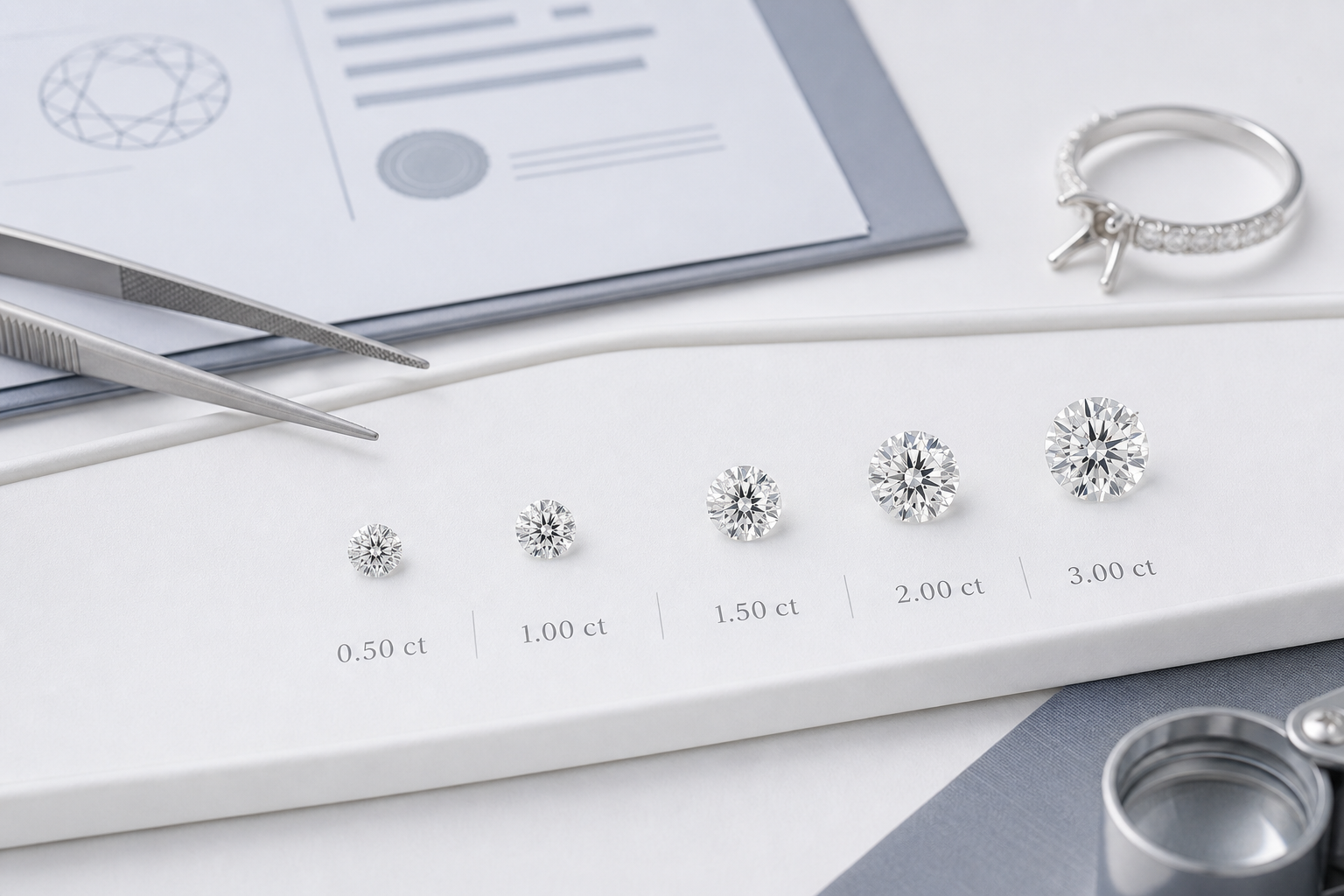
Another reason round lab-grown diamonds can jump in price is the way buyers shop by milestone weights. Popular thresholds such as 1.00 ct, 1.50 ct, 2.00 ct, and 3.00 ct often attract more attention, so pricing can feel less linear around those marks. A stone just below a threshold can sometimes deliver better lab-grown diamond value without giving up much face-up size.
That is why a 0.90 ct, 1.40 ct, or 1.90 ct round may be a smart buy compared with the next round number up, as long as the diameter still gives the look you want. Carat weight is only useful if it translates into the visual presence you actually expect.
What to Check Before You Pay More
Before accepting a higher round lab-grown diamond price, ask what the premium is really buying. Better proportions, stronger light performance, cleaner documentation, and a more balanced diameter-to-price ratio can be worth paying for. A popular carat number alone is not a strong enough reason.
If two round diamonds look very similar in video and share comparable color and clarity, the slightly lower carat stone with better cut and stronger spread may be the better decision. For buyers trying to avoid overpaying, that is usually the more disciplined way to judge price.
Best Color and Clarity Choices for Round Lab-Grown Diamonds
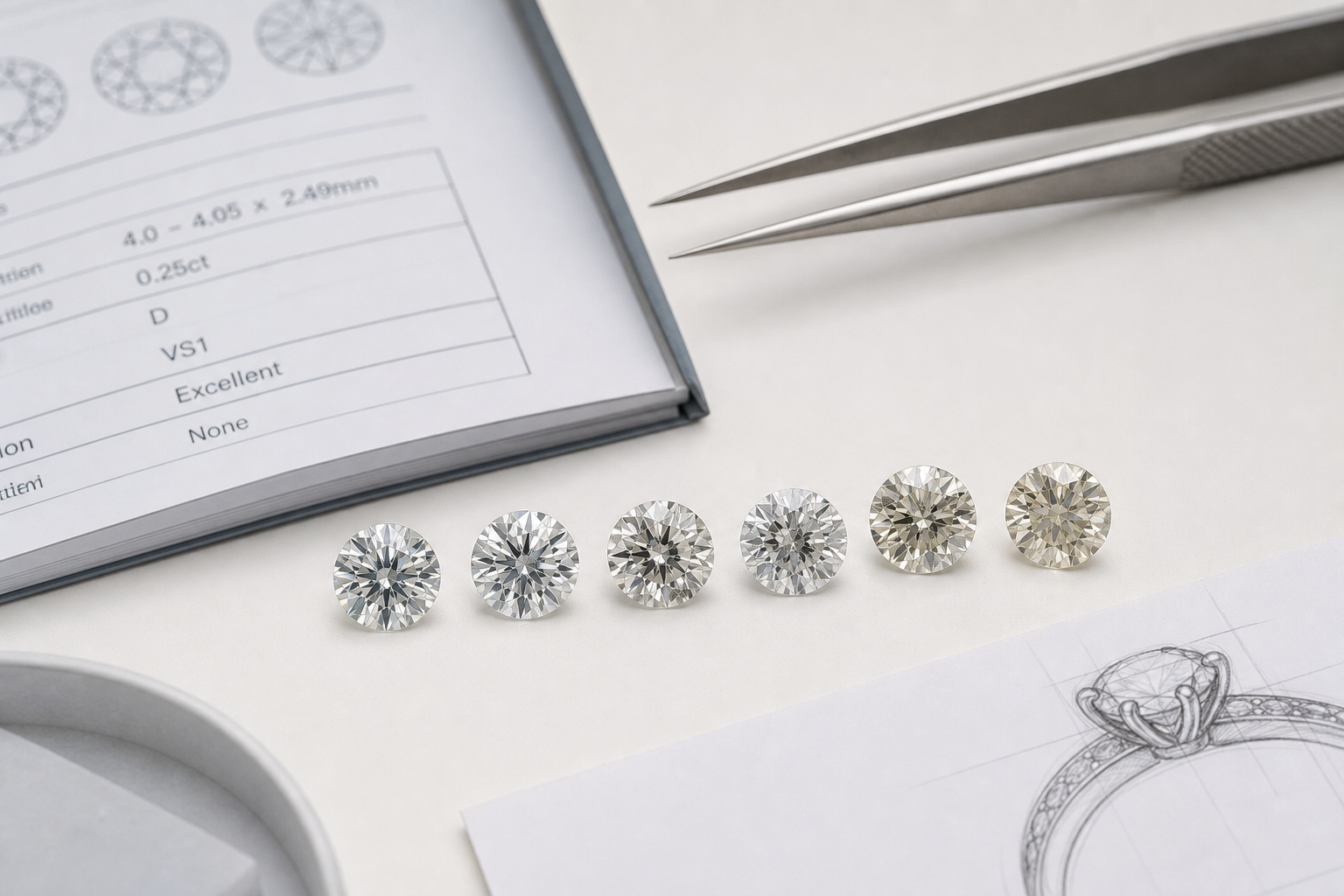
Color and clarity should support the look you want, not inflate the budget for qualities you will never notice in daily wear. For many round lab-grown diamond buyers, the smartest choice is not the highest grade available. It is the grade that looks clean, bright, and balanced once the stone is set. A round lab-grown diamond color grade that matches your metal and a round lab-grown diamond clarity grade that appears eye-clean will usually do more for satisfaction than chasing top-tier paperwork.
Round diamonds are forgiving in some ways, but they are not magical. A bright round brilliant can help mask minor inclusions and small color differences, yet that does not mean all grades look the same. The right choice depends on ring size, setting metal, and how sensitive you are to warmth or tiny inclusions.
Color: When D-F Matters and When G-H May Be Enough
D-F color makes the most sense for buyers who want a very icy look, especially in white gold or platinum. In those settings, higher color grades can help the center stone look especially crisp and colorless. If that is the priority, paying more for D, E, or F can be reasonable.
For many buyers, though, G-H color is already bright enough once the stone is mounted, especially in yellow gold or rose gold. In those metals, a slightly warmer look may be less noticeable and sometimes more natural. The mistake is assuming color is either always visible or always invisible. It depends on the setting, the stone size, and what kind of look you want in the finished ring.
Clarity: Prioritize Eye-Clean Over Highest Grade
Clarity is where buyers most often overpay. VVS or IF may sound reassuring, but many people cannot see a meaningful difference from a well-chosen VS diamond that is eye-clean. If the inclusion cannot be seen without magnification in normal viewing conditions, the better value is often the lower grade that still looks clean.
That choice becomes more important as carat size increases. Larger stones give the eye more surface area to inspect, so buyers should review videos carefully rather than relying on grade alone. The goal is not the most impressive letter on the report. It is a diamond that looks clean in real use.
Why Round Brilliant Can Hide Some Inclusions Better
Round brilliant diamonds tend to hide small inclusions more effectively than step-cut shapes like emerald or Asscher cuts because their facet pattern creates more sparkle and movement. That liveliness can draw attention away from minor internal features. It does not erase the need for a close look, but it does mean a lower clarity grade may still be a strong choice if the diamond is eye-clean.
This is one reason round brilliant diamonds often offer a better balance of appearance and value than more revealing shapes. The cut works in your favor, but only if you still review the actual image or video instead of trusting the grade by itself.
Grade Selection Shortcut
For many round lab-grown diamond buyers, the practical value zone is Ideal or Excellent cut, near-colorless to colorless appearance depending on preference, and eye-clean clarity rather than the highest possible clarity grade. That is not a rule for every buyer, but it is a strong starting point if you want a clean, bright stone without paying for upgrades you may not notice.
Round Lab-Grown Diamond Size: Carat Weight, Diameter, and Face-Up Look
Carat weight matters, but it is not the same as visible size. A round lab-grown diamond size should be judged by millimeter diameter as much as by carat, because two stones with the same weight can look noticeably different once they are set. If you are choosing a round diamond for an engagement ring, the face-up look is what you will actually see every day, not the weight number on the report.
This is where many buyers make a costly mistake. They assume a bigger carat number automatically means a bigger-looking diamond. In reality, depth, proportions, and setting style can change how much of that weight you actually see from above.
Approximate Diameter Benchmarks Buyers Can Use
As a practical reference, round diamonds at common carat weights tend to fall within familiar millimeter ranges, but those ranges should be treated as screening guidance rather than fixed rules. Actual measurements vary with cut quality, depth, girdle, and how the diamond carries its weight. A well-balanced stone should look appropriately spread for its weight without sacrificing light performance.
The point is not to memorize numbers. It is to give yourself a realistic sense of scale before you compare listings. If a stone is unusually deep or unusually shallow, the visual diameter can move enough to affect value and appearance.
Why Two Diamonds With the Same Carat Can Look Different
A deeper diamond can carry more of its weight below the girdle, which may make it face up slightly smaller than another stone of the same carat. A shallower diamond can look wider from the top, but if the proportions are pushed too far, light performance can suffer. That is a bad trade if sparkle is the reason you chose a round brilliant in the first place.
For that reason, size should never be judged in isolation. The better question is whether the stone looks full and balanced from above while still holding strong light return.
How Setting Style Changes Perceived Size
The setting can make a round diamond look larger, smaller, bolder, or more delicate than its measurements suggest. A halo adds surrounding sparkle and can increase visual impact. A thin band can make the center stone appear larger. A bezel can make the stone feel a little more compact and protected. Six prongs can slightly change how open or complete the outline appears. Hidden halos can add lift and brightness without changing the center stone itself.
That is why the same 2.00 ct round diamond can feel very different in different ring designs. The stone and the setting should be considered together, not as separate decisions.
Stone-to-Setting Fit Check
Before you choose the final diamond, confirm the exact diameter, depth, and girdle details with the intended setting. A 2.00 ct round diamond is not just a “2 carat stone”; the jeweler needs accurate millimeter measurements to make sure the head, prongs, basket, or bezel fits properly. For a custom ring, that fit matters as much as the headline weight.
For custom design, the center stone cannot be evaluated separately from the setting. A slightly different depth, girdle thickness, or diameter can change prong length, basket height, side-stone alignment, and how comfortable the ring feels on the hand. This is why a stone that looks attractive as a loose diamond still needs a final fit check before the ring design is approved.
For custom jewelry, stone measurements and setting compatibility should be confirmed before finalizing a purchase. This includes the center stone, any accent stones, prong layout, metal choice, ring size, and whether the finished profile suits the wearer’s daily habits.
Best Settings for Round Lab-Grown Diamond Engagement Rings
The best setting for a round lab-grown diamond engagement ring depends on what you want the ring to do in daily life. A round brilliant already has strong symmetry and sparkle, so the setting should either keep attention on the center stone, add visual presence without overwhelming it, or protect it for regular wear. The mistake is choosing a setting only because it looks good in a photo; height, prong style, band width, and accent stones all affect how the ring wears.
Solitaire Settings: Best for Clean Sparkle
A solitaire is usually the best setting for a round lab-grown diamond if the goal is clean sparkle with minimal distraction. Because there are no side stones competing for attention, the viewer’s eye goes directly to the round brilliant. This works especially well when the center stone has strong cut quality, because the setting is not trying to compensate for weak light performance.
Band width changes the look more than many buyers expect. A thinner band can make the center diamond appear larger from the top, which is useful if you want a more delicate round diamond setting or want the stone to carry the design visually. A wider band can feel more substantial and balanced on the hand, but it may make the same center diamond look slightly less dominant. Neither choice is automatically better; the right one depends on finger size, stone diameter, and whether the wearer prefers a lighter or more grounded ring profile.
Six-Prong vs Four-Prong Settings
For a round brilliant engagement ring, the prong decision is both visual and practical. Six prongs tend to emphasize the circular outline of the diamond and add more contact points around the stone. That can be helpful for buyers who want a classic round look or extra security for daily wear. The tradeoff is that six prongs can cover a bit more of the diamond’s edge, especially on smaller stones or heavier prong designs.
Four prongs show more of the diamond and can make the setting feel more open. This can be a good choice for buyers who want a lighter, cleaner view of the stone or prefer a slightly more modern look. The risk is that four-prong settings place more importance on prong quality and maintenance, because each prong carries more responsibility. If the wearer is active with their hands, a six-prong or more protective setting may be the more practical choice.
Halo, Pavé, and Hidden Halo Designs
Halo, pavé, and hidden halo designs can add visible impact to a round lab diamond solitaire ring, but they also add more details that need to be made well and maintained over time. A halo can make the center diamond look larger from a distance, especially when the accent stones are well matched in color and size. If the halo is too bulky or poorly proportioned, it can make the ring look crowded rather than refined.
A pavé band adds sparkle across the finger and can make the ring feel more finished, but it is not as low-maintenance as a plain band. Tiny accent stones and small prongs are more vulnerable to wear, impact, and loosening over time. A hidden halo is more subtle because the accent diamonds are usually seen from the side angle rather than straight from above, which makes it useful for buyers who want detail without changing the clean face-up appearance of the center stone.
For lab-grown diamond rings, buyers should ask whether accent stones are lab-grown or natural if that matters to their values, budget, or desire for consistency. This is especially important in custom work, where the center stone and accent stones should be planned together rather than treated as separate decisions.
If sustainability or sourcing is part of the reason for choosing lab-grown diamonds, ask for clear documentation rather than relying on broad claims. Lab-grown diamonds can offer a different sourcing path from mined diamonds, but energy use, production practices, chain communication, and seller transparency still matter. A responsible buying decision is based on what can be verified, not on the assumption that every lab-grown option is automatically the same.
Sourcing and Sustainability Claim Check
Be cautious with broad words such as “eco-friendly,” “carbon-neutral,” “ethical,” or “conflict-free” unless the seller can explain exactly what is being claimed and provide documentation for that specific claim. A lab-grown origin alone does not answer every question about energy source, production practices, cutting location, labor conditions, shipping, packaging, or offset programs.
A more defensible way to compare sellers is to ask narrow questions: Is the center stone clearly disclosed as lab-grown? Are accent stones lab-grown or natural? Is the growth method listed if available? Are any environmental claims tied to a specific program, certificate, or measurable practice? The clearer the answer, the easier it is to separate meaningful documentation from general marketing language.
Environmental and sustainability claims should be specific, documented, and limited to what can be substantiated. A broad claim may sound appealing, but a narrow claim with evidence is more useful for a buyer comparing real options.
What to Confirm With the Jeweler
Before approving the final round diamond setting, confirm the metal type, prong style, center stone dimensions, accent stone type, ring size, setting height, and how the design fits the wearer’s daily routine. Platinum can be a strong choice for prong security and a cool white look, while gold offers different color and style options depending on whether the buyer chooses white, yellow, or rose gold.
Setting height deserves careful attention. A high setting can make the center diamond more visible, but it may snag more easily and feel less practical for active daily wear. A lower-profile or more protective design is often the smarter choice for someone who works with their hands, wears gloves, travels often, or does not want to think about the ring constantly. Useful round diamond ring setting ideas are not just attractive; they fit the wearer’s habits.
Common Mistakes When Buying a Round Lab-Grown Diamond
Buying a round lab-grown diamond can feel easier than buying a fancy shape because the comparison points are more standardized. That convenience helps, but it can also create false confidence. The most common round lab diamond mistakes happen when buyers reduce the decision to one number, such as carat weight, color grade, or price, instead of checking how the stone actually performs and fits the intended ring.
Mistake 1: Choosing the Biggest Carat Weight First
The biggest diamond is not always the best-looking diamond. In practical comparisons of lab grown diamond shapes, a round stone with weak proportions, poor diameter value, or dull visual performance can look less impressive than a slightly smaller stone with stronger cut quality. This matters most near popular carat milestones, where buyers may pay more for the number on the certificate without getting a noticeably better face-up result.
A better approach is to compare carat weight with diameter, proportions, and video appearance. If two round diamonds are close in price, the smarter choice is often the one with better light return and a more attractive face-up spread, not simply the heavier stone. Carat weight is only useful when it supports the visual result.
Mistake 2: Treating the Certificate as the Whole Story
A certificate is important, but it is not the complete buying decision. It records important details such as cut grade, carat weight, color, clarity, measurements, and proportions, but it does not fully show how lively the diamond looks in motion. Two round diamonds with similar reports can still differ in contrast, brightness, and overall visual appeal.
Buyers should use the certificate as a screening tool, then review clear images, 360-degree video, measurements, and seller-provided details before committing. At NUVU, we treat the grading report as the starting point because it helps narrow the field, but it should not replace visual inspection or setting compatibility. This is especially true when buying round lab-grown diamonds online, where the buyer cannot rely on in-person lighting alone.
A grading report helps document key characteristics, but it should not be treated as a guarantee of beauty, value, or sourcing ethics. It is one part of the evidence set, not a promise that the diamond is the right choice for every buyer or every design.
Mistake 3: Paying for Grades You Cannot Appreciate Visually
Some buyers spend heavily on extremely high color or clarity grades without asking whether those upgrades will be visible in the finished ring. A D color or VVS clarity diamond may be the right choice for someone who wants that specification and can see the difference, but it is not automatically the best value for every round lab-grown diamond engagement ring.
For many buyers, an eye-clean diamond with a color appearance that suits the setting will deliver a better balance than paying for grade prestige. The recommendation changes with stone size, metal color, and personal sensitivity. Larger stones make inclusions and color easier to notice, while yellow or rose gold can make a near-colorless stone look warmer in a pleasing way. The mistake is not buying a high grade; the mistake is paying for a high grade without a visual reason.
Mistake 4: Ignoring Total Ring Cost
The diamond price is not the full purchase cost. The setting, metal, accent stones, customization, applicable taxes, shipping choices, insurance choices, resizing needs, and post-purchase service terms can all affect the final budget. A buyer who spends the entire budget on the center stone may end up compromising on the setting, which can weaken the finished ring both visually and practically.
This is especially important for custom designs or rings with pavé, halos, hidden halos, or more complex baskets. A lower-priced center diamond may not be a better deal if the total project cost rises because the design requires more labor, more accent stones, or a more specialized setting. A round diamond buying guide should not stop at the loose stone; the finished ring is the real purchase.
Buyer Verification Checklist
Before purchase, confirm the grading report number, exact measurements, cut grade, color, clarity, video appearance, return or exchange terms if available, setting compatibility, final ring price, and written order details. The goal is not to make the process complicated. It is to prevent avoidable surprises, especially when a diamond looks strong on paper but does not fit the intended design, budget, or expectations.
When a Round Lab-Grown Diamond Is Not the Best Choice
A round lab-grown diamond is often the safest choice for sparkle, but it is not automatically the best choice for every ring. If the buyer values finger coverage, elongated shape, vintage softness, or a more distinctive silhouette more than standardized brilliance, a round lab-grown diamond alternative may make more sense. The right decision depends on what the wearer wants to notice first: sparkle behavior, shape, size impression, or style.
If You Want More Face-Up Length
Oval, pear, marquise, and elongated cushion cuts can create more visual length across the finger than a round diamond of similar carat weight. This can be useful for buyers who want a larger-looking ring without moving to a much higher carat weight. In a round or oval lab-grown diamond comparison, the oval may look more elongated and finger-flattering from the top, even if the round has more predictable sparkle.
The tradeoff is that elongated shapes require closer visual screening. Bow-tie effect, uneven outline, awkward length-to-width ratio, and inconsistent brightness can be more noticeable than buyers expect. If finger coverage is the priority, a fancy shape can be the better choice, but it should not be selected by dimensions alone.
If You Prefer a Softer or More Distinctive Shape
Cushion and oval cuts often feel softer and less traditional than round diamonds. A cushion can bring a warmer, pillow-like outline, while an oval gives length without the sharp points of a pear or marquise. For buyers comparing round vs cushion lab diamond options, the decision is usually less about which one is “better” and more about whether they prefer consistent round brilliance or a more individual shape personality.
The caution is that fancy shapes are less standardized. Two cushion diamonds with the same carat weight and grades can look very different depending on their facet pattern, outline, depth, and sparkle style. A buyer who wants a distinctive shape should be comfortable judging videos and rejecting stones that do not have the right visual balance.
If You Love Clean, Architectural Facets
Emerald and Asscher cuts offer a different kind of beauty from a round brilliant. They show broad flashes, straight lines, and a more architectural look rather than intense all-over scintillation. This can be the better choice for someone who prefers clarity, symmetry, and a calmer visual rhythm over maximum sparkle.
The tradeoff is clarity scrutiny. Step-cut shapes do not hide inclusions as easily as round brilliant diamonds, so buyers often need to be stricter about eye-clean appearance and video review. An emerald cut with visible inclusions or weak transparency can look less forgiving than a round diamond with the same clarity grade.
Shape Decision Shortcut
Choose round if sparkle reliability, easy comparison, and balanced light performance matter most. Consider fancy shapes if finger coverage, elongated appearance, softer styling, or a distinctive silhouette matters more than maximum standardized brilliance. The best lab diamond shape for finger coverage is often not round, but the safest shape for predictable sparkle usually is.
How to Choose a Round Lab-Grown Diamond With Confidence
The safest way to choose a round lab-grown diamond is to start with cut quality, then work outward from there. A round brilliant lab diamond is easier to shop than most shapes, but that only helps if you treat the certificate, proportions, and video as a package. For buyers who want a strong round lab diamond for an engagement ring, the goal is not simply to find a high grade on paper. It is to find a stone that looks bright, balanced, and worth the price in real light.
Step 1: Start With Cut and Proportions
If sparkle matters most, cut should be your first filter. Use the report to screen for strong table, depth, crown angle, pavilion angle, symmetry, and polish before you spend time on color or carat. That is the part many buyers get backwards. A larger stone with weaker proportions can look less lively than a slightly smaller round brilliant lab diamond with stronger cut performance.
Do not treat every “Excellent” or “Ideal” label as equal without checking the rest of the data. The grade narrows the field, but the actual proportions tell you whether the diamond has a real chance of performing well. If a stone sits outside sensible ranges, it deserves extra scrutiny even if the certificate looks clean.
Step 2: Match Color and Clarity to Your Eyes, Not Just the Grade
Once cut is strong, decide how much color and clarity really matter in the finished ring. Many buyers overpay for grades they may never notice. For a round lab-grown diamond, eye-clean clarity usually matters more than chasing the highest clarity tier, and the preferred color depends on the metal, the size of the stone, and how sensitive you are to warmth.
If you want a bright, icy look in a white metal setting, a higher color grade can make sense. If you are trying to keep the budget balanced, a slightly lower color grade may still look very white once mounted. The same logic applies to clarity. A clean-looking diamond that performs well is often the smarter purchase than a technically higher grade that offers little visible difference.
Step 3: Compare Diameter, Not Just Carat
Carat weight tells you how much a diamond weighs, not how large it looks on the hand. That matters a lot with round diamonds because two stones with the same carat can still face up differently. When comparing round lab-grown diamonds online, always look at millimeter measurements alongside carat weight.
This becomes more important near milestone sizes, where buyers often focus too much on the number and too little on spread. A stone with better diameter may create a more satisfying look even if it sits slightly below a popular carat threshold. The smarter comparison is usually the one that balances visible size, proportions, and price instead of chasing weight alone.
Step 4: Review the Diamond With the Setting in Mind
A loose diamond is only half the decision. The right round lab-grown diamond should fit the ring design, the wearer’s lifestyle, and the total budget. A stone that looks excellent on its own can still be a poor choice if it sits too high for daily wear, conflicts with the intended head style, or forces the rest of the ring into a budget compromise.
Think about the complete project, not just the center stone. If you want a solitaire, the diamond has to carry the look by itself. If you want pavé or a halo, the center stone has to work with those details without overwhelming them. At NUVU, we usually treat the stone and setting as one decision because the strongest round lab diamond choice is the one that works cleanly in the finished ring, not just in isolation.
Final Buying Checklist
A strong round diamond buying checklist should include verified report details, strong cut data, clear video or imagery, suitable diameter, eye-clean clarity, preferred color appearance, compatible setting measurements, and a total project cost you understand before purchase.
If you are buying a round lab-grown diamond online, the best habit is simple: compare the report, then verify the look, then confirm the setting fit. That order prevents most costly mistakes.
NUVU’s role in buyer education is to make comparison clearer, especially around grading reports, visual evidence, design fit, and documentation. A report can narrow the shortlist, but it should be read alongside proportions, images, video, and the requirements of the finished jewelry.
Documentation That Should Accompany a Confident Round Diamond Choice
A confident round lab-grown diamond purchase should leave a clear paper trail. At minimum, the buyer should be able to connect the diamond listing to its grading report, match the measurements and inscription where available, and understand whether the report is from GIA, IGI, HRD Antwerp, or another disclosed laboratory. This does not make the diamond automatically superior, but it gives the buyer a verifiable basis for comparing the stone against similar options.
For custom engagement rings, documentation should also connect the selected diamond to the approved design details. The center-stone dimensions, metal choice, ring size, prong style, accent-stone description, and final order summary should be consistent before production begins. This is especially useful for round brilliant diamonds because small measurement differences can affect the head, basket, prong coverage, and finished ring profile.
Documentation is most useful when it is specific enough to be checked. A buyer should know which diamond is being discussed, which report belongs to it, which measurements the setting will be built around, and which design details have been approved. Vague reassurance is less helpful than a clear match between report data, visual evidence, order details, and the finished ring plan.
If a seller or jeweler recommends one round diamond over another, ask what evidence supports that recommendation. The answer should be practical: stronger proportions, better diameter for the weight, cleaner visual appearance, more suitable color for the metal, better fit for the setting, or a clearer match to the buyer’s budget. This type of explanation is more useful than relying on a single grade or a general statement that one stone is “better.”
Before purchase, buyers should confirm the seller’s documentation, return policy, resizing terms, and after-sales support in writing. These details are separate from the diamond’s grade and should not be assumed from the grading report.
These assurances should support, not replace, your own comparison process. A good retailer should be willing to explain why a particular round diamond was recommended, what tradeoffs were made in color or clarity, how the stone compares with alternatives, and how the setting will protect and present the diamond in daily wear. A transparent buying experience helps you understand the decision before you approve it.
FAQ: Round Lab-Grown Diamond Buying Questions
Do round lab-grown diamonds sparkle more than other shapes?
Usually, yes. A well-cut round brilliant lab diamond is the most reliable shape for balanced brilliance, fire, and scintillation. Other shapes can be beautiful, but they are less standardized and often require more visual judgment.
Are round lab-grown diamonds more expensive than fancy shapes?
Often they are, on a comparable basis. Demand, cutting expectations, and yield can all affect price. The exact difference depends on the stone’s specifications and the market at the time you shop.
What is the best cut grade for a round lab-grown diamond?
If sparkle is the priority, start with Excellent or Ideal cut grades where those terms apply. Then check the proportions and the actual video, because a good label alone does not guarantee strong light performance.
What color grade is best for a round lab-grown diamond?
D-F is a strong choice if you want a very icy appearance. G-H can still offer excellent value for many buyers, especially in warm metal settings or when the stone size is moderate.
What clarity grade should I choose for a round lab-grown diamond?
Many buyers should focus on eye-clean clarity rather than the highest grade. VS grades are often a practical starting point, but the right answer depends on the stone’s size and what you can actually see in images or video.
Next Steps for Comparing Round Lab-Grown Diamonds
For readers who want to shop with less guesswork, the next step is to compare stones in a way that respects both the report and the real appearance. A useful path is to move from broader education into a tighter review of the exact diamonds you are considering.
If you still need the bigger picture, a lab-grown diamond 4Cs guide can help with grade interpretation, while a certification guide can help you read the report more confidently. If you are still deciding between silhouettes, a lab-grown diamond shapes guide may help narrow the field. For buyers who are closer to purchase, a loose lab-grown diamonds collection or a custom engagement ring page can make the final comparison much easier.
A good round lab-grown diamond shortlist should be built around cut quality, certificate details, video appearance, diameter, and setting fit. If those pieces line up, you are usually looking at a strong candidate. If they do not, the stone may be attractive in theory but frustrating in the finished ring.
The simplest CTA is also the most useful: compare round lab-grown diamonds by cut quality, certificate details, video appearance, and setting fit before choosing your final stone. If you want help narrowing the options, NUVU can support that comparison and help align the diamond with the ring design.
Why This Article Stays Focused
This guide is built to help you judge a round brilliant diamond as a shape choice for sparkle and reliability. It should not replace a full price guide, a certification guide, or a broader shape comparison. Keeping the focus narrow makes the decision clearer and helps you avoid overpaying for the wrong feature.
What You Should Take Away
By now, the main idea should be straightforward: round brilliant remains the safest sparkle-first choice because it is easier to compare, easier to evaluate, and more predictable when well cut. The smartest buyers still look beyond the label, compare the actual stone, and make sure the diamond works with the setting they plan to wear every day.
Disclosure: This article is for general educational purposes only. Diamond grading, pricing, availability, specifications, and seller policies can change, and readers should verify important details through grading reports, official laboratory tools, seller documentation, or qualified professionals before making a purchase decision. Laboratory-grown diamonds should be clearly distinguished from natural diamonds, and environmental or sourcing claims should be supported by specific documentation.