
Most lab-grown diamond jewelry looks stunning in a display case, but the real test happens when you try to wear it, a scenario from the lab-grown diamond fashion jewelry guide, while typing, lifting a cast iron pan, pulling on a sweater, or rushing out the door with the kids. A ring that constantly snags on fabric, earrings that feel heavy by noon, or a necklace chain that kinks after a few weeks will quickly end up in a drawer instead of on your body.
For the full framework, read Lab-Grown Diamond Jewelry Guide.
This guide moves past the 4Cs and marketing claims to focus on what actually determines daily wearability: shank thickness, setting profile height, clasp type, metal weight distribution, and how each piece fits your specific routine and risk tolerance. By the end, you will know exactly which specifications to look for and which designs to avoid when building a capsule of lab-grown diamond jewelry built for everyday life.
| Decision Point | Safe Daily Wear Choice | Problematic for Daily Wear |
|---|---|---|
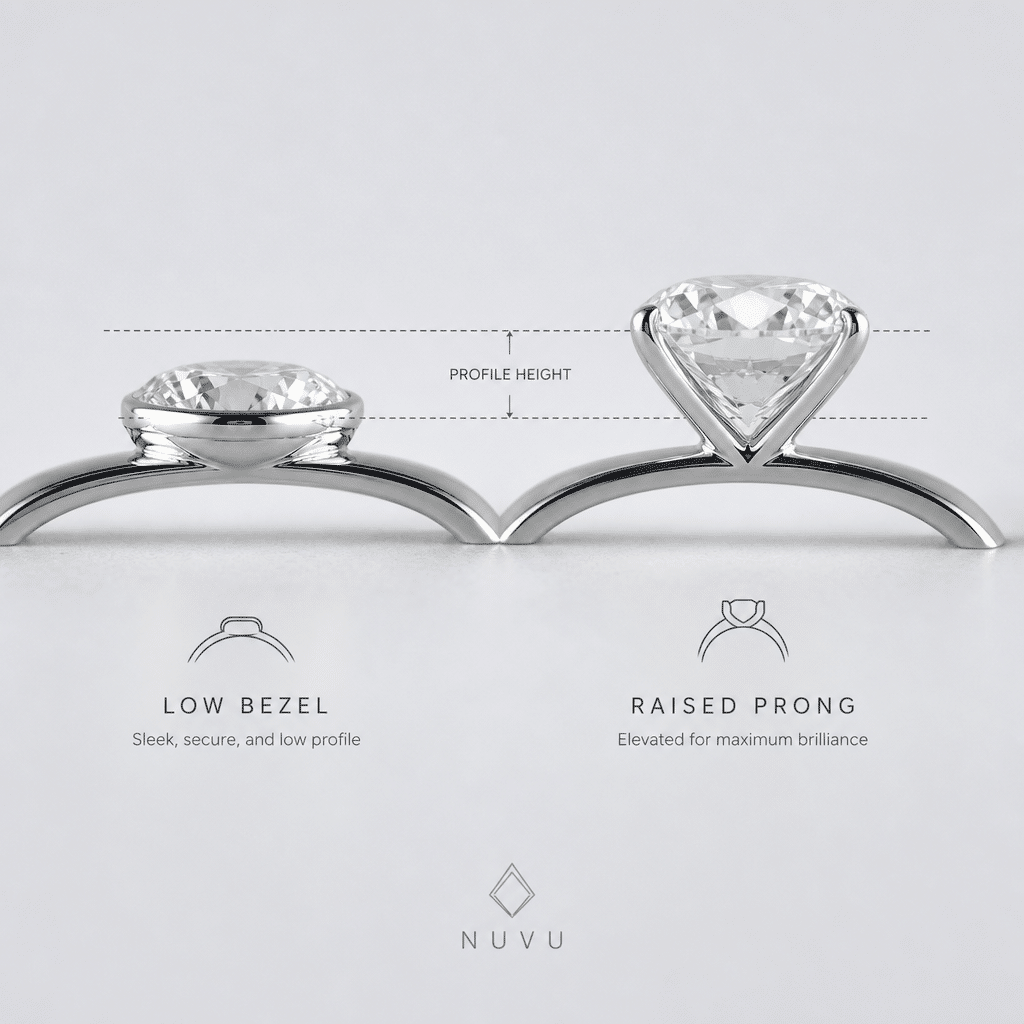
| Ring setting height | Under 6mm (preferably bezel) | Cathedral or high-prong settings |
| Ring shank thickness | 1.8–2.2mm | Under 1.6mm |
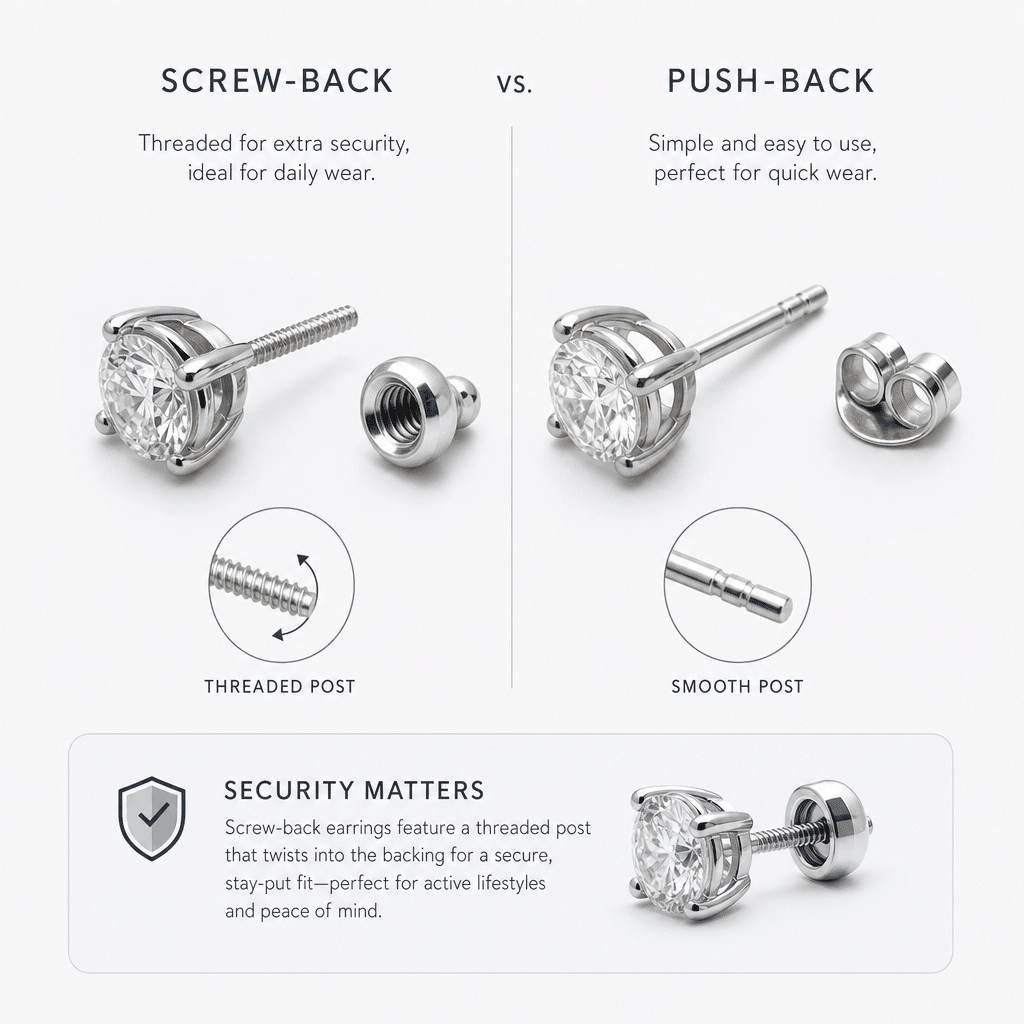
| Earring back type over 0.50ct | Screw-back posts or lever-backs | Standard push-back |
| Necklace chain for pendant | Rope or box, 3.5–4.0mm | Tiny cable or low-quality spring ring |
| Bracelet clasp | Fold-over with double safety catch | Lobster clasp alone |
| Activity level | Low-profile, low-clearance design | Any protruding stone for high-impact action |
| Starter capsule | Studs (0.50ct), bezel ring (0.75ct), pendant (0.30ct) | High-variety, low-wear collection |
Quick Questions Before You Read
Q: Can I really wear a lab-grown diamond ring every day without damaging it?
Yes—provided the setting is low-profile (under 6mm high) and the shank is at least 1.8mm thick. A bezel setting gives you the highest durability for constant wear.
Q: Is a bezel setting less sparkly than a prong setting?
Bezel settings do let in slightly less light from the sides, but the difference is modest for round brilliant cuts in typical daily lighting. If a low profile is your priority, a bezel offers the best protection.
Q: How many wearable pieces should I actually own?
Start with three core pieces in the same metal: round studs, a bezel ring, and a small pendant. Track what you actually reach for over 30 days. If you wear three or fewer pieces regularly, invest in better versions of those instead of adding variety.
Q: Are lab-grown diamonds more practical than natural diamonds for everyday wear?
Both score 10 on the Mohs hardness scale and require the same care. The practical difference is the setting and shank quality, not the diamond origin. Choose lab-grown for identical performance at a lower price point.
How to Choose Low-Profile Settings for Everyday Wear
The single most important factor determining whether a ring or pendant feels comfortable for daily use is the setting profile. A high setting catches on everything. A low setting almost never does. Setting height and shape directly control how the jewelry interacts with clothing, bags, desks, and hand movement.
Bezel Settings vs. Prong Settings for Daily Durability
Bezel settings encase the diamond in a metal rim, creating a smooth surface that resists snagging on clothing, hair, and bags. The diamond sits protected inside the metal frame, and the ring slides past obstacles rather than catching on them. Dome-headed bezels and flush-set designs reduce snag risk to near zero because there is nothing for fabric or zippers to grab. This makes the bezel the strongest choice for anyone who wants to put on a ring in the morning and not think about it again until bedtime.
Prong settings, especially low-profile four-prong designs, offer more light exposure to the diamond, which means more visible sparkle. But that comes with a tradeoff. Prongs require periodic inspection for loose claws. A bent or worn prong leaves the diamond exposed to loss. For daily wear, prong tips should always be rounded, not sharp. Sharp prongs catch on sweaters, towels, and seat belts. Rounded prongs reduce that risk without blocking light entry. Even so, a low-profile bezel will always be safer for high-contact routines than even the best prong work.
For buyers comparing these two options, it is worth evaluating not just the look but the actual contact risks in your day. A prong-set ring that stays in an office drawer during cooking and gardening may last just as long as a bezel ring worn through all activities. The setting choice depends on where you plan to keep it on your hand.
Terminology around lab-grown diamonds is also relevant to the buying process. The Gemological Institute of America (GIA) has developed a specific nomenclature for describing laboratory-grown diamonds, distinguishing them from natural diamonds in grading reports.[1] This labeling is intended to provide clarity for consumers, ensuring that the origin of the stone is clearly documented alongside its 4Cs characteristics. When reviewing a grading report for a lab-grown diamond, checking for this clear designation can help confirm what the report covers and does not cover.
Cathedral and Tension Settings: Tradeoffs for Active Hands
Cathedral settings raise the diamond above the band with arched shoulders. The result is an elegant silhouette that many buyers associate with classic engagement ring styling. But those same elegant arches create leverage points. The raised profile catches on jacket cuffs, gym equipment, and backpack straps more readily than a flush or bezel design. If your daily routine involves typing, cooking, carrying bags, or handling children, a cathedral setting will require more removal than a lower alternative.
Tension settings grip the diamond under pressure without prongs, giving the illusion that the stone floats between the band ends. The visual effect is striking, but the exposed girdle of the diamond remains vulnerable during ordinary activity. Knocking the ring against a door frame, a desk edge, or a car door handle transfers impact directly to the diamond’s unsupported edge. For jewelry worn during active hours, tension settings demand caution that most buyers prefer not to manage daily.
Split-Shank and Contoured Bands
Split-shank bands create visual interest by splitting the band into two arms that merge near the center stone. Contoured bands curve to follow the finger shape and reduce spinning. Both styles can work well for daily wear, but only when the shank is thick enough to handle normal movement. The recommended shank thickness for everyday durability is 1.8 to 2.2mm. Below 1.8mm, metal fatigue and bending become real risks, especially for rings worn during hand-intensive activities.
What to Check Before You Decide
Confirm the setting profile height in millimeters. For a ring worn daily, a setting height under 6mm from the finger significantly reduces snag risk. Request side-view photos and a video showing the ring against a flat surface. Verify that prong tips are rounded, not sharp, and that the bezel rim sits flush with surrounding metal. These simple checks separate a piece you will wear every day from one that stays in the box.
Pendant and Necklace Design for Comfortable Regular Use
A pendant that flips upside down every time you move is not an everyday piece. The difference between a necklace you wear daily and one that sits in a box comes down to how the setting interacts with your body and how the chain holds up under normal use.
Pendant Settings That Lie Flat Against the Body
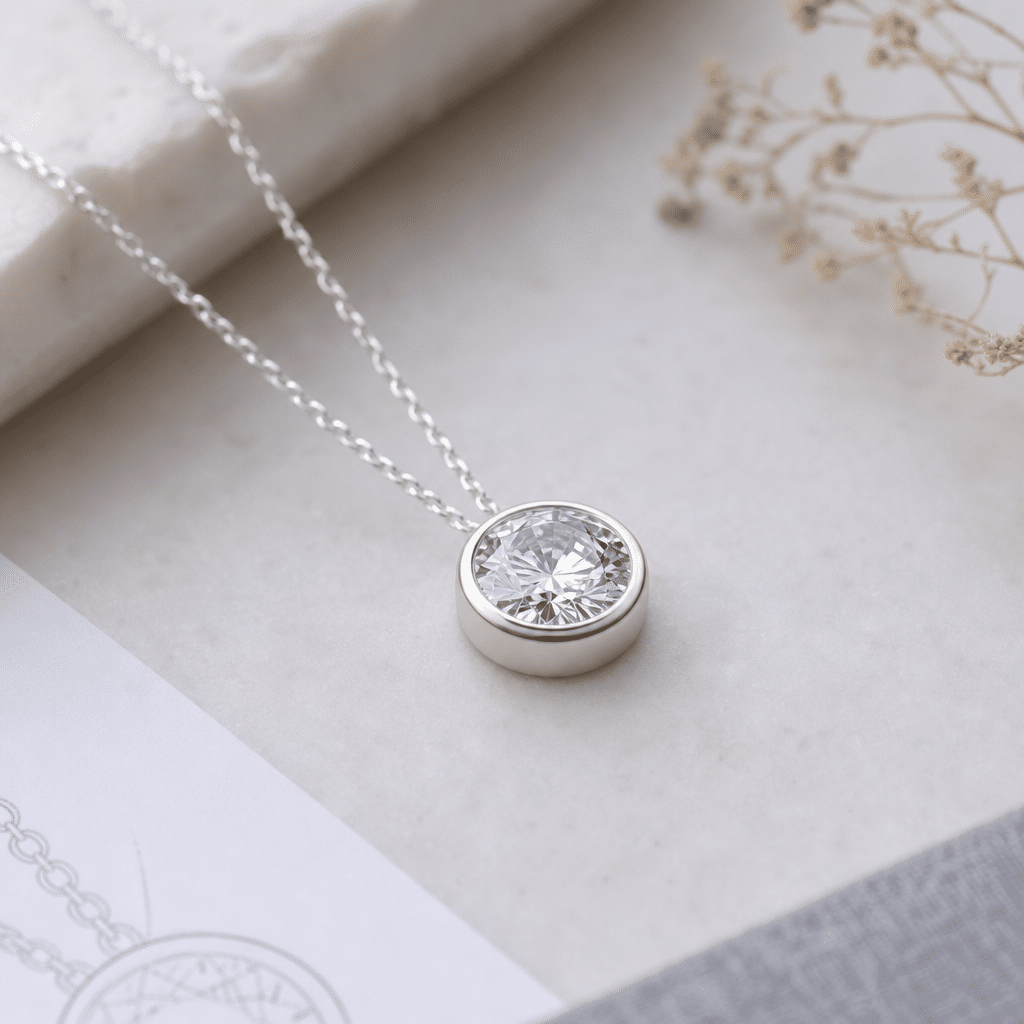
Low-profile bezel pendants and flush-set diamond shapes rest flat against the collarbone. They do not catch on shirt collars, zip pulls, or seatbelt straps. The diamond is encased in a smooth metal rim, so the front and back of the piece move with your clothing rather than against it.
High-profile basket settings and halo designs create a gap between the diamond and the body. That gap is where tangling starts. A raised stone catches on knitwear, scarf threads, and jacket zippers. Over time, the repeated snagging also stresses the chain connection point.
Full bezel pendants or modified bezel cage settings offer the smoothest daily contact. There is no exposed edge to catch. For buyers who want visible diamond face without the snag risk, a bezel-set round or cushion cut in a low-profile mount is the most practical everyday pendant.
Understanding How Lab-Grown Diamonds Are Made: HPHT and CVD
While the durability of a lab-grown diamond is identical to a natural diamond, knowing the growth method can inform other practical decisions. The two primary laboratory processes used to create diamonds are High Pressure High Temperature (HPHT) and Chemical Vapor Deposition (CVD).[2] HPHT mimics the intense pressure and temperature conditions under which natural diamonds form, while CVD uses a gas mixture in a low-pressure chamber to deposit carbon atoms layer by layer onto a diamond seed. Both methods produce diamonds with the same physical and chemical properties. From a wearability standpoint, the difference is not significant, as both score 10 on the Mohs scale. However, understanding these processes can help a buyer better interpret the terminology found on a grading report, which typically identifies the growth method used.[1]
Chain Styles and Clasp Security for Active Movement
Box chain and rope chain styles offer the best durability-to-weight ratio for everyday wear. Their linked construction resists kinking and distributes tension evenly across the chain length. Cable chains look classic but at thinner gauges they kink and knot more easily, especially when worn under clothing.
Clasp choice matters more than most buyers realize. A lobster clasp at 3.5-4.0mm provides reliable security for pendants weighing 1-3 grams; as noted in the lab-grown diamond jewelry guide, the spring mechanism is enclosed, so dirt and lotion buildup is less likely to jam it. Spring ring clasps are smaller and less secure. They can loosen over months of daily wear and release unexpectedly when a chain is pulled against a bag strap or door handle. For a piece intended for daily use, spring ring clasps should be avoided.
Drop vs. Station Necklace Layouts
A drop pendant with one central stone creates a clean focal point that stays in place. The weight is concentrated in one spot, which helps the chain hang consistently. Station necklaces with multiple small lab-grown diamonds along the chain add more sparkle but introduce multiple points of potential failure. Each stone-to-chain attachment must hold under bending, pulling, and cleaning.
Soldered stations prevent the diamonds from rotating out of position, but they also reduce chain flexibility. For daily wear, a single soldered drop pendant on a 16-18 inch chain is the most practical starting point. It creates visible presence without introducing unnecessary complexity.
What This Means in a Real Purchase
Weigh the finished pendant plus chain on a kitchen scale if possible. Total weight under 5 grams feels light enough for all-day wear without pulling on the neck. Heavier pieces create noticeable tension by mid-afternoon.
Bring the necklace over a mirror and turn your head side to side. A well-designed pendant stays face-forward. If it flips when you turn, the setting is too top-heavy for daily use. Ask the seller for a video showing pendant behavior during normal movement before you buy. This simple check saves returns later.
When a grading report is provided for a lab-grown diamond, buyers can independently verify the report number through the issuing laboratory’s official report-check tool where available. This step confirms that the documented 4Cs and growth method correspond to the specific stone. However, a grading report assesses the loose diamond’s characteristics and does not evaluate the security or quality of the final jewelry setting.
Earring Designs That Stay Secure for Hours
The wrong backing or post length turns a comfortable stud into an earring you check constantly. For daily wear, earring security depends on three factors: backing type, post fit, and stone weight distribution.
Push-Back vs. Screw-Back vs. Lever-Back Earrings
Push-back posts are the fastest to insert and remove. They work well for lightweight studs worn a few hours at a time. But the friction grip loosens over the course of a day, especially with stones above 0.50 carat. You find yourself pressing the backing back into place by lunch.
Screw-back posts solve this by threading the post into the backing. Manual tightening creates a secure hold that does not loosen during normal movement. For stones above 0.50 carat, screw-backs are the better choice for daily wear. The tradeoff is slightly more time to put them on and take them off.
Lever-back earrings hook through the piercing and close with a hinged lever that rests behind the earlobe. They distribute weight evenly across the ear, reducing droop for heavier stones. Omega clips, which are hinged spring mechanisms that press against the back of the lobe, add security but require correct ear contour fit. If the clip does not match your ear shape, it creates pressure points within an hour of wear.
Post Length and Backing Material
Standard post length of 10-11mm suits most ear lobes. For thicker lobes, 12mm posts prevent pinching and allow enough room for the backing without compressing the tissue. Posts shorter than 10mm can embed into the lobe over a full day of wear, especially with screw-back designs that pull the stone closer to the ear.
Backing material matters for sensitive skin. Hypoallergenic backings made from surgical stainless steel, titanium, or 14K gold reduce irritation caused by nickel alloys commonly found in lower-cost jewelry. Silicone backings grip tightly and are comfortable, but they degrade after 3-6 months of daily use. A degraded silicone backing loses grip and can release without warning.
Stone Weight and Setting Integration for Hoop and Drop Earrings
Hoop earrings with lab-grown diamonds benefit from hollow tube construction. A hollow tube maintains the visual thickness of the hoop while reducing total weight by 30-50% compared to solid construction. This matters because heavier hoops pull on the piercing and stretch the hole over time.
Drop earrings with center stones above 1 carat each create noticeable tug during walking, phone calls, and head movement. The weight pulls the earring forward, changing the angle of the drop. For daily wear, keeping each drop stone under 0.75 carat reduces this effect significantly.
Threader earrings offer minimal weight and slide through the piercing with a fine chain. They look delicate but risk slipping out of unbacked piercings during sleep or exercise. If you want threaders for daily wear, confirm the seller offers small silicone stoppers that can be added behind the ear.
Buyer Verification Checklist
For stud earrings, confirm post thickness. Posts between 0.8-1.0mm reduce insertion friction and stay secure in the backing. Thinner posts bend under repeated daily use. For screw-backs, ask about threading depth and whether the post is solid or hollow. Solid posts resist bending during tightening; hollow posts can deform. For lever-backs, request an image of the hinge mechanism. It should use a spring pin, not a simple friction hinge. Friction hinges wear loose over months and eventually fail to hold the lever closed.
The Role of Grading Reports in Verification
When purchasing diamond jewelry, especially online, the grading report is a key tool for understanding what you are buying. For lab-grown diamonds, organizations like the GIA provide grading reports that assess the 4Cs and specifically identify the diamond as laboratory-grown.[3] These reports can include details such as the growth method, which adds a layer of transparency. Buyers can independently verify the report number through the issuing lab’s online database, a step that confirms the document corresponds to the specific diamond. However, it is important to remember that a report grades the loose stone, not the finished setting or piece of jewelry. The setting quality and security features must still be evaluated separately.
Bracelet and Cuff Considerations for Continuous Wear
Most bracelet loss happens not through stone damage but through clasp failure. A bracelet that survives typing, bag carrying, and hand washing depends on clasp strength, link design, and correct wrist fit.
Clasp Strength and Clasp Mechanism Types
Fold-over clasp with double safety catch offers the highest security for daily bracelets. The clasp closes over the band and locks with a secondary catch that requires two deliberate actions to open. A well-made fold-over clasp clicks audibly when fully closed and does not release under sideways pulling.
Lobster clasp at 4-5mm works for lightweight tennis bracelets but has a known weakness: the hook can release when snagged on a sweater sleeve or bag strap. Box clasp with push-button release provides both security and ease of removal. The button mechanism is recessed enough that accidental contact during movement is unlikely.
Magnetic clasps are convenient for one-handed closure but release under sideways stress. A bracelet with a magnetic clasp can fall off during typing, reaching for a wallet, or carrying groceries. For daily wear, magnetic clasps are not recommended for any bracelet carrying diamond weight.
Link Design and Diamond Configuration
Tennis-style bracelets with continuous round stones set in flexible links require the most attention to clasp solder points. The clasp takes the most stress during putting on and taking off. If the clasp is soldered to a single link instead of reinforced across multiple links, that joint becomes the failure point.
Stone-set links between 3-4mm offer a good balance of continuous sparkle and comfortable fit. Links smaller than 3mm reduce visible stone surface and create a more delicate feel that can snag on knit fabrics. Links above 4mm add weight that pulls the bracelet downward and causes it to slide under the wrist.
Cuff designs with an open back eliminate clasp failure entirely. The cuff slides over the wrist and grips gently. But an open-back cuff requires correct wrist circumference measurement. Too loose, and it shifts during typing. Too tight, and it leaves marks after a few hours. Hinged bangles distribute weight evenly around the wrist but need correct hinge alignment for smooth movement. A misaligned hinge catches on clothing and creates a visible gap at the clasp point.
Wrist Clearance and All-Day Fit
Bracelet length should allow 1-1.5cm of slack for natural wrist movement. Per the lab grown diamond jewelry guide, that slack lets the bracelet shift slightly during typing and bag carrying without sliding over the hand. A bracelet that fits snug against the wrist will stretch or deform the clasp mechanism within weeks of daily wear.
Cuffs should open enough to slide over the hand knuckle without forcing. An opening that requires pressure to pass over the knuckle will also open under moderate impact, releasing the bracelet. For daily wear, a safety chain connecting both clasp ends prevents loss if the clasp opens during typing, bag carrying, or hand washing.
Stone-to-Setting Fit Check
Request the bracelet clasp closing force test before purchase. A fold-over clasp should click audibly with moderate hand pressure. If it requires excessive force to close, the clasp mechanism is too tight and will fatigue over months. If it closes without a click, the internal spring may be undersized.
Confirm that link joints are soldered, not merely pressed. Pressed joints separate under tension during daily abrasion against desk edges and bag hardware. Soldered joints hold the links together even when pulled sideways during typing or bag carrying.
Ask about repair turnaround time for clasp replacement. This matters more than any other bracelet specification because clasp failure is the most common daily wear risk. A seller who offers a quick clasp replacement service provides more practical value than a seller who focuses on diamond specs alone.
What to Check Before You Decide
Ask whether the seller recommends ultrasonic cleaning for the specific setting and diamond type of the piece you are considering. Many lab-grown diamond sellers confirm that standard diamond cleaning methods apply. Request a care card with cleaning frequencies for metal type and stone configuration. This single document reduces long-term wear problems.
How to Match Everyday Jewelry with Daily Activities
A beautiful piece of jewelry is only practical if it works with how you actually spend your time. Matching a piece to your daily routine matters more than any single design feature. The right question is not whether a piece looks good, but whether it still looks good after a full day of real activity.
Office, Travel, and Social Event Fit
Office environments favor stud earrings, low-profile rings, and pendant necklaces that do not click against keyboards or desk surfaces. A bezel-set ring under 6mm from the finger stays out of the way during typing. A pendant that rests on the collarbone rather than dangling above the keyboard reduces the risk of catching on headphone cords or desk edges. Travel introduces a different set of constraints. Secure clasps and lightweight chains matter more than visual impact when you are moving through security lines and hotel rooms. Heavy statement pieces attract attention from bag straps and seat belts. Social events allow more design flexibility, but the same piece should still pass the snag test. If it catches on a sweater, it will catch on a friend’s jacket or a restaurant chair.
Exercise and Outdoor Activity Compatibility
High-impact sports require removing rings and bracelets entirely. The risk is not just cosmetic. Ring avulsion, where a ring catches on equipment and tears the skin, is a known injury pattern in gyms and climbing environments. Trapped sweat also accelerates metal wear and dulls stones over time. Bezel-set pendants in moisture-resistant metals like 14K gold or titanium can remain worn during low-impact activity such as walking, stretching, or light yoga. But even here, caution matters. Yoga ring stacks can irritate skin during poses that require gripping the mat, and a single simple band is safer than a stack. For running or cycling, remove everything. No setting type makes a ring safe during high-velocity hand movement around handlebars or weights.
Parenting and Household Task Considerations
Diaper changes, dishwashing, and gardening create direct contact with water, detergent, dirt, and chemicals. This is the most demanding environment for jewelry, and it is also the one where removal is least practical. Low-profile bezel rings and fully bezel pendants survive these environments best because there are no exposed prongs for soap residue or dirt to collect around. Chemical resistance matters as much as physical durability. Check that the metal type resists tarnish from household bleach, ammonia, and hand soap used throughout the day. Platinum and 14K gold handle these exposures well. Lower-karat gold and silver require more frequent removal. A piece that must be taken off every time you wash dishes or change a diaper is not genuinely wearable.
Guidance on Advertising and Terminology
When comparing sellers, it is helpful to be aware of how advertising guidance applies to lab-grown diamonds. The Federal Trade Commission (FTC) in the United States provides guidance on how marketers should describe laboratory-grown diamonds to avoid misleading consumers.[4] Terms like “eco-friendly,” “sustainable,” or “green” are generally considered to be broad claims that require specific, substantiated evidence if they are to be used in marketing. Similarly, a lab-grown diamond must be clearly identified as such, and terms misleadingly suggesting a natural origin are not appropriate.[4] For buyers, this means claims about a stone’s origin or environmental impact should be specific and verifiable. A seller’s transparency about terminology—much like their transparency about setting specifications—is a positive sign of a reputable purchase experience.
Buyer Verification Checklist
Review your typical daily schedule. List three to five activities where jewelry contacts surfaces, water, or chemicals. Compare that list against the setting type, metal, and stone shape of the piece you intend to buy. Ask the seller whether the piece can survive all listed contacts without requiring removal. A “yes” for all five activities means genuinely practical everyday jewelry.
Before purchase, buyers should confirm the seller’s policies on returns, resizing, and repairs in writing. Similarly, if a certificate of authenticity is mentioned, it is worth asking what specific documentation is provided and how it can be independently verified. These confirmations matter more than any single advertised feature for long-term satisfaction.
Traceability and Documentation for Everyday Pieces
For lab-grown diamonds, traceability typically begins with the grading report issued by a third-party laboratory. This report documents the stone’s characteristics—cut, color, clarity, carat weight, and growth method—and often includes a unique inscription number that can be laser-inscribed on the diamond’s girdle. When a report number is present, buyers can verify it through the issuing lab’s online report check, creating a clear link between the stone and its documented properties. This verification step is straightforward and useful, especially for higher-value pieces in a capsule wardrobe. For smaller accent stones (under 0.20 carat) that are not individually graded, the trust comes from the seller’s transparency about sourcing and the quality controls applied to the full jewelry piece. In either case, asking for documentation—and understanding what it covers and does not cover—helps build a clearer picture of what you are buying. The goal is not to collect documents, but to confirm that the specifications you chose are the ones you receive.
Building an Everyday Lab-Grown Diamond Wardrobe System
Most people do not need a large jewelry collection. They need a small set of pieces that work together, stay comfortable, and match their actual life. Building a capsule wardrobe of lab-grown diamond jewelry starts with the right three pieces and expands only when daily wear patterns justify it.
The Core Three: Stud Earrings, One Ring, One Pendant
Start with round brilliant stud earrings in 14K gold at 0.50 carat total weight. This size provides visible sparkle without pulling on the earlobe or requiring heavy backing. Add a single low-profile bezel ring in the same metal color at 0.75 to 1.00 carat for daily hand presence. Combine polished and textured metal rather than matching everything exactly, because slight variation in finish adds visual interest without requiring identical design. Complete the set with a bezel pendant at 0.30 to 0.50 carat on a 16-inch rope chain. These three pieces cover 90 percent of daily wear scenarios, from office meetings to casual weekends.
Adding a Bracelet and Second Earring Style
Once the core three are in place, consider a single bracelet and a second earring style as the first expansion. A tennis-style bracelet at two to three millimeter stones offers gap coverage for long sleeves and bare wrists. The small stone size keeps the bracelet flexible and comfortable. A second pair of earrings, either hoop or drop, adds occasion flexibility for dinners, events, or days when studs feel too minimal. Both should match the metal color of the core three to maintain visual consistency without requiring separate storage or different care products.
Storage and Rotation Habits
Daily pieces benefit from a single travel pouch or dedicated jewelry box compartment. Keeping them together reduces the chance of losing small items during travel or morning routines. Weekly rotation prevents wear concentration on one piece and extends clasp life. Cleaning all pieces on the same day simplifies maintenance and creates a consistent habit. A mild rotation habit also reveals stone movement or prong wear patterns before they become visible to the naked eye. Catching a loose stone during a weekly cleaning is far less stressful than finding it missing after a day of wear.
It is also worth noting that a grading report for a lab-grown diamond documents the stone’s color, clarity, and cut characteristics, but it does not assess setting security or setting compatibility with daily activities. A diamond graded VS1 or Ideal Cut can still loosen if the setting is not designed for the intended wear environment. The report is a useful starting point, but it should be paired with the setting checks described throughout this guide.
What to Check Before You Decide
Count the number of pieces you actually wore in the last 30 days. If it is three or fewer, a capsule wardrobe of three matching pieces is the correct size. If you rotate frequently through five or more pieces, add one bracelet. If you rarely change jewelry, invest the highest budget in low-profile quality for the core three. This avoids owning jewelry you do not wear. The goal is not variety. It is consistency with the jewelry you actually reach for every morning.
Disclosure: This article is for general educational purposes only. Diamond grading, pricing, availability, specifications, and seller policies can change, and readers should verify important details through grading reports, official laboratory tools, seller documentation, or qualified professionals before making a purchase decision. Laboratory-grown diamonds should be clearly distinguished from natural diamonds, and environmental or sourcing claims should be supported by specific documentation.
[1] GIA, “GIA Laboratory-Grown Diamond Reports,” Gemological Institute of America, accessed 2025. https://www.gia.edu/gia-laboratory-grown-diamond-reports
[2] GIA, “HPHT and CVD Diamond Growth Processes,” Gemological Institute of America, accessed 2025. https://www.gia.edu/gem-hpht-cvd-diamond-growth
[3] GIA, “GIA Report Check,” Gemological Institute of America, accessed 2025. https://www.gia.edu/report-check
[4] Federal Trade Commission, “Guides for the Jewelry, Precious Metals, and Pewter Industries,” 16 CFR Part 23, FTC, 2018. https://www.ftc.gov/legal-library/browse/rules/guides-jewelry-precious-metals-pewter-industries