
Choosing a lab-grown diamond shape for an engagement ring is about more than personal taste—it directly affects how large the stone looks on the finger, how much sparkle it produces, and whether it can withstand daily wear without damage. Shapes like ovals and pears can appear up to 12% larger per carat than round brilliants, but they also come with trade-offs like bow-tie effects and vulnerable tips. Princess cuts offer excellent face-up coverage, yet their sharp corners demand protective settings. Grading reports alone won’t tell you which shape works best with your lifestyle or how the diamond will actually appear in different settings; to understand solitaire, halo, hidden halo, and three stone options thoroughly, consult lab grown diamond ring settings for expert insights on setting compatibility and light performance. This article breaks down each popular shape by visual size, durability, setting compatibility, and light performance, so you can match the stone to your priorities rather than guessing from photos.
For the full framework, read Lab-Grown Diamond Engagement Rings Guide.
| Shape | Key Strength | Critical Risk |
|---|---|---|
| Round | Maximum sparkle; fits any setting | Higher cost per carat; appears smallest face-up |
| Oval | Elongated look; 10–12% larger face-up than a round | Bow-tie effect if poorly cut; needs check for symmetry |
| Emerald | Elegant step-cut; classic Art Deco appeal | Requires VS2+ clarity; vulnerable corners need bezel or V-prongs |
| Cushion | Versatile: crushed ice or brilliant; durable for daily wear | Depth under 68% critical; cut quality varies widely without a grade |
| Princess | Excellent face-up area; modern square shape | Sharp corners chip easily; always needs V-prongs or bezel |
| Pear / Marquise | Largest face-up size per carat; elongates the finger | Pointed tip is fragile; bow-tie is common; needs tip protection |
Quick Questions Before You Read
Q: Does an oval cut really show up bigger than a round of the same carat weight?
Yes. An oval’s elongated silhouette can cover 10–12% more surface area on the finger than a round brilliant, making it a good value if visual size is your priority.
Q: Why do some cuts need extra corner protection?
Princess and emerald cuts have sharp or thin corners that are prone to chipping from everyday knocks. Settings like V-prongs or bezels physically guard those edges.
Q: Can I judge cut quality from a grading certificate alone?
No. For fancy shapes (oval, pear, cushion, marquise), there is no standardized cut grade, so you need to review real videos and check proportions like depth ratio and symmetry yourself.
Q: Which shape is safest for someone with an active job or lifestyle?
Round and cushion cuts are the most durable because they have no sharp corners or fragile points. A bezel setting adds further protection for any shape.
Why Shape Is the First Decision in a Lab-Grown Diamond Engagement Ring
Before you think about carat weight, before you look at color or clarity grades, and before you decide between platinum and yellow gold, you have to pick a shape. That is not an exaggeration. Shape determines how the diamond looks on the finger, how large it appears for its weight, what kind of settings it can fit into, how much light it reflects, and how well it holds up during daily wear. Every other decision follows from this one.
It is also important to recognize that shape decisions carry different weight when buying a laboratory-grown diamond as opposed to a mined diamond. Laboratory-grown diamonds should be clearly identified as such, and they should not be presented as mined diamonds. In practice, this means that when a seller describes an oval or emerald cut, the diamond’s origin as laboratory-grown should be disclosed in the product details, the grading report, or the seller’s documentation. For the buyer, confirming this disclosure is a straightforward step that avoids confusion later.
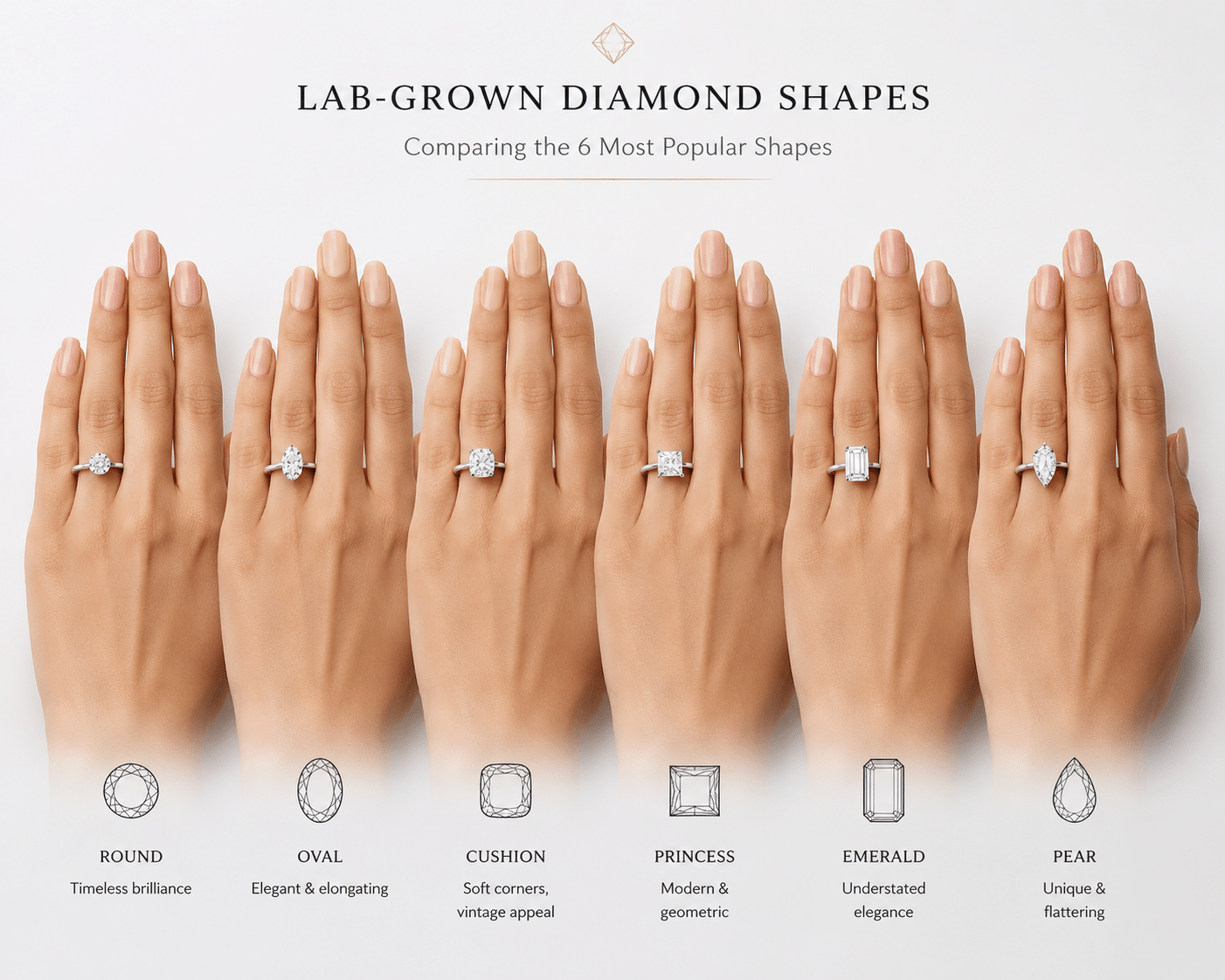
A round brilliant diamond and an oval diamond of the same carat weight can look like completely different stones side by side. A princess cut requires different corner protection than a cushion cut. An emerald cut reveals clarity in a way a brilliant cut hides. These are not minor differences. They change the entire character of the ring.
For any buyer, the starting point is understanding that shape is not simply an aesthetic preference. It is a functional parameter that determines how the stone will behave mechanically, optically, and proportionally within the ring design. A buyer who begins with shape clarity avoids mismatches that no amount of carat weight or color grading can fix later.
How Shape Determines Visual Size, Not Just Carat Weight
The most common surprise among first-time buyers is that two diamonds with the same carat weight can look very different in size. Carat measures weight, not visible surface area. The face-up dimensions of a diamond — how much real estate it covers on the finger — depend entirely on shape and proportions.
Elongated shapes such as oval, pear, and marquise spread their weight across a larger visible area. A 1.0-carat round brilliant typically measures about 6.5 mm across. A 1.0-carat oval of similar quality often shows roughly 10 to 12 percent more face-up surface. That extra visual size matters to anyone who wants a stone that reads larger than its carat label suggests.
At the other end, deep or square shapes like some princess or cushion cuts can carry more weight in the depth of the stone, making the face-up area smaller than expected. The practical takeaway: stop thinking in carats alone and start thinking in dimensions. An elongated shape gives you more visual size per carat. A round shape gives you less. Neither is wrong, but the difference is real enough to be a deciding factor.
Setting Compatibility: Why Your Shape Choice Limits or Expands Your Options
Not every shape works with every setting. If you have already imagined a specific ring design, that setting may eliminate certain shapes before you ever look at a stone.
Round brilliants are the most universal shape. They fit solitaires, halos, three-stone rings, side-stone settings, bezels, tension settings, and nearly any custom design. If maximum flexibility matters, round is the safe choice.
Ovals and cushions are nearly as versatile, though they require more care with proportion matching in multi-stone designs. Three-stone rings with an oval center stone need side stones of specific widths to look balanced. Halos for ovals must match the silhouette closely to avoid awkward gaps.
Princess cuts and emerald cuts are more selective. Princess cuts have sharp corners that need protection, which limits them to V-prong or bezel-style settings. Invisible-set princess cuts, while visually striking, carry higher durability risk for daily wear. Emerald cuts also need corner protection and look best in clean, architectural settings — solitaires, bezels, or art-deco inspired designs – rather than heavy halos or ornate clusters.
The mistake to avoid is picking a shape first and discovering later that your preferred setting either does not exist for that shape or does not protect it properly. Check setting compatibility early.
Durability and Everyday Wear: What Shape Holds Up Over Time
Diamond is the hardest natural material on earth, but hardness is not the same as toughness. Shapes with sharp corners, thin points, or long exposed edges are more vulnerable to chipping under impact.
Round brilliants are the most durable shape for everyday wear. No sharp corners, symmetrical faceting, and a design that distributes force evenly. Cushion cuts share similar advantages due to their rounded corners.
Emerald cuts and princess cuts are the riskiest for active lifestyles. Emerald cuts have exposed step-cut corners that can chip if the setting does not protect them. Princess cuts have four sharp corners that catch impact easily. A V-prong or bezel setting is essential for both.
Pear and marquise cuts have pointed tips that require protection. The natural choice is to set the point under a secure prong or inside a bezel. Orientation also matters: pointing the tip toward the hand reduces exposure to snagging, but some wearers prefer the aesthetic of a point-out orientation.
What to Check Before You Decide
After narrowing your shape options, three practical checks can save you from a common mismatch:
First, confirm the shape’s typical depth ratio. A very deep stone sits higher in the setting and may look smaller face-up. If low profile is important, ask about depth percentage before committing.
Second, verify corner protection in the setting. For princess, emerald, pear, and marquise cuts, confirm that prongs or bezel edges fully cover the vulnerable points. A gap as small as half a millimeter can expose the stone to chipping.
Third, request a real video or photo of the actual stone under normal lighting. A grading report tells you weight and color grade, but it does not show you how the shape actually appears on the finger. Compare face-up appearance across two or three stones at the same reported specs. The visual difference is often larger than you expect.
In addition to these checks, buyers should keep in mind that environmental or sustainability claims associated with any shape should be specific, documented, and limited to what can be substantiated. A seller may describe a lab-grown diamond as having a different production path from a mined diamond, but broad claims such as “eco-friendly” or “sustainable” without supporting details about energy use, production methods, or manufacturing practices should be verified independently. For the buyer, the most reliable approach is to focus on the stone’s documented specifications and visual evidence rather than on unqualified marketing language.
Round Brilliant: The Benchmark for Light Performance and Versatility
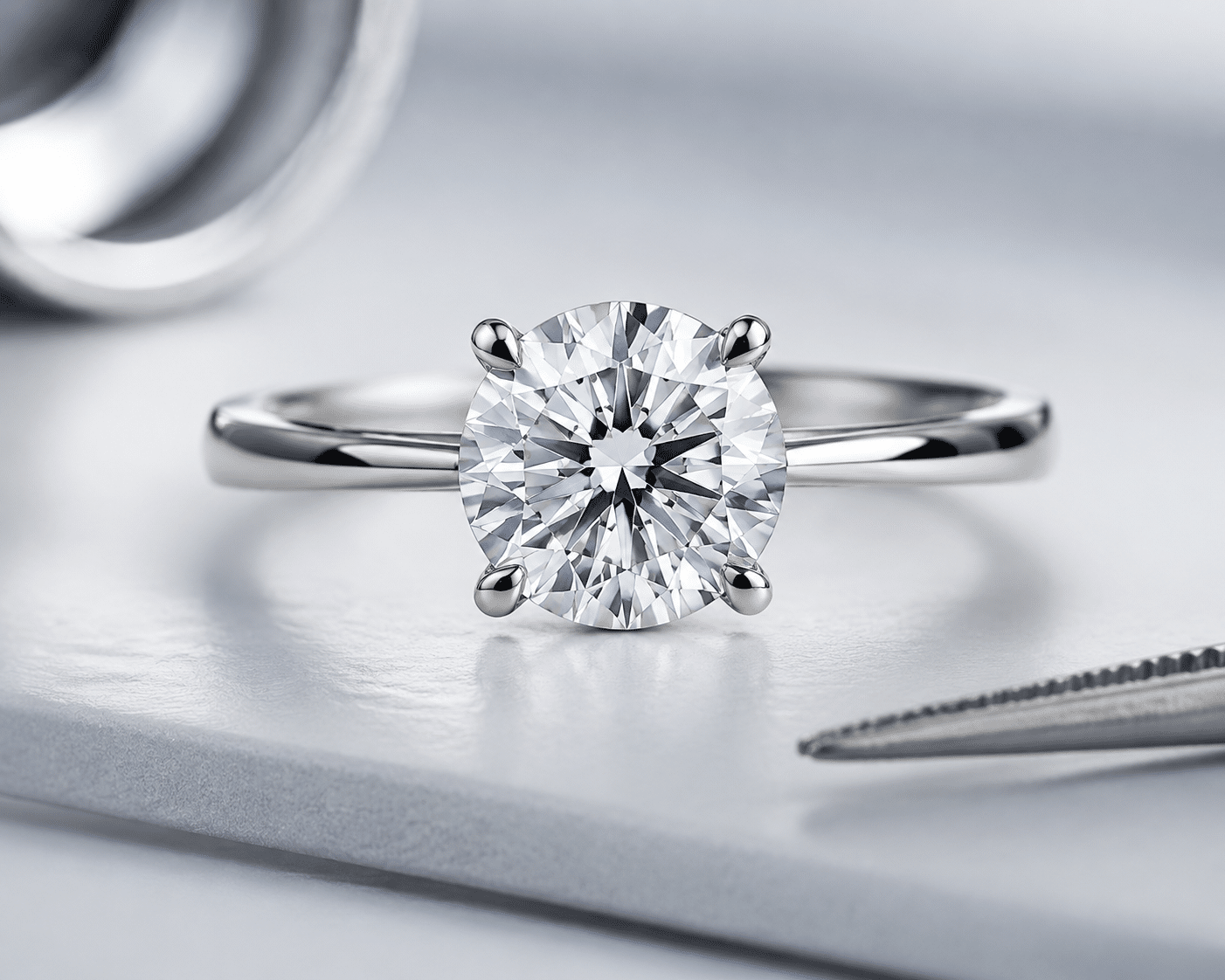
The round brilliant cut is the shape every other shape gets compared to. It is the most researched, most precisely engineered, and most consistently brilliant diamond cut in existence. That does not mean it is the right choice for every buyer, but it is the reference point for understanding what all other shapes trade off.
Why Round Brilliant Has the Most Consistent Sparkle
The round brilliant’s 57 or 58 facet structure is the result of decades of optical engineering. Each facet is cut to specific angles that maximize light return. When light enters a well-cut round brilliant, it reflects internally through the crown and pavilion facets before exiting back through the top. That is why rounds produce the most consistent, predictable sparkle across lighting conditions.
Cut quality matters more for round brilliants than for any other shape. A round with ideal proportions — GIA Excellent or AGS Ideal grade — will visibly outperform a fair-cut round of the same carat weight. In fancy shapes, the cut grading is less standardized, which makes visual comparison more important. In round brilliants, the grade is actually useful.
Visual Size vs. Carat Weight: The Round Tradeoff
A round brilliant of a given carat weight always looks smaller face-up than an elongated shape of the same weight. That is the tradeoff. You get the most consistent sparkle, the most universal setting compatibility, and the best cut standardization, but you get less visible finger coverage per carat.
This tradeoff matters most if your budget is fixed and visual size is a priority. At the same carat weight, an oval, pear, or marquise will cover more surface area. If the budget allows, the round buyer compensates by moving up in carat weight. If the budget is tight, an elongated shape stretches the stone further.
Setting Compatibility: Where Round Works Best
Round brilliants fit into every engagement ring setting, and in terms of lab grown diamond selection, Solitaire, halo, three-stone, side-stone, bezel, tension, cathedral — there is no common setting design that cannot accommodate a round brilliant. This is not true of any other shape.
For buyers who want the freedom to change settings later or who are unsure which setting style they prefer, round provides the most options. If versatility matters more than uniqueness, round is the practical default.
Certificate and Visual Review Check
For a round brilliant, the certificate matters more than for any other shape. Verify that depth percentage falls between 59 and 62.6 percent and table percentage between 54 and 57 percent in GIA Excellent or AGS Ideal range. These are not optional guidelines for a round; they are the difference between a stone that sparkles evenly and one that leaks light.
Even with identical grades, two rounds can look different. Request video of two or three diamonds with similar reports. You will often see real variation in brightness and contrast that no single number captures.
When a grading report is available for a round brilliant, the cut grade provides a useful starting point for evaluating light performance. However, buyers should also compare the stone’s face-up appearance under normal room lighting, as small differences in polish or symmetry that are not fully captured by the grade can affect how the diamond appears in everyday wear. The report and the visual evidence together give a more complete picture than either alone.
Emerald Cut: Step-Cut Clarity and Understated Elegance
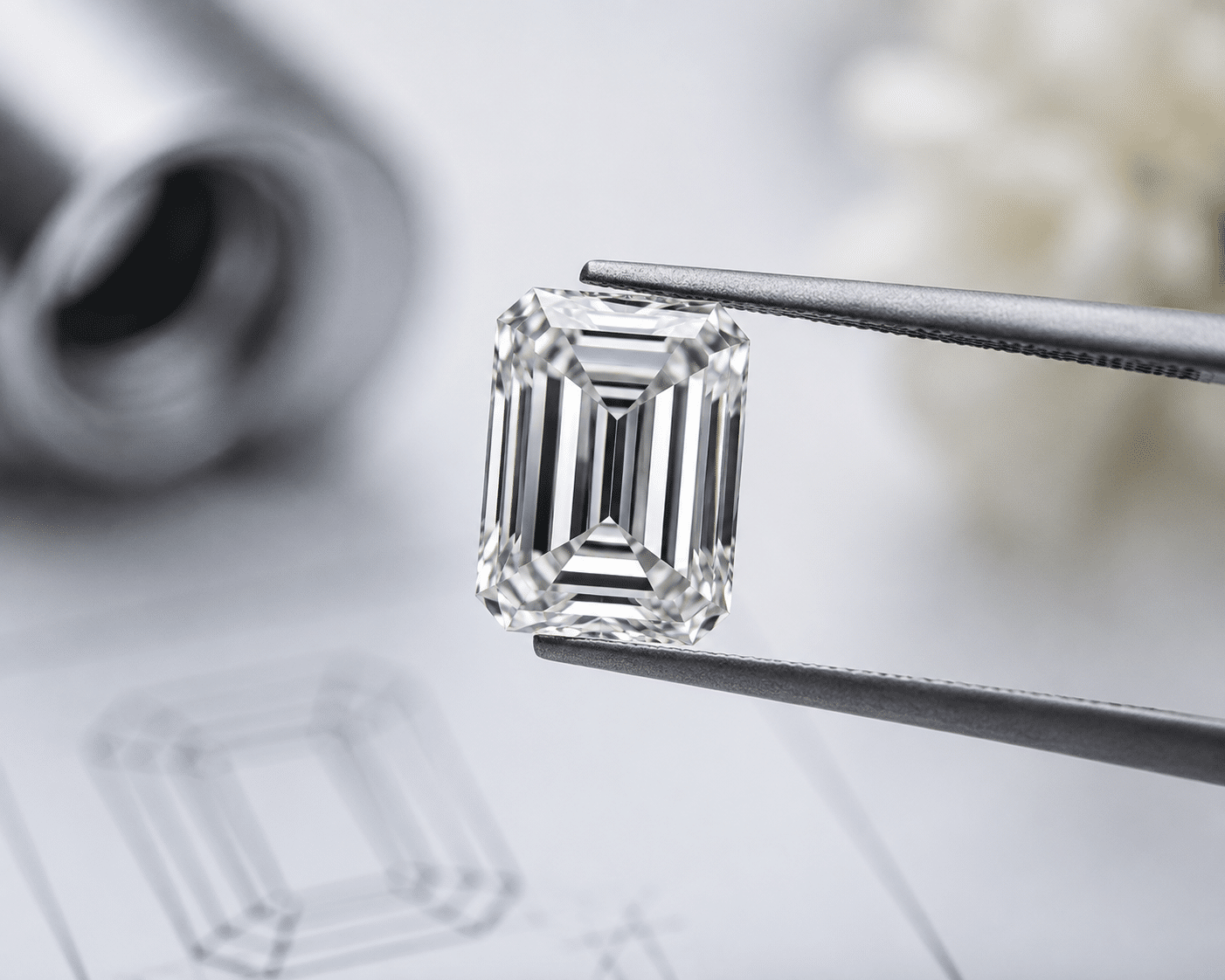
The emerald cut does not compete on sparkle. It competes on clarity, transparency, and line. Instead of the scattered flashes of a brilliant cut, it produces broad, mirror-like steps of light that move slowly across the stone as it tilts. That visual character is the entire point of the shape, but it also changes what matters in the buying decision.
Why Emerald Cut Demands Higher Clarity
A brilliant cut hides inclusions. An emerald cut reveals them. The large, open step facets act like windows into the stone. Any visible inclusion is not hidden by sparkle, it sits in plain view, often reflecting across multiple steps. This is why an emerald cut bought purely on budget pricing often disappoints. A lower clarity grade that looks clean in a round brilliant may look compromised in an emerald cut.
The practical takeaway is straightforward: if you want an emerald cut, do not shop by carat weight and price alone. The same budget that buys a well-hidden SI1 in a round brilliant may need to move to a VS2 or VS1 in an emerald cut to achieve the same clean appearance. That is not a penalty. It is a different priority. The shape rewards clarity over size, and buyers who understand that tradeoff end up with a stone that looks intentional rather than compromised.
Visual Size and Shape Personality
Emerald cuts offer a moderate face-up area. They are not the shape that maximizes visual size per carat, but they are also not the smallest. A well-cut emerald cut holds its own at any carat weight because the shape itself is the statement.
Visually, the emerald cut is architectural. Its clean lines and stepped geometry fit naturally into minimalist bezel settings, art-deco inspired designs, and tapered baguette side stones. It does not try to look romantic in a soft sense. It looks deliberate. That makes it a strong choice for buyers who want the ring to feel modern, restrained, or consciously designed rather than traditionally showy. The shape works best when the rest of the ring design supports that same sensibility.
Setting and Durability Concerns
The emerald cut has four exposed corners that are vulnerable to chipping if struck directly. This is not a reason to avoid the shape, but it is a reason to choose the setting carefully. A bezel setting eliminates the risk entirely by covering the corners. A V-prong setting at each corner also provides reliable protection while leaving more of the stone visible. Standard prong settings without dedicated corner protection are a real risk for everyday wear, especially in rings worn during manual activity.
Beyond durability, the setting should also respect the shape’s lines. A bezel that follows the emerald cut’s clean outline reinforces its architectural character. A four-prong setting with exposed corners works visually but should only be chosen if the wearer is careful about impact.
For buyers evaluating emerald cuts, a useful distinction is between what the grading report documents and what it does not. The report will show clarity grade and color grade, but it will not show whether the step facets appear clean and transparent or whether the stone has a hazy or dead zone in the center. This is one of the shapes where a video is not optional; it is the only reliable way to judge the stone’s true face-up character.
Stone-to-Setting Fit Check
Before committing to an emerald cut, confirm three things. First, the setting must include corner protection, either a bezel or V-prongs at all four corners. Second, verify the length-to-width ratio. The ideal range for most buyers is 1.30 to 1.50. A ratio below 1.30 looks almost square and loses the shape’s signature elongation. A ratio above 1.50 can look thin and fragile on the finger. Third, request a real video of the stone under normal lighting. The step facets should appear clean and even. Any visible cloudiness, dead zones, or dark inclusions in the center steps are dealbreakers that a certificate number alone cannot reveal.
Documentation and Verification for Emerald Cuts
Because emerald cuts reveal inclusions more readily than brilliant styles, documentation takes on added importance. If a grading report is supplied along with the stone, buyers should verify the report details through the issuing laboratory’s official report-check tool where available. In addition, since moissanite and other simulants can occasionally be confused with emerald-cut lab-grown diamonds in certain lighting, it is worth confirming that the stone’s identification as a laboratory-grown diamond is clearly stated on the report. For custom designs, the fit between the stone’s exact measurements and the setting’s inner dimensions should be confirmed before finalizing the piece, as even small measurement discrepancies can affect how the step facets align with the setting’s frame.
It is also worth noting that a grading report for an emerald cut helps document key characteristics, but it should not be treated as a guarantee of beauty, value, or sourcing ethics. The report is one tool among several. The visual evaluation of the stone itself, combined with a clear understanding of the seller’s documentation and return terms, gives the buyer a more complete picture. Claims about ethical sourcing or sustainability associated with the stone should be supported by specific documentation rather than assumed from the shape or the report alone.
Cushion Cut: Vintage Warmth with Modern Options
The cushion cut is the most shape with the most internal variation. It is not a single look. It is a category that spans antique-inspired crushed ice faceting, modern brilliant faceting, square outlines, and rectangular outlines. That variety makes it one of the most flexible shapes for engagement rings, but it also means buyers need to be specific about what they want.
Crushed Ice vs. Traditional Brilliant Faceting
The single most important choice in a cushion cut is the faceting style. A crushed ice cushion uses smaller, more numerous facets that break light into many tiny flashes. The result is a softer, diffused sparkle that resembles crushed glass. A traditional brilliant cushion uses larger facet patterns closer to a round or princess cut, producing broader flashes and more defined light return. Neither is objectively better, but they look completely different on the finger.
Crushed ice cushions tend to hide inclusions better and appeal to buyers who want a gentle, romantic sparkle. Traditional brilliant cushions offer more contrast and are better suited to buyers who want the stone to flash visibly with movement. The only wrong choice is not knowing which one you are buying. Always confirm the faceting style by looking at a video, not just the shape name.
Visual Size and Shape Profile
Cushion cuts sit in a practical middle zone for face-up area. They appear larger than rounds of the same carat weight, but smaller than ovals. The exact visual size depends on depth. A deeper cushion loses face-up area. A shallower cushion opens up more surface. Buyers who prioritize visual size should look for a cushion with a depth percentage below 68. Buyers who want more light performance and weight presence can accept a deeper cut without disappointment.
The shape’s outline also matters significantly. Square cushions offer a balanced, classic look. Rectangular cushions lean modern and elongated. Neither is rare, but the silhouette changes how the ring feels on the hand. Square cushions pair naturally with halos. Rectangular cushions work well in solitaires and three-stone settings.
Setting Compatibility: Halo and Solitaire Designs
Cushion cuts are highly setting-friendly. They look natural in a halo, which reinforces the shape’s soft outline. They also hold their own in a solitaire, especially if the cushion has a modern brilliant faceting style that delivers enough sparkle to fill the negative space. The key is matching the setting to the cushion’s outline. Square cushions need square or nearly-square halos. Rectangular cushions need rectangular halos or elongated solitaire proportions. A square cushion in an elongated halo or a rectangular cushion in a round halo creates visible asymmetry that looks unintentional.
For cushion buyers, one overlooked consideration is how the faceting style affects the stone’s appearance in different lighting. A crushed ice cushion may look uniformly bright in diffused daylight but appear less defined under direct spot lighting. A traditional brilliant cushion shows more contrast in directional light but can appear darker in low light. Neither is a flaw, but knowing the lighting environments where the ring will be most often worn can help narrow the choice between the two styles.
What This Means in a Real Purchase
When shopping for a cushion cut, start by deciding the outline. Square cushions use a length-to-width ratio of 1.00 to 1.15. Rectangular cushions use a ratio of 1.15 to 1.30. Anything beyond 1.30 starts to look like an elongated cushion or a modified oval, which changes the shape category. Next, request side-by-side video of a crushed ice cushion and a traditional brilliant cushion. The difference is immediate and visible. Most buyers prefer one style strongly. Finally, check the depth. If the depth is above 72, the stone will look smaller face-up than expected for its carat weight. That is not necessarily a problem, but it should be a conscious choice, not a surprise.
Certificate-Aware Selection for Cushions
Because cushion cuts do not receive a standardized cut grade from most major laboratories, buyers cannot rely on a single number to judge cut quality. A grading report for a cushion will typically show color, clarity, and carat weight, but the stone’s overall visual appeal depends heavily on proportions, facet pattern, and symmetry. Two cushions with identical color and clarity grades can look markedly different side by side. For this reason, a grading report can narrow the comparison, but it should be read alongside the stone’s proportions, visual evidence, and intended jewelry use. For custom design, trust comes from matching the stone to the setting, budget, and wearer’s daily use — not from choosing grades in isolation.
When evaluating cushion cuts, buyers should also be aware that pricing can vary with market conditions, report type, seller channel, and stone-specific details, so exact comparisons should be verified at the time of purchase. A lower price per carat for a cushion may reflect less efficient cutting, a less desirable proportion range, or higher inclusion visibility. The combination of a verified report, real video, and a clear understanding of the seller’s documentation provides the most reliable basis for comparison.
Princess Cut: Modern Sharpness with Setting Tradeoffs
The princess cut is the most popular square shape for engagement rings, and its appeal is easy to understand. It offers sharp, clean lines, excellent brightness, and strong face-up coverage. But its modern silhouette comes with a real practical tradeoff that buyers should understand before they fall in love with the shape.
Visual Size and Corner Vulnerability
Princess cuts deliver excellent face-up area. For a given carat weight, a well-cut princess cut fills the finger more visibly than a round brilliant. That makes it a strong choice for buyers who want a square shape that looks substantial without needing a large carat weight.
The tradeoff is corner vulnerability. The princess cut has four sharp corners that are structurally thin. A direct impact on a corner can chip or break the stone. This is not a catastrophic flaw in the shape, but it is a real consideration for everyday wear. Buyers who plan to wear the ring daily, especially in active or hands-on environments, should prioritize a setting that protects those corners. The shape is not fragile when set correctly. It becomes fragile only when the setting leaves the corners exposed without reinforcement.
Setting Recommendations for Princess Cut
The safest settings for a princess cut are V-prong settings, where a V-shaped prong cradles each corner, and bezel settings, which cover the corners entirely. Both options provide reliable protection without damaging the stone’s clean visual profile. A four-prong setting with standard prongs at each corner is acceptable if the prongs are thick enough, but it offers less protection than V-prongs or a bezel.
One setting type to avoid for daily wear is the invisible-set princess cut. Invisible settings hold square stones together without visible prongs, but they leave corners exposed and rely on tension rather than mechanical grip. For a necklace or occasional-wear ring, invisible set can work. For an engagement ring worn daily, it introduces unnecessary risk. Stick with V-prongs or a bezel for reliable everyday protection.
Certificate and Visual Review Check
Before buying a princess cut, check three things. First, verify the depth percentage. The ideal range is 60 to 75. Below 60, the stone may look too shallow and lose brightness. Above 75, the stone will look deep and small face-up for its carat weight. Second, confirm that the setting includes corner protection. If the setting you want uses standard prongs rather than V-prongs or a bezel, ask whether the prongs cover the corners or leave them exposed. Third, request a video showing the stone from all angles, especially the corners. If the video is only face-up, you cannot evaluate corner condition or symmetry. A clean face-up view does not guarantee well-protected corners.
Practical Verification Step for Princess Cuts
When evaluating a princess cut, it is helpful to ask for the stone’s exact measurements in millimeters, not just the carat weight. This allows you to calculate the face-up area and compare it to other stones of the same shape. Additionally, for any princess cut sold with a grading report, buyers should check whether the report includes a diagram of inclusions and verify that the stone’s clarity grade matches what is visible in a real video. Because the princess cut’s open table and step-like crown faceting can make certain inclusions more apparent than in a round brilliant, a visual check is essential alongside the certificate data.
For buyers considering a princess cut, it is also worth confirming that the seller’s documentation clearly identifies the stone as a laboratory-grown diamond. This is a straightforward step that avoids any confusion about origin. If the stone is sold with a grading report, the report should state the laboratory-grown origin directly. A report alone, however, does not convey how the shape performs visually or how durable it will be in daily wear. The combination of a verified report and real video of the actual stone provides the most reliable basis for comparison.
Pear and Marquise Cuts: Distinctive Shapes That Require Precision
Pear and marquise cuts are not for the cautious buyer looking for a safe, universal shape. They are for someone who wants a diamond with personality and presence. Both shapes are elongated, which gives them a strong visual advantage in face-up size, but they also demand more attention to cutting precision than nearly any other fancy shape, a key aspect explained in the lab grown diamond engagement rings guide. A well-cut pear or marquise can be the most striking stone in the showroom. A poorly cut one will have visible flaws that no setting can hide.
Why Face-Up Size Is a Major Draw
The primary appeal of pear and marquise cuts is simple: they show more surface area per carat than almost any other shape. A 1.0-carat pear or marquise will typically face up as large as a 1.2-carat round brilliant. For buyers working within a specific budget who want the visual impact of a larger diamond, these shapes offer the fastest shortcut to that goal. The elongated silhouette also creates a finger-lengthening effect that many wearers find flattering, particularly on shorter fingers.
The Bow-Tie and Symmetry Risks
The tradeoff for that extra size is higher sensitivity to cut quality. Elongated shapes are prone to a bow-tie effect, a dark shadow that crosses the center of the stone when light does not return evenly from both ends. Some bow-tie is normal in any pear or marquise. The problem arises when it becomes dark, wide, or inconsistent across the stone face. A heavy bow-tie can make one side of the diamond look dull while the other sparkles. Symmetry is equally critical. An off-center tip, uneven shoulders, or a lop-sided silhouette ruins the shape’s elegance. Buying blind without a 360-degree video is unwise here. The report will not tell you whether the bow-tie is acceptable.
Setting and Wearability for Unique Shapes
Both shapes have a pointed end that is vulnerable to chipping. The setting must protect that point, or the risk of damage over years of daily wear increases noticeably. A tight V-prong or a bezel that wraps around the tip is the most reliable approach. For pear cuts, the orientation matters. Most wearers prefer the point facing toward the fingertip, which creates a teardrop silhouette that aligns with the finger’s natural line. Marquise cuts can face either direction, but the longer profile makes a cathedral or high-profile setting a practical choice to keep the stone centered and protected. Claw prongs that grip tight against the diamond are better than loose, rounded prongs that leave the tip exposed.
For buyers considering pear or marquise, it is worth noting that the bow-tie effect is not inherently a flaw. A light, narrow, centered bow-tie is simply the visual consequence of the elongated geometry. The question is whether the bow-tie is noticeable enough to distract from the stone’s overall appearance. Comparing two stones of the same shape with different shadow patterns is the most direct way to calibrate personal tolerance. No grading report captures this nuance.
How to Verify This Before Buying
Before committing to a pear or marquise, start by confirming the symmetry grade is at least Good on the grading report. Anything below that increases the odds of visible asymmetry. Next, request a 360-degree video shot under normal lighting, not studio glare, to evaluate the bow-tie pattern. It should be light, centered, and relatively narrow. Finally, confirm that your intended setting design includes protection for the pointed tip. Do not assume a generic prong setting will work. Ask the jeweler directly whether the setting was designed for a pear or marquise shape.
Documentation and Fit for Pear and Marquise
For pear and marquise cuts, documentation matters beyond the standard grading report. Since these shapes are more sensitive to proportion variation, buyers should request not only the length-to-width ratio but also the total depth percentage and the outline symmetry measurements if available. In sourcing or wholesale conversations about these shapes, consistency, documentation, and communication often matter as much as the headline specification. If the stone is intended for a custom design, the fit between the stone’s tip angle and the setting’s prong or bezel channel should be confirmed before finalizing the order. A stone that is well-documented and well-matched to its setting will wear far better than one chosen solely by carat weight and color grade.
It is also important for buyers to confirm that the seller’s documentation for a pear or marquise cut clearly discloses the stone’s laboratory-grown origin. Because these shapes are less common than round brilliants, some buyers may not realize that a stone they are considering could be a diamond simulant rather than a lab-grown diamond. A simulant is not the same as a lab-grown diamond, and the grading report or seller description should clarify the distinction. Buyers should verify that the stone’s identification as a laboratory-grown diamond is stated on the report or in the product description before purchase.
How Shape Affects Lab-Grown Diamond Pricing
In the lab-grown diamond market, shape plays a direct role in price. The reason is not brand preference or fashion trends. It comes down to production economics: how much rough material a shape wastes, how complex it is to cut, and how much demand exists for each shape at a given quality level. Understanding this relationship helps buyers decide where to spend and where to save.
Why Round Cuts Often Cost More
Round brilliant cuts are the most expensive shape per carat in the lab-grown market for two reasons. First, cutting a round wastes more rough material than cutting a fancy shape. A round must be cut from a cylindrical core, leaving more leftover diamond material on the sides. Fancy shapes like ovals or cushions can be cut in a flatter layout that preserves more of the rough stone. Second, the round brilliant has the strictest cut grading standards. To achieve an Excellent or Ideal cut, the angles, depth, and table must fall within a tight window. Stones that fall outside that window drop in grade and price. The combination of higher raw material waste and tighter cutting requirements pushes round prices upward.
Which Shapes Offer the Best Value
For buyers who prioritize visual size for the money, the best value usually comes from shapes with high face-up area and lower cutting waste. Ovals and cushions typically offer 10–20% more perceived size than a round of the same weight, often at a lower price per carat. Pear and marquise cuts extend that logic further, frequently representing the lowest cost per carat among commonly available shapes. Emerald cuts fall in a middle zone: their step-cut faceting is less wasteful to cut than a round, but demand for the clean, architectural look keeps pricing relatively stable. The key distinction is between value and cheapness. A well-cut fancy shape at a fair price is a smart buy. A poorly cut stone at a bargain price is a mistake that affects appearance every time the ring is worn.
The relationship between shape and pricing is also influenced by the consistency of the rough material from lab-grown production. Some shapes can make more efficient use of certain crystal geometries, but production yields vary by manufacturer and growth method. For buyers, the practical implication is that price differences between shapes are a starting point for comparison, not a fixed rule. Two ovals at the same carat weight and clarity grade can differ in price based on proportions, symmetry, and how well the stone was cut from its rough — factors that the certificate alone does not fully explain.
The Certification and Cut Quality Tradeoff
One reason fancy shapes can be more affordable is that cut grading is less standardized. GIA and IGI do not assign a cut grade to most fancy shapes the way they do for round brilliants. That does not mean cut does not matter. It means the buyer must do the visual evaluation that the certificate cannot provide. For round brilliants, the certificate does much of the work. For ovals, cushions, emeralds, pears, and marquises, the certificate shows color, clarity, and carat, but the buyer must judge proportions, symmetry, bow-tie, and overall shape balance from real photographs or video. The lower price of a fancy shape is partly a tradeoff for that additional diligence.
It is also worth noting that pricing in the lab-grown diamond market can change with market conditions, report type, seller channel, and stone-specific details. Buyers comparing prices across different shapes should keep in mind that a lower price per carat for a fancy shape may reflect less efficient cutting, a less desirable proportion range, or higher inclusion visibility rather than a genuine bargain. A grading report can help clarify clarity and color, but it does not capture visual proportion quality for fancy shapes. For wholesale buyers, documentation that includes exact measurements, depth ratio, and table percentage allows for a more objective comparison between stones of the same shape. In sourcing or wholesale conversations, documentation, consistency, and communication often matter as much as the headline specification. A well-documented stone at a fair price is a better investment than an undocumented stone at a discount.
What to Check Before You Decide
The price-shape relationship is most useful as a framework, not a rule. Round remains the best option for buyers who want predictable cut performance and maximum sparkle. Oval or cushion delivers the most visual size per dollar for most buyers. Emerald cut works well for those who value clean clarity and a minimalist style over brilliance. Pear or marquise offers the largest face-up appearance for the price, but requires the most careful selection. Before buying, always request real imagery of the specific stone, not just a certificate, and compare two stones in the same shape to see how proportion variation changes appearance.
Transparency in Pricing and Documentation
When comparing prices across different shapes, buyers should keep in mind that a lower price per carat for a fancy shape may reflect less efficient cutting, a less desirable proportion range, or higher inclusion visibility rather than a genuine bargain. A grading report can help clarify clarity and color, but it does not capture visual proportion quality for fancy shapes. For wholesale buyers, documentation that includes exact measurements, depth ratio, and table percentage allows for a more objective comparison between stones of the same shape. In sourcing or wholesale conversations, documentation, consistency, and communication often matter as much as the headline specification. A well-documented stone at a fair price is a better investment than an undocumented stone at a discount.
Frequently Asked Questions About Lab-Grown Diamond Shapes for Engagement Rings
Which Shape Looks Biggest for the Carat Weight?
Elongated shapes with a larger face-up area relative to their depth: oval, pear, and marquise cuts. A 1.0-carat oval or pear can appear as large as a 1.2- to 1.3-carat round because more of the carat weight is distributed across the visible table surface rather than hidden in depth. Buyers should still evaluate individual proportions, because a deep or narrow version of the same shape can cancel that advantage.
Can I Set Any Shape in a Bezel Setting?
Yes, but with different results. Princess cuts and emerald cuts benefit considerably from a bezel because the setting wraps around the corners where these shapes are most vulnerable. Round and oval shapes look clean in either a bezel or prong setting. Pear and marquise cuts in a bezel provide excellent point protection, but the setting will make the shape appear slightly smaller because the bezel frame adds visible metal around the diamond.
Do Lab-Grown Diamond Shapes Perform Differently From Natural Diamonds?
No. The optical performance of a given shape is identical regardless of the diamond’s origin. A round brilliant cut lab-grown diamond reflects light the same way a natural round brilliant does. A lab-grown emerald cut shows the same step-facet transparency. The growth method affects the crystal structure during formation, but it does not change how the shape interacts with light after cutting and polishing.
How Do I Choose Between Two Shapes I Like Equally?
Start with everyday practicality. A round or cushion is more forgiving for an active lifestyle. A pear or marquise requires a protective setting. Then consider visual priority: if a larger appearance matters more, choose the elongated shape. If sparkle and setting flexibility matter more, choose round. If you are still undecided, visit a showroom to see both shapes side by side in person, or request real-life videos of both stones in similar lighting. A certificate comparison will not settle the question. Visual comparison will.
How Should I Verify a Lab-Grown Diamond’s Grading Report Before Purchase?
If the diamond is sold with a grading report from a major laboratory, buyers should verify the report number and details through the issuing laboratory’s official online report-check tool where available. This step confirms that the report corresponds to the specific stone and that the reported grades have not been altered. For lab-grown diamonds, it is also important to confirm that the report clearly identifies the stone as laboratory-grown. A report alone, however, does not convey how the shape performs visually. The combination of a verified report and real video of the actual stone provides the most reliable basis for comparison.
Next Step: Match Your Shape to a Lab-Grown Diamond and Setting
By now, you have a clearer sense of which shapes match your priorities: visual size, light performance, durability, or a specific design personality. The next step is straightforward—turn that knowledge into a selection.
Start by exploring loose lab-grown diamonds filtered by the shape that fits your decision. Seeing actual stones side by side changes how you evaluate proportions, face-up appearance, and cut quality in a way a report alone cannot. If you narrowed down to two shapes, compare real videos of both at your target carat weight to confirm your preference.
From there, the setting becomes the second major decision. Your shape choice already narrowed the field. A round brilliant fits almost any setting. An emerald cut demands corner protection. A marquise needs point security. A bezel may be the best choice for an active wearer, while a solitaire maximizes light exposure for a well-cut oval or cushion. Match the setting to the stone, not the other way around.
If you are working toward a custom design, bring both decisions together: the diamond and the setting should be evaluated as one piece. A beautiful diamond can feel wrong if the setting does not complement its proportions or protect its vulnerable edges. This is most often seen when buyers choose a stone and setting separately without checking the fit. For custom design, trust comes from matching the stone to the setting, budget, and wearer’s daily use — not from choosing grades in isolation.
NUVU’s buyer-first approach is to make the comparison clearer: what the report shows, what the visuals reveal, and whether the stone fits the intended piece. Browse the NUVU collection by shape to compare available diamonds, or start a custom design consultation if your vision combines a specific shape with a tailored setting. Either way, the right starting point is the shape that matches how you want the ring to look, feel, and wear over time.
[1] GIA, “Diamond Cut: The 4Cs of Diamond Quality,” Gemological Institute of America. Explains that cut quality — proportions, symmetry, and polish — determines how a diamond interacts with light, and that GIA assigns a cut grade specifically for round brilliant diamonds where the relationship between proportions and light performance has been studied in detail.
[2] FTC, “Guides for the Jewelry, Precious Metals, and Pewter Industries,” 16 CFR Part 23, Federal Trade Commission. Provides guidance on terminology for lab-grown diamonds, including the requirement that terms like “laboratory-grown,” “laboratory-created,” or “[manufacturer]-created” must be clearly and conspicuously disclosed, and that environmental or sustainability claims must be substantiated. Available at FTC.gov.
[3] GIA, “Lab-Grown Diamond Identification,” Gemological Institute of America. Documents how HPHT and CVD growth methods produce diamonds with distinctive characteristics that can be identified by gemological laboratories, emphasizing that growth method is a separate consideration from a diamond’s cut, color, and clarity grades.
[4] GIA, “Diamond Clarity: The 4Cs of Diamond Quality,” Gemological Institute of America. Describes how clarity characteristics are graded and how their visibility varies by faceting style — brilliant cuts can obscure certain inclusions while step cuts such as emerald tend to make them more visible.
[5] GIA, “Diamond Cut: The 4Cs of Diamond Quality,” (cited as [1] above) — also addresses that for fancy shapes (all shapes other than round brilliant), GIA does not assign a standardized cut grade, meaning buyers must evaluate proportions and symmetry independently.
[6] FTC, “Guides for the Jewelry, Precious Metals, and Pewter Industries,” (cited as [2] above) — the same FTC guidance reinforces that advertising should not imply lab-grown diamonds are identical to natural diamonds in all respects without appropriate disclosure, and that durability comparisons should be accurate.
[7] GIA, “Lab-Grown Diamond Identification,” (cited as [3] above) — confirms that once a lab-grown diamond is cut and polished, its optical performance — how it reflects and refracts light — is identical to a natural diamond of the same cut quality.
Disclosure: This article is for general educational purposes only. Diamond grading, pricing, availability, specifications, and seller policies can change, and readers should verify important details through grading reports, official laboratory tools, seller documentation, or qualified professionals before making a purchase decision. Laboratory-grown diamonds should be clearly distinguished from natural diamonds, and environmental or sourcing claims should be supported by specific documentation.