 Get a Quote
 Loose lab-grown diamonds10 shapes · IGI, GIA or NGTC reports
China Lab-Grown Diamond Cutting and Polishing: Why Midstream Quality Matters
- Where quality is gained or lost
- Why low rough cost does not guarantee value
- Yield versus appearance
- Shape skills differ
- Symmetry and polish
- Measurements and tolerances
- Questions to ask about cutting
- Cutting technology
- Signs of cutting problems on reports and video
- Cutting for calibrated melee
- Cutting questions
- Specify the cut, not only the grade
Two 1.00 ct rounds come off the wheel. One was cut to keep weight: a deep pavilion, a thick girdle, about 6.2 mm across. The other was cut for light: about 6.4 mm across, brighter, a little more rough lost in the process. The cutter chose which stone to make, and the buyer will see the result on every hand that wears it.
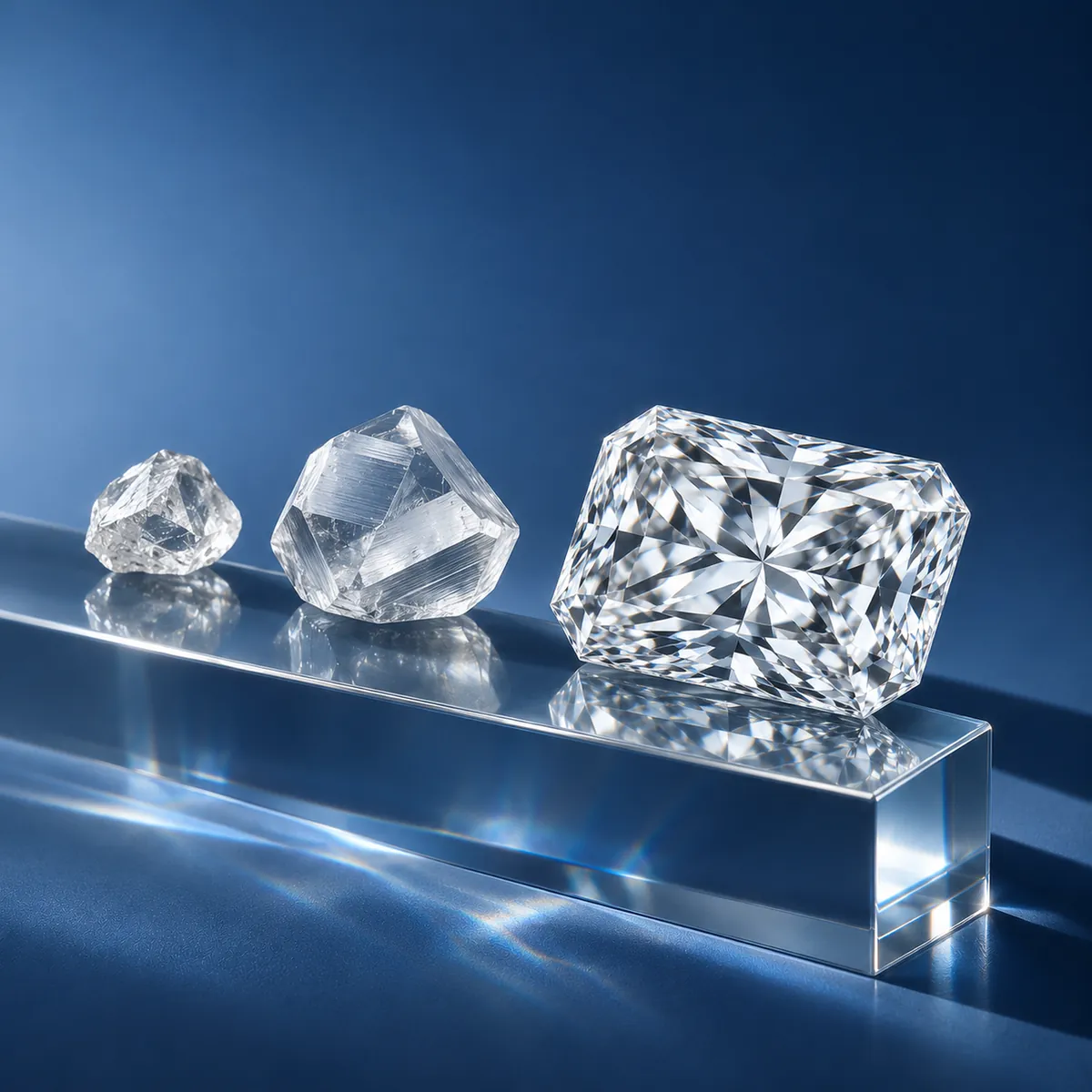
Grown rough is only potential. Cutting and polishing turn it into a stone that looks bright, faces up to its weight and matches the next one. A cutter that keeps too much weight can produce a deep, dull stone; one that cuts precisely produces better light performance and tighter consistency. When you compare suppliers, ask who cuts the stones, which shapes they are strongest in, and how they control proportions and measurements across orders.
Where quality is gained or lost
Why low rough cost does not guarantee value
Cheap rough cut poorly becomes a stone that sells slowly or comes back. Cutting decides brightness, face-up size and how well stones match, which is what your customers see. That is why two quotes with the same report grades can still differ in value.
Yield versus appearance
Cutters must balance carat weight against appearance. Keeping more weight often means a deeper pavilion or thicker girdle. The stone weighs more but faces up smaller and may show less brightness. A slightly smaller, well-cut stone can look larger and sell better than a heavier, poorly proportioned one. Check depth percentage and millimeter measurements, not only carat weight.
Shape skills differ
- Round brilliants need tight control of angles and symmetry. GIA’s cut grade for rounds weighs brightness, fire, scintillation, weight ratio, durability, polish and symmetry, so the grade on the report helps.
- Fancy shapes such as ovals, pears and marquises depend on outline, length-to-width ratio and the bow-tie effect. Most labs do not give them a cut grade, so judge them from video.
- Step cuts such as emeralds and Asschers show clarity and cutting errors openly. They are a good test of a cutter’s discipline.
A cutting works that excels at rounds may not be equally strong in step cuts. Ask what share of their output is your shape.
Symmetry and polish
Symmetry describes how precisely facets align. Polish describes the surface finish. Both are graded on reports, and both affect how crisp a stone looks. For wholesale and matching, consistent finish across stones counts as much as the grade of a single stone.
Measurements and tolerances
For calibrated and matched goods, consistent measurements are the clearest sign of cutting control. Ask for millimeter measurements per stone or per lot, and agree a tolerance. Check a sample of stones with a gauge on arrival.
Questions to ask about cutting
Cutting technology
Modern cutting uses rough scanners and planning software to map inclusions and plan shapes, laser sawing to cut rough, automated bruting for round outlines, and skilled polishers for faceting. Equipment helps, but the cutter’s choices about yield and proportions still decide the result.
Signs of cutting problems on reports and video
Swipe the table to see more →
| Sign | Possible cause |
|---|---|
| Depth over about 63% (rounds) | Weight retention, face-up size lost |
| Thick to very thick girdle | Weight retention |
| Polish or symmetry Good or lower | Rushed or imprecise polishing |
| Dark center in video | Deep pavilion, strong bow-tie |
| See-through center | Shallow pavilion, windowing |
Cutting for calibrated melee
Small stones are cut in large numbers to fixed sizes. Consistency comes from rough planning, automated equipment and careful sorting. Ask the supplier how they measure and sort melee and what tolerance they hold per size. See wholesale melee and calibrated stones.
Cutting questions
Are lab-grown diamonds cut in China?
Many are, close to where they are grown in Henan. Ask each supplier whether it cuts in-house or buys polished stones.
How can I judge cut quality on fancy shapes?
Check length-to-width ratio, depth percentage and outline, and watch video for bow-tie and brightness.
What depth percentage is too deep for a round?
As a rough guide, rounds much deeper than about 63% start to face up small for their weight. Check the diameter and a video.
Specify the cut, not only the grade
Send the shape, size in millimeters, the depth and table range you accept and the tolerance you need for calibrated sizes. NUVU supplies polished lab-grown diamonds and inspects calibrated and matched goods by industry practice. Send your requirements or WhatsApp / WeChat +86 191 1840 3930.

9+ years optimizing HPHT & CVD growth recipes and overseeing large-scale lab-grown diamond manufacturing.
About NUVU. NUVU is the international brand of New Perspective Superhard Materials Co., Ltd. in Zhecheng, Henan, China. We grow HPHT lab-grown diamonds in-house and cut, polish and match stones in our own workshop.
Related Guides
How Lab-Grown Diamonds Are Made in China
Lab-grown diamond manufacturing in China step by step: HPHT and CVD growth, rough planning, cutting,…
Read more →NUVULab-Grown Diamond 4Cs Guide
The 4Cs for lab-grown diamonds in one page: which cut, color, clarity and carat to choose for your shape…
Read more →WholesaleMatched Pairs and Calibrated Lab-Grown Diamonds Guide
How to buy matched pairs, layouts and calibrated lab-grown diamonds: size, color, cut and outline…
Read more →