
Many shoppers wonder whether a lab-grown diamond and a natural diamond look different in real life. The practical answer is usually no—not when the stones are closely matched for cut, size, shape, color, clarity, and setting, while diamond certification reports provide the documentation context behind origin and grading. What most people see first is brightness, sparkle, shape, and how clean the diamond looks to the eye, not geological origin. That makes appearance-based buying more about careful comparison than assumptions.
For the full framework, read Lab-Grown Diamond Shapes Guide.
This article helps you judge what actually affects the look of a diamond: cut quality, proportions, visible inclusions, color sensitivity, lighting, and setting style. It also explains why a grading report is important for confirming origin, but not enough by itself to predict beauty. By the end, you should be better prepared to compare two diamonds fairly, avoid paying for grade differences you cannot see, and choose between lab-grown and natural based on appearance, budget, meaning, documentation, and preference.
| Buying Question | What to Check | Common Mistake to Avoid |
|---|---|---|
| Can you see the origin? | Report, inscription, seller disclosure | Judging lab-grown or natural by eye |
| Which diamond looks brighter? | Cut, proportions, symmetry, light return | Assuming origin controls sparkle |
| Is the clarity good enough? | Eye-clean appearance, inclusion location, video | Buying by clarity grade alone |
| Does color matter here? | Shape, size, setting metal, personal sensitivity | Paying for color differences you cannot see |
| Are two stones fairly compared? | Similar shape, measurements, grades, lighting | Comparing unmatched diamonds |
| Which one should you choose? | Visible beauty, budget, symbolism, rarity | Treating one origin as always better |
Quick Questions Before You Read
Q: Can most people tell a lab-grown diamond from a natural diamond by looking?
No. When the diamonds are well matched, origin usually cannot be identified by sight.
Q: Does a natural diamond automatically sparkle more?
No. Sparkle depends mainly on cut quality, proportions, polish, symmetry, and cleanliness.
Q: Is a grading report enough to choose the best-looking diamond?
No. It confirms key details, but photos, video, and real viewing conditions help judge appearance.
Q: Should I always choose the highest color and clarity grades?
Not necessarily. Many grade differences are hard to see once the diamond is set.
The Short Answer: Most Buyers Cannot See Diamond Origin by Eye
Most buyers cannot tell the difference between a lab-grown diamond and a natural diamond by eye when the two stones are similar in cut quality, shape, carat weight, color, clarity, and setting style. In everyday viewing, lab-grown vs natural diamond appearance is usually not separated by origin. It is separated by how well each diamond handles light and how carefully it was selected.
That does not mean diamond origin is unknowable. It means the unaided eye is the wrong tool for confirming it. Lab-grown and natural diamonds are both crystallized carbon, and when they are properly cut, they can show the same core optical behavior: brightness, fire, scintillation, and a real diamond appearance. Origin is confirmed through disclosure, grading reports, inscriptions, and appropriate testing, not casual visual inspection.
The practical answer to “can you tell the difference between lab-grown and natural diamonds?” is this: visually, usually no; professionally, yes, with the right documentation or equipment. A buyer who relies only on appearance may be judging the wrong thing. The better question is whether the diamond looks beautiful, faces up well, appears clean to the eye, suits the setting, and is accurately represented by the seller.
For buyers, the useful distinction is between appearance evidence and identity evidence. Photos, videos, and in-person viewing help you judge beauty; reports, inscriptions, and seller disclosure help you confirm origin. Mixing those two categories can lead to weak decisions, such as accepting a beautiful-looking stone without proper documentation or rejecting a strong stone because of an assumption about its origin.
Documentation note: when an article or seller says a diamond is “lab-grown,” “laboratory-grown,” “natural,” or “mined,” that language should be treated as an origin disclosure, not a visual description. The appearance test can tell you whether the stone is attractive; the paperwork and seller disclosure tell you what the stone is represented to be. Keeping those ideas separate makes the comparison more defensible and helps prevent a beautiful-looking diamond from being accepted on trust alone.
Laboratory-grown diamonds should be clearly identified as laboratory-grown, and they should not be presented as mined diamonds. Natural diamonds and laboratory-grown diamonds have different origins, while diamond simulants such as cubic zirconia or moissanite are a separate category and should not be described as lab-grown diamonds.
What the Eye Actually Sees
Your eye responds to visible performance, not geological history. It sees how bright the diamond appears, how much white light returns through the top, whether colored flashes show when the stone moves, and whether the sparkle pattern feels lively or flat. It also sees face-up color, obvious inclusions, shape outline, size, and how the diamond interacts with the ring design.
This is why two diamonds with different origins can look nearly identical, while two diamonds with the same origin can look noticeably different. A well-cut lab-grown oval may look brighter and cleaner than a poorly cut natural oval. A well-selected natural round may outperform a lab-grown round with weak proportions. The visual difference comes from selection quality, not the origin label by itself.
For a real buyer, the highest-priority visual factor is usually cut and light performance. Color and clarity matter too, but only to the extent that they are visible in the actual stone, under normal lighting, at normal viewing distance. Over-focusing on origin before checking these visible traits can lead to a worse-looking diamond at the same budget.
What the Eye Cannot Reliably Confirm
The unaided eye cannot reliably confirm diamond origin. A buyer may guess based on price, a seller’s description, a report number, or a laser inscription seen under magnification, but that is not the same as visual identification. Even a trained jeweler generally should not rely on eyesight alone to determine whether a diamond is lab-grown or natural.
This matters because “can a jeweler tell if a diamond is lab-grown by looking” is often misunderstood. A jeweler may notice clues, ask for paperwork, or use professional tools, but reliable origin confirmation depends on documentation and proper testing. Basic appearance is not enough, especially when the diamond is well cut and has grades similar to a comparable natural stone.
The risk for buyers is assuming that a diamond “looks lab-grown” or “looks natural” based on brightness, cleanliness, or size. Those assumptions are weak. A very clean-looking diamond may be natural, and a warm or included diamond may be lab-grown. Origin and visible beauty overlap, but they are not the same category of information.
The Most Useful Comparison Standard
The fair comparison is not any lab-grown diamond against any natural diamond. That approach creates misleading conclusions because the stones may differ in cut, measurements, shape, color, clarity, and setting design. The useful comparison is two diamonds that are matched as closely as possible in the traits your eye can actually evaluate.
For example, comparing a 2.00 ct lab-grown oval to a 1.20 ct natural round does not answer whether lab-grown and natural diamonds look different. It mostly compares size, shape, and outline. A more meaningful test would compare two 1.50 ct ovals with similar length-to-width ratios, comparable color and clarity ranges, similar cut quality, and the same viewing conditions.
This is where many buyers make a mistake: they compare the emotional category instead of the physical diamond. If one stone looks better, ask why. Is it brighter because of cut? Whiter because of color grade? Cleaner because the inclusions are better placed? Larger because the shape has more face-up spread? Those answers are more useful than assuming origin created the difference.
Buyer Verification Checklist
Before judging appearance, ask the seller for the grading report, report number, diamond origin disclosure, high-resolution images, and 360-degree video. If a laser inscription is available, confirm that it matches the report information. These details do not replace visual judgment, but they protect you from comparing stones that are not truly equivalent.
Then check whether the diamonds are actually similar in the areas that affect appearance: shape, carat weight, measurements, cut quality or proportions, color grade, clarity grade, and setting context. If those factors are not aligned, the comparison may tell you which diamond was better selected, not whether lab-grown and natural diamonds look different by eye.
When a grading report is available, buyers should verify the report details through the issuing laboratory’s official report-check tool where available, then compare those details with the seller’s listing and the stone’s visual evidence.
Compliance-Aware Comparison Notes for Buyers
A grading report helps document key characteristics, but it should not be treated as a guarantee of beauty, value, or sourcing ethics. It can help confirm stated origin, measurements, color, clarity, and other recorded features when the report matches the stone, but it does not replace visual review or a careful check of the seller’s description.
Prices can change with market conditions, report type, seller channel, and stone-specific details, so exact comparisons should be verified at the time of purchase. If one diamond appears to offer more size or higher grades for the budget, compare like-for-like specifications before deciding that it is the more suitable option for your needs.
Environmental and sustainability claims should be specific, documented, and limited to what can be substantiated. Lab-grown diamonds offer a different sourcing path from mined diamonds, but appearance alone says nothing about production practices, energy use, or broader sourcing claims.
For custom jewelry, stone measurements and setting compatibility should be confirmed before finalizing a purchase. A diamond can look appealing in a loose-stone video and still need additional review for prong placement, profile height, side-stone matching, and everyday wear comfort.
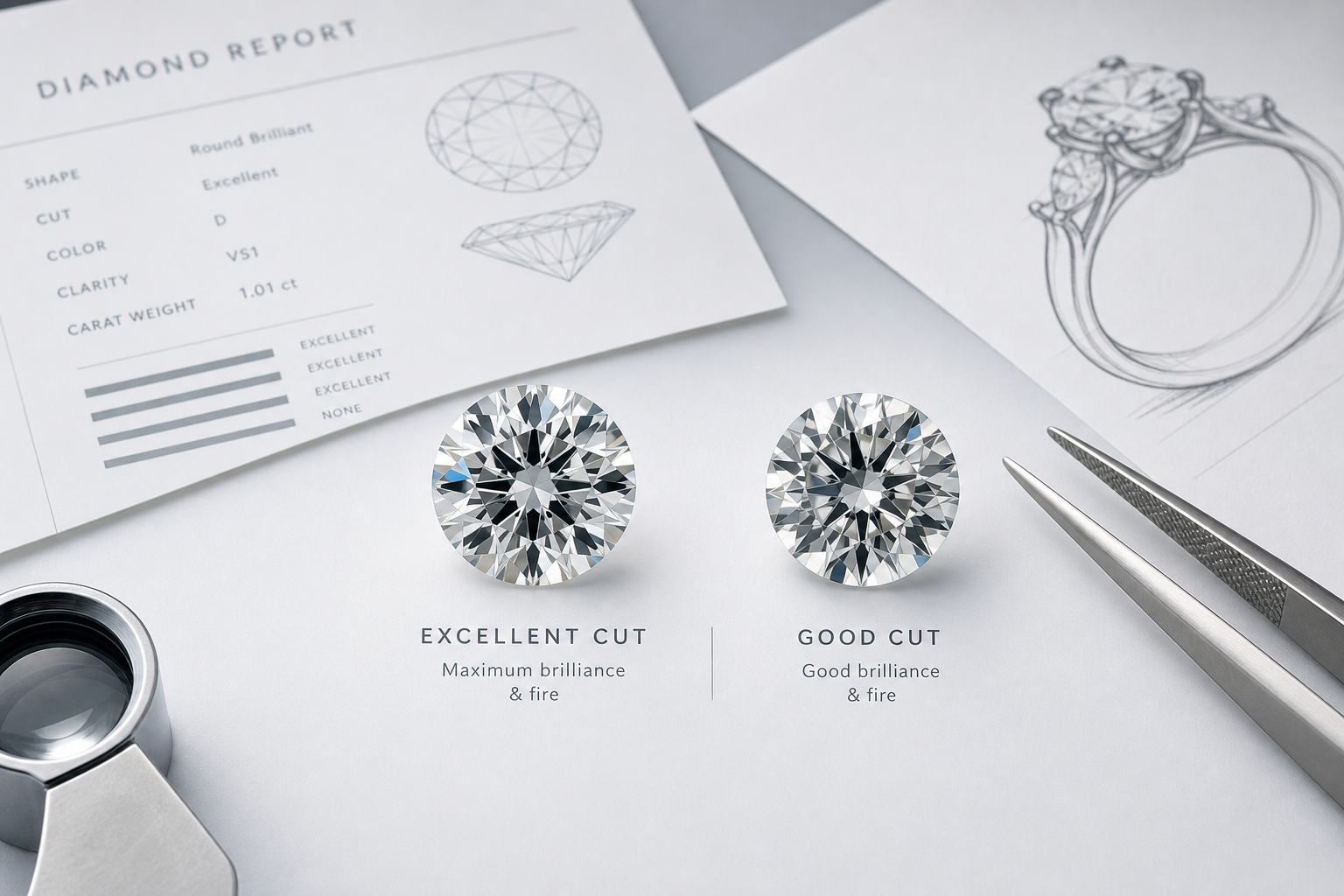
Sparkle and Brilliance: Origin Matters Less Than Cut Quality
If one diamond sparkles more than another, origin is rarely the first place to look. Lab-grown diamond sparkle and natural diamond brilliance are both driven mainly by cut quality, proportions, symmetry, polish, and how efficiently the stone returns light. A poorly cut natural diamond can look dull, while a well-cut lab-grown diamond can look bright and lively. The reverse can also be true.
Brilliance refers to white light return. Fire refers to the colored flashes you see as the diamond moves. Scintillation is the pattern of sparkle and contrast during motion. These are visual effects created by the diamond’s geometry. If the angles and facets do not work well together, light leaks out instead of returning to the viewer, and the diamond can look sleepy even if it has strong color and clarity grades.
The buyer’s practical takeaway is simple: if appearance is the priority, cut quality deserves more attention than origin. Many shoppers spend too much energy asking whether lab-grown diamonds sparkle like natural diamonds and not enough time asking why one diamond sparkles more than another under the same lighting.
In practical buying, sparkle comparisons become misleading when one stone is shown in a more flattering environment than the other. A grading report can point you toward promising candidates, but it does not show the rhythm of the flashes, the darkness through the center, or how the diamond reacts as it turns. For that reason, video and consistent lighting are not extras; they are part of the appearance evidence.
Fair visual evidence matters. A useful comparison should show the diamonds under similar lighting, similar magnification, similar backgrounds, and similar camera movement. If one video is filmed under intense spotlighting and another under flat diffuse light, the brighter-looking stone may simply have the stronger presentation. Treat glamour photos as introductions, not final proof of light performance.
Why Two Diamonds With the Same Origin Can Sparkle Differently
Two lab-grown diamonds can sparkle differently. Two natural diamonds can sparkle differently. The cause is usually not the origin category but the way each stone is cut. Cut grade, symmetry, polish, table size, depth, crown angle, pavilion angle, and facet alignment all affect how light moves through the diamond and returns to your eye.
Table and depth are especially easy to overlook because they sound technical, but they have visible consequences. A diamond that is too deep may carry weight where you cannot see it, making it look smaller for its carat weight and potentially reducing brightness. A diamond that is too shallow may lose contrast or show light leakage. Strong proportions do not guarantee beauty by themselves, but weak proportions are a warning sign.
Facet alignment also matters. When facets are arranged and finished well, the diamond tends to show a cleaner rhythm of brightness and contrast. When the optical pattern is messy, the stone may still glitter under intense jewelry store lighting, but it can appear less crisp in normal environments. This is one reason video is more useful than a single glamour photo.
Why a Well-Cut Lab-Grown Diamond Can Look Just as Brilliant
A well-cut lab-grown diamond can show the same type of brilliance buyers expect from a diamond because it interacts with light according to the same optical principles. If the proportions are strong, the polish and symmetry are good, and the stone is visually lively, the result can be bright, crisp, and difficult to separate from a comparable natural diamond by eye.
The important caveat is that “lab-grown” does not automatically mean “well cut.” Lab-grown diamonds vary in quality just as natural diamonds do. Some are beautifully proportioned; others carry excess depth, weak spread, uneven sparkle, or visual issues that become obvious in video. A buyer who assumes every lab-grown diamond is visually strong may end up choosing size over performance.
For appearance-led buying, a smaller diamond with better cut can be the more suitable visual choice than a larger stone with poor light return. This is especially true in engagement rings, where the diamond is seen in motion throughout the day rather than inspected only under ideal lighting.
When a Natural Diamond May Look Better
A natural diamond may look better than a lab-grown diamond when it is simply the better-selected stone. Stronger cut quality, better proportions, cleaner optics, a more flattering shape, or a better match with the setting can all give the natural diamond the visual advantage. That advantage comes from the individual diamond, not from natural origin alone.
This distinction matters because natural diamonds are sometimes assumed to have superior sparkle by default. They do not. A natural diamond with compromised proportions can look less bright than a lab-grown diamond with excellent light return. If the natural option wins in a side-by-side comparison, the buyer should identify the visible reason: better cut, better outline, less bow-tie, cleaner face-up appearance, or stronger setting compatibility.
Origin can still matter emotionally or symbolically, but it should not be used as a shortcut for visual quality. If two diamonds are being compared for beauty, the one with better light performance deserves serious consideration regardless of origin.
What to Check Before You Decide
For round brilliant diamonds, start with an excellent or ideal cut grade when available, then look deeper. A table in the mid-50 percent range and a depth in the low-60 percent range are common starting points for well-performing rounds, but they are not universal guarantees. Crown angle, pavilion angle, symmetry, and actual video performance still matter.
For fancy shapes such as oval, cushion, radiant, pear, emerald, and Asscher, do not rely on a single cut grade as the main decision tool. Photos, 360-degree video, measurements, outline, depth, and visible patterning carry more weight. Watch for issues such as a heavy bow-tie in elongated brilliant cuts, a glassy or flat appearance in poorly proportioned stones, or excessive depth that makes the diamond face up smaller than expected.
The most useful comparison uses the same lighting, similar camera conditions, and similar backgrounds. If one diamond is shown in a bright spotlight video and another in flat diffuse lighting, the comparison is not fair. A beautiful diamond should not need ideal lighting to look alive.
Color Appearance: Lab-Grown and Natural Diamonds Use the Same Color Language
Lab-grown and natural diamonds are evaluated with the same basic color language when graded by gemological labs. A D color diamond sits in the colorless range, while G color and H color are commonly considered near-colorless. The visual question is not whether lab-grown diamond color works differently from natural diamond color. The better question is whether the grade, shape, size, and setting make any warmth visible to you.
Most buyers are not judging color in a laboratory environment. They are seeing the diamond face-up in a ring, under mixed lighting, against skin, metal, and clothing. In that real-world context, small differences between adjacent grades may be hard to detect, especially once the diamond is mounted. Paying for a higher color grade can be worthwhile for some buyers, but it is not always the most practical use of budget if the difference is invisible in the final ring.
A color grade is a useful reference point, not a promise that every viewer will perceive the stone the same way. Human color sensitivity varies, and the same diamond can look slightly different beside white metal, warm metal, skin tone, or side stones. The most reliable approach is to use the grade to narrow the search, then judge the actual stone in the setting context you plan to wear.
When Color Is Hard to See Face-Up
Color is often hardest to see when the diamond is viewed face-up, especially in well-cut brilliant styles that return a lot of light. Round brilliants, radiants, cushions, and ovals can often mask slight warmth better than step cuts because their facet activity breaks up the view into flashes of light and contrast.
Many buyers cannot easily distinguish between adjacent color grades, such as F and G or G and H, once the diamond is set and viewed in everyday lighting. This depends on the person. Some buyers are highly color-sensitive, while others notice size, sparkle, and shape far more than subtle warmth. The mistake is assuming the highest color grade is always visually necessary.
If the diamond faces up white to your eye in the intended setting, a slightly lower color grade may be a smarter appearance decision than moving higher on paper while sacrificing cut, size, or overall design balance.
When Color Becomes More Noticeable
Color becomes easier to see as diamonds get larger because there is more body material for the eye to read. It can also be more noticeable from the side than from the top, especially in settings that expose the pavilion. A diamond that looks white face-up may show more warmth in profile.
Shape also changes color tolerance. Emerald and Asscher cuts have broad, open facets that create a clearer window into the diamond’s body color. These shapes can look elegant and crisp, but they are less forgiving than many brilliant cuts. If you want a cool, white look in an emerald cut or Asscher cut, it is usually safer to stay in a higher color range than you might choose for a round or radiant.
Side-by-side comparison makes color more obvious than normal wear. A G color diamond may look very white on its own but slightly warmer next to a D color diamond. That does not make the G a poor choice. It means comparison conditions can exaggerate differences that may not matter once the ring is worn by itself.
How Setting Metal Changes the Visual Result
Setting metal can either soften or emphasize diamond color, a consideration that can sit alongside a lab grown diamond price comparison when buyers balance appearance and budget. Yellow gold and rose gold often make near-colorless diamonds appear pleasantly white because the warm metal creates a more forgiving frame. In those settings, a G, H, I, or sometimes J color diamond may look balanced if the stone is well cut and visually confirmed.
Platinum and white gold create a cooler frame, which can make warmth easier to notice in some diamonds. This does not mean every diamond in white metal needs to be D-F color. It means buyers who are sensitive to warmth should be more careful when choosing lower color grades for a platinum or white gold engagement ring.
The prong color can also affect perception. White prongs around the center stone can help preserve a whiter face-up look, even on a yellow gold band. This small design choice can matter when the buyer wants the warmth of yellow gold without drawing attention to warmth in the diamond.
Practical Color Selection Guide
Choose D-F if you want an icy white look and are willing to use more of the budget on color. This range is especially useful for buyers who are color-sensitive, choosing a larger diamond, selecting a step cut, or using platinum or white gold.
Choose G-H if you want a white face-up appearance with a strong balance of appearance and budget. For many engagement ring buyers, this is a practical range because the diamond can still look bright and white without paying for color differences that may be difficult to see once mounted.
Consider I-J when the diamond is a brilliant cut, the setting uses yellow or rose gold, or the actual stone looks good in images and video. This range requires more visual confirmation. It can work well, but it is not the right shortcut for every buyer, especially in larger stones or open step cuts.
These ranges are selection guidelines, not guarantees. The final decision should be made with actual images, video, and the intended setting in mind, because color grade only tells part of the visual story.
Clarity and Inclusions: Eye-Clean Matters More Than Perfect on Paper
Clarity affects appearance only when the clarity characteristics are visible. That is the practical point many buyers miss. A diamond can have inclusions listed on a grading report and still look completely clean in normal wear, while another diamond with a similar clarity grade may show a distracting mark because of where that inclusion sits.
This applies to both lab-grown diamond clarity and natural diamond inclusions. Lab-grown diamonds can have growth-related features, pinpoints, clouds, or other clarity characteristics. Natural diamonds can have crystals, feathers, clouds, needles, and other internal features. The origin may explain how a characteristic formed, but the buyer’s eye cares about size, contrast, location, and how the cut handles light around it.
The mistake is treating clarity as a paper ranking rather than a visual filter. A flawless or very high-clarity diamond is not automatically the better-looking choice if the difference cannot be seen without magnification. For most engagement rings, the smarter target is an eye-clean diamond with a clarity grade that fits the shape, size, and setting.
What “Eye-Clean” Should Mean in This Article
Eye-clean means there are no obvious inclusions visible to a normal viewer under normal lighting at a typical viewing distance. For close inspection, many buyers naturally look from roughly 6 to 10 inches away. If an inclusion cannot be seen at that range without magnification, it is unlikely to matter much in daily wear.
This does not mean the diamond has no inclusions. It means the inclusions are not visually disruptive. A VS clarity diamond is often eye-clean, but many SI clarity diamonds can also look clean if the inclusions are small, light-colored, scattered, or placed away from the most visible parts of the stone. The risk rises as the diamond gets larger because the viewing area expands and small characteristics become easier to notice.
The useful question is not simply “What clarity grade is it?” A better question is: what clarity looks clean to the eye in this specific diamond, at this size, in this shape, and in the setting being considered?
Why Inclusion Placement Matters
Placement can matter more than the grade itself. An inclusion near the center of the table is often more noticeable because the table acts like a viewing window into the diamond. A small dark crystal in that area may catch the eye even if the overall clarity grade sounds acceptable.
An inclusion near the edge can be less concerning, especially if it is small and the setting can cover or visually minimize it. In some ring designs, a prong may hide an edge-positioned characteristic without affecting appearance. This should be planned carefully, not assumed. A poorly placed prong can fail to cover the inclusion, or the setting may draw attention to the very area the buyer hoped to hide.
High-resolution images and 360-degree video are especially useful here because a clarity plot tells you where characteristics are recorded, but it does not always show how noticeable they are in motion. A plotted feature can look harmless in real life, while an unflattering dark inclusion can become the first thing a buyer sees.
Why Shape Changes Clarity Tolerance
Different shapes hide inclusions differently. Brilliant cuts, such as round, oval, cushion, pear, marquise, and radiant styles, create more facet activity. That movement can break up the view into the stone and make small inclusions harder to detect.
Step cuts are less forgiving. Emerald and Asscher cuts have broader, more open facets with a hall-of-mirrors effect. That clean, architectural look is the reason buyers love them, but it also means inclusions have fewer places to hide. For these shapes, being more conservative with clarity is usually the better decision, especially in larger carat weights.
This is where a blanket rule like “SI is fine” or “VS is always safe” becomes too simple. An SI1 round brilliant may look clean and lively, while an SI1 emerald cut of the same size may show a visible mark under the table. The clarity grade matters, but the shape determines how much risk that grade carries.
Grading Report and Visual Review Check
Before choosing a diamond, review the clarity grade, the clarity plot if one is provided, magnified images, and a 360-degree video. Ask the seller to confirm whether the diamond is eye-clean under normal viewing, not only under ideal lighting or from a single flattering angle.
For larger stones and step cuts, be stricter. A clarity characteristic that feels minor in a one-carat brilliant cut may become distracting in a larger emerald cut. The cautious approach is to combine the grading report with visual evidence, because magnification explains what is present while video shows whether it actually affects appearance.
A grading report can narrow the comparison, but it should not be treated as a substitute for your own visual threshold. If two stones have the same clarity grade, the more trustworthy choice for appearance is the one whose images, video, and inclusion placement make the eye-clean claim easier to understand.
Shape, Size, and Setting Can Create Bigger Visual Differences Than Origin
A buyer comparing lab-grown diamond shapes and natural diamond shapes may notice a bigger visual difference from shape, size, and setting than from origin. An oval lab-grown diamond and a round natural diamond can look dramatically different on the hand even if both are well cut, near-colorless, and eye-clean. The difference is not because one formed in a lab and the other underground. It is because their outlines, proportions, and light patterns are different.
This is one of the most common comparison mistakes. Buyers ask whether a lab-grown diamond looks different from a natural diamond, but they may be comparing different shapes, different face-up measurements, or different ring designs. Those variables can dominate what the eye notices first.
For custom design, the stone cannot be evaluated separately from the setting. A diamond that looks excellent in a loose-stone video may sit too high, feel too elongated, or leave awkward gaps in a particular design. This is why measurements, prong layout, side-stone proportions, and metal color are practical appearance factors rather than purely technical details.
Why Shape Changes Sparkle Pattern
A round diamond is designed for balanced brilliance and strong sparkle across the face of the stone. It is usually a dependable choice for buyers who want classic brightness and predictable light performance, especially when the cut quality is strong.
An oval diamond gives a longer, more elongated look on the finger and often appears larger face-up than a round diamond of similar carat weight. Its sparkle pattern is different, with more lengthwise movement and the possibility of a bow-tie effect through the center. A good oval can look elegant and bright, but a poorly chosen one may look uneven or dark across the middle.
Cushion cuts tend to look softer, with rounded corners and a more pillow-like outline. Radiant cuts offer a rectangular or square shape with active, crushed-ice or brilliant-style sparkle. Emerald cuts create broader, mirror-like flashes instead of constant glitter. If a buyer wants strong sparkle, a round or radiant may be more satisfying; if they want a cleaner, more architectural look, an emerald cut may feel more refined but less fiery.
Why Carat Weight Does Not Always Equal Visual Size
Carat weight measures weight, not visual size. Two diamonds can both weigh 1.50 carats and look noticeably different because of their length, width, depth, and overall proportions. A deeper stone may carry weight below the surface, while a well-spread stone may look larger from the top.
Face-up spread is especially important for buyers trying to understand which diamond shape looks biggest. Ovals, pears, marquise cuts, and some emerald cuts can appear larger than round diamonds of the same carat weight because they cover more visible length on the finger. But spread is not always an advantage. If a diamond is too shallow or poorly proportioned, it may sacrifice brightness or show uneven light return.
The better comparison is not carat weight alone. Look at the actual millimeter measurements, especially length and width, and then judge whether the diamond still performs well visually. A slightly smaller diamond with better proportions can look brighter and more intentional than a larger stone that appears flat or watery.
Why the Setting Influences What Buyers Notice First
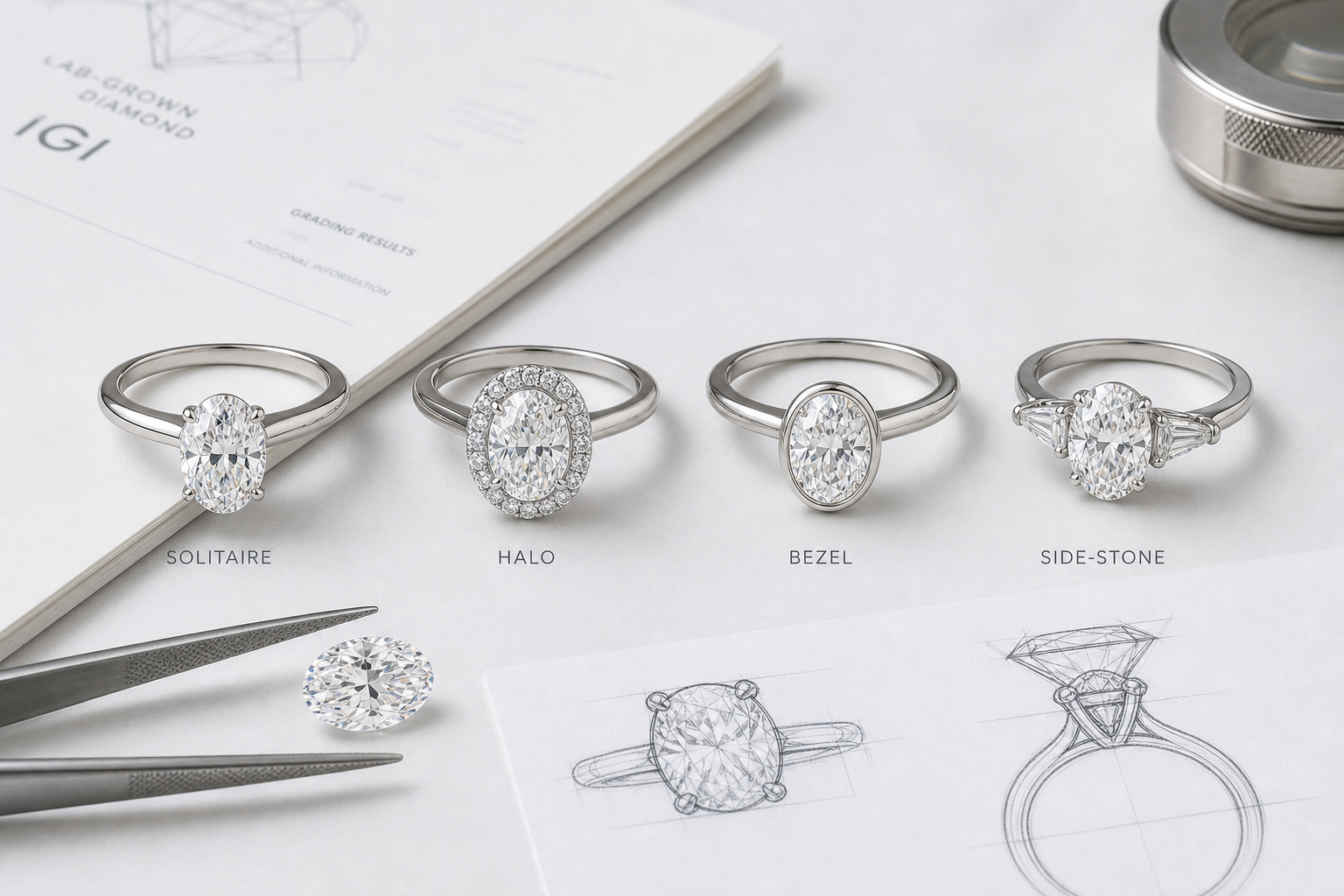
The engagement ring setting acts like a frame. A solitaire puts nearly all attention on the center stone, which makes cut, shape, and clarity more exposed. A halo can make the ring look larger and add sparkle around the center, but it may also make the design feel busier. A bezel creates a clean outline and can protect the edges, though it can make the stone appear slightly more enclosed.
Hidden halos and side-stone settings change the profile and overall impression without always changing the face-up look as much as buyers expect. Side stones can make the ring feel more substantial, but they also introduce matching considerations. If the side stones are too bright, too warm, or poorly proportioned next to the center, the ring may look less cohesive.
This is why a lab-grown diamond for an engagement ring setting should be judged as part of the whole design, not as an isolated loose stone. The better-looking diamond on a white screen may not be the better fit for the ring if the proportions, height, or shape do not work with the setting.
Stone-to-Setting Fit Check
Before committing, confirm the diamond’s length, width, depth, girdle thickness, and prong placement. The shape should fit the setting physically and visually. An elongated oval may need different prong spacing than a round diamond. An emerald cut may need a setting that supports its corners and keeps the clean outline balanced.
For custom designs, CAD views or setting mockups can help prevent a mismatch between the stone and the finished ring. At NUVU, this is one of the practical reasons to look at the diamond and setting together: a stone can be beautiful on its own and still feel wrong if the ring design does not support its shape, height, or visual proportions.
For custom design, trust comes from matching the stone to the setting, budget, and wearer’s daily use—not from choosing grades in isolation. Before finalizing a loose diamond, confirm whether its measurements, girdle, corners, profile height, and side-stone proportions are compatible with the intended design.
A Real Buyer Scenario: Two Diamonds That Look the Same but Feel Different to Buy
Scenario Setup: Same Visual Goal, Different Origin
Maya is comparing two 1.50 ct oval diamonds for a white gold engagement ring. One is lab-grown and one is natural. In side-by-side diamond videos, both look bright, both fall in a near-colorless range, and both appear clean to her eye. Their measurements are similar enough that the final ring would have almost the same face-up presence. From appearance alone, she cannot confidently identify which diamond is which.
The Decision Point
At this stage, Maya’s lab-grown vs natural diamond comparison stops being a simple visual question. The grading report confirms origin, but her eyes are responding to shape, sparkle, color, and clarity rather than formation history. Her diamond buying decision now depends on a budget tradeoff, emotional preference, setting design, and whether she would rather allocate more of the budget toward a larger or more detailed ring design.
If she wants a diamond that fits her appearance goals and budget at the chosen size, the lab-grown option may let her prioritize visual presence and setting details. If natural origin carries personal meaning for her, the natural diamond may feel more satisfying even if it does not look better. Neither choice is visually “correct” unless it matches what she actually values.
The Practical Takeaway
When two diamonds look similar, the better choice is not determined by visible origin. It depends on size goals, price comfort, origin preference, report confidence, and how the diamond will sit in the final ring. The wrong move is paying for assumptions instead of comparing the actual stones.
For buyers asking, “Should I choose lab-grown or natural diamond if they look the same?” the honest answer is that appearance may not settle the decision. Once the visual match is strong, the choice becomes personal and practical rather than optical.
In a situation like Maya’s, the most useful next step is to ask what each report and seller listing actually document. If one stone has clearer media, more complete measurements, a better match to the setting, or more transparent origin disclosure, that information can influence the buying decision even when the two diamonds look nearly identical in a short video.
What This Means in a Real Purchase
Compare like with like: same shape, similar measurements, similar color and clarity range, comparable cut quality, same lighting, and the same setting context. Without those controls, the comparison can be misleading. A brighter video, a larger face-up spread, or a more flattering setting may make one diamond appear superior for reasons that have nothing to do with whether it is lab-grown or natural.
What a Grading Report Can Confirm That Your Eyes Cannot
A grading report does something your eyes cannot do reliably: it documents the diamond’s stated origin and records the measurable details that affect appearance. If you are trying to understand how to know if a diamond is lab-grown or natural, the answer is not to stare harder at the stone. The answer is to match the diamond to a credible report, review the report number, and confirm that the listing, inscription, and stone details all agree.
This is where a lab-grown diamond grading report or natural diamond grading report becomes a buyer protection tool. It does not make a diamond beautiful by itself, and it should not replace visual review. But it helps prevent a common mistake: comparing two diamonds by appearance while assuming their origin, grades, or measurements are what the seller says they are.
A careful report review should also look for consistency, not just attractive grades. The report details, seller listing, inscription information, and media should describe the same stone. If the millimeter measurements, carat weight, color, clarity, or origin language do not line up, the issue should be clarified before the diamond is treated as a serious candidate.
Evidence hierarchy for buyers: treat a grading report as stronger evidence than a product title, and treat a matched report number or inscription as stronger than a loose verbal description. Product pages can contain useful shopping information, but they can also be incomplete or summarized. When origin, measurements, and grades influence the purchase, the cautious habit is to compare the listing back to the actual report details before relying on the claim.
Origin Disclosure
A grading report can state whether a diamond is lab-grown or natural, depending on the issuing lab and the report type. IGI reports and GIA reports, for example, may include origin language that identifies a stone as laboratory-grown or natural. The key is not the lab name alone; it is whether the specific report clearly matches the specific diamond being sold.
That match matters because origin is not normally something a buyer can confirm by eye. A diamond may look bright, white, and clean whether it formed underground or in a controlled growth environment. If the origin matters to your decision, do not rely on the seller’s description alone. Ask for the report, check the report number when possible, and compare the report details with the stone’s listing.
Grade Confirmation
A report also helps confirm the details that shape what you actually see: carat weight, measurements, color grade, clarity grade, polish, symmetry, and fluorescence when applicable. For round brilliant diamonds, a cut grade may also be included, which can be especially useful because cut has a direct effect on brightness and sparkle.
Measurements deserve more attention than many buyers give them. Two diamonds with the same carat weight can face up differently if one is deeper, shallower, longer, or wider. If you are comparing a lab-grown diamond and a natural diamond for appearance, the report helps you see whether the comparison is fair. A 1.50 carat oval with a larger spread should not be judged against another 1.50 carat oval as if they will look identical on the hand.
Color and clarity grades should also be treated as filters, not final answers. A G color diamond and an H color diamond may look nearly the same once mounted, while two SI clarity diamonds can look very different depending on where the inclusions sit. The report narrows the field; images and video decide whether the stone works visually.
Report Limits
A report cannot fully show a diamond’s personality. It will not tell you whether an oval has a distracting bow-tie, whether an emerald cut has pleasing mirror-like flashes, or whether a cushion has the kind of soft sparkle you prefer. It also cannot show how the stone will look in a yellow gold solitaire, a platinum pavé ring, or a bezel setting.
This is the mistake to avoid: treating the report as if it answers every appearance question. A grading report can document diamond origin when the report and stone are properly matched, but it cannot prove that the diamond is the most suitable-looking option for your ring. For appearance-led buying, documentation and visual review need to work together.
A grading report can narrow the comparison, but it should be read alongside the stone’s proportions, visual evidence, and intended jewelry use. The most responsible decision is usually not “the strongest report on paper,” but the diamond whose report, media, measurements, and setting fit all tell the same story.
How to Verify This Before Buying
Before buying, check the report number on the issuing lab’s website when that service is available. Compare the carat weight, measurements, color grade, clarity grade, and report date against the seller’s listing. If a laser inscription is shown, make sure it matches the report number and is associated with the same stone.
If any detail is unclear, ask for written confirmation before moving forward. This is especially important if the listing uses vague language, if the report image is missing, or if the diamond is being compared against another stone with different measurements or grading details. A transparent seller should be able to explain what the report confirms and what still needs to be judged through images, video, or in-person viewing.
A report check can confirm whether the report details are accessible through the issuing laboratory’s tools, and a lab grown vs natural diamonds guide may contextualize price and sustainability priorities, but it does not replace inspection of the actual stone, its media, or its suitability for the intended setting.
Everyday Appearance: Lighting, Distance, and Wear Change What You Notice
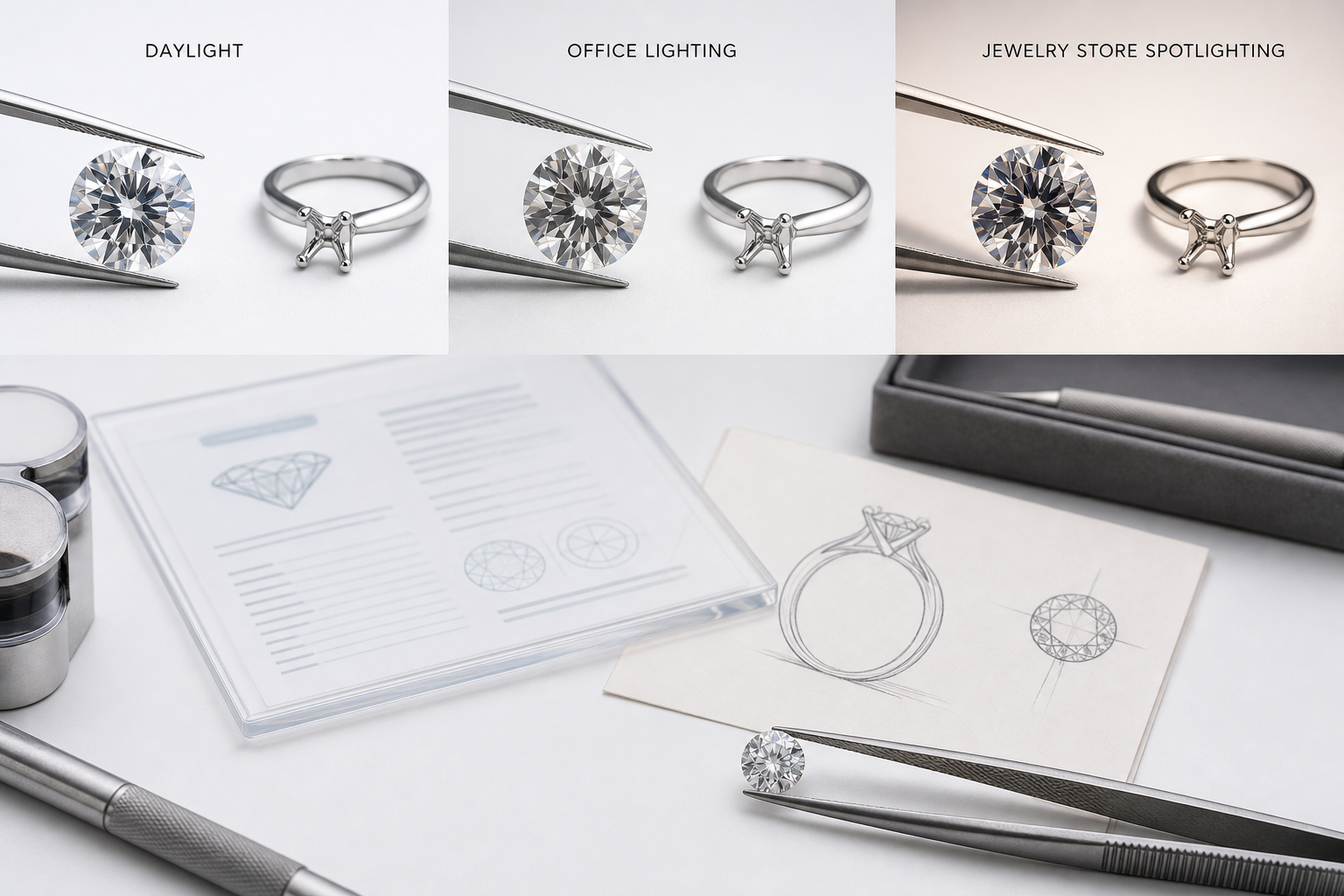
Diamond everyday appearance is not the same as showroom appearance. A stone that looks explosive under jewelry store spotlights may look softer in office lighting, warmer near a window, and less lively after a week of hand lotion and daily wear. This affects both lab-grown and natural diamonds, so it is not a useful way to identify origin.
If you are wondering why a diamond looks different in different lighting, the answer is usually the environment, not the diamond changing. Diamonds reflect and refract the light around them. Strong directional light can create sharp flashes, while shaded indoor light may show body color, facet pattern, or clarity characteristics more honestly.
Jewelry Store Lighting Versus Normal Lighting
Jewelry stores often use bright spotlights that make many diamonds look more sparkly than they will in everyday conditions. That lighting is not dishonest by itself, but it is incomplete. It can make a weaker stone look more exciting and can hide some differences that become easier to see in softer light.
A better judgment comes from seeing the diamond in more than one condition. Diffuse daylight, office lighting, shaded indoor light, and standard room lighting all reveal different traits. If a diamond only looks impressive in high-intensity spotlighting, be cautious before assuming it will have the same presence in daily wear.
Viewing Distance Matters
Many color and clarity differences are most visible during close inspection, not during normal social viewing. At roughly 6 to 10 inches, you may notice a small inclusion, a hint of warmth, or a bow-tie pattern in an elongated shape. At arm’s length, those same details may become much less obvious, while overall brightness, size, and shape dominate the impression.
This distinction matters when choosing grades. Paying more for a higher color or clarity grade can make sense if you are highly sensitive to those details, choosing a large stone, or selecting a step cut. But if the difference is only visible under close scrutiny and disappears in normal wear, that money may be better used toward cut quality, size, or the setting design.
Cleanliness Affects Sparkle
Oils, lotions, soap residue, dust, and everyday grime can dull a diamond quickly. A clean diamond returns light more efficiently; a dirty one can look flat even if it has excellent grading details. This is true for a lab-grown diamond in real life and for a natural diamond worn in the same way.
Do not mistake maintenance for origin or quality. If a diamond looked bright when purchased but appears muted after regular wear, cleaning is the first thing to address. Routine care often makes a bigger visible difference than moving up one clarity grade.
Real-Life Viewing Test
When shopping online, look for videos in more than one lighting condition when available. Compare diamonds against a neutral background rather than a heavily stylized display, and be cautious with clips that rely only on extreme sparkle lighting or aggressive editing. A useful video should help you see brightness, facet pattern, shape outline, and any obvious visual distractions.
For an in-person comparison, view the diamond close up and at arm’s length. Rotate it slowly rather than judging it from one fixed angle. If you are choosing a ring, try to evaluate the stone in a setting context whenever possible because metal color, prong style, and surrounding stones can change what your eye notices first.
Common Myths About Seeing the Difference
Many lab-grown diamond myths and natural diamond appearance myths start with the same assumption: that origin must create an obvious visual signature. In normal buying situations, that assumption leads shoppers in the wrong direction. The visible issues worth checking are cut, color, clarity, shape, size, lighting, and setting fit.
The better question is not whether someone can guess the origin from across a room. It is whether the diamond looks strong under fair comparison conditions and whether its origin has been disclosed clearly through documentation.
Myth: Lab-Grown Diamonds Look Fake
Lab-grown diamonds are not fake diamonds, and they are not the same as simulants such as cubic zirconia or moissanite. They are diamonds with a laboratory origin rather than a geological origin. A well-cut lab-grown diamond can show the brightness, fire, and scintillation buyers expect from a diamond.
The risk is not that a lab-grown diamond automatically looks fake. The real risk is choosing a poorly cut stone, an unflattering shape, a visible inclusion, or a color grade that does not suit the setting. Those are selection problems, not proof that the stone is lab-grown.
Myth: Natural Diamonds Always Sparkle More
Natural origin does not guarantee stronger sparkle. A natural diamond with weak proportions can look dull beside a well-cut lab-grown diamond, just as a poorly selected lab-grown diamond can look less lively than a better natural option. Sparkle is driven mainly by cut quality, light performance, symmetry, polish, and facet behavior.
This is one of the most expensive myths to believe. If a buyer assumes natural automatically means more brilliant, they may overlook the actual performance of the stone in front of them. The smarter comparison is to judge diamonds under the same lighting, with similar shape, size, color, clarity, and cut quality.
Myth: A Diamond Tester Always Solves the Question
A basic diamond tester can help separate some diamond simulants from diamonds, but it is not a complete answer for lab-grown versus natural origin. Many testers are designed to identify diamond-like thermal or electrical properties, not to determine whether a real diamond formed in a lab or underground.
If origin matters, use proper documentation and appropriate professional identification. A grading report, report number verification, laser inscription review when available, and clear seller disclosure are more reliable than assuming a handheld tester settles the question.
Seller Claim Check
Be careful with broad claims such as “looks exactly the same,” “better than natural,” or “impossible to tell in every way.” The first claim may be visually true in a controlled comparison, but it still needs proof. The second is too broad to be useful. The third ignores the role of reports, inscriptions, and professional testing.
Ask for specific evidence instead: the grading report, origin disclosure, measurements, high-resolution images, 360-degree video, and written clarification for anything that does not match. A seller who is confident in the diamond should not need vague language to make the comparison feel safe.
Be equally careful with ethics and sustainability language. A lab-grown diamond and a natural diamond may look visually similar, but appearance does not prove anything about energy use, production practices, origin controls, working conditions, or environmental impact. If those issues matter to your purchase, ask for specific seller documentation rather than relying on general claims or assuming that origin alone answers the question.
How to Choose Based on Appearance Instead of Assumptions
If your main priority is how the diamond looks, start with the factors your eye will actually notice. The better-looking diamond for your ring is not automatically the one with the highest grade, the largest carat weight, or a particular origin. It is the stone that returns light well, looks clean in normal viewing, faces up in a color you like, and fits the setting without awkward proportions.
This is the most practical way to choose lab-grown or natural diamond options fairly: judge visible performance first, then decide what origin means to you. If two diamonds look equally strong in video and in comparable lighting, the origin question becomes a personal, financial, or symbolic decision rather than a visual one.
At NUVU, this kind of comparison is treated as a practical selection question rather than a single-grade decision. The report narrows the field, but the final choice still needs to make sense visually, physically, and financially for the intended ring. That means a lower paper grade can sometimes be the more sensible option if the diamond looks strong and fits the design better.
Prioritize Cut and Visual Performance First
Cut should be the first filter for any appearance-focused buyer. A diamond with weak proportions can look flat even if it has excellent color and clarity grades, while a well-cut stone can look lively without needing the highest paper specifications. For round diamonds, cut grade, symmetry, polish, and proportions give useful starting points. For fancy shapes, videos and measurements often matter more because cut grading is less standardized.
Look for brightness across the whole stone, not just a few intense flashes under strong lighting. A diamond that goes dark through the center, shows uneven sparkle, or has a distracting bow-tie effect may disappoint in an engagement ring even if the report looks attractive. If you are comparing lab-grown or natural diamond options for engagement ring appearance, the better visual choice is usually the one with cleaner light return and a more balanced face-up pattern.
Choose Color and Clarity Based on What You Can See
Color and clarity matter, but they should not automatically outrank visual performance. Many buyers pay for color or clarity differences they cannot see once the diamond is set, especially in brilliant cuts and everyday lighting. If a G-color diamond looks white to you in the chosen metal, paying more for D color may be more about preference than visible improvement.
The same logic applies to clarity. A diamond does not need to be flawless to look clean in real life. What matters is whether inclusions are visible without magnification, where they sit in the stone, and whether the shape makes them easier to notice. Step cuts and larger stones usually deserve stricter clarity standards; smaller brilliant cuts often allow more flexibility if the diamond is confirmed eye-clean.
The mistake to avoid is buying grades as if they all create equal visual impact. Cut usually drives beauty first. Color and clarity should be chosen around your sensitivity, the diamond shape, the setting metal, and what the actual images or videos show.
Compare Like-for-Like Before Choosing Origin
A fair comparison is controlled. Do not compare a well-cut lab-grown oval to a poorly proportioned natural round and treat the difference as an origin issue. Compare the same shape, similar carat weight, similar face-up measurements, similar color and clarity range, and similar setting style. Otherwise, you may be reacting to size, cut, or design while thinking you are judging lab-grown vs natural diamond appearance.
Lighting should also be consistent. A diamond shown under bright spotlighting can look more dramatic than one filmed in softer conditions. If possible, compare diamond video under similar lighting and against a neutral background. This reduces the chance of choosing the stone with the better presentation instead of the better appearance.
Decide What Origin Means to You
If two diamonds are visually close, origin may still matter. Some buyers prefer lab-grown because it may allow them to choose a larger or higher-grade stone within the same budget. Others prefer natural origin because of tradition, rarity, or personal meaning. Neither preference needs to be justified by claiming one automatically looks better.
The clearest decision comes from separating appearance from identity. Choose the diamond that looks right first, then decide whether lab-grown or natural origin fits your priorities. If the diamond is for a custom engagement ring, the final choice should also account for how the stone works with the setting, finger coverage, metal color, and daily wear.
Appearance-First Buying Checklist
Choose the shape first, because shape affects sparkle pattern, face-up size, and the overall style of the ring.
Define your target size by measurements, not carat weight alone. Length, width, and depth affect how large the diamond looks once set.
Review cut quality or proportions before giving too much weight to color and clarity grades.
Select a color range that looks right in the intended metal. D-F suits buyers who want a crisp white look, while G-H often gives a strong balance of appearance and budget. I-J can work in some warm-metal or brilliant-cut designs when confirmed visually.
Confirm eye-clean clarity using magnified images, video, and seller confirmation, especially for larger stones and step cuts.
Compare video under similar lighting whenever possible. Avoid making a final decision from edited images or bright showroom clips alone.
Verify the grading report, report number, origin disclosure, and available laser inscription before purchase.
Evaluate how the diamond fits the final setting. A beautiful loose stone can still be the wrong choice if the depth, outline, or prong placement does not work well with the design.
For buyers who want added confidence after the visual comparison is done, the most useful trust signals are still straightforward: a clear grading report, transparent origin disclosure, documented measurements, consistent media, and seller policies you understand before purchase. Those checks do not tell you which diamond looks better, but they do help confirm that the stone you choose is the stone you were shown.
Before purchase, buyers should confirm the seller’s documentation, return terms, resizing terms, and after-sales support directly in writing rather than relying on assumptions from the product page alone.
When those documents line up, the appearance decision becomes easier to trust because you are comparing real, identified stones rather than marketing shorthand. That is especially helpful when two diamonds look very close and the final choice depends on subtle differences in cut, color, clarity, or setting compatibility.
FAQ: Lab-Grown vs Natural Diamond Appearance
Can people tell my engagement ring is lab-grown just by looking?
Usually no. If the diamond is well cut, clean to the eye, and visually comparable to a natural diamond of similar grade, most people cannot identify lab-grown origin by looking at the ring. What they are more likely to notice is size, sparkle, shape, and setting style.
Do lab-grown diamonds sparkle less than natural diamonds?
No, not because of origin alone. Lab-grown diamonds and natural diamonds can both show strong brilliance, fire, and scintillation when cut well. If one diamond sparkles less than another, the more likely reason is cut quality, proportions, facet alignment, cleanliness, or lighting.
Can a jeweler tell the difference by eye?
A jeweler may ask for documentation or notice clues from an inscription or listing details, but reliable origin confirmation should not depend on eyesight alone. A grading report, report number verification, laser inscription when available, or appropriate professional testing is the proper way to confirm diamond origin.
Should I choose a higher color or clarity grade for lab-grown diamonds?
Not automatically. Choose color and clarity based on what you can see in the specific diamond, not because the stone is lab-grown. Shape, size, setting metal, and your own sensitivity to warmth or inclusions should guide the decision. A higher grade is worth paying for when it improves the appearance you actually notice or gives you personal confidence.
Will people know my diamond is lab-grown if it looks large for the budget?
People may guess based on size, price assumptions, or what they know about current diamond options, but that is not the same as visual identification. A larger lab-grown diamond can still look like a diamond in everyday wear if it is well proportioned and properly set. If privacy matters to you, choose a size and design that feels comfortable for your lifestyle rather than choosing around other people’s assumptions.
How can I prove whether a diamond is lab-grown or natural?
Use documentation, not appearance. Check the grading report, match the report number to the stone, review any laser inscription, and ask for written origin disclosure from the seller. A diamond can look beautiful and still need proper verification.
Where to Go Next
If appearance is your main priority, the next step is not to decide lab-grown versus natural in the abstract. It is to compare real stones by cut, video, measurements, color, clarity, report details, and setting fit. That process gives you a more reliable answer than judging origin alone.
Helpful Related Guides
A broader lab-grown diamond buying guide can help if you are still weighing budget, size, and purchase priorities. A diamond cut guide is the better next step if sparkle and brilliance are your main concerns. If your uncertainty is about documentation, a diamond grading report guide can explain how reports, report numbers, and origin disclosure work.
If you are still deciding on style, a diamond shape guide can make the visual comparison clearer. Shape changes the way a diamond sparkles, how large it appears, and how it works in different engagement ring designs. For buyers ready to compare actual stones, browsing loose lab-grown diamonds gives a useful view of how grades translate into real appearance.
Appearance-Led Next Step
At NUVU, the most useful comparison usually starts with the stone’s visible performance rather than the label attached to it. Review the video, check the measurements, confirm the report, and think about the final setting before deciding whether a diamond is right for you.
If you are choosing a lab-grown diamond for an engagement ring, compare loose stones by shape, cut quality, face-up size, color, clarity, and setting compatibility. For a custom engagement ring, ask for help matching the diamond to the design so the finished piece looks balanced, not just impressive on paper.
Keep the Comparison Focused
This visual comparison should stay centered on what the eye can and cannot see. Cut, color, clarity, shape, lighting, cleanliness, and setting design create the differences buyers notice most. Origin still matters, but it is confirmed through documentation rather than ordinary viewing.
The strongest choice is the diamond that looks right under realistic conditions, fits the intended design, and comes with clear origin and grading information. That standard protects you from two common mistakes: paying for invisible upgrades, or assuming origin alone determines beauty.
Disclosure: This article is for general educational purposes only. Diamond grading, pricing, availability, specifications, and seller policies can change, and readers should verify important details through grading reports, official laboratory tools, seller documentation, or qualified professionals before making a purchase decision. Laboratory-grown diamonds should be clearly distinguished from natural diamonds, and environmental or sourcing claims should be supported by specific documentation.