 Get a Quote
 Loose lab-grown diamonds10 shapes · IGI, GIA or NGTC reports
Heart Lab-Grown Diamond Guide: Symbolic Shape, Symmetry, and When It Works Best
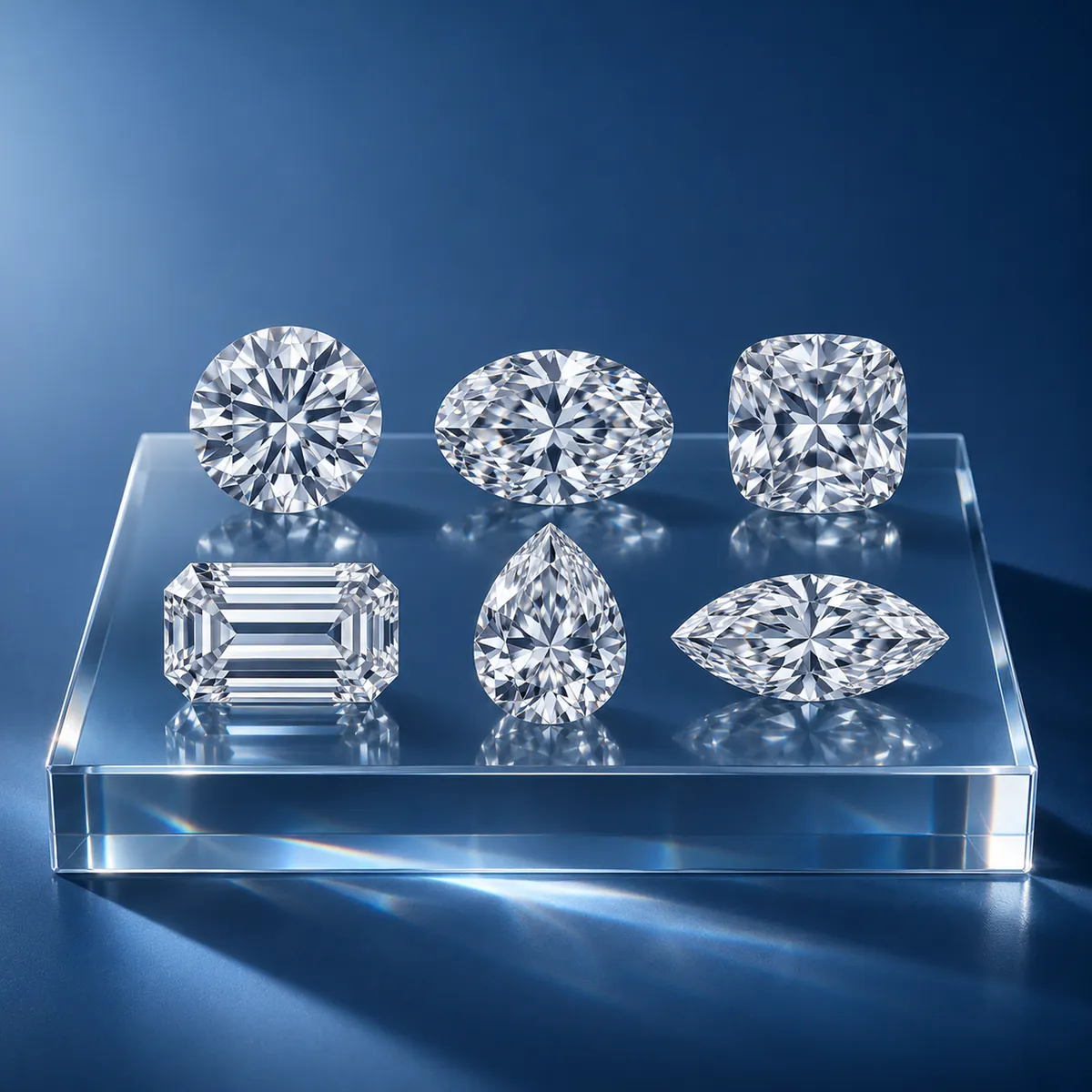
A 0.25 ct heart is only about 4 mm across. Set it with three prongs, one at the point and one on each lobe, and the prongs hide much of the outline, so from a step away it reads as a small round or a triangle. At 0.50 ct and above the shape starts to read as a heart. Size and symmetry decide this shape more than any grade.
A heart is the most symbolic diamond shape, popular for pendants, earrings, gifts and some engagement rings. Its beauty depends almost entirely on symmetry: two even lobes, a clear cleft, and a centered point. Choose a ratio of about 0.90 to 1.10, a size large enough for the outline to read clearly (often 0.50 ct and up), and protect the point with a V-prong.
Heart at a glance
Judging the outline
- Lobes: both rounded, same size and height.
- Cleft: a clear dip between the lobes, centered.
- Wings: the sides from lobes to point, gently curved, not bulging.
- Point: centered under the cleft, not twisted.
A top-down photo makes all of these easy to check.
Ratio
Swipe the table to see more →
| Ratio | Look |
|---|---|
| Below 0.90 | Wide, squat |
| 0.90–1.10 | Classic |
| Above 1.10 | Long, narrow |
A 1.00 ct heart is roughly 6.2 × 6.6 mm.
Size
In small sizes, setting prongs cover much of the outline and the heart can look like a round or triangle. Many people choose 0.50 ct or larger for pendants and rings so the shape is clear.
Color and clarity
Hearts hide inclusions well. Color can show at the point and lobes. G to H in white metal and H to I in yellow or rose gold are common.
Settings and uses
Swipe the table to see more →
| Use | Notes |
|---|---|
| Pendant | Most popular use; point down |
| Stud earrings | Matched pair needed |
| Solitaire ring | V-prong at the point, prongs at the lobes |
| Halo | Defines the outline |
| Bezel | Protects edges, emphasizes shape |
Hearts as gifts
Hearts are a classic gift for anniversaries, Valentine’s Day and milestones. See the jewelry gifts guide.
What a report shows for a heart
On a report, a heart gets measurements, polish and symmetry. An overall cut grade appears only on some reports: IGI can grade loose fancy shapes, while GIA grades cut on round brilliants only and plans fancy-shape grades for 2027. IGI and NGTC give full color and clarity grades. GIA, since October 1, 2025, gives lab-grown stones a Premium or Standard assessment instead, which for fancy shapes rests on color, clarity, polish and symmetry; see the GIA report guide. No report records the symmetry of the lobes, the depth of the cleft or the shape of the point, so judge that on video.
Matched hearts for earrings
Heart earrings need two hearts with matching lobes, cleft and ratio. A side-by-side top-down video is the check.
Common mistakes with hearts
- Choosing a heart too small for the outline to read.
- Accepting uneven lobes or an off-center point.
- Ignoring how prongs cover the outline.
Heart diamond questions
What size should a heart shaped diamond be?
Often 0.50 ct or larger so the outline is clear.
What makes a good heart diamond?
Even lobes, a clear cleft and a centered point.
What ratio is best for a heart?
About 0.90 to 1.10.
Find a symmetrical heart
Tell us the size, the color and clarity range and whether you need a single stone or a pair, and we will suggest hearts with their measurements and reports. NUVU can arrange IGI, GIA or NGTC reports. Send your requirements or WhatsApp / WeChat +86 191 1840 3930.

12+ years in lab-grown diamond grading, identification and quality assurance for both HPHT and CVD stones.
About NUVU. NUVU is the international brand of New Perspective Superhard Materials Co., Ltd. in Zhecheng, Henan, China. We grow HPHT lab-grown diamonds in-house and cut, polish and match stones in our own workshop.
Related Guides
Shapes guide
Compare lab-grown diamond shapes: round, oval, emerald, radiant, cushion, pear, marquise, princess, Asscher, heart.
Read more →Fine jewelryNecklace guide
How to choose a lab-grown diamond necklace: pendant styles, stone size by chain length, cut, color and clarity…
Read more →ShopLoose lab diamonds
Loose lab-grown diamonds in 10 shapes with IGI, GIA or NGTC reports.
Read more →