
Choosing between a lab-grown and natural diamond is rarely just a question of which one “looks better.” Well-cut diamonds from either origin can appear nearly identical in everyday wear, so the more useful decision is about documentation, value, meaning, budget, and long-term expectations, especially when evaluating lab-grown vs natural diamonds through grading data and purchase goals. A grading report can confirm origin and key measurements, but it should be paired with visual review, proportion checks, and clear seller information.
For the full framework, read Lab-Grown vs Natural Diamonds Guide.
This article helps you judge what actually matters before buying: whether a small grade difference is worth paying for, how to question sustainability or ethics claims, when natural rarity may matter, and when a lab-grown diamond may offer better size or design flexibility. It also clarifies what to keep for insurance, resale, replacement, or future upgrades.
Evidence-first buying note: Treat every major claim in a diamond listing as something that should either be written down, visible in the stone media, or explained by the seller. Origin should be stated plainly, grading details should match the report, and broad claims about value, sustainability, or sourcing should not be accepted just because they sound reassuring. The safest purchase path is to separate documented facts from preferences and marketing language.
| Decision Point | What to Check | Common Mistake to Avoid |
|---|---|---|
| Origin | Verify report number, inscription, and seller documentation | Judging origin by appearance alone |
| Visual quality | Review cut, proportions, photos, videos, and real-life appearance | Overpaying for tiny grade differences |
| Budget fit | Compare size, cut quality, setting, and total finished cost | Looking only at carat weight |
| Ethics claims | Ask for traceability, sourcing details, and production information | Accepting vague “green” or “ethical” language |
| Long-term value | Keep reports, invoices, appraisals, and upgrade-policy details | Confusing resale value with emotional or replacement value |
| Ring design | Match stone measurements to setting style and daily wear needs | Choosing the diamond and setting separately without fit checks |
Quick Questions Before You Read
Q: Can people tell the difference between lab-grown and natural diamonds by looking?
Usually not in everyday wear, especially when both are well cut. Origin should be confirmed through documentation.
Q: Does a grading report guarantee that a diamond is the best choice?
No. It confirms key facts, but visual performance, proportions, price, and setting fit still need review.
Q: Is a natural diamond automatically better for long-term value?
Not automatically. Rarity, resale, replacement value, and personal meaning are separate considerations.
Q: Is a lab-grown diamond a good choice for an engagement ring?
It can be, if it matches the couple’s budget, values, design goals, and expectations about future value.
Start With the Real Difference: Same Diamond Material, Different Origin and Market Logic
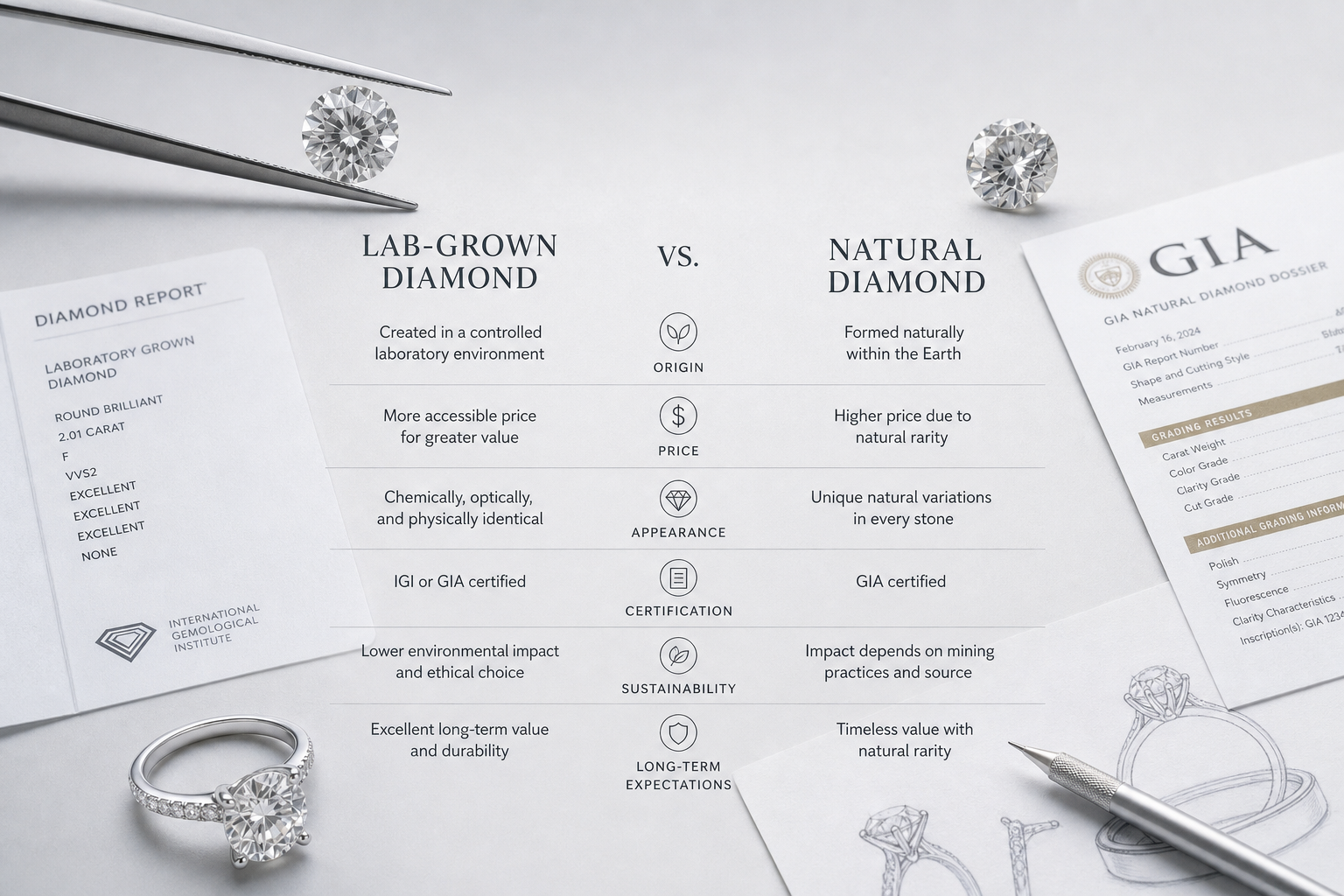
Lab-grown vs natural diamonds is not a question of real versus fake. Both are diamonds, and both can be beautiful, durable, and suitable for fine jewelry. The real difference is where they come from, how rarity shapes their pricing, and what the purchase means to the buyer. If you are trying to decide whether you should buy a lab-grown or natural diamond, the useful question is not which one is “real.” It is which one fits your budget, expectations, and values better.
That distinction matters because appearance alone rarely settles the decision. Two diamonds can look equally impressive once they are well cut and properly set, but still lead to very different buying choices. One buyer may care most about size and design flexibility. Another may care more about geological origin, tradition, or the idea of owning something formed naturally over time. The diamond buying decision gets easier once those priorities are named clearly.
Origin disclosure boundary: Laboratory-grown diamonds should be clearly identified as laboratory-grown, and they should not be presented as mined diamonds. Diamond simulants, such as non-diamond lookalikes, are a separate category and should not be confused with lab-grown diamonds or natural diamonds. When origin matters to the purchase, the seller description, grading report, invoice, and any appraisal language should use consistent terminology.
For buyers, the practical distinction is that origin is a factual attribute, while value is a broader judgment. A report may confirm whether a diamond is lab-grown or natural, but it cannot decide whether that origin matters to the wearer, whether the price makes sense, or whether the finished ring supports the intended meaning.
What Lab-Grown and Natural Diamonds Have in Common
Lab-grown diamonds and natural diamonds can both be graded for the 4Cs, both can be mounted in engagement rings or fine jewelry, and both can deliver strong visual beauty when cut well. In practice, a well-cut diamond is what most people notice first, not whether it was created in a lab or mined from the earth. That is why it is a mistake to assume origin alone decides quality.
For buyers comparing lab-grown and mined diamonds, the shared ground is larger than many marketing messages suggest. They are both diamond material, not substitutes in the sense of being completely different stones. The difference begins after that common starting point, where origin and market logic start to pull the choice in different directions.
Documentation checkpoint: Because the visual difference is not a reliable way to determine origin, the buyer should expect the listing, invoice, and report language to be consistent. If one document says “laboratory-grown,” another says only “diamond,” and the seller cannot explain the difference clearly, pause before buying. Consistent paperwork is especially important when the stone may later be insured, reset, upgraded, or passed on.
Where the Decision Actually Splits
The split happens in origin, rarity, price behavior, sustainability questions, resale expectations, and symbolic preference. Lab-grown diamonds usually appeal to buyers who want more visible size or stronger specs for the same budget. Natural diamonds often appeal to buyers who place more weight on geological origin, traditional rarity, or the meaning tied to a mined stone.
This is why a lab-grown or natural engagement ring cannot be judged by one universal rule. A buyer who values visual impact may feel one answer is obvious. A buyer who values origin-based rarity may reach the opposite conclusion. The right choice depends less on the diamond itself than on what the buyer wants that diamond to represent.
The Mistake to Avoid: Treating the Choice as Only a Price Comparison
Price matters, but it is only one part of the decision. A lower lab-grown diamond price may let you buy a larger stone, improve the setting, or choose better cut quality. A higher natural diamond price may reflect origin preference, rarity, or the value a buyer places on tradition. If you reduce the choice to “which is cheaper,” you miss the part that will actually affect satisfaction after the purchase.
Prices can change with market conditions, report type, seller channel, and stone-specific details, so exact comparisons should be verified at the time of purchase. Compare like-for-like specifications whenever possible: origin, carat weight, shape, cut information, color, clarity, measurements, report type, setting cost, taxes, and any customization costs that affect the final total.
The smarter comparison is whether the spending pattern matches your priorities. Some buyers want the most presence they can get for the budget. Others would rather accept a smaller stone if it gives them the satisfaction of natural origin. Neither approach is wrong, but they are not the same decision.
What to Check Before You Decide
Before you buy, confirm that the seller states clearly whether the stone is lab-grown or natural on the listing, invoice, and grading report. Do not rely on loose language like “real,” “premium,” “ethical,” or “sustainable” as a substitute for a direct origin statement. Those words can be meaningful, but they do not tell you what the diamond actually is.
At NUVU, we treat that clarity as the starting point, not the finish line. If the origin is not written down plainly, the buyer has not really been given enough information to compare the stone properly.
Use Budget as a Design Tool, Not Just a Spending Limit
Budget is where the lab-grown vs natural diamond comparison becomes practical. The same amount of money can lead to very different outcomes depending on which path you choose. That is why the better question is not simply how much you want to spend, but what you want that budget to do for you.
With lab-grown diamonds, buyers often have more room to prioritize larger carat size, higher color or clarity, or a more elaborate setting within the same total spend. With natural diamonds, the budget usually has to absorb origin and rarity as part of the stone’s price, which can mean tighter tradeoffs across carat, color, clarity, and cut. If your budget is fixed, decide whether you want more visual presence or more origin-based rarity.
It is also important to think in total project cost, not just center stone cost. The ring budget may need to cover the center diamond, side stones, setting, metal, customization, resizing, insurance, and taxes. A buyer who focuses only on the diamond itself can easily end up with a beautiful stone and an underfunded setting, or a great ring design and a compromised center stone.
A useful budget conversation separates visible value from category value. Visible value includes size, cut performance, shape, and setting design; category value includes natural origin, rarity preference, and documentation confidence. When those two types of value are mixed together, buyers may feel unsure even when the price seems fair.
What the Same Budget Can Mean in Each Buying Path
In a lab-grown diamond purchase, more of the budget can go toward the features you will see every day. That usually means size, shape preference, or a stronger setting. In a natural diamond purchase, more of the budget may be tied to origin and rarity, which can leave less room for larger carat weight or high-end extras. The right choice depends on what you want the budget to emphasize.
For some buyers, that means the lab-grown route is clearly more practical. For others, the premium attached to natural origin is part of the point, so the tradeoff is acceptable. The key is recognizing that both are valid budget outcomes, but they are not interchangeable outcomes.
Where Buyers Often Overspend
One common mistake is paying for clarity grades that do not change what the diamond looks like to the naked eye. Another is chasing color grades that will not matter much once the stone is set in the chosen metal. Cut quality is often the factor that has the most visible impact, yet it is easy to underprioritize because carat weight feels more concrete.
Buyers also overspend when they treat every dollar as if it should go into the center stone. If the setting matters to the overall look, that money needs to be reserved early. A well-balanced ring often feels more expensive than a large stone in a weak setting, and that is especially true for custom or multi-stone designs.
Budget Checklist: Decide What You Are Actually Buying
Use your budget to answer six practical questions before comparing lab-grown diamonds and natural diamonds: do you care more about visual size, cut performance, origin preference, setting complexity, documentation confidence, or long-term emotional value? The answer will tell you more than a price tag alone.
That ranking is often what separates a confident buyer from a hesitant one. If size and design matter most, lab-grown usually gives you more room. If natural origin is part of the meaning, then the budget has to be judged differently, because rarity is part of what you are paying for.
Useful Budget Parameters to Include
For a fixed engagement ring budget, think in broad allocation categories rather than rigid percentages. A simple solitaire may leave more room for the center stone, while a detailed custom setting with side stones, halo work, or premium metal may require more of the budget to be reserved for the mount and labor. These are planning principles, not universal rules, but they help prevent the mistake of overspending in one area and weakening the rest of the design.
If the ring is meant to feel balanced on the hand, the setting should be part of the budget conversation from the start. That is especially true when comparing lab-grown and natural options, because the price difference between the stones can change how much design room you have left.
Compare Appearance the Right Way: Cut, Size, Shape, and Setting Matter More Than Origin
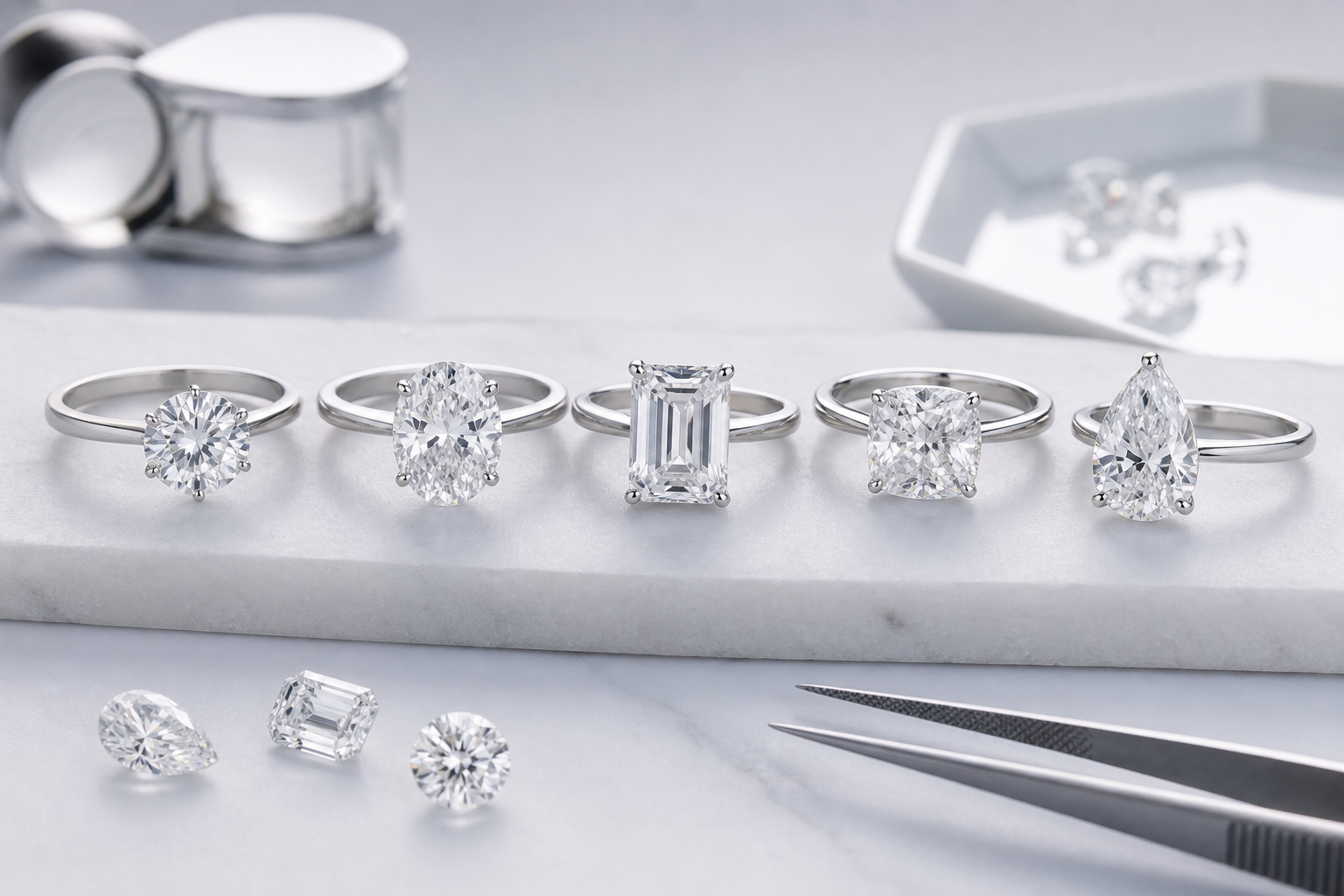
It is easy to assume that lab-grown diamond appearance and natural diamond appearance should look different in a dramatic way. In most cases, they do not. A poorly cut diamond can look dull whether it is lab-grown or natural, while a well-cut diamond can look strong in either category. If you are asking which diamond looks better, origin alone is the wrong place to start.
Visual performance comes from cut quality, proportions, face-up size, shape, and how the stone works with the setting. That means the better-looking diamond for an engagement ring is rarely the one with the most impressive label. It is the one that performs well in actual viewing conditions.
In practical buying, this is where many comparisons become misleading. A listing may highlight carat, color, and clarity because those fields are easy to scan, but the final appearance often depends on how the stone returns light, whether the shape has pleasing balance, and whether the setting supports the diamond rather than hiding or exaggerating its weaknesses.
Why Cut Quality Should Lead the Visual Decision
Cut affects brightness, contrast, sparkle, and how lively the stone looks from different angles. A diamond with strong cut performance tends to look more balanced and more alive, even if it is not the biggest stone in the case. That is why cut quality should lead the visual decision, not follow it.
Buyers sometimes focus so much on carat weight that they overlook how much light performance changes the final look. A smaller stone with strong cut can often look more impressive than a larger stone with weak proportions. This is one of the most common and most costly mistakes in diamond buying.
How Carat Weight and Measurements Affect Face-Up Size
Two diamonds with the same carat weight can look noticeably different in size because carat is weight, not a direct measure of visible spread. Measurements and shape determine how much of that weight shows on the surface. For buyers comparing lab-grown vs natural diamond appearance, that detail matters more than many realize.
This is where a buyer can get more value from a lab-grown diamond if size is a top priority. But the reverse can also be true: a natural diamond with better proportions and stronger presence may feel more satisfying than a larger stone that looks shallower or less balanced. Face-up appearance is what you will actually see, so it should guide the decision.
Shape-Specific Visual Tradeoffs
Different shapes require different visual checks. Round diamonds are often the easiest to compare because cut data is more straightforward and performance is easier to judge. In custom settings, lab grown vs natural diamonds can shape how buyers weigh appearance, budget, and selection before focusing on fancy-shape details. Oval and pear shapes need attention to bow-tie visibility, because a dark center can weaken the look. Emerald cuts demand closer inspection of clarity and transparency because their step-cut style reveals the body of the stone more openly. Cushion cuts vary widely in facet pattern, so two stones with similar specs can still look quite different.
These shape differences matter whether the stone is lab-grown or natural. If you skip shape-specific review, you may end up comparing numbers that do not capture the real visual effect. The better approach is to compare the shape in context, not in isolation.
Certificate and Visual Review Check
Compare the grading report with actual images or 360-degree video before you decide. Check measurements, table and depth percentages where relevant, symmetry, polish, and any visible inclusions instead of relying only on the grade summary. A report can help narrow the field, but it cannot show how the stone will feel in your own lighting or setting.
A grading report helps document key characteristics, but it should not be treated as a guarantee of beauty, value, or sourcing ethics. It is strongest when used alongside visual evidence, measurements, seller documentation, and the intended jewelry use.
For a lab-grown or natural engagement ring, that visual review is where the comparison becomes real. The buyer who checks both paper and photos is much less likely to overpay for a stone that looks better in the listing than it does in person.
Traceable comparison step: Save the report, listing images, video, and any written measurement notes before making a final decision. If you later compare two stones, change settings, or ask another jeweler for an opinion, having the same evidence in one place makes the conversation clearer and reduces the risk of comparing memory against marketing copy.
Decide What “Meaning” Means to You Before You Compare Specs
Meaning is often the part of the diamond buying decision that buyers leave vague until the end, but it should be one of the first things clarified. Lab-grown diamond meaning and natural diamond meaning are not identical because the story attached to each stone type is different. One is tied to modern production and practical value; the other is tied to geological rarity, tradition, and mined origin.
That does not make one more romantic than the other. It simply means the symbolism is different. If you are choosing an engagement ring, proposal ring, or milestone piece, you need to know which story matters more to you before you compare specs.
This is also where buyer expectations should be stated plainly. If the wearer assumes “diamond” means natural origin, that assumption should be addressed before purchase; if the wearer values design freedom and size more than origin, that should be treated as a valid preference rather than a compromise.
When Natural Origin Carries Personal Value
Natural diamonds may matter more to buyers who strongly value geological rarity, family tradition, heirloom symbolism, or the conventional luxury story that comes with mined origin. For those buyers, the emotional value of a natural stone is part of the product itself, not an extra feature. If that is true, a lab-grown stone may never feel like the right choice no matter how attractive the price is.
That preference is not outdated. It is simply a different way of assigning value. The important thing is to recognize it early, because once a buyer has an emotional attachment to natural origin, trying to “talk them into” lab-grown can create regret later.
When Lab-Grown Origin Fits the Buyer Better
Lab-grown diamonds may fit buyers who care more about visual beauty, budget efficiency, design flexibility, or a more modern buying philosophy. For these buyers, the stone’s origin matters less than the way it looks, how it fits the design, and how well it reflects their spending priorities. That makes lab-grown diamonds a strong option when appearance and practicality carry more weight than tradition.
This is especially common for buyers who want a larger center stone or a more expressive setting without pushing the budget too far. A suitable decision is the one that matches the wearer’s expectations, not the one that sounds most impressive in a conversation.
Scenario Grounding: Two Buyers, Same Budget, Different Priorities
Maya and Daniel have the same fixed engagement ring budget, but they value different things. Maya wants a larger oval stone in a custom setting and does not feel strongly attached to mined origin, so a lab-grown diamond gives her more of what she wants without forcing tradeoffs elsewhere. Daniel’s partner has always imagined a natural diamond because of family tradition, so they choose a smaller natural stone with excellent cut and accept the size tradeoff.
Both choices make sense because they match different definitions of value. The wrong choice would be picking a stone that looks good on paper but feels wrong in the story the couple actually wants to tell.
Conversation Checklist for Couples
Ask whether either person would feel disappointed if the diamond were lab-grown, whether origin is part of the emotional story, whether a larger or better-cut diamond would create more daily enjoyment, and whether future resale is actually part of the expectation. Those questions usually reveal the real decision faster than spec comparisons do.
If the answers are mixed, that is a sign to pause and talk before buying. A diamond can be visually impressive and still be the wrong emotional fit.
Use Certification to Confirm Facts, But Do Not Treat It as the Whole Decision
A grading report is useful because it turns a diamond comparison into something concrete. It tells you what the stone is on paper, which matters when you are deciding between lab-grown and natural diamonds, but it does not tell you whether the stone is the right choice for your eye, your setting, or your priorities. At this stage, the report should reduce uncertainty, not replace judgment.
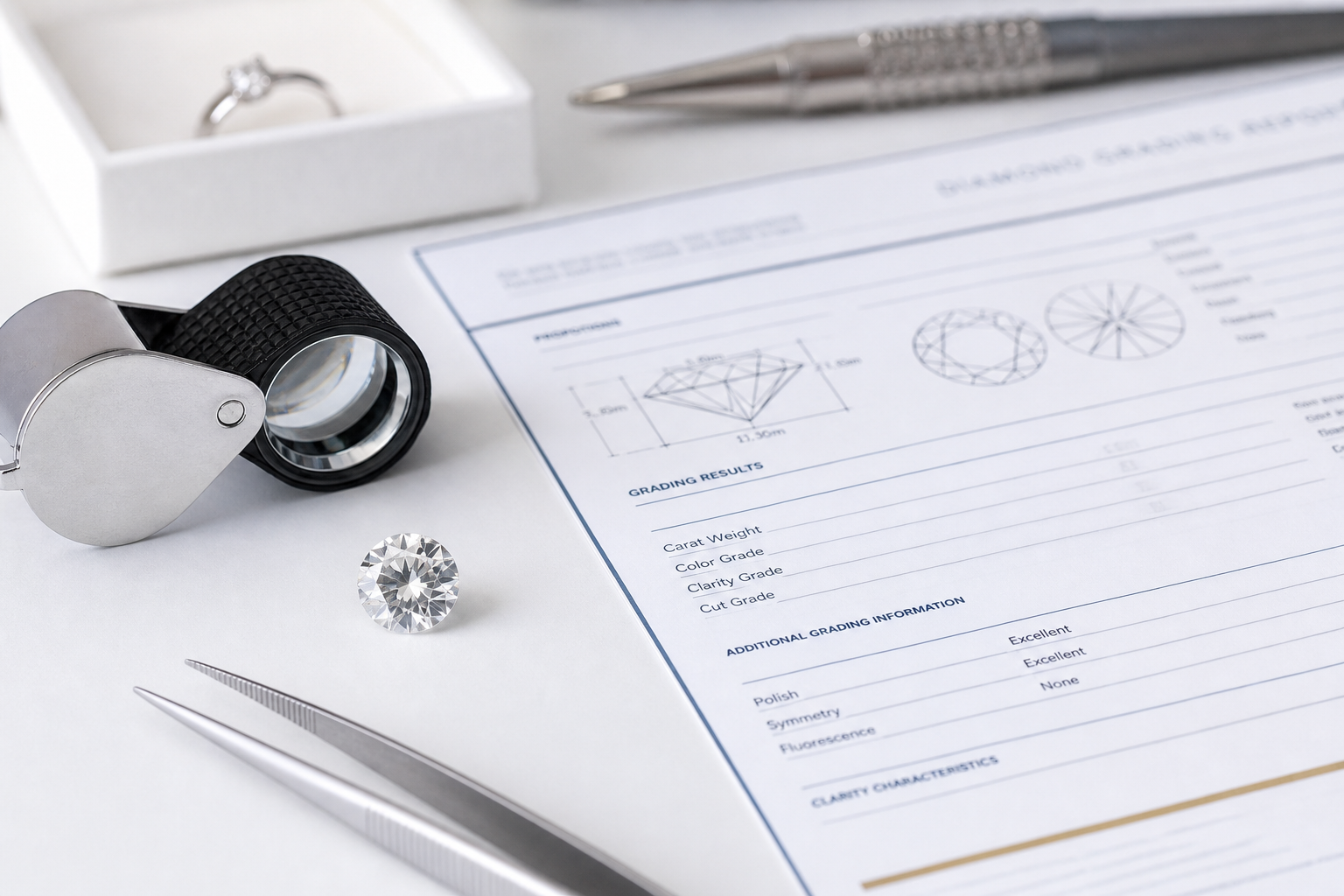
For a buyer comparing a lab-grown diamond with a grading report and a natural diamond with a grading report, the report helps confirm the basics that should already be disclosed by the seller. That includes origin, carat weight, color, clarity, cut information, measurements, polish, symmetry, and fluorescence where applicable. If the report number is available, it should also be something you can verify independently through the grading lab’s official database when that option exists.
Certification language can be easy to overread. A grading report documents characteristics observed under grading conditions; it does not guarantee that every buyer will like the diamond, that the stone is priced well, or that the finished ring will suit the wearer. The strongest use of a report is to confirm facts, then compare those facts with actual stone media and the intended design.
Report comparison safeguard: Avoid using the name of a grading laboratory as the only reason to buy a stone. A report can be widely recognized and still be only one part of the decision. Compare what the report actually documents, whether the seller’s listing matches it, and whether the stone’s photos, video, proportions, and setting plan support the same conclusion.
What a Grading Report Can Help Confirm
A proper grading report gives you a factual baseline. It can show whether the diamond is lab-grown or natural, whether the listed measurements match the stone, and whether the grade details line up with the seller’s description. That matters because a buyer should never have to guess whether “real,” “premium,” or “ethical” refers to the actual stone or just a sales phrase.
The report also helps narrow the field when two diamonds look similar online. A stone with stronger cut, polish, symmetry, and consistent measurements may be a better candidate for further review than one that looks attractive only because the listing language sounds strong. In practice, the report is most valuable when it confirms that the diamond being considered is the same one being shown.
What a Grading Report Cannot Fully Tell You
A report cannot tell you how the diamond will feel in real life. It does not show sparkle in different lighting, how the shape behaves face-up, whether an oval has a distracting bow-tie, or whether the inclusions will bother you once the stone is set. Two stones with similar paper grades can still look very different once you see them on video or in a ring.
This is where buyers sometimes overtrust certification. A clean-looking report can still hide an underwhelming visual result, especially if the cut is only average or the proportions are not ideal for the shape. The better habit is to treat the report as a filter and the visual review as the final check.
How to Compare Reports Without Overreacting to Small Grade Differences
Not every difference on paper deserves a higher price. Buyers often pay too much for a small clarity or color improvement that will not be visible in the finished piece, especially in a setting that already influences how the diamond looks. The smarter move is to ask whether the difference changes what you will actually notice.
If two diamonds look similar in real photos and one is priced higher only because of a small grade shift, that premium may not be worth it for a daily-wear ring. On the other hand, a meaningful improvement in cut, measurements, or overall visual balance can be worth paying for because it changes the stone you live with, not just the report you file away.
How to Verify This Before Buying
- Match the report number to the seller listing.
- Check whether the report identifies the stone as lab-grown or natural.
- Confirm measurements match the listed diamond.
- Ask whether the diamond has a laser inscription if applicable.
- Keep copies of the report and invoice after purchase.
When a grading report is available, buyers should verify the report details through the issuing laboratory’s official report-check tool where available, then compare those details with the seller listing and the actual stone media.
For NUVU, the point of report-aware buying is not to make the report sound more important than the diamond itself. The goal is to make the comparison easier to understand: what the report confirms, what the visuals reveal, and whether the stone fits the intended jewelry use.
Evaluate Sustainability and Ethics Claims With Specific Questions, Not Slogans
Sustainability is one of the most commonly discussed reasons buyers lean toward lab-grown diamonds, but the claim is more complicated than “grown” versus “mined.” A responsible diamond buying decision should focus on what can actually be verified. If the seller cannot explain the source, production, or documentation behind the claim, the language may be doing more work than the facts.
Lab-grown diamonds avoid mining, which is part of their appeal for many buyers. But they still require energy, manufacturing infrastructure, cutting, polishing, transport, and supply-chain coordination. That does not make them automatically better or worse in every case; it means the environmental question depends on more than the origin label alone.
Environmental and sustainability claims should be specific, documented, and limited to what can be substantiated. Buyers should be cautious with broad claims unless the seller can point to clear information about production practices, energy use, sourcing boundaries, or other relevant documentation.
Ethics and sustainability are best treated as evidence questions, not category labels. The more specific the claim, the easier it should be to explain what is known, what is documented, and what remains uncertain. A careful seller should be willing to separate verified information from general positioning.
Substantiation matters: Be especially cautious with absolute words such as “eco-friendly,” “carbon-neutral,” “conflict-free,” or “fully sustainable” unless the seller can explain exactly what is being claimed and what documentation supports it. A narrower claim is often more trustworthy than a sweeping one. For example, a seller may be able to document origin or production details without proving every environmental impact across the full supply chain.
Why “Lab-Grown” Does Not Automatically Answer Every Sustainability Question
The main mistake is assuming that lab-grown origin settles the issue by itself. It does not. Energy source matters, production method matters, and so does where the diamond was cut, polished, and shipped. A buyer asking are lab-grown diamonds sustainable is really asking how the stone was made, under what conditions, and with what documentation.
For that reason, a vague sustainability claim is not enough. A seller should be able to explain what is known and what is not, rather than leaning on broad phrases that sound responsible without proving much. Transparency is more useful than a polished slogan.
Why “Natural” Does Not Automatically Mean Unethical
Natural diamonds involve mining, and that is a real concern for many buyers. But it is not accurate to treat every natural diamond as if it comes with the same sourcing story. Some suppliers can provide more detail than others, and some origins are documented more clearly than others. The question is not whether natural diamonds are ethical in every case, but whether the seller can support the specific claim being made about the stone you are considering.
Buyers who ask are natural diamonds ethical often need a more practical answer than a yes-or-no label. A better answer depends on traceability, supplier disclosure, and whether the documentation is specific enough to support the story being told. Blanket assumptions are less useful than concrete disclosure.
Questions That Create a More Responsible Purchase
- What documentation supports the origin claim?
- What does the seller disclose about sourcing or production?
- Are sustainability claims specific or vague?
- Can the seller explain what is verified and what is not?
A practical traceability question is whether the information follows the specific stone or only describes a general category. “This is lab-grown” or “this is natural” is a starting point, but buyers may also want to know what the seller can say about production, cutting, polishing, and documentation boundaries. If the answer shifts from specific evidence to broad reassurance, treat the claim as incomplete rather than settled.
Claim Verification Checklist
Look for details, not generalities. Words like “green,” “ethical,” “clean,” or “conflict-free” do not mean much unless the seller can explain what they refer to and what proof backs them up. If the claim cannot be tied to a document, source, or clear explanation, it should be treated as marketing, not evidence.
That is the standard that keeps the buyer in control. The goal is not to prove one diamond type is morally perfect. The goal is to understand the specific stone well enough to make a responsible choice based on facts, not slogans.
Think About Long-Term Expectations: Resale, Upgrades, Insurance, and Heirloom Value
The right diamond choice is not only about how it looks on day one. Lab-grown diamond resale value, natural diamond resale value, and diamond long-term value all need to be understood with care, because resale expectations are often the wrong lens for a purchase that is mainly personal. Most buyers should not treat either category as a simple investment unless they already understand the market well enough to judge timing, demand, and condition.
What matters more in practice is the difference between resale value, replacement value, appraisal value, and emotional value. A diamond may have a lower resale price than its original purchase price and still carry strong replacement value for insurance or deep personal meaning as heirloom jewelry. That distinction matters because many buyers overestimate what a future resale will look like and underestimate how much value they will actually get from daily wear.
Insurance and resale conversations can also use different numbers for different purposes. A replacement-oriented document is not the same as a likely cash resale offer, and neither one fully captures the personal value of a ring. Before relying on any future-value expectation, ask what the number is meant to represent and who would actually pay it.
Value evidence checkpoint: Be careful with any seller, appraiser, or listing that suggests a diamond has a predictable future value without explaining the basis for that claim. For lab grown vs natural diamonds decisions, current retail price, insurance replacement value, trade-in allowance, and secondhand cash offer can all be different figures. If future value matters to you, ask for the seller’s upgrade policy in writing and keep the original report and invoice together.
Resale Value Is Not the Same as Personal Value
A diamond can be deeply valuable to the person who wears it even if diamond depreciation makes resale uncertain. This is where buyers often make the wrong assumption: they think “long-term value” always means future cash value. In reality, a ring or loose stone can be worth far more emotionally than it would be in the secondary market.
If your main goal is a piece that will be worn, enjoyed, and remembered, personal value should lead the decision. Resale only becomes a central issue when you expect to trade, upgrade, or liquidate the stone later. For most buyers, that is a secondary concern, not the main reason to buy.
Why Natural Diamonds May Appeal to Buyers Focused on Rarity
Natural diamonds often appeal to buyers who care about geological origin, tradition, and the idea of owning something formed over immense time. That does not mean natural diamond resale value is guaranteed to hold or rise, but rarity can matter to buyers who see the stone as part of a legacy piece rather than a purely visual purchase.
This is the main tradeoff: a natural diamond may satisfy symbolic or heritage-driven expectations better, while also requiring a larger budget for the same face-up look. For buyers who place high value on tradition or heirloom symbolism, that cost difference may be acceptable. For buyers who do not attach special meaning to mined origin, it may not be.
Why Lab-Grown Diamonds May Appeal to Buyers Focused on Daily Wear Value
Lab-grown diamonds may fit buyers who want stronger visual impact for the purchase price. In that situation, the more relevant question is not “What will this be worth later?” but “What will I enjoy wearing every day?” For many shoppers, that is the more honest way to think about diamond long-term value.
A lab-grown stone can allow more size, a better cut, or a more expressive setting within the same budget. If the ring is meant to be worn often and appreciated now, that extra visual presence may matter more than resale expectations. The mistake is assuming that a lower resale outlook makes the purchase less worthwhile; for many people, it simply means the value is concentrated in use, beauty, and budget efficiency rather than future recovery.
Documents to Keep After Purchase
Keep the grading report, invoice, appraisal if provided, setting details, metal type, and any written seller confirmations. These documents help with insurance appraisal, maintenance, and future reference, especially if you later need replacement value documentation or want to compare upgrade options.
If the seller offers an upgrade policy, read the terms carefully and do not assume all policies work the same way. Some are limited by condition, timing, or the original purchase category, and those details matter more than broad marketing language. Before buying, make sure your paperwork is complete enough that you could explain exactly what you own if you ever need to insure it, service it, or compare it against another stone.
Build Your Final Decision Checklist Before You Visit a Jeweler or Buy Online
The most useful lab-grown vs natural diamond checklist is the one that turns broad preference into a real decision. At this stage, the question is no longer which category sounds better in theory. It is which diamond type fits your buyer priorities, your budget, and the kind of jewelry you actually want to own.
Use the same framework for every option you compare. That keeps the final purchase decision grounded and makes it easier to compare diamonds without getting pulled off course by a polished listing or a vague sales pitch. If one option keeps failing the checklist, that is usually a stronger signal than any single headline claim.
At NUVU, this kind of comparison is treated as a practical selection question rather than a single-grade decision. The report helps narrow the field, but the stone still needs to make sense visually, physically, financially, and emotionally for the intended piece.
Choose Lab-Grown If These Priorities Rank Highest
Choose lab-grown if you want more visual size for the budget, prefer modern production over mined origin, want flexibility for custom design, and care more about appearance and documentation than natural rarity. In that case, the stone may fit better because the purchase is centered on what you can see and wear, not on geological origin.
This choice often makes the most sense for buyers who are trying to balance a fixed budget with strong visual expectations. If you would rather allocate more of the budget to cut quality, shape, or the setting itself, lab-grown can make that easier without forcing the whole ring into a smaller size range.
Choose Natural If These Priorities Rank Highest
Choose natural if you value geological origin, prefer traditional rarity, care about heirloom symbolism tied to natural formation, and are comfortable accepting smaller size or different specs for the same budget. In that case, natural origin is not a side detail; it is part of the meaning of the purchase.
This is usually the better fit for buyers who want the story of the stone to matter as much as its appearance. If tradition, rarity, or family expectations are central, a natural diamond may justify tradeoffs in size or specification that would feel unacceptable in a purely visual comparison.
Pause Before Buying If These Issues Are Unclear
Do not move forward if the seller does not clearly disclose origin, the diamond has no reliable documentation, the price seems attractive but the cut or visuals are weak, sustainability claims are vague, or you and your partner disagree on meaning. Any one of those gaps can turn a seemingly good deal into a poor decision.
When the biggest question is still unresolved, the right move is to slow down rather than guess. A diamond purchase should feel clear on origin, report details, and intended use before money changes hands.
Final Purchase Readiness Check
Proceed only when you can answer these questions clearly:
- Do I know whether the diamond is lab-grown or natural?
- Have I reviewed the grading report?
- Have I seen images or video of the actual stone?
- Do the measurements fit the intended setting?
- Does this choice match both budget and meaning?
If any answer is uncertain, the decision is not ready yet. That is especially true when the purchase is for an engagement ring or another piece that is meant to last for years, because the buyer’s regret usually comes from missing information, not from choosing one category over the other.
Match the Diamond Type to the Purchase Path: Loose Stone, Engagement Ring, or Custom Design
The right diamond choice also depends on how you are buying it. A loose lab-grown diamond, a natural diamond engagement ring, and a custom diamond ring all involve different decision points, so the right answer is not always the same across every purchase path. The stone, the setting, and the buyer’s timeline all change how the comparison should be made.
This is where many shoppers make a mistake: they compare diamond categories without considering the actual jewelry format. A stone that looks excellent in a loose diamond listing may not be the right fit once it is set, and a finished ring may hide details that would matter in a custom build.
For custom design, the stone cannot be evaluated separately from the setting. Measurements, depth, outline, prong position, and band proportions can all affect whether the finished ring feels secure, balanced, and wearable, even when the diamond itself has attractive grades.
If You Are Buying a Loose Diamond
Loose diamond buyers should focus on report verification, actual visuals, dimensions, and whether the stone suits the intended setting. The grading report matters, but it should not be the only filter. Two stones with similar paperwork can still differ in face-up size, brilliance, and how they will sit in a final ring.
This path is usually best when you want the most control. It also makes it easier to compare lab-grown and natural stones directly, because you can evaluate each one on the same terms before any mounting changes the way it looks.
If You Are Buying an Engagement Ring
When you are buying a finished ring, the setting can change how color, size, and shape appear. Metal color, prong style, and daily wearability all affect the final look, so you should review the actual listed ring, not just the center stone specs. A diamond that seems one way on paper can read very differently once it is mounted.
For engagement rings, the practical question is whether the complete piece fits the wearer’s style and routine. A ring that looks beautiful in photos but feels too high, too delicate, or too small on the hand may not be the right long-term choice, even if the diamond itself is strong.
If You Are Planning a Custom Design
Custom design gives you the most room to shape the final result, which makes the diamond type more consequential. Lab-grown diamonds may offer more flexibility for larger centers, matched pairs, or design experimentation within budget, while natural diamonds may be selected for origin-based symbolism. The better choice depends on what you want the finished ring to communicate.
For custom jewelry, the stone and the setting need to work together from the start. At NUVU, that usually means looking at the diamond and the design as one decision, not two separate ones. If the stone saves budget but forces compromises in the setting, the apparent value can disappear quickly.
For custom design, trust comes from matching the stone to the setting, budget, and wearer’s daily use, not from choosing grades in isolation. Before finalizing a diamond, ask how its measurements, outline, depth, and visual character will translate into the exact ring style being planned.
Custom design confirmation: For custom jewelry, stone measurements and setting compatibility should be confirmed before finalizing a purchase. If growth method, post-growth treatment, or special disclosure language is relevant to the specific lab-grown diamond, buyers should look for clear disclosure in the grading report or seller documentation rather than assuming those details from the product category alone.
Stone-to-Setting Fit Check
Before production begins, confirm stone measurements, shape compatibility, prong placement, band width, setting height, and whether the jeweler has reviewed the actual diamond. This is one of the easiest places to avoid a costly mistake. A stone can be excellent on paper and still be the wrong physical fit for the intended ring.
If you are comparing options online, this is also where a thoughtful shortlist matters most. The strongest diamond decision is the one that fits the purchase path, the setting plan, and the person who will actually wear it.
FAQs to Resolve Final Buyer Hesitations
Can Most People Tell the Difference Between Lab-Grown and Natural Diamonds by Looking?
Usually not from casual viewing if both stones are well cut. A lab-grown diamond and a natural diamond can look essentially the same to the eye, especially once they are set in a ring. Origin is identified through documentation, not by everyday appearance. If you want to go deeper on verification, the diamond certification and grading report guide is the better place to start.
Is a Lab-Grown Diamond Appropriate for an Engagement Ring?
Yes, if it matches the couple’s values, budget, and expectations. For many buyers, the real question is not whether it is appropriate, but whether both people are comfortable with the origin and the story behind the ring. A lab-grown diamond can be a strong engagement ring choice when visual impact, flexibility, and clear disclosure matter more than mined origin. If the ring is meant to reflect a shared view of value, that matters more than public opinion.
Are Natural Diamonds Better Long Term?
Not automatically. Natural diamonds may carry more appeal for buyers who care about rarity, tradition, or geological origin, but that does not guarantee stronger long-term value. Resale, replacement value, and emotional value are different things, and they should not be treated as the same. If long-term expectations are important, it is worth reading more about diamond pricing and value before making a final call.
Should I Spend More on Natural Origin or Better Visual Quality?
If the diamond will be worn often and judged mostly by appearance, better cut and visual performance usually deserve the higher priority. A stone that looks brighter, cleaner, and better proportioned will matter more in daily life than origin alone for many buyers. If natural origin carries personal or symbolic meaning, that may justify accepting a smaller or less feature-rich stone. The right choice depends on which part of the purchase you will actually value most after the initial decision is over.
When to Review More Detail
These answers should help narrow the choice, not reopen the entire comparison. If a question still depends on report details, shape behavior, or setting fit, that is a sign to look at a more specific guide rather than trying to solve everything here.
Next Steps for Your Diamond Decision
If you are still comparing options, the most useful next step is to narrow the field with a few practical filters rather than reading more general advice. Start with the category that matches your decision stage, then compare actual stones, reports, and settings side by side. For a brand like NUVU, the goal is not to push you toward one answer, but to make the comparison clearer.
Further Reading by Buying Question
If you want more context, the most relevant next pages are a lab-grown diamond education guide, a loose lab-grown diamonds collection or buying guide, a diamond certification and grading report guide, a diamond shape comparison guide, an engagement ring setting guide, a custom engagement ring design process page, a diamond pricing interpretation guide, and a sustainability and traceability explanation article. Each one answers a different part of the buying decision, so you do not have to force every question into one page.
If You Prefer Lab-Grown Diamonds
If you are leaning toward lab-grown, compare actual loose lab-grown diamonds by cut, shape, measurements, and certification rather than by carat alone. That approach usually gives a more honest picture of what you are getting. If the stone is meant for a ring, ask how the measurements will work with the setting you have in mind before you decide.
If You Are Still Comparing Both Origins
If you are still undecided, build a shortlist of both lab-grown and natural options using the same checklist categories: origin, appearance, documentation, budget fit, and long-term expectations. Then compare the stones as they would actually be worn, not just as they look in a listing. The better choice is usually the one you can explain clearly to yourself without relying on hype.
Before purchase, buyers should confirm the seller’s documentation, return policy, resizing terms, and after-sales support in writing. Clear written information is more useful than relying on assumptions made during browsing or sales conversations.
Make a Choice You Can Explain
The better diamond is the one whose origin, appearance, documentation, budget fit, and long-term meaning all make sense to you. At NUVU, the most useful approach is transparency and practical comparison, so buyers can choose clearly instead of feeling pressured toward a single answer.
Disclosure: This article is for general educational purposes only. Diamond grading, pricing, availability, specifications, and seller policies can change, and readers should verify important details through grading reports, official laboratory tools, seller documentation, or qualified professionals before making a purchase decision. Laboratory-grown diamonds should be clearly distinguished from natural diamonds, and environmental or sourcing claims should be supported by specific documentation.