
Choosing between lab-grown and natural diamonds for custom jewelry is not simply a question of which diamond is “better.” The right choice depends on what the piece needs to achieve, and a lab-grown vs natural diamonds checklist can help frame priorities such as a larger visual presence, a precise shape, matched stones, an intricate setting, or a sense of natural origin and heirloom meaning. Custom design makes this decision more important because the stone’s measurements, proportions, and appearance affect how the setting is built and how balanced the finished piece feels.
For the full framework, read Custom Lab-Grown Diamond Jewelry Guide.
This article helps you judge the choice from a practical buying perspective. Lab-grown diamonds often give more flexibility for fancy cuts, multi-stone designs, matched pairs, and budget-sensitive customization. Natural diamonds may be the stronger choice when rarity, tradition, or geological origin matters most. In both cases, the category is only the starting point; the actual diamond, its documentation, images, measurements, and fit within the design matter most.
| Custom Jewelry Priority | Lab-Grown Diamond Advantage | Natural Diamond Advantage |
|---|---|---|
| Larger visual size | Often allows a bigger stone within budget | May require size or setting compromises |
| Matched stones | Easier to source similar pairs or sets | Possible, but may take more time |
| Fancy shapes | More flexibility in cut, ratio, and proportions | Best when origin outweighs exact shape demands |
| Heirloom meaning | Can be meaningful through design and personalization | Strong when rarity and natural origin matter |
| Final design approval | Review measurements, video, and setting fit | Review the same details before production |
Quick Questions Before You Read
Q: Is a lab-grown diamond usually better for custom jewelry?
It is often better for design flexibility, larger stones, matched accents, and detailed settings, but not always for buyers who value natural origin most.
Q: Should I choose the diamond or the setting first?
Shortlist or choose the diamond first, because its shape, size, and proportions affect the setting design.
Q: Can a certificate tell me if a diamond will look good in my design?
No. A report helps verify details, but images, video, measurements, and visual balance are still important.
Q: Are natural diamonds better for heirloom pieces?
They can be, especially when rarity, tradition, and geological origin are central to the meaning of the piece.
Lab-Grown vs Natural Diamonds for Custom Jewelry: The Short Answer
For most custom jewelry projects, lab-grown diamonds offer more design flexibility. They make it easier to explore a larger center stone, a specific diamond shape, matched side stones, or a more detailed setting without forcing the entire budget toward the diamond’s natural origin. Natural diamonds can still be the better choice when the buyer values geological rarity, family tradition, or the emotional meaning of a naturally formed stone more than design range.
The stronger choice is not about which diamond type is universally “better.” In custom jewelry, the better choice is the one that supports the design. A custom engagement ring with an elongated oval, hidden halo, and matched side stones has different needs than a simple solitaire built around a single natural diamond. The first project rewards flexibility. The second may reward origin preference.
Why Lab-Grown Diamonds Often Work Better for Design Flexibility
Lab-grown diamonds for custom jewelry often give buyers more room to shape the final piece around the look they actually want. If the design calls for a larger loose diamond, a non-standard shape, or several stones that need to look balanced together, lab-grown inventory can make those choices more practical. This matters because custom design is rarely about one specification in isolation. The center stone, side stones, setting height, metal choice, and overall proportions all affect the final result.
The practical advantage is budget control. A buyer considering a lab-grown diamond custom ring may be able to choose a larger face-up size and still keep room for details such as a hidden halo, hand engraving, tapered side stones, or a more substantial setting. With a natural diamond at the same project budget, the design may need to become simpler earlier. That is not automatically a problem, but it is a real tradeoff.
Where Natural Diamonds Still Make Sense
Natural diamond custom jewelry makes sense when the origin of the stone is central to the meaning of the piece. Some buyers want the fact that the diamond formed naturally over geological time to be part of the story. Others may be following a family tradition or choosing a more conventional luxury path for an engagement ring, anniversary piece, or heirloom-style pendant.
This preference is not about natural diamonds being visibly superior by default. A well-cut lab-grown diamond and a well-cut natural diamond with comparable color, clarity, and proportions can look very similar to the unaided eye. The difference that matters most in this decision is diamond origin. If natural origin carries emotional weight for the buyer, it may justify accepting a smaller stone, a simpler setting, or a longer sourcing process.
The Real Decision: Design Freedom vs Origin Preference
The clearest way to compare lab-grown vs natural diamonds for custom jewelry is to ask what the piece needs to express. If the goal is visual impact, shape precision, matched stones, or design experimentation, lab-grown diamonds usually provide more freedom. If the goal is rarity, tradition, or a natural-origin story, a natural diamond may feel more appropriate even if it limits size or complexity.
This is where many buyers make the wrong comparison. They ask for the “best diamond for a custom engagement ring” before defining the design priority. A better first question is whether the design depends more on appearance and flexibility or on origin and symbolism. Once that is clear, the diamond choice becomes much easier to defend.
What This Means in a Real Purchase
A buyer designing a three-stone ring may find that lab-grown diamonds allow for a larger center stone and better-matched side stones within the same budget. That can produce a more balanced final ring because the side stones are not treated as an afterthought. In this type of project, matching and proportion often matter as much as the center stone itself.
A buyer designing an heirloom-style solitaire may choose a natural diamond instead because the design is intentionally simple and the stone’s origin carries most of the emotional value. In that case, spending more of the budget on natural origin can make sense because the design does not depend on multiple stones, unusual proportions, or extensive customization.
How Diamond Origin Changes the Custom Design Process
Diamond origin affects custom design long before the setting is made. It influences what stones are available, how quickly a design can be refined, how much room remains in the budget, and whether the jeweler can match additional stones without compromising the look. For custom diamond jewelry, the stone is not just an object placed into a setting. It is often the starting point for the entire design brief.
A loose diamond that looks appealing by itself can still be the wrong choice for a custom ring if its measurements do not suit the setting style, if side stones are difficult to match, or if the remaining budget cannot support the level of craftsmanship the design requires. This is why the origin decision should happen alongside design planning, not after the design has already been imagined in detail.
Stone Availability Shapes the Design Brief
Custom design depends on what can actually be sourced in the desired size, shape, color, clarity, and measurements. Lab-grown diamond design often gives buyers a wider practical field to explore, especially when they want a specific shape or proportion. If the goal is a slim oval, a balanced radiant cut, a matched pair for earrings, or a center stone with very specific dimensions, lab-grown inventory can make the search more efficient.
Natural diamond jewelry can absolutely be custom-designed, but the sourcing path may require more patience. A buyer may need to choose between a slightly different shape, a smaller carat weight, a warmer color grade, or a higher price to stay close to the original vision. The risk is not that natural diamonds cannot work. The risk is committing to a design concept that depends on a stone combination that is difficult or expensive to source naturally.
Budget Allocation Becomes More Flexible with Lab-Grown Diamonds
Custom jewelry with lab-grown diamonds often allows more of the budget to be spread across the full piece rather than concentrated almost entirely in the center stone. That can matter more than first-time buyers expect. A ring with a larger diamond but a poorly considered setting may not feel finished, while a slightly more balanced budget can support better proportions, more secure construction, cleaner finishing, or carefully matched side stones.
For a custom engagement ring, this flexibility can change the design outcome. The buyer may be able to choose a larger center stone, add a hidden halo, use tapered baguettes, upgrade the setting detail, or maintain better symmetry across accent stones. The smarter move is not always to buy the largest lab-grown diamond possible. It is to decide how much of the budget should go toward the stone and how much should remain for the design that makes the stone work.
Natural Diamonds May Narrow the Design Path Earlier
With a fixed budget, a custom natural diamond ring often requires the design path to become more selective sooner. The center stone may need to be smaller, the setting simpler, or the side-stone requirements less strict. This can be the right choice when the buyer’s priority is natural origin, but it should be recognized before the design moves too far forward.
The common mistake is treating the natural diamond and lab-grown diamond as interchangeable until the final quote arrives. They are not interchangeable from a design process standpoint. If natural origin takes a larger share of the budget, the design needs to respect that limit from the beginning. Otherwise, the buyer may end up cutting the details that made the custom project appealing in the first place.
Design Process Check Before You Commit
Before selecting the diamond type, confirm three things in writing: the target center stone dimensions, the preferred setting style, and whether matching stones are needed. These details help prevent a buyer from choosing a loose diamond for a custom ring that looks strong on paper but limits the final design.
For example, an elongated center stone may need a different basket, prong placement, or band proportion than a shorter, wider stone of the same carat weight. A three-stone ring may require side stones that match not only in carat, but also in shape, color appearance, and face-up balance. The earlier these requirements are defined, the less likely the project is to require costly redesign or disappointing compromise.
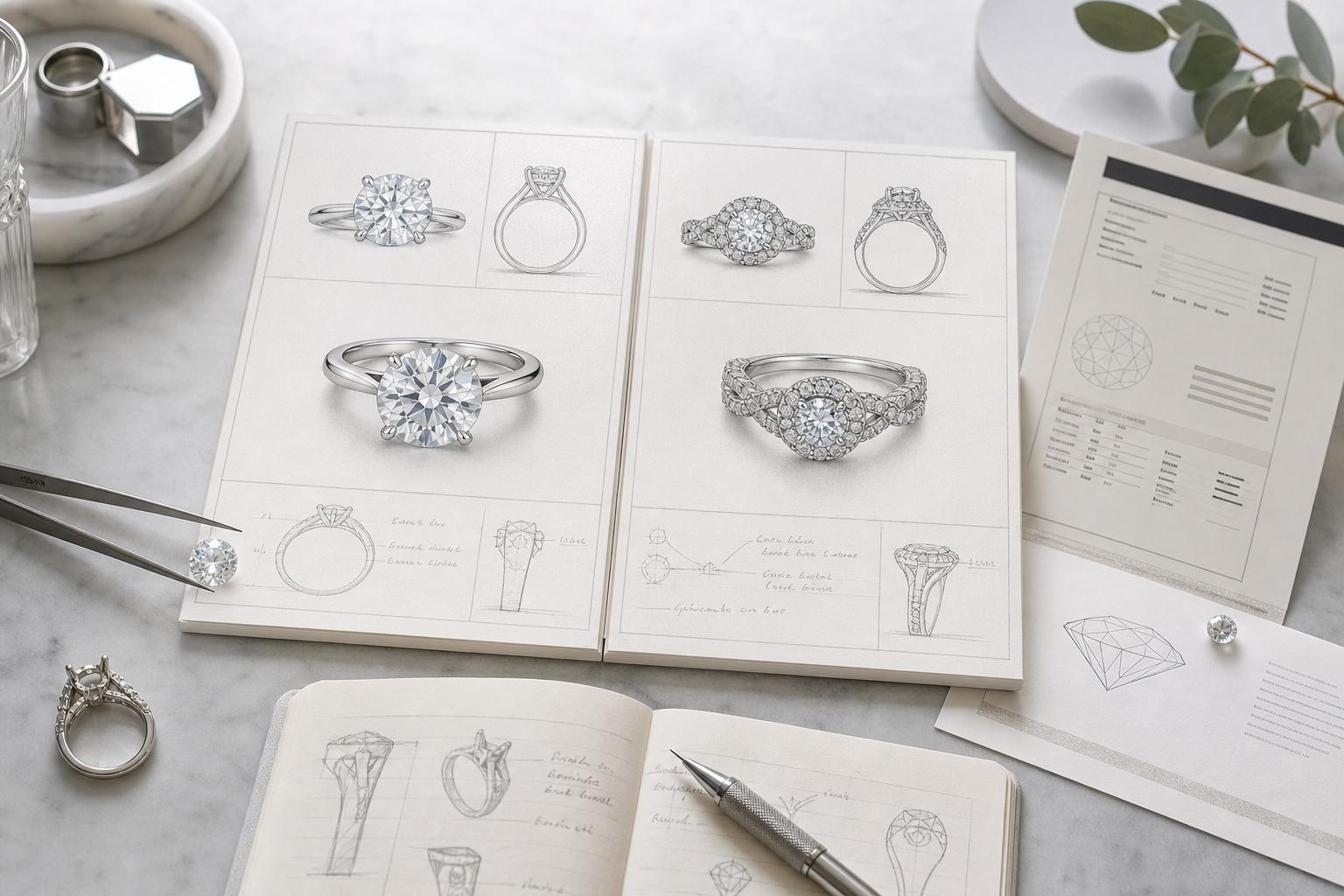
Size, Shape, and Layout: Where Lab-Grown Diamonds Offer More Room to Experiment
Lab-grown diamonds tend to be strongest in custom projects where the design depends on visual presence, specific proportions, or multiple stones working together. This is where the difference between diamond types becomes practical rather than theoretical. A buyer choosing a custom diamond ring is not only choosing a stone; they are choosing the scale, outline, balance, and personality of the finished piece.
For buyers who want a large lab-grown diamond ring, a custom oval diamond engagement ring, or a layout that uses side stones and accent diamonds, lab-grown options can make it easier to test ideas before narrowing the design. Natural diamonds can still be beautiful in these projects, but the design usually becomes more constrained as the desired size, shape specificity, and number of stones increase.
Larger Visual Presence Without Redesigning the Whole Budget
Lab-grown diamonds often allow buyers to consider a larger carat weight or greater face-up size while still preserving budget for the setting. This matters because size alone does not create a successful custom piece. A larger diamond needs a setting that supports it physically and visually. If the stone consumes too much of the budget, the final piece can feel underbuilt or poorly balanced.
The better use of lab-grown flexibility is to choose a size that improves the design without overwhelming the hand, pendant, or earring. For a custom engagement ring, that may mean selecting a center stone with enough presence to suit the wearer’s style while still leaving budget for a secure basket, comfortable band width, or accent details. More size is useful only when the setting can carry it well.
Fancy Shapes Become Easier to Explore
Fancy shapes are especially important in custom design because they influence the entire structure of the piece. An oval diamond can make a ring feel elongated and soft. An emerald cut creates a cleaner, more architectural look. A pear shape can feel directional and sculptural, while radiant, cushion, and marquise cuts each require different decisions about prongs, orientation, and surrounding space.
Lab-grown diamond shapes can be useful here because buyers often have a more specific visual target than “one carat” or “two carats.” They may want a slim oval rather than a wide oval, an elongated cushion rather than a square cushion, or an east-west emerald cut that fits low across the finger. Those proportion details affect the whole custom design. If the shape is central to the concept, a broader sourcing range gives the buyer a better chance of finding a stone that fits the idea rather than forcing the idea around the stone.
Multi-Stone Designs Benefit from Better Matching Options
Multi-stone jewelry raises the difficulty level because the stones have to work as a group. A three-stone ring needs side stones that support the center stone without competing with it. Diamond earrings need a matched pair that looks balanced when worn. Tennis bracelets, station necklaces, halo rings, and cluster designs depend on consistency across many stones, not just the quality of one diamond.
Lab-grown stones can make this matching process more practical because buyers may have access to several diamonds with similar measurements, color, clarity, and cut style. The key advantage is not simply having “more diamonds.” It is having more chances to find stones that look harmonious together. In repeated-stone designs, a small mismatch in diameter, outline, or color can be more noticeable than a minor difference in an individual grading detail.
Natural Diamonds Can Still Be Strong for Classic Simplicity
Natural diamonds can be an excellent fit when the design is simple enough that flexibility matters less. A traditional solitaire, a single-stone pendant, or a classic pair of studs may not require unusual sourcing, complex matching, or extensive layout experimentation. In those cases, the buyer may reasonably place more weight on natural origin and less on maximizing size or design options.
The decision changes when the design becomes more specific. A natural diamond may be easy to justify for a clean solitaire where one stone carries the meaning of the piece. It may become harder to justify if the buyer also wants a larger center, matched side stones, a detailed setting, and tight budget control. The more the design depends on coordination, the more practical flexibility matters.
Stone-to-Setting Fit Check
For custom rings, review the diamond’s millimeter measurements, not only the carat weight. Carat measures weight, not the exact way the diamond will appear from the top. Two 2.00 ct oval diamonds can look noticeably different if one is longer and slimmer while the other is shorter and wider. The same issue applies to pear, marquise, emerald, radiant, and cushion cuts.
The setting should be designed around the actual stone dimensions. A deeper stone may sit higher than expected. A wider stone may require different prong placement or band proportions. A very elongated stone may need extra attention to balance and durability. For custom jewelry, the best diamond is not just the one with strong grades; it is the one whose shape and measurements support the design you are trying to build.
Matched Diamonds for Earrings, Side Stones, and Jewelry Sets
Matched lab-grown diamonds can be especially useful in custom diamond jewelry because paired and repeated-stone designs expose small differences quickly. A diamond that looks beautiful by itself may look slightly off when placed next to another stone with a different spread, color tone, outline, or brightness pattern. This matters most in diamond earrings, three-stone rings, side-stone settings, tennis bracelets, and jewelry sets where the eye reads the stones together.
The practical risk is choosing stones by carat weight alone. Two diamonds can both weigh 1.00 carat and still look uneven because one has a wider face-up measurement, a deeper pavilion, a different length-to-width ratio, or a noticeably warmer color appearance. In custom work, matching is less about identical paperwork and more about whether the stones look balanced in the finished piece.
Why Matching Is Harder Than It Looks
A true matched pair needs more than the same carat weight. The stones should have similar millimeter dimensions, color grade, clarity appearance, cut style, and face-up personality. For round studs, diameter is often more important than tiny differences in total weight. For oval or pear-shaped earrings, outline and length-to-width ratio matter just as much as color and clarity because one slightly slimmer stone can make the pair look mismatched when worn.
Side stones create another challenge. In a three-stone ring, the center diamond usually gets the attention, but the side stones determine whether the ring feels intentional or awkward. If the side stones are too bright, too warm, too long, too deep, or too different in shape, they can compete with the center stone instead of framing it. For custom diamond side stones, the better approach is to match the visual role of the stones, not simply chase the highest individual grades.
Accent diamonds also need consistency, especially in halos, pavé bands, station necklaces, and bracelets. A small difference that seems harmless in one loose diamond can become obvious when repeated across a row. This is why color match, clarity match, diamond proportions, and cut style should be reviewed together before production begins.
Lab-Grown Diamonds Can Make Matching More Practical
Lab-grown diamonds can make matching more practical because available inventory often includes multiple stones within similar specifications. For matched lab-grown diamond earrings, this can mean finding two stones with closer measurements, similar face-up size, and compatible brightness without waiting for a rare natural pair to appear. For a lab-grown diamond jewelry set, it can also make it easier to keep the earrings, pendant, and accent stones visually related.
This advantage becomes more important as the design gets more complex. A pair of solitaire studs may only need two closely matched stones. A three-stone ring may need a center diamond plus two side stones that complement its proportions. A bracelet or necklace may require dozens of diamonds that stay within a narrow color and size range. Lab-grown sourcing does not remove the need for review, but it can reduce the number of compromises required to create a clean, balanced design.
The best use of lab-grown matching is not simply to buy more stones. It is to control the look of the finished piece. If the design depends on symmetry, repetition, or a clean left-right balance, matched lab-grown diamonds often give the jeweler more room to select for actual appearance rather than settling for stones that only match loosely on paper.
Natural Diamonds May Require More Compromise or Time
Natural diamond matching is absolutely possible, especially for classic studs, traditional side stones, or heirloom-style jewelry. The tradeoff is usually sourcing time, cost, or tolerance for slight differences. If the buyer wants natural diamonds in a very specific size, color, clarity, and proportion range, the search can narrow quickly.
This does not make natural diamonds a poor choice. It simply means the design may need to be more flexible. A buyer may accept a slightly smaller pair, a narrower color range, a simpler setting, or a longer sourcing window. For some custom jewelry projects, especially pieces built around natural origin or family tradition, that compromise may be worth it. For designs where symmetry and repeated stones are central to the look, the compromises can become more noticeable.
Buyer Verification Checklist
For matched pairs, ask to compare the stones side by side using measurements, color and clarity grades, table percentage, depth percentage, and face-up images or video. The paperwork should support the match, but it should not be the only basis for approval.
- Compare millimeter measurements, not only carat weight.
- Check whether the stones have a similar face-up size and outline.
- Review color appearance together, especially if the stones will sit side by side.
- Look for similar brightness, contrast, and cut style in images or video.
- For earrings, confirm the pair looks balanced when worn, not only when listed in a specification sheet.
The strongest matched pair is the one that looks even in the real jewelry context. A slight paper difference may be acceptable if the stones look balanced; a perfect carat match is not enough if the pair appears visually uneven.
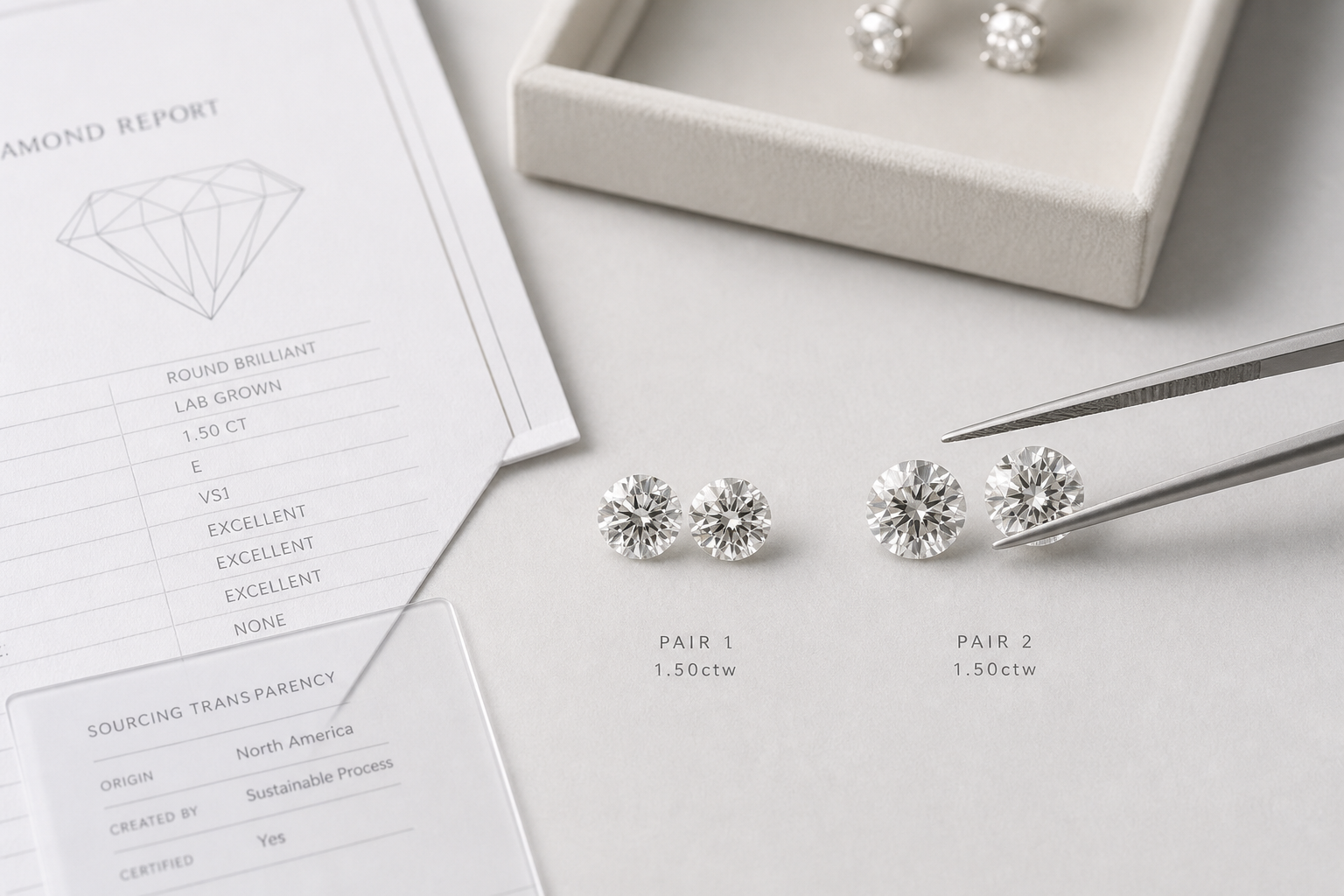
Recommended Diamond Parameters for Custom Jewelry Projects
Diamond parameters matter more in custom jewelry because the stone is not being dropped into a generic setting. The setting is usually built around the diamond’s actual measurements, proportions, and visual behavior. Whether the buyer chooses lab-grown or natural, the best diamond specs for a custom ring, pendant, earrings, or bracelet depend on how the stone will be used.
The mistake to avoid is treating grades as isolated achievements. A higher color grade, higher clarity grade, or larger carat weight does not automatically make a diamond better for a specific design. For custom jewelry diamonds, the right parameter is the one that protects the final look and fit of the piece.
Practical Specification Ranges to Discuss with a Jeweler
Use these ranges as practical discussion points, not rigid rules. The right choice can shift based on setting style, stone shape, metal color, and the wearer’s preference.
- Round center stone: Prioritize Excellent or Ideal cut when available from the grading lab. For round diamonds, cut quality usually affects beauty more than a minor color or clarity upgrade. A well-cut G or H color stone can often look better than a poorly cut higher-color stone.
- Oval diamonds: Common length-to-width preferences often fall around 1.30 to 1.50. A lower ratio looks fuller and softer, while a higher ratio looks more elongated. Very elongated ovals can be elegant, but they should be checked carefully for bow-tie effect and setting balance.
- Pear shapes: Many buyers prefer ratios around 1.45 to 1.75. Shorter pears can look rounded and vintage-inspired, while longer pears feel more dramatic. Symmetry matters because an uneven shoulder or off-center point becomes obvious in a custom pendant or ring.
- Marquise diamonds: Common ratios often sit around 1.75 to 2.25. Longer marquise cuts create more finger coverage, but extreme length can make the stone harder to protect unless the setting is designed carefully around the tips.
- Emerald cuts: Clarity visibility matters because step cuts have broad, open facets. Many buyers prefer VS clarity or better, but an eye-clean SI stone can still work if the inclusions are not distracting. The visual review matters more than the label alone.
- Radiant cuts: Review both brilliance and outline. A radiant can be square or elongated, and that choice changes the entire setting. For elongated radiant cuts, the length-to-width ratio should support the design rather than simply maximize size.
- Earrings: Pair balance is more important than exact carat match. Keep diameter or length and width close enough that the stones look even face-up. A small carat difference may be invisible if the measurements and visual spread match well.
- Custom ring settings: Confirm length, width, and depth before CAD or setting production. A diamond that is unusually deep may sit higher than expected, while a stone that is unusually wide may require changes to prong placement, halo spacing, or band proportions.
These parameters are especially useful when comparing lab-grown diamond proportions because buyers often have more options within a given size and shape range. More options are helpful only if they are filtered properly, especially in a lab grown vs natural diamonds budget comparison where proportions, size, and shape must be weighed together; without measurement review, it is easy to choose a stone that looks strong in the listing but creates avoidable design problems.
Why Measurements Matter More Than Carat Alone
Carat weight measures weight, not visual spread. Two diamonds with the same carat weight can face up differently if one carries more weight in depth and the other spreads more across the top. This is common in fancy shapes, where outline, length-to-width ratio, and depth can change the entire feel of the piece.
For a custom ring, this affects more than appearance. The diamond’s measurements influence prong placement, halo shape, stone height, band width, and how the ring sits on the finger. A 2.00 ct oval that is long and narrow may need a different setting than a 2.00 ct oval that is shorter and wider. Treating those two stones as interchangeable can lead to a setting that feels visually cramped, unbalanced, or too high on the hand.
For earrings and bracelets, measurements affect symmetry and comfort. A deeper diamond may add weight without adding much visible size. A pair with similar carat weights but different spreads can look uneven in studs or drops. In repeated-stone jewelry, small measurement inconsistencies can add up across the entire piece.
Color and Clarity Should Match the Design Context
Color and clarity should be chosen for the design, not for bragging rights. In a solitaire, the center stone is exposed, so body color and visible inclusions may be easier to notice. In a halo, the center stone should not look noticeably warmer or duller than the surrounding accent diamonds. In a bezel setting, the metal color can influence how the diamond’s color is perceived, especially in yellow or rose gold.
Clarity also depends on shape and placement. Emerald cuts and other step cuts tend to reveal inclusions more easily than brilliant cuts. A radiant or cushion may hide certain inclusions better because of its facet pattern, but transparency and brightness still need review. For many custom projects, an eye-clean diamond is a smarter target than paying for clarity grades that do not improve the visible result.
Lab-grown diamonds may allow buyers to select higher color or clarity grades without giving up as much size or setting detail. That can be useful, but higher grades are not always necessary. If the stone is already bright, eye-clean, and visually compatible with the design, the better use of budget may be craftsmanship, matching stones, or a more refined setting.
Certificate and Visual Review Check
Compare the grading report with actual images or 360-degree video before approving the diamond for custom work. The report can confirm carat weight, diamond measurements, color grade, clarity grade, and other graded details, but it does not fully show bow-tie effect, transparency, brightness pattern, or how the stone will look once set.
For custom design, the report should narrow the field; the visual review should make the final call. A diamond with strong parameters can still be the wrong choice if its outline does not suit the setting, its depth creates height issues, or its face-up appearance does not match the intended style.
Custom Rings, Earrings, Necklaces, and Bracelets: Which Diamond Type Fits Each Project?
The better diamond type changes by jewelry category. A custom diamond ring places different demands on the stone than a pair of earrings or a tennis bracelet. Lab-grown diamonds often become more useful as the design requires size, matching, or repeated stones. Natural diamonds may be more compelling when the design is simple and the emotional value of natural origin carries most of the meaning.
Custom Engagement Rings
For a custom engagement ring, lab-grown diamonds often work well when the buyer wants a larger center stone, a specific fancy shape, a hidden halo, a three-stone layout, or more detailed setting work. The practical advantage is budget control. Instead of spending most of the budget on natural origin, the buyer may have more room to refine the shape, increase the face-up size, improve the matching side stones, or invest in a more considered setting.
This matters most when the ring design depends on proportions. An elongated oval, emerald-cut east-west ring, radiant center with trapezoid side stones, or cushion with a hidden halo all require the stone and setting to work together. Lab-grown sourcing can make it easier to find a diamond that fits the design brief closely.
Natural diamonds may be the better fit when tradition or natural origin is central to the proposal story. If the buyer wants a classic solitaire and cares more about the diamond’s geological origin than maximizing size or design complexity, a smaller natural diamond in a clean setting can be the more meaningful choice.
Custom Earrings
Custom diamond earrings often favor lab-grown diamonds because matching pairs and visual size matter. For studs, the stones need to look even on the ear. For drops or statement earrings, the diamonds may need to match not only each other but also the movement, proportions, and overall design. Lab-grown options can make it easier to find pairs with similar measurements, color, clarity appearance, and face-up balance.
For buyers who want larger studs or more dramatic drops, lab-grown diamonds can also help preserve budget for the setting design. This is useful because earring construction affects comfort, security, and how the stones sit when worn. A larger diamond pair is less successful if the setting pulls forward, feels heavy, or fails to present the stones evenly.
Natural diamonds can still make sense for classic studs, especially if the buyer values natural origin more than size. The key is to avoid assuming that two natural diamonds with the same carat weight automatically make a good pair. For earrings, visual balance is the priority.
Custom Necklaces and Pendants
Custom necklaces and pendants depend heavily on scale. A single diamond pendant may need enough presence to stand on its own, while an initial necklace, birthstone combination, or station necklace may require multiple stones that feel consistent across the design. Lab-grown diamonds can support larger pendants and more flexible layouts without forcing the entire budget into one stone.
For a custom diamond pendant, shape is often more important than buyers expect. A pear, oval, emerald cut, or radiant cut changes how the pendant hangs and how much metal is needed around the stone. Lab-grown options can make it easier to select a shape and proportion that suits the necklace rather than settling for the first available stone in budget.
Natural diamonds may suit minimalist pendants where one carefully selected stone carries the meaning. If the necklace is intended as an heirloom-style piece and the buyer values natural origin, a smaller natural diamond can feel appropriate, especially in a simple bezel, prong, or solitaire pendant design.
Custom Bracelets and Multi-Stone Pieces
Lab-grown diamonds are especially practical for custom bracelets and multi-stone pieces because consistency becomes the main challenge. A lab-grown diamond tennis bracelet, line bracelet, or repeating motif may require many stones in a controlled size, color, and clarity range. In this category, one excellent diamond does not solve the design problem; the full set has to work together.
The larger the number of diamonds, the more important matching becomes. Slight color differences, uneven diameter, or inconsistent brightness can disrupt the rhythm of a bracelet. Lab-grown diamonds can make this type of project easier to assemble because the jeweler may have access to more stones with similar specifications.
Natural diamonds can work well in bracelets, but the buyer should be prepared for the cost and sourcing discipline required to maintain consistency. If the design calls for many matched stones, natural origin may reduce flexibility unless the buyer is willing to adjust size, total carat weight, or budget.
What to Check Before You Decide
For multi-stone jewelry, ask whether all stones will be matched by color range, clarity range, size tolerance, and cut style. For a custom bracelet or necklace, consistency across many stones is often more important than maximizing the grade of one individual diamond.
For rings and earrings, confirm that the stone proportions support the finished design, not just the loose diamond listing. For necklaces and bracelets, review how the stones will appear as a group. The right choice is the diamond type that supports the design’s weakest point: for some projects that is center-stone presence, for others it is matching, comfort, or consistency across the entire piece.
A Realistic Custom Jewelry Scenario: Two Buyers, Same Budget, Different Priorities
A custom jewelry budget does not make the same decision for every buyer. Two people can spend within the same general range and still make opposite choices because they are buying different kinds of meaning. One may want the strongest visual design possible. Another may care more about natural origin than size, matching, or setting detail.
This is where the lab-grown vs natural diamond ring decision becomes less abstract. The better choice is not the diamond category with the strongest marketing story. It is the one that supports the design priority without forcing the buyer to compromise on the part of the piece they care about most.
Buyer A: More Design Detail and a Larger Center Stone
Maya is designing a custom engagement ring with an oval center stone, a hidden halo, and small matched side stones. Her priority is the finished look: an elongated shape, balanced proportions, and enough detail in the setting to make the ring feel personal without looking overdesigned.
With a lab-grown diamond, Maya can often consider a larger oval while keeping more of the setting budget available for the hidden halo, side-stone matching, and finer metalwork. That matters because her design depends on more than one impressive center stone. If the side stones are poorly matched or the setting has to be simplified too much, the ring may lose the exact character she wanted.
Her tradeoff is clear: the diamond does not carry natural-origin rarity. For Maya, that may be acceptable because the emotional value sits in the custom design itself, the shape she chose, and the way the ring is built around her preferences. If she asks, “should I choose lab-grown or natural diamond for custom ring design detail?” the practical answer often points toward lab-grown, as long as the stone is well documented and visually reviewed.
Buyer B: Natural Origin as the Main Emotional Value
Daniel is also planning a custom engagement ring, but his priorities are different. He wants a simple solitaire with a clean setting, and the main emotional value is that the diamond formed naturally. He is less concerned with maximizing diamond size or adding hidden details because the story he wants the ring to carry is tied to natural origin.
With the same general custom jewelry budget, Daniel may choose a smaller natural diamond and a more restrained setting. That choice is not automatically less thoughtful. It simply places the value in a different place. The setting becomes a frame for the stone rather than a major design feature, and the natural diamond becomes the central expression of the piece.
The tradeoff is that he has less room for size, layout complexity, or matched stones within the same budget. If he later decides he wants a larger center stone, side accents, or a more elaborate setting, the natural diamond choice may start to constrain the project. Natural origin makes the most sense when that preference is strong enough to justify the design limits it may create.
The Takeaway: Better Depends on What the Jewelry Must Express
Custom jewelry is not only about getting the highest specifications on paper. A larger diamond, higher color grade, or more complex setting is only useful if it supports the purpose of the piece. A lab-grown diamond custom ring may be the smarter choice for one buyer because it leaves room for scale, matching, and design experimentation. A natural diamond custom engagement ring may be the better fit for another because the origin story is the point.
The mistake is trying to make the diamond type answer every question at once. Origin, diamond size, setting budget, and design complexity all compete for attention. If the buyer has not ranked those priorities before selecting the stone, the project can drift toward a compromise that satisfies none of them well.
Decision Framework for Similar Buyers
If the design goal is size, matched stones, layout complexity, or experimentation, lab-grown often fits better because it gives the buyer more room to shape the final piece. If the design goal is rarity, natural origin, or a traditional heirloom narrative, natural may fit better, even if that means choosing a smaller stone or simpler setting.
If both priorities matter, decide which one is non-negotiable before selecting the diamond. A buyer who says “I want a large oval with perfectly balanced side stones, but it must be natural” may need more budget, more sourcing time, or a simpler design. A buyer who says “I want the most flexible custom design within my budget” will usually have more options with lab-grown.
Certification, Visual Review, and Transparency for Both Diamond Types
Whether the diamond is lab-grown or natural, documentation should be treated as a starting point, not a substitute for judgment. A certified diamond for custom ring design still needs to be checked against the setting, the measurements, and the way it looks in real images or video. This is especially true when the design depends on a specific shape, proportion, or face-up size.
A lab-grown diamond certificate and a natural diamond grading report serve the same basic purpose: they help confirm what the stone is and provide a common language for comparison. They do not guarantee that the diamond is the right choice for a particular custom piece.
What a Grading Report Can Confirm
A diamond certification report can confirm key details such as lab-grown or natural origin, carat weight, diamond measurements, color grade, clarity grade, and, for many round diamonds, cut grade. Depending on the grading lab and report format, it may also include polish, symmetry, fluorescence, proportions, a plotted clarity diagram, and a report number that can be checked through the issuing lab’s verification tool when available.
For custom jewelry, the measurements often matter as much as the headline grades. Length, width, and depth affect how the stone sits in the setting, how much finger coverage it gives in a ring, and whether a jeweler needs to adjust prong placement, bezel walls, halo spacing, or side-stone proportions. A diamond that looks appealing by carat weight alone can still be awkward for the intended design if the physical dimensions do not fit.
What a Report Cannot Fully Show
A grading report cannot fully show face-up beauty. It does not tell you whether an oval has a distracting bow-tie effect, whether an emerald cut has the crisp pattern you prefer, or whether a pear shape looks elegant rather than bottom-heavy. It also cannot show how the diamond will look once it is placed in yellow gold, white gold, platinum, or a close-fitting halo.
This is where buyers often overtrust paperwork. A higher color or clarity grade may look reassuring, but it does not automatically make the diamond more attractive in the finished piece. For custom jewelry, a slightly lower grade with better proportions and a better visual fit can be the stronger choice than a higher-grade stone that creates design problems.
Why Visual Review Matters for Custom Jewelry
Custom design is built around a real stone, not an average version of that stone category. The outline, spread, depth, facet pattern, and visual balance all influence how the setting should be made. This is why photos, 360-degree video, and measurement review are especially important before CAD approval or production begins.
At NUVU, we usually treat the grading report as the first filter rather than the final decision. For custom work, the more important question is whether the stone’s actual proportions support the design the buyer wants. A certificate can narrow the options, but it cannot show every visual issue that may affect the finished jewelry.
How to Verify This Before Buying
Ask for the grading report number and confirm the report details through the issuing lab’s verification tool when that option is available. Check that the report identifies the diamond as lab-grown or natural, review the carat weight, color grade, clarity grade, measurements, and any laser inscription details if listed.
Then compare the report with actual images or 360-degree video. For elongated shapes, look for bow-tie visibility and outline balance. For step cuts, look for transparency and visible inclusions. For any custom ring, pendant, or earring design, confirm the stone’s length, width, and depth before approving CAD or final production. The risk is not only buying a poorly documented diamond; it is buying a well-documented diamond that is wrong for the design.
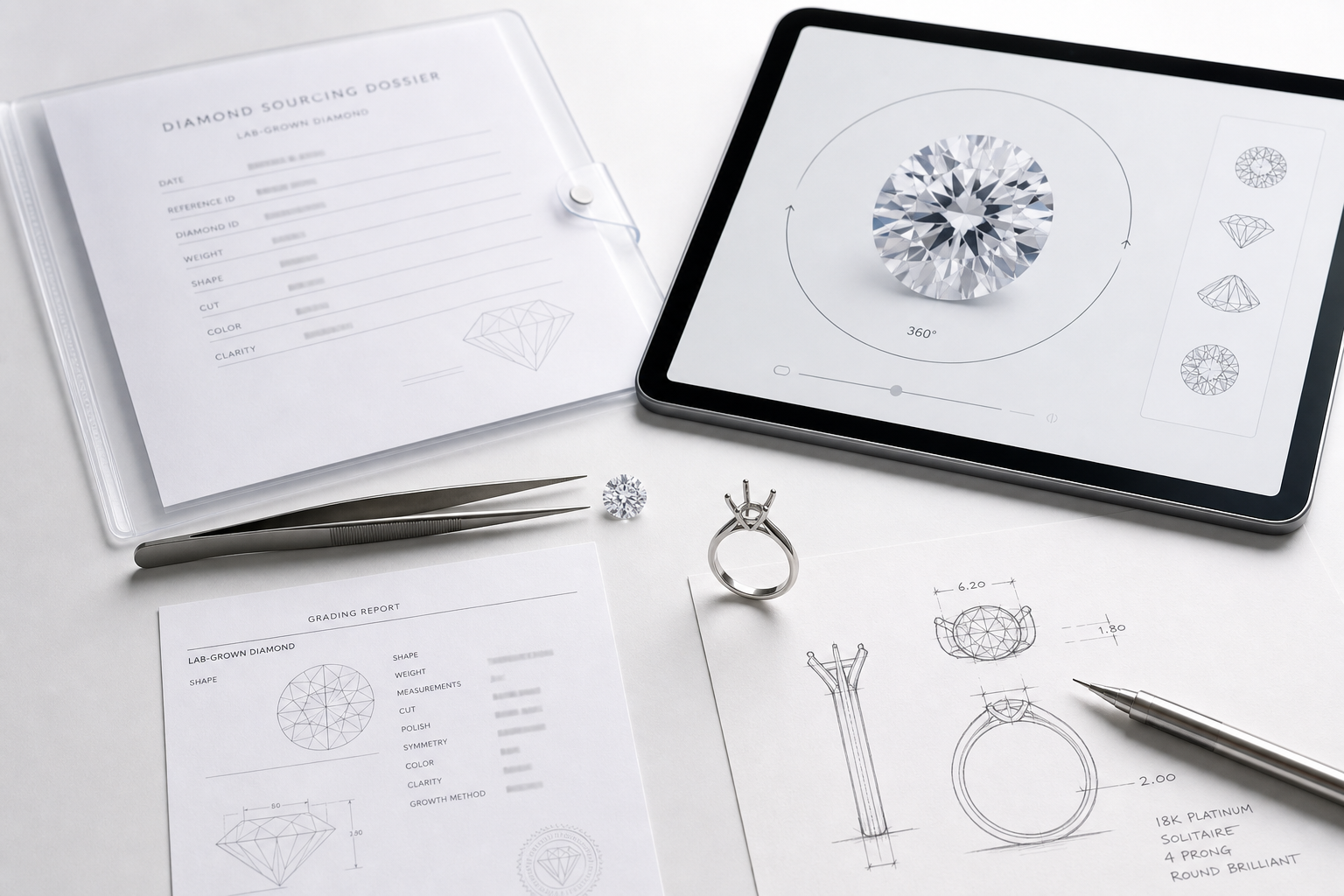
When a Lab-Grown Diamond Is the Better Custom Jewelry Choice
A lab-grown diamond is often the better custom jewelry choice when the project depends on flexibility. That does not mean lab-grown is automatically better for every buyer. It means that if the design requires size, specific proportions, matched stones, or room for creative detail, lab-grown diamonds can make those goals more practical within a controlled budget.
The strongest reason to choose lab-grown is not simply that it may cost less than a comparable natural diamond. The stronger reason is that the budget can be distributed across the whole piece instead of being concentrated almost entirely in natural origin. For custom lab-grown diamond jewelry, that can change the design from a scaled-back idea into something closer to the buyer’s original vision.
You Want More Size or Visual Impact
If the goal is a larger diamond or stronger face-up presence, a lab-grown diamond ring often gives buyers more room to work. This matters for custom engagement rings, statement pendants, and designs where the center stone defines the overall appearance. A larger stone can also change the proportions of the setting, making a simple design feel more intentional rather than underbuilt.
The practical warning is not to chase size alone. A larger diamond with poor proportions, visible strain, a strong bow-tie, or a shape that overwhelms the wearer’s hand can weaken the design. Lab-grown is a strong option when it allows a better balance of size, cut appearance, and setting quality, not when it is used only to buy the biggest stone available.
You Want a Specific Shape or Proportion
Custom design often starts with a precise visual idea: an elongated cushion, a slim oval, an emerald-cut east-west ring, a pear-shaped pendant, or a radiant cut with a particular length-to-width feel. Lab-grown sourcing may make those specifications easier to pursue because buyers can often compare more options within the same shape and size range.
This becomes important when proportion is central to the design. A short, wide oval and a long, slender oval can create completely different rings even if the carat weight is similar. If the buyer has a clear design target, lab-grown may reduce the need to settle for a stone that is “close enough” but not quite right.
You Need Multiple Diamonds to Match
Lab-grown diamonds are often practical for earrings, side stones, bracelets, and jewelry sets because matching matters more than many buyers expect. A matched pair should not only share a similar carat weight. The stones should look balanced in diameter or length and width, color appearance, clarity visibility, and cut style.
This is especially important in custom diamond jewelry with repeated stones. In a tennis bracelet, uneven color or inconsistent spread can make the piece feel less refined even if each diamond looks acceptable alone. In three-stone rings, poorly matched side stones can distract from the center stone. Lab-grown inventory can make it easier to build a coherent set rather than assembling stones that only match on paper.
You Want to Experiment Without Overcommitting the Budget
Some custom projects need room for exploration. A buyer may want to compare a hidden halo against a plain basket, add accent stones, test a wider band, or refine the shape of a pendant before committing. Lab-grown diamonds may allow more of the budget to stay available for these design decisions instead of locking most of it into the center stone from the start.
This is where lab-grown diamond design ideas can become more practical. The buyer is not just choosing a diamond; they are building a piece. If the entire budget is consumed by the stone, the custom process becomes less flexible and the setting may have to absorb every compromise.
Buyer Verification Checklist
Before choosing lab-grown, confirm that the diamond is clearly disclosed as lab-grown and supported by appropriate documentation. Review the report number, measurements, color grade, clarity grade, and cut or proportion details where available. Then compare the documentation against images or video, especially for fancy shapes.
Do not compare a well-cut, well-documented natural diamond against the cheapest available lab-grown stone and assume the conclusion is meaningful. Instead, use a lab grown vs natural diamonds guide to compare similar-quality stones, confirm the diamond fits the intended setting measurements, and make sure the savings or flexibility are being used to improve the final jewelry design rather than simply reducing the decision to price.
When a Natural Diamond May Be the Better Custom Jewelry Choice
A natural diamond can be the better choice for custom jewelry when the origin of the stone is part of the meaning of the piece. In a lab-grown vs natural diamonds decision, this is the point that cannot be measured by carat weight, color grade, or millimeter size. Some buyers want a diamond that formed in the earth over geological time, and that preference is legitimate.
The practical tradeoff is that natural origin usually competes with other design goals. If the budget is fixed, choosing a natural diamond may mean accepting a smaller center stone, a simpler setting, fewer accent diamonds, or more time spent sourcing the right shape. That does not make the decision wrong. It only means the buyer should be clear that natural origin is the priority, not maximum size or design flexibility.
You Care Most About Natural Origin
If the question is “should I choose natural diamond for engagement ring design?” the answer depends on what the diamond needs to represent. For some buyers, a natural diamond ring feels more connected to tradition because the stone’s formation story is part of its emotional value. That value is not visual in the same way sparkle or size is visual, but it can still matter deeply.
This is where natural diamond custom jewelry makes the most sense: when the buyer would rather own a smaller natural diamond than a larger lab-grown diamond with similar visible beauty. If that statement feels true, natural origin is probably not a minor preference. If it feels uncertain, it may be worth comparing real stones side by side before committing to the higher natural-origin cost.
You Want a Traditional Heirloom Feel
Natural diamonds often fit buyers who want a conventional heirloom story, especially for pieces meant to be passed down. A custom ring with natural diamond may feel more aligned with family tradition, classic engagement expectations, or the idea of rarity as part of diamond value.
This matters most in simple designs where the stone carries most of the emotional weight. A solitaire engagement ring, a natural diamond custom pendant, or a pair of classic studs does not depend on unusual layouts or complicated matching in the same way a three-stone ring, tennis bracelet, or cluster design might. In those simpler pieces, choosing natural may feel more coherent because the design is not asking the diamond to solve multiple technical problems at once.
Your Design Is Simple Enough That Flexibility Matters Less
Natural diamonds become easier to justify when the custom design does not require many stones, unusual proportions, or repeated matching. A single round solitaire, a bezel-set pendant, or classic stud earrings may not need the same sourcing flexibility that lab-grown diamonds often provide. If the design is clean and restrained, the origin preference can take the lead.
The mistake is choosing natural first and then trying to force an ambitious design around the remaining budget. If the buyer wants a large oval, matched side stones, a detailed hidden halo, and a specific setting style, natural origin may narrow the design path quickly. If the buyer wants one meaningful stone in a timeless setting, natural can be a strong fit.
What to Confirm Before Choosing Natural
Before choosing a natural diamond, ask for grading documentation, review the stone visually, and confirm the exact measurements for the intended setting. Do not rely on carat weight alone. A diamond can look strong on paper and still be too deep, too wide, or visually mismatched for the design.
The most important question is whether natural origin is worth the tradeoff in size, design detail, or matching options within the same budget. If the answer is yes, a natural diamond may be the right custom jewelry choice. If the answer is no, lab-grown may give the design more room to become what the buyer originally imagined.
Final Decision Framework: Which Diamond Type Is Better for Your Custom Piece?
The best diamond for custom jewelry is not the category that sounds better in theory. It is the stone that fits the design goals, budget, diamond shape, setting requirements, and emotional purpose of the piece. Lab-grown vs natural diamonds becomes much clearer when the decision starts with the custom design rather than with a general debate about which type is “better.”
Choose Lab-Grown If Your Priority Is Design Freedom
Lab-grown diamonds often make the most sense when the custom piece depends on visual impact, specific proportions, or matching. They are especially useful for larger center stones, elongated fancy shapes, matched pairs, three-stone rings, tennis bracelets, station necklaces, and designs that need several diamonds to work together visually.
This choice is strongest when the buyer wants to preserve budget for the full piece, not just the main stone. If the setting, side stones, metalwork, and design details matter as much as the center diamond, lab-grown can make the overall custom diamond jewelry project easier to balance.
Choose Natural If Your Priority Is Origin and Rarity
Natural diamonds may be the better fit when the emotional value of natural formation matters more than maximizing size, layout complexity, or matching options. This is most common in traditional engagement rings, heirloom-inspired pieces, and minimalist designs where one carefully chosen stone carries the meaning of the jewelry.
The key is honesty about the tradeoff. If choosing natural means reducing the center stone size or simplifying the setting, that should feel acceptable before production begins. If it feels like a compromise the buyer will keep questioning, the design may be asking for more flexibility than the natural diamond budget can comfortably support.
Choose the Stone Before Finalizing the Setting
For custom jewelry, the diamond’s actual dimensions should guide the setting. This is especially important for fancy shapes and larger stones, where length, width, depth, corner shape, and outline can change how the piece needs to be built.
A 2.00 ct oval, emerald cut, pear, or radiant diamond is not a fixed design object. Two diamonds with the same carat weight can sit differently on the finger, require different prong placement, or create a different visual balance in a pendant or ring. Finalizing the setting before confirming the stone can lead to avoidable redesigns or a piece that looks slightly off once assembled.
Next Step: Compare Real Stones, Not Just Categories
The final decision should come from comparing actual lab-grown and natural diamond options, not assumptions about each category. Review grading reports, measurements, images, and video when available. Look at how each stone fits the intended custom setting, not only how it ranks on paper.
For custom design, NUVU usually encourages buyers to compare the stone and setting together. A diamond can be attractive on its own and still be the wrong fit for a specific ring, pendant, earring pair, or bracelet layout. The better choice is the one that supports the final piece without forcing the design into avoidable compromises.
Custom Design Readiness Checklist
Before starting a custom project, clarify the jewelry type, preferred diamond origin, target shape, approximate size range, budget range, and whether matching stones are needed. Also confirm whether the design requires CAD work, stone-specific setting adjustments, or approval of proportions before production.
If the goal is to design custom jewelry with lab-grown diamond options, start by comparing shapes, measurements, and certification details. If the goal is a natural diamond piece, decide early how much size or design detail can be traded for natural origin. Either path can work well when the stone is chosen for the design, not just for the label.
FAQ
Are lab-grown diamonds good for custom engagement rings?
Yes. Lab-grown diamonds are often a strong choice for a custom engagement ring, especially when the buyer wants more flexibility in diamond size, shape, matched side stones, or setting detail. They can make it easier to build the ring around the desired look instead of reducing the design to fit a tighter natural diamond budget.
Can you use lab-grown diamonds for earrings and necklaces?
Yes. Lab-grown diamonds can be used in fine jewelry, including earrings, necklaces, pendants, bracelets, and custom jewelry sets. They are especially practical for matched pairs, larger pendants, and multi-stone layouts where visual consistency matters.
Do lab-grown and natural diamonds look different?
Comparable lab-grown and natural diamonds can look very similar to the unaided eye when cut, color, clarity, and proportions are similar. The main difference is origin, not basic appearance. Visual review still matters because two diamonds with similar grades can perform differently in brightness, shape appeal, or face-up balance.
Is a natural diamond better for heirloom jewelry?
A natural diamond may be better for buyers who define heirloom value through natural origin, rarity, and tradition. Lab-grown diamonds can also be used in meaningful heirloom-style jewelry, but the emotional basis is different. The better choice depends on what the piece is meant to represent.
Should I choose the diamond or the setting first?
For custom jewelry, choose or at least shortlist the diamond before finalizing the setting. The stone’s measurements, shape, depth, and proportions affect the setting design, especially for fancy shapes, larger diamonds, and pieces with matching stones.
Continue Your Custom Jewelry Research
A strong custom jewelry decision usually does not come from comparing diamond origin alone. Once you know whether lab-grown or natural better fits your priorities, the next step is to narrow the actual stone, shape, setting, and documentation requirements.
If the difference between lab-grown and natural origin still feels unclear, start with a plain-English explanation of what lab-grown diamonds are. That foundation helps separate visual quality from origin, which matters because a well-cut lab-grown diamond and a well-cut natural diamond can both be suitable for fine jewelry.
If you are ready to compare stones, focus on how to choose a loose diamond for a custom ring or jewelry piece. This is where measurements, shape, cut quality, color, clarity, and certification become more useful than broad category labels. A diamond that looks attractive on its own still needs to fit the intended design.
For buyers choosing between oval, emerald, cushion, pear, round, radiant, or marquise cuts, a diamond shape guide can help clarify how each outline changes the final look. Shape is not only a style preference. It affects finger coverage, setting proportions, side-stone matching, pendant balance, and how much visual size the diamond appears to have.
When documentation becomes the sticking point, a guide to reading a diamond grading report is the better next step. The report helps verify origin, measurements, carat weight, color, clarity, and cut information where applicable, but it should be reviewed alongside images or video before approving a custom design.
If the design direction is already clear, move toward the custom jewelry process itself. Starting with the jewelry type, preferred diamond shape, approximate size range, and budget gives the design conversation structure. For engagement rings, it can also help to compare settings such as solitaire, halo, three-stone, bezel, hidden halo, or east-west designs before choosing the final stone.
Where to Go Next
The best next step depends on the question you still need answered. If you are unsure about diamond origin, begin with education. If you know the origin but not the stone, compare loose diamonds. If you know the stone shape but not the setting, review setting styles before finalizing the design.
A common mistake is jumping straight from “I want a custom ring” to a finished setting concept before confirming the diamond’s measurements. For custom jewelry, the actual stone should guide the design. This is especially true for fancy shapes, larger center stones, matched pairs, and multi-stone layouts.
What Not to Overfocus On
Do not treat every mention of lab-grown diamonds or custom jewelry as a reason to keep researching. Too much comparison can make the decision feel more complicated than it needs to be. Once the diamond origin, shape, budget range, and setting direction are clear, the more useful question is whether a specific stone fits the design.
The most valuable research happens at decision points: choosing the diamond type, comparing loose stones, checking proportions, reading the grading report, and approving the setting design. General information matters early, but custom jewelry eventually requires stone-specific judgment.
Navigation Tip for Buyers
The strongest next step usually appears when you ask one of two questions: “How do I choose the actual diamond?” or “How do I start the custom design?” If you can answer both, you are ready to compare real stones and build the piece around the one that fits best.
Next Step: Build the Design Around the Right Diamond
A helpful next step should make the custom process clearer, not pressure you into a decision. For most buyers, that means comparing loose diamonds by shape, size, certification, measurements, and visual appearance before committing to a setting.
If you are leaning toward a lab-grown diamond, use the flexibility carefully. A larger stone can be appealing, but it still needs the right proportions, depth, and setting fit. The better choice is not automatically the biggest diamond within budget. It is the stone that gives the design the right balance of scale, wearability, and visual performance.
If you are designing a custom engagement ring, pendant, bracelet, or pair of earrings, start with the practical details: jewelry type, preferred shape, approximate size, metal color, daily-wear expectations, and whether matching stones are needed. Those details help determine whether the design should prioritize center-stone presence, symmetry, durability, or repeated-stone consistency.
NUVU’s custom jewelry approach is most useful when the buyer has a direction but still needs help matching the diamond to the piece. For example, a slim oval may suit one ring design better than a wider oval of the same carat weight, while a pair of earrings may benefit more from balanced millimeter dimensions than from identical carat numbers.
Compare the Stone and Design Before Approval
To reduce mistakes in custom jewelry, compare real diamond options, review the grading report, match the stone to the setting, design around actual measurements, and confirm the final details before production.
Avoid pressure-based decision-making. Claims such as “perfect forever” or “best value” do not help you judge whether a diamond fits a custom design. A better standard is whether the stone supports the look, proportions, budget, and meaning of the piece.
When NUVU Can Help
NUVU is a useful next step when you want to explore loose lab-grown diamonds, compare shapes, or prepare a custom jewelry design around a specific stone. The goal is not to make every buyer choose the same option. It is to help clarify whether lab-grown flexibility supports the design you actually want.
For buyers still comparing lab-grown and natural diamonds, the most productive conversation starts with priorities. If size, matching, shape, and design experimentation matter most, lab-grown options often deserve close consideration. If natural origin is the emotional center of the piece, that preference should be addressed before the design is finalized.
Quality Check Before Moving Forward
Before approving a diamond for custom jewelry, confirm the origin disclosure, grading report, actual measurements, images or video, and setting compatibility. Do not rely on price, carat weight, or a certificate alone. A custom piece succeeds when the diamond and design work together physically and visually.
What This Guide Should Help You Decide
This guide is meant to answer one specific question: whether lab-grown or natural diamonds are the better fit for a custom jewelry project. The answer depends less on which category is “better” in general and more on what the finished piece needs to achieve.
Lab-grown diamonds often make more sense when the design depends on flexibility. Larger center stones, specific fancy shapes, matched pairs, side stones, tennis bracelets, station necklaces, and experimental layouts all benefit from having more options to compare. In these projects, the main risk is choosing a diamond based only on size and missing proportion, depth, or setting fit.
Natural diamonds may make more sense when the emotional value of natural origin matters more than maximizing scale or design complexity. This is especially true for simple solitaires, classic studs, and heirloom-style pendants where the story of the stone carries much of the meaning. The tradeoff is that the same budget may require a smaller stone, simpler setting, or more patience during sourcing.
Reader Value Check
By the end of the comparison, the decision should be clearer: choose lab-grown when the custom piece needs more design freedom, better matching options, larger visual presence, or room for experimentation. Choose natural when geological origin, rarity, and tradition are the non-negotiable parts of the piece.
The practical checkpoint is the same for both diamond types. Before approving the stone, review its measurements, documentation, visual appearance, and compatibility with the intended setting. A diamond can be beautiful and still be the wrong fit for a specific custom design.
Weigh Design Flexibility Against Origin Preference
The strongest case for lab-grown diamonds in custom jewelry is not simply that they cost less than natural diamonds in many buying situations. The stronger point is that they can change what is possible within a design brief. That flexibility shows up through size, shape, matched stones, and multi-stone layouts rather than through a single abstract advantage.
For natural diamonds, the strongest case is not visual superiority. It is origin preference. If that origin story matters deeply to the buyer, a smaller or simpler custom piece may still feel more meaningful than a larger lab-grown alternative.
Avoid Absolute Claims
Neither diamond type should be treated as universally better. Lab-grown diamonds are not automatically the right choice for every meaningful custom piece, and natural diamonds are not automatically more beautiful or more appropriate for fine jewelry. The better choice is the one that fits the design goal, budget, documentation expectations, and emotional purpose of the piece.
Be cautious with absolute claims about value, ethics, beauty, resale, or sustainability. Those topics require careful context and should not be used as shortcuts. For custom jewelry, the more reliable comparison is practical: what each diamond type allows you to design, what it may limit, and what tradeoff you are accepting.
Your Final Custom Jewelry Decision
A good custom jewelry decision should move from uncertainty to a clear direction: choose lab-grown for flexibility and experimentation, choose natural for origin and rarity, and choose the actual stone based on measurements, documentation, visual review, and design fit.