 Loose lab-grown diamonds10 shapes · IGI, GIA or NGTC reports
Lab-Grown Diamond 4Cs Guide
Cut, color, clarity and carat, explained for lab-grown diamonds: what each grade changes on the hand, and where paying more stops making a visible difference.
The Short Version
Cut decides sparkle.
Pay for an excellent cut before anything else.
Color depends on the metal.
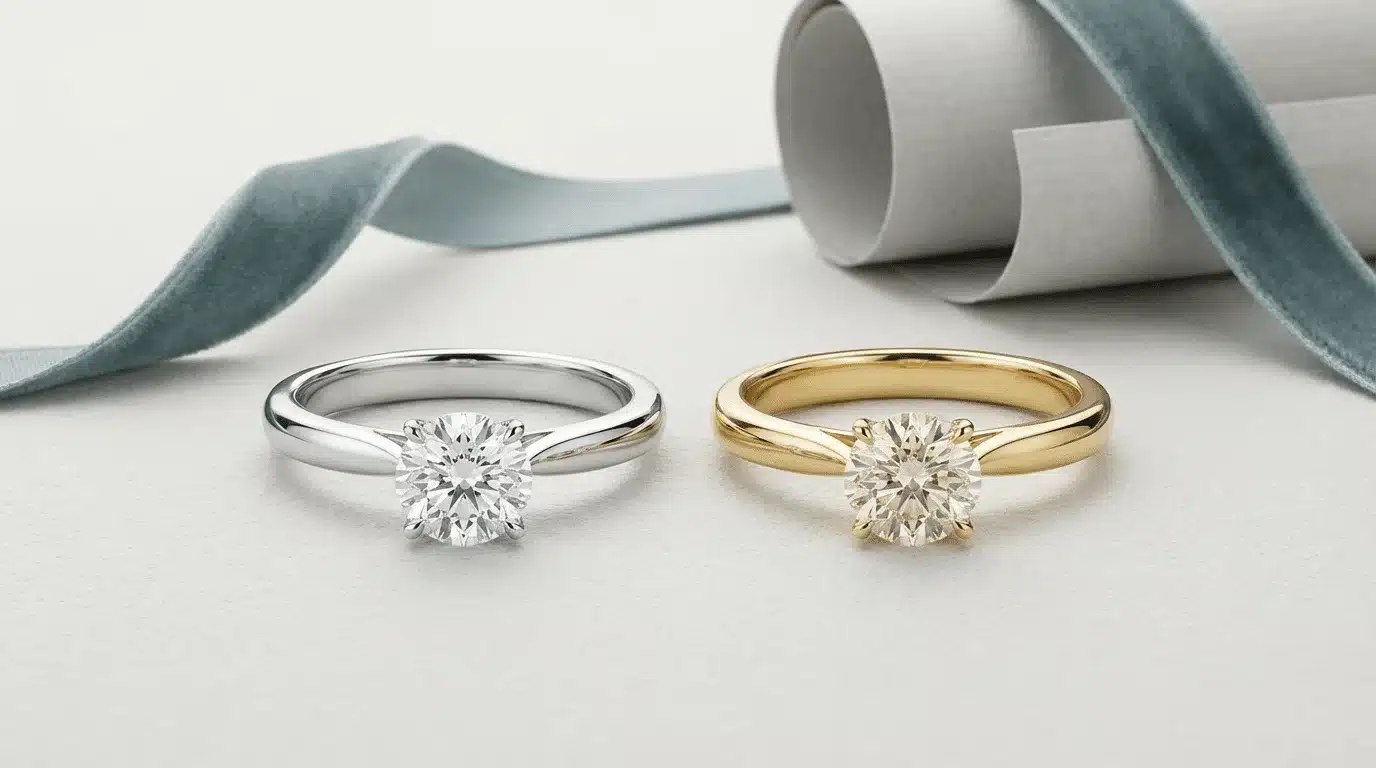
In platinum or white gold, G–H usually looks colorless; in yellow or rose gold, I–J is often fine.
Clarity counts only when you can see it.
Most VS and many SI stones are eye-clean in brilliant shapes. Emerald and Asscher need a cleaner stone.
Carat is weight, not size.
Check the millimeter measurements; shape and cut change how big a stone looks.
How the 4Cs Work Together
The 4Cs are four separate grades, but you see one diamond. A bright, well-cut G VS2 often looks better than a dull D VVS1, and it costs less. Lab-grown diamonds make this easier: because prices are lower, you can usually afford an excellent cut and still choose a good size.
| If you want | Put money into | Save money on |
|---|---|---|
| Maximum sparkle | Cut (Excellent / Ideal) | Clarity above eye-clean, color above G |
| A bigger look | Carat and a spread-friendly shape (oval, pear, marquise) | Clarity above eye-clean |
| Best overall value | Excellent cut, G–H color, VS2–SI1 eye-clean | D–E color, VVS clarity |
Cut: The Grade That Controls Sparkle
Cut is how well the stone’s facets are proportioned and finished. It controls brightness, fire and contrast. A poorly cut diamond looks dark or glassy no matter how good its color and clarity are.
- Round brilliants receive an overall cut grade from GIA (Excellent to Poor), based on brightness, fire, scintillation, weight ratio, durability, polish and symmetry. Choose Excellent (IGI: Ideal or Excellent).
- Fancy shapes are judged on polish, symmetry, proportions and how the stone looks: check depth and table percentages, length-to-width ratio and, in elongated shapes, the bow-tie.
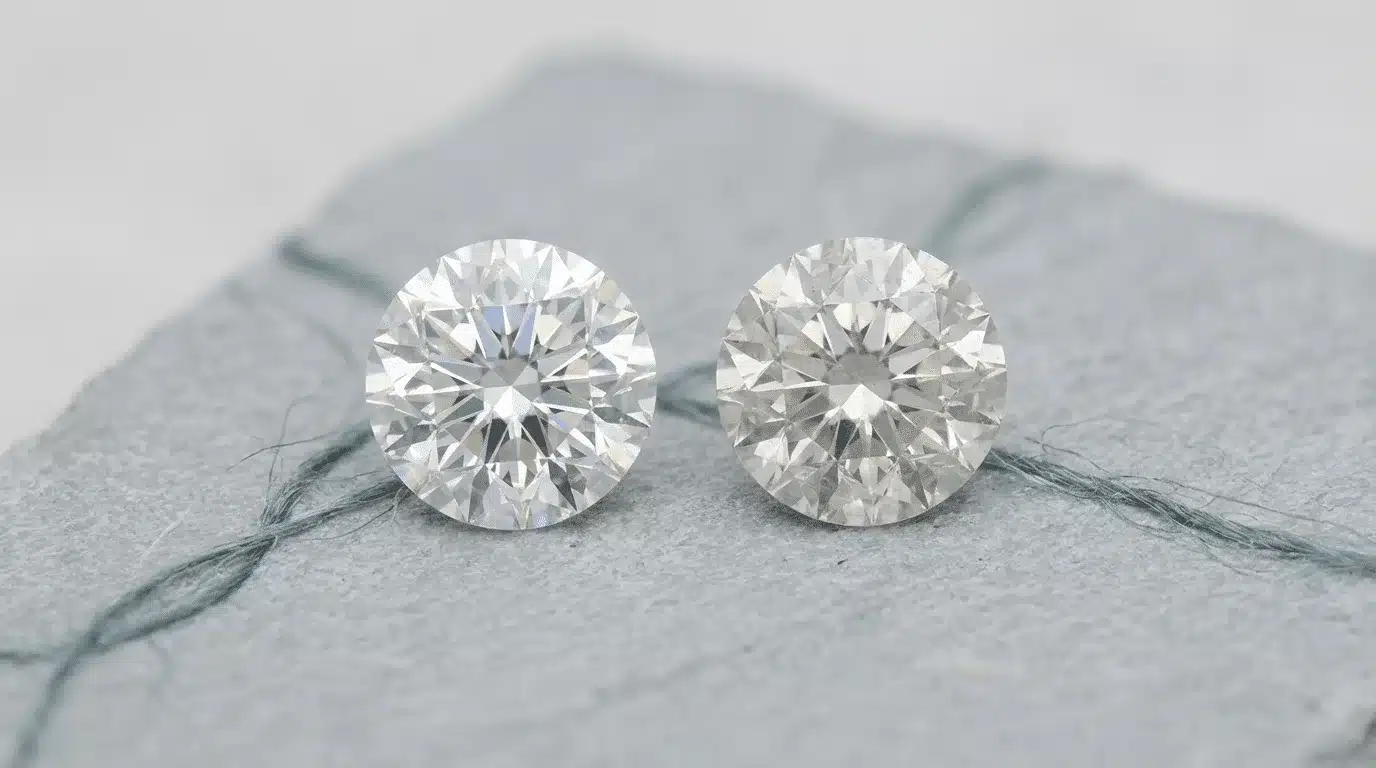
Well proportioned
Light enters through the top, reflects off the lower facets and comes back out through the top: the stone looks bright and lively.
Too shallow
The lower facets are too flat, so light passes straight through and leaks out the bottom: the stone can look glassy or watery.
Too deep
The lower facets are too steep, so light bounces to the side and escapes: the stone can look dark in the center.
Color: How White the Diamond Looks
Color grades run from D (colorless) down the alphabet as a faint yellow or brown tint increases. What you see depends on four things:
- Metal. White gold and platinum show tint more. GIA notes that in platinum, H and above look colorless; in yellow or rose gold, even J and K tints are hard to spot.
- Shape. Step cuts and elongated shapes show color at the ends more than round brilliants.
- Size. Larger stones show more body color.
- Lighting. Daylight and jewelry-store lighting can make the same stone look different.
Note on GIA reports. Since October 2025, GIA no longer gives individual D–Z color and clarity grades to colorless lab-grown diamonds. Its reports show a quality assessment instead: Premium (D color, VVS or better) or Standard (E–J color, VS or better). IGI reports still list full color and clarity grades.
Clarity: Eye-Clean Is the Goal
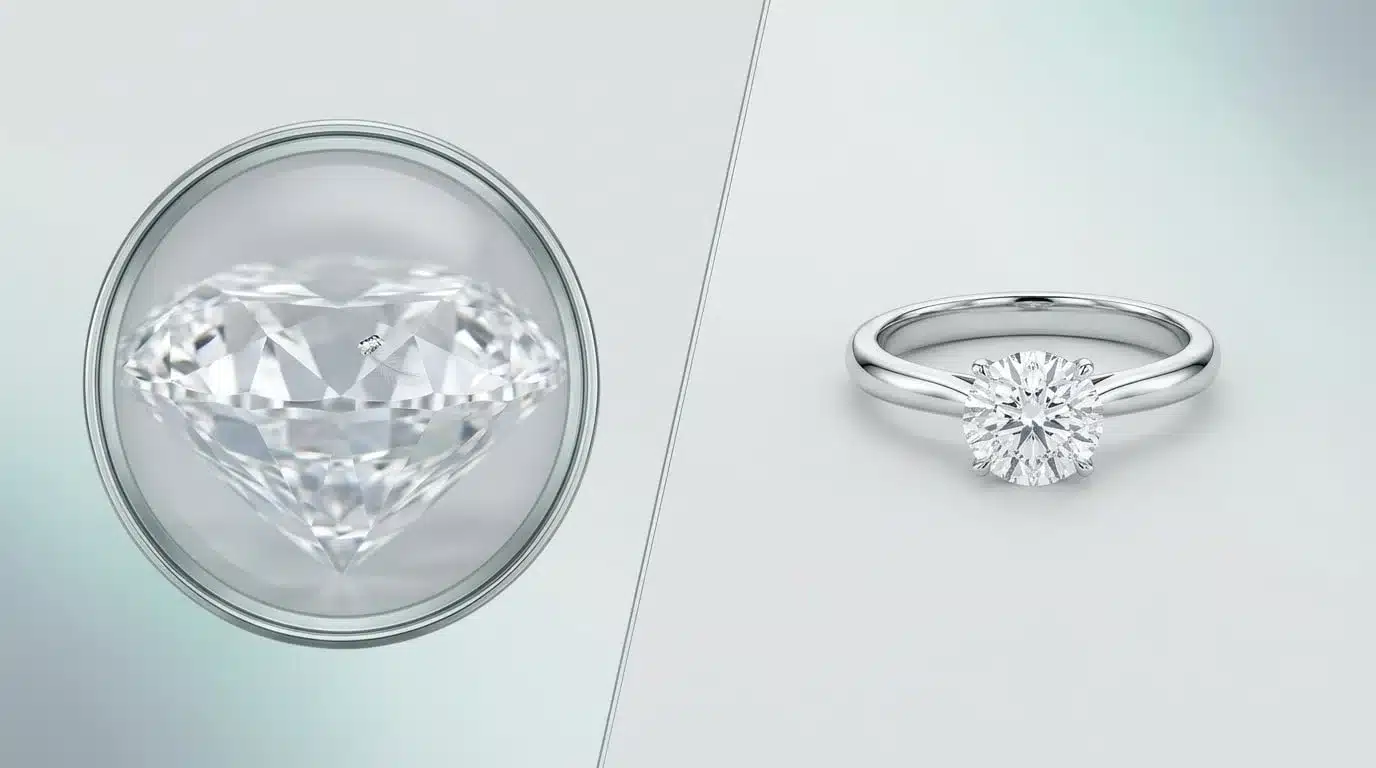
Clarity grades describe inclusions seen under 10× magnification. Once a stone looks clean to the eye at normal viewing distance, a higher grade adds cost but no visible difference.
- Brilliant shapes (round, oval, cushion, radiant, pear): VS2 and many SI1 stones are eye-clean, but check each stone’s photo or video.
- Step cuts (emerald, Asscher): their open facets show inclusions more, so aim for VS1 or better.
- Lab-grown inclusions differ from mined ones: HPHT stones can carry small metallic flux inclusions, CVD stones dark graphite-like specks. Where an inclusion sits counts for more than its type.
Carat: Weight, Not Face-Up Size
Carat is weight (1 ct = 0.2 g). Face-up size grows more slowly than weight: a 2 ct round is only about 26% wider than a 1 ct round, not twice as wide.
- Check millimeters. A 1 ct round brilliant measures roughly 6.4–6.5 mm across when well cut.
- Watch the thresholds. Prices jump at 0.50, 0.75 and 1.00 ct. A 0.95 ct stone looks the same as a 1.00 ct and costs less.
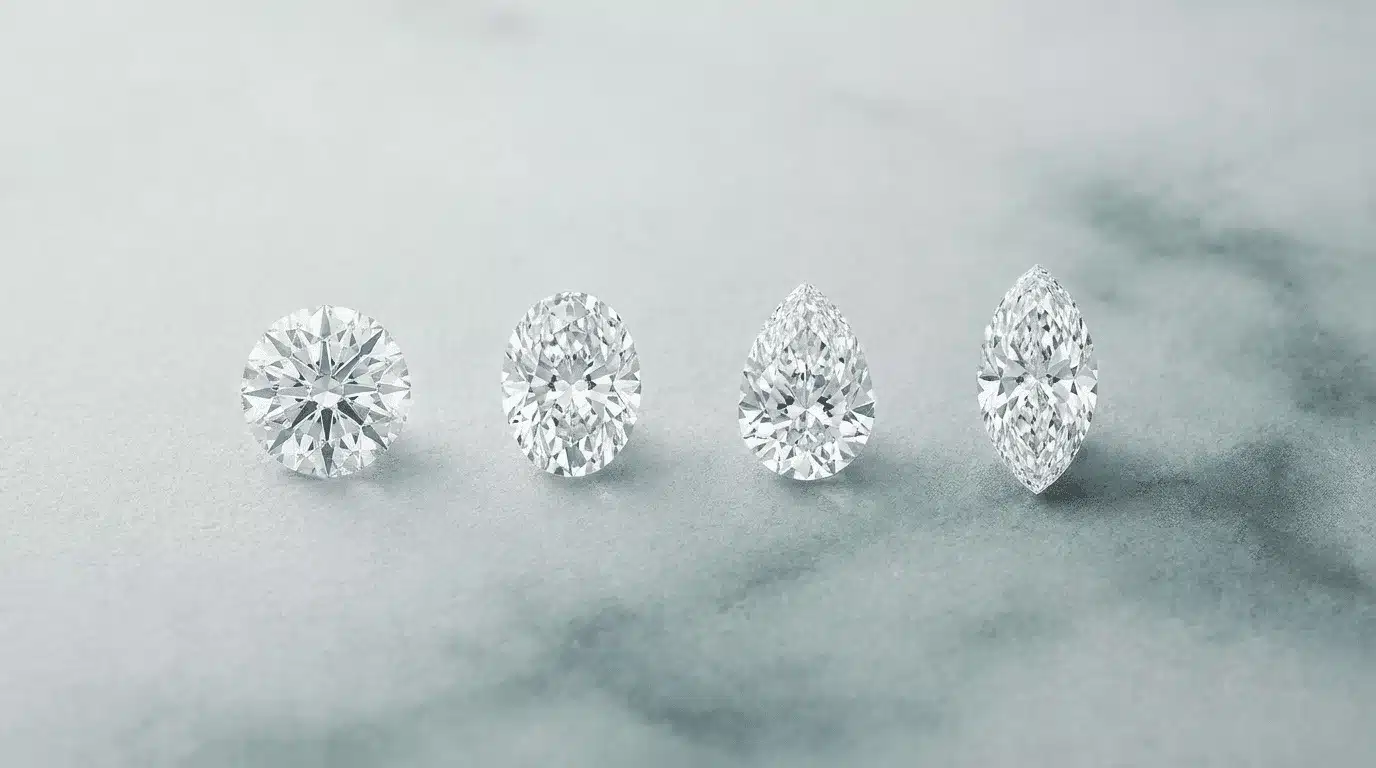
- Shape changes spread. Ovals, pears and marquise shapes look larger per carat than rounds; cushions and Asschers look smaller.
About 6.5 mm across
The reference size: a well-cut 1 ct round is roughly 6.4–6.5 mm.
Approximate sizes for a well-cut round brilliant. A deep cut can make the same weight face up smaller. See what 2 and 3 carat lab-grown diamonds cost.
Quick Picks by Shape and Metal
| Shape | White gold / platinum | Yellow / rose gold | Clarity target |
|---|---|---|---|
| Round | F–H | H–J | VS2–SI1 eye-clean |
| Oval, pear, marquise | E–G | G–I | VS2 eye-clean |
| Cushion, radiant | F–H | H–J | VS2 eye-clean |
| Emerald, Asscher | E–G | G–H | VS1 or better |
These are starting points. Always check the stone itself: photos, video and measurements.
Choose Your Priority
Go Deeper
4Cs Questions
Which of the 4Cs matters most?
What is the best color and clarity for a lab-grown diamond?
Are the 4Cs graded the same way for lab-grown diamonds?
Does a bigger carat always look better?
Put the 4Cs to Work
Filter stones by the grades that matter for your shape and metal, or tell us your budget and we suggest the best balance.
Sources: GIA: Diamond cut grade, six things to know · GIA: Best ways to save money on a diamond · GIA lab-grown diamond services update