- Shop
Diamonds & Jewelry
Loose Lab Diamonds Yellow Lab Diamonds Pink Lab Diamonds Blue Lab Diamonds Engagement Rings Fine Jewelry Shop All Loose lab-grown diamonds10 shapes · IGI, GIA or NGTC reports
- Wholesale
- Custom Design
- Education
- About
How to Choose Side Stones for a Three-Stone Lab-Grown Diamond Ring
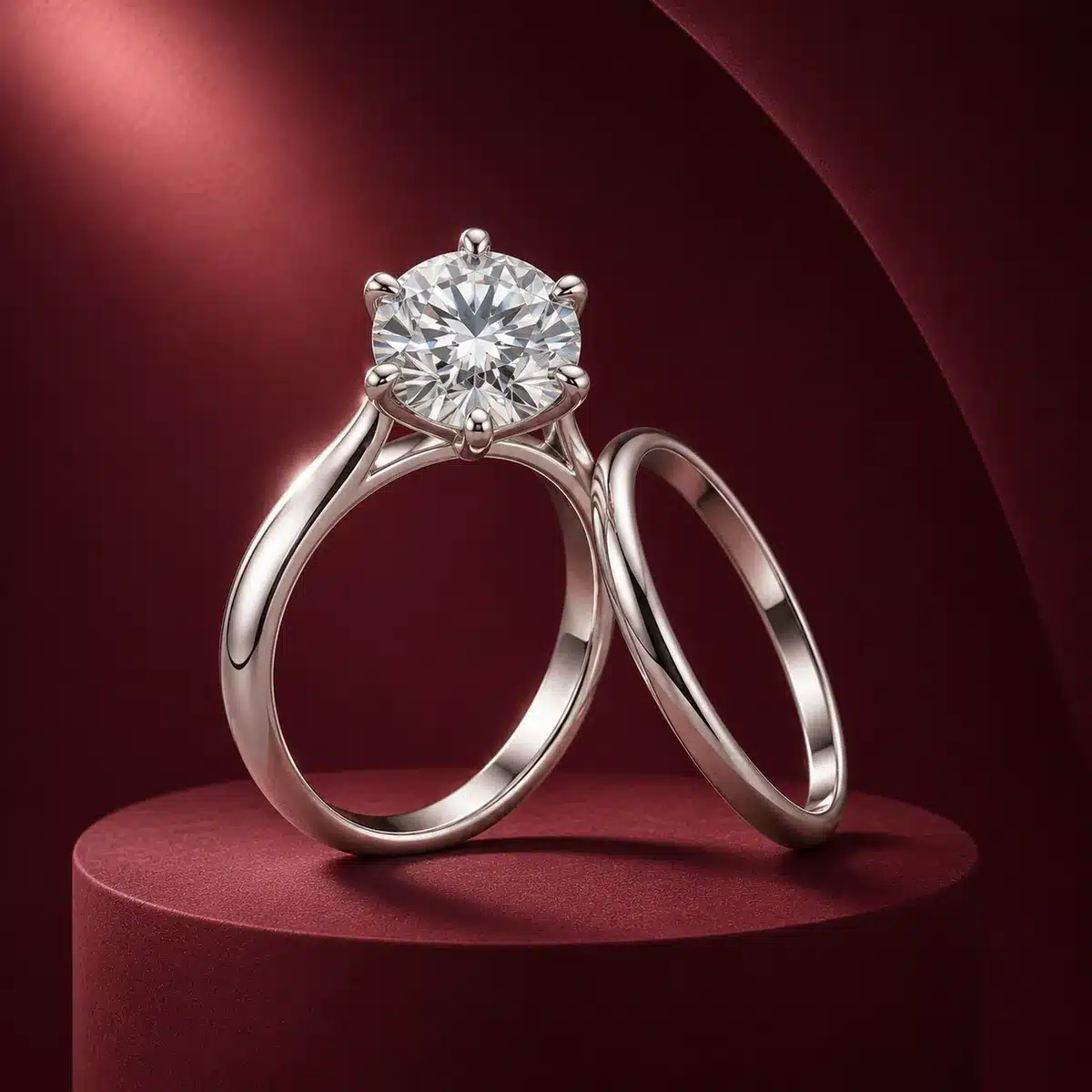
Side stones should frame the center stone, not compete with it. Choose a side-stone shape that suits the center’s outline, size the side stones by their face-up width rather than carat weight (often about half to two-thirds of the center’s width), and match their color closely to the center. Then make sure the setting holds all three stones level and low enough for daily wear. For finished designs, see our three-stone engagement rings.
Side-stone shapes for each center
Brilliant side stones (rounds, pears) add sparkle. Step-cut side stones (baguettes, trapezoids) add clean lines and make the center look brighter by contrast.
Why lab-grown suits three-stone designs
Three-stone rings need three well-matched stones. With lab-grown diamonds, side stones of 0.30 to 0.75 carat each become affordable, so the design can be generous without squeezing the center stone’s budget. It also makes closely matched pairs easier to source. All three stones should be described as laboratory-grown: under the FTC Jewelry Guides, the word diamond used for a lab-grown stone has to be qualified with “laboratory-grown”, “laboratory-created”, “[manufacturer name]-created” or a term of the same meaning.
How to size side stones
Use face-up width, not carat weight
Two stones of the same carat weight can face up very differently depending on shape and depth. Compare millimeter measurements. A common starting point:
Swipe the table to see more →
| Look you want | Side-stone width vs. center width |
|---|---|
| Center dominates | About 40–50% |
| Balanced classic | About 50–65% |
| Bold, wide ring | About 65–75% |
These are design starting points, not rules. Look at the CAD at actual size on the hand.
Total weight
A frequently used reference is side stones totaling roughly a third to two-thirds of the center’s carat weight. Elongated centers (oval, emerald) often carry slightly larger side stones well.
Matching the two side stones
The two side stones should match each other closely in shape, measurements, color and appearance, which is what “matched pair” means on an order. For larger side stones, compare their reports or measurements.
Color and clarity matching
- Color: keep side stones within about one color grade of the center, or slightly warmer in yellow or rose gold. Side stones that are whiter than the center make the center look warmer.
- Clarity: side stones need to be eye-clean. Step-cut side stones show inclusions more, so aim higher for baguettes and trapezoids.
- Cut: well-cut side stones match the center’s brightness. Dull side stones pull the whole ring down.
Settings that hold three stones well
Swipe the table to see more →
| Setting | Notes |
|---|---|
| Separate prongs per stone | Most light; each stone held independently |
| Shared prongs | Stones sit closer together; less metal |
| Basket | Secure and lower profile |
| Cathedral | Lifts the stones with arches; elegant but taller |
| Bezel or semi-bezel on sides | Protects side stones; modern look |
Check that all three stones sit level and in a straight line, that points and corners are protected, and that the profile is not so tall it snags. A three-stone head is wider than a solitaire, so check how a wedding band will sit.
Reports for side stones
A report for the center stone is standard. Side stones above about 0.30 carat can have their own reports; smaller ones are usually described on the invoice by type, approximate weight and quality range. Verify report numbers on the laboratory’s website and check comments for growth method and post-growth treatment where stated. See how to read a report.
When matching isn’t the goal
Some designs use contrasting side stones: colored gemstones, a different diamond shape, or lab-grown fancy colored diamonds. That works when it is deliberate. Keep the side stones’ size and color consistent with each other so the ring still looks balanced.
Before you approve a three-stone design
Three-stone questions
What side stones go best with an oval center?
Pears or tapered baguettes, which lengthen the line.
How big should side stones be?
Often about half to two-thirds of the center’s width, depending on the look you want.
Should side stones be the same color as the center?
Close to it, within about one grade, or slightly warmer in yellow gold.
Do side stones need reports?
Larger ones can have them. Smaller ones are usually described on the invoice.
Plan a three-stone ring
Send the center stone’s shape and measurements, or its report number, the side-stone shape you like, the metal and ring size. NUVU can arrange IGI, GIA or NGTC reports for the center and larger side stones. Send your requirements or message us on WhatsApp / WeChat at +86 19118403930.

11+ years supporting global clients with lab-grown diamond product consultation and market analysis.
About NUVU. NUVU is the international brand of New Perspective Superhard Materials Co., Ltd. in Zhecheng, Henan, China. We grow HPHT lab-grown diamonds in-house and cut, polish and match stones in our own workshop.
Related Guides
Ring settings explained
Engagement ring settings explained for lab-grown diamonds: solitaire, halo, hidden halo, three-stone, bezel, pavé…
Read more →Engagement ringsHow to choose an engagement ring
How to choose a lab-grown diamond engagement ring: are they a good choice, choosing the center stone, shape, setting…
Read more →ShopEngagement rings
Lab-grown diamond engagement rings in solitaire, halo, hidden halo, three-stone and vintage styles.
Read more →