
Lab-Grown Diamond Certification Knowledge
Understand grading reports, IGI and GIA, laser inscriptions, and what certification can verify—and what it cannot fully explain—when buying a lab-grown diamond.
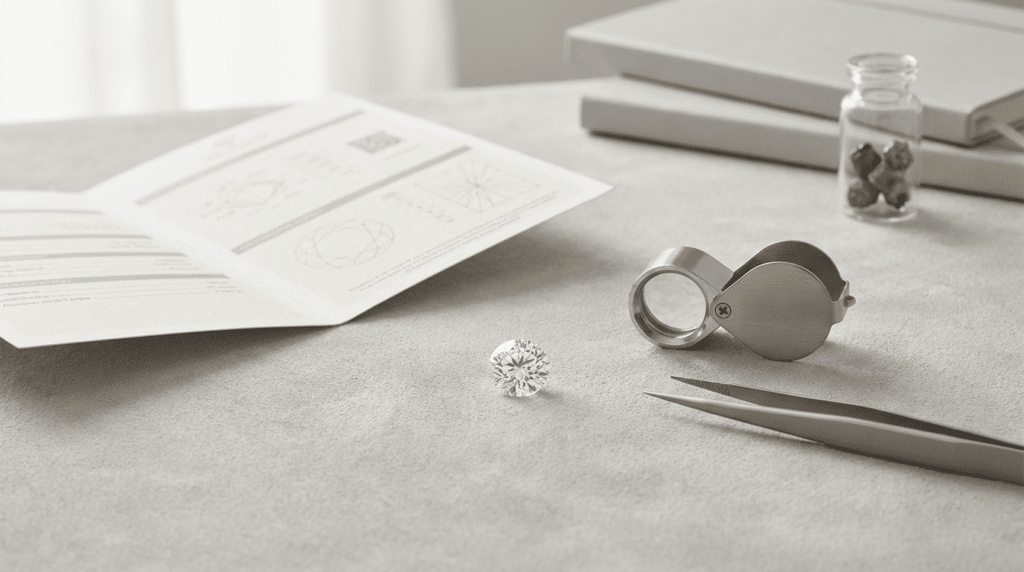
Certification helps bring structure and transparency to a diamond purchase. It gives shoppers a third-party grading reference for quality, while also making it easier to compare stones, verify details, and buy with more confidence.
But a report is only useful when buyers understand how to read it, how to connect it with real visual evidence, and where personal preference, setting style, and daily wear still matter.
Quick Takeaways
Takeaway 1
Certification provides a third-party quality reference.
It helps standardize how cut, color, clarity, and carat are described across different diamonds.
Takeaway 2
IGI is common in the lab-grown diamond market.
GIA is also recognized, but shoppers should focus on how to read the report, not just the lab name alone.
Takeaway 3
A certificate helps you compare—but it does not replace visual judgment.
The report matters, but so does how the diamond actually looks in light and in the setting you choose.
Takeaway 4
Laser inscription adds an extra layer of verification.
It can help connect the physical diamond to the grading report number.
Why Certification Matters
Certification matters because it gives structure to a purchase that can otherwise feel opaque. It provides a consistent way to describe a diamond’s core quality characteristics, makes comparison easier across different stones, and gives buyers more confidence that the product is being represented clearly.
For online shoppers especially, certification helps create trust—but its real value comes from knowing how to use it well.

Creates a Common Language
A certification report gives diamonds a shared set of terms and measurements. Instead of relying only on how a seller describes a stone, shoppers can understand its quality through a more consistent grading framework.

Reduces Information Asymmetry
One of the most important roles of certification is reducing the gap between what the seller knows and what the buyer can verify. It makes the buying process feel more transparent, especially when the purchase happens online.

Supports Comparison
When shoppers compare multiple diamonds, certification creates a more reliable basis for evaluating cut, color, clarity, and carat. It helps turn a confusing search into a more structured decision.

Builds Buying Confidence
For many buyers, especially online, third-party grading adds reassurance. It helps create confidence that the diamond is being described clearly and that the purchase is supported by more than marketing language alone.
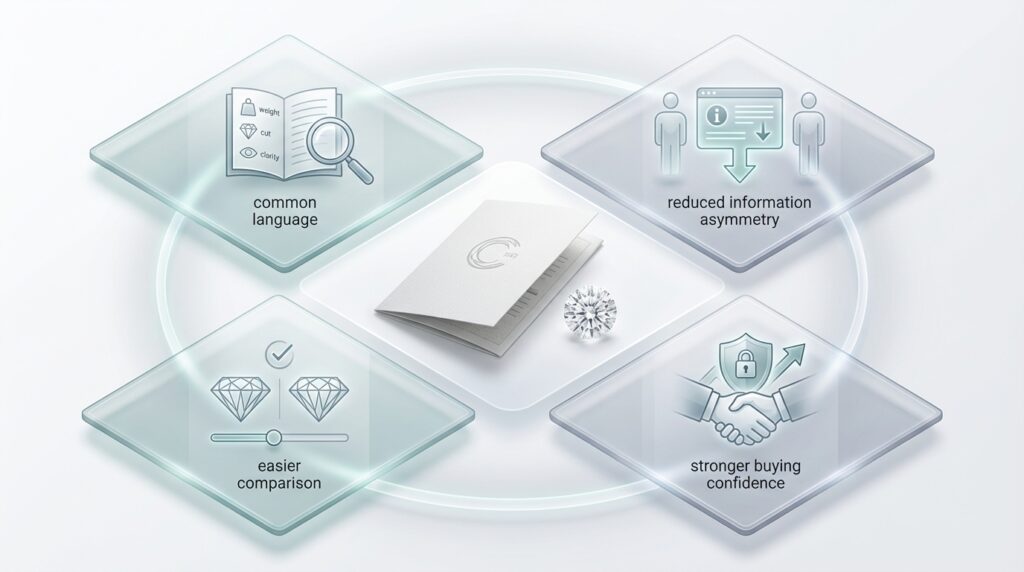
Certification is not the final decision—but it is often the framework that makes a better decision possible.
IGI vs GIA: What Shoppers Should Actually Understand
IGI and GIA are both recognized grading laboratories, but buyers often misunderstand what the difference means in a real lab-grown diamond purchase. The more useful question is not only which laboratory name appears on the report, but whether the report, diamond visuals, proportions, and price make sense together.
A grading report is most useful when it helps buyers understand the actual characteristics of the diamond in front of them. It should support the decision, not replace it. A strong certificate still needs to be read alongside visual performance, setting plans, and the buyer’s real priorities.

IGI
Widely used in lab-grown diamond grading
- Common across many lab-grown diamond categories
- Familiar to online shoppers comparing certified stones
- Most useful when read with diamond images, video, proportions, and clear seller presentation
GIA
A highly recognized grading institution
- Highly recognized by many diamond shoppers
- May appear in some lab-grown diamond purchases
- Still needs to be judged through the report details, diamond visuals, proportions, and pricing
For most shoppers, the smarter question is not simply “Which lab name is better?” but “Do I understand what this report says, does it match the diamond visuals, and does the overall value make sense for the piece I want to create?”
Reading the Report
How to Read a Diamond Certificate
A grading report can look technical at first, but most buyers do not need to memorize every field. What matters more is knowing which details affect comparison, visual expectations, verification, and the final jewelry decision.
The goal is not to read a certificate like a gemologist. It is to understand which parts help you ask better questions, compare stones more clearly, and avoid treating one grade as the whole answer.
Report Number
What it means
This is the identification number for the grading report.
Why it matters
It can often be used for report lookup and, in some cases, matched with a laser inscription on the diamond. It helps connect the document to a specific stone.
Shape and Cutting Style
What it means
This describes the diamond’s shape and the general cutting style.
Why it matters
It affects both appearance and comparison. A round brilliant and an emerald cut are not judged the same way visually, so shape is part of how you interpret the rest of the report.
Measurements
What it means
These are the physical dimensions of the diamond.
Why it matters
Measurements help explain face-up appearance. Two diamonds with the same carat weight can look different in spread depending on their dimensions and proportions.
Carat Weight
What it means
This is the diamond’s weight.
Why it matters
Carat affects size perception, but it does not tell the full story by itself. A stone’s measurements and proportions also shape how large it appears once viewed face up.
Color Grade
What it means
This indicates the degree of colorlessness.
Why it matters
It helps buyers understand where the stone sits on the color scale, but color should still be judged with metal choice, diamond shape, setting style, and the level of warmth the buyer is comfortable seeing.
Clarity Grade
What it means
This reflects the visibility and type of internal or external characteristics.
Why it matters
Clarity helps describe the stone’s internal profile, but many buyers care most about whether the diamond appears eye-clean in normal viewing conditions and whether any inclusion affects confidence, appearance, or durability.
Cut / Polish / Symmetry
What it means
These fields describe different parts of a diamond’s finishing and overall make.
Why it matters
They remind buyers that quality is not captured by the 4Cs alone. Cut influences light performance, while polish and symmetry help explain how carefully the stone has been finished and how cleanly its facets work together.
Fluorescence
What it means
This records whether the diamond shows fluorescence under ultraviolet light.
Why it matters
It is a field worth noticing, but it should not automatically create fear. It is best understood as one part of the report rather than a standalone red flag.
Inscription
What it means
This refers to identifying markings, often related to the report number.
Why it matters
When present, inscription adds another layer of traceability by helping connect the physical diamond to its grading documentation.
The value of a report is not in how technical it looks, but in how clearly it helps buyers compare what they are actually buying, what they are paying for, and what still needs visual review.
Laser Inscription and Report Verification
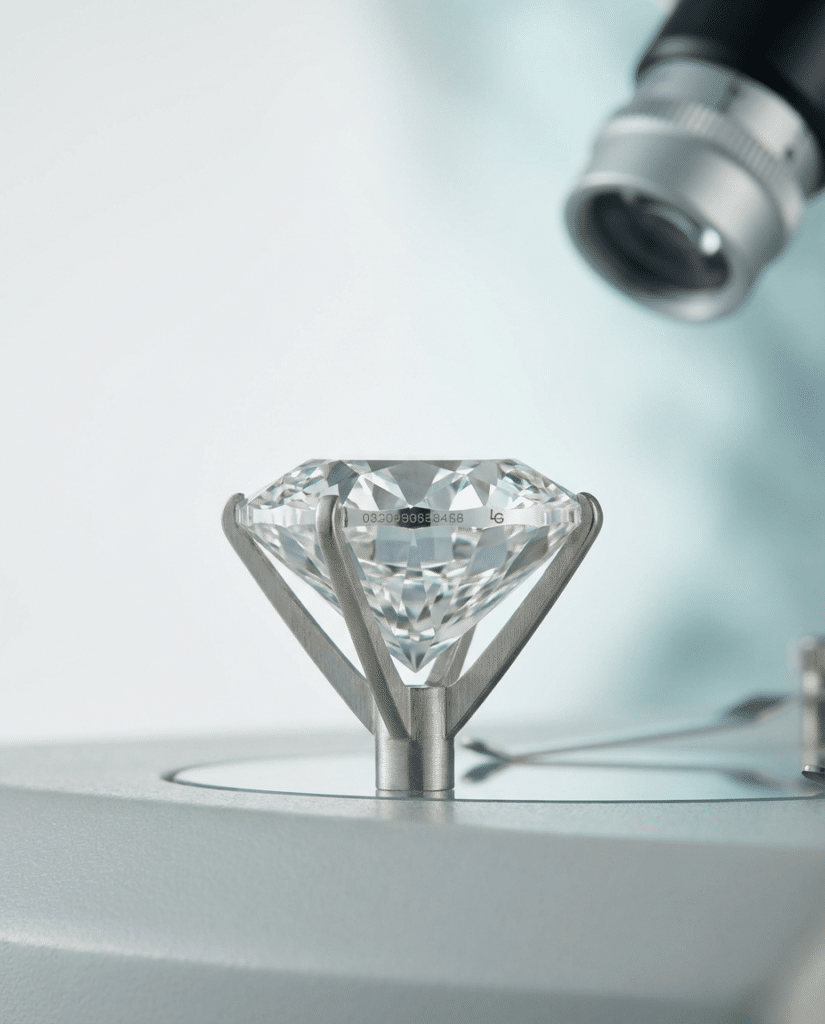
Some diamonds include a microscopic laser inscription on the girdle that corresponds to the grading report number. This can create an additional link between the physical diamond and its documentation, especially when buyers want more confidence that the stone shown, described, and delivered is connected to the same report.
What It Is
Laser inscription is a microscopic marking, often placed on the girdle of the diamond, that may correspond to the grading report number or another identifying reference. It is not usually visible to the naked eye, but it can be checked with proper magnification when verification is needed.
Why It Matters
Its value lies in adding another layer of traceability. When the inscription matches the report information, it helps support the connection between the stone and its documentation, reducing uncertainty during online comparison, custom design, or final delivery review.
How Shoppers Should Think About It
For most buyers, laser inscription is not something they need to examine constantly. Its role is to support transparency and make the diamond’s identity more traceable within the buying process. It should be treated as a helpful verification layer, not as a replacement for reading the full report or reviewing the diamond visually.
What Certification Does Not Tell You
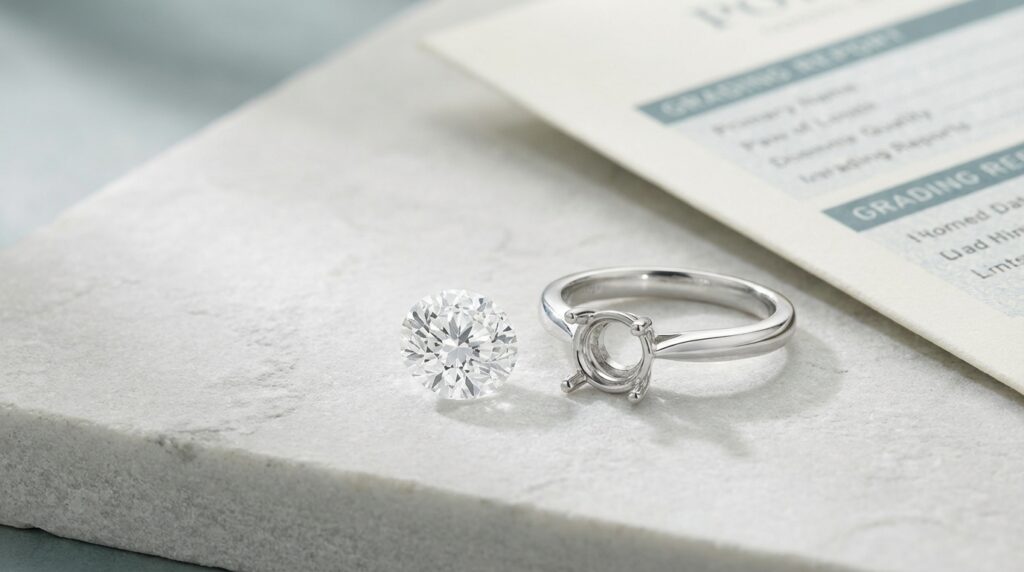
A certificate is a valuable buying tool, but it is not the entire experience of the diamond. It does not fully capture how the stone looks in motion, how it performs in different lighting, how it pairs with a particular setting, or how it aligns with your personal priorities.
That is why certification should support the decision—not replace thoughtful comparison.

It Does Not Replace Visual Beauty
A diamond can look different in real life than numbers alone might suggest, especially when movement, lighting, and facet behavior come into play.

It Does Not Fully Describe Setting Context
The same stone may feel different once placed in a solitaire, halo, or custom design.

It Does Not Tell the Whole Story About Preference
Some shoppers prioritize spread, others want stronger brightness, and others care most about budget efficiency.

It Does Not Replace Seller Transparency
A trustworthy purchase depends on more than documentation alone.
Certification is powerful when it is used with visual context, honest presentation, and clear priorities.
How NUVU Approaches Transparency
At NUVU, we believe certification should make a diamond purchase clearer, not more intimidating. That means presenting grading information in a way that is easy to understand, connecting it to real visual priorities, and helping customers choose with more context rather than more pressure.
Transparency is not just about showing a document. It is about helping you understand what that document means in the diamond you are actually choosing.
Clear Grading Information
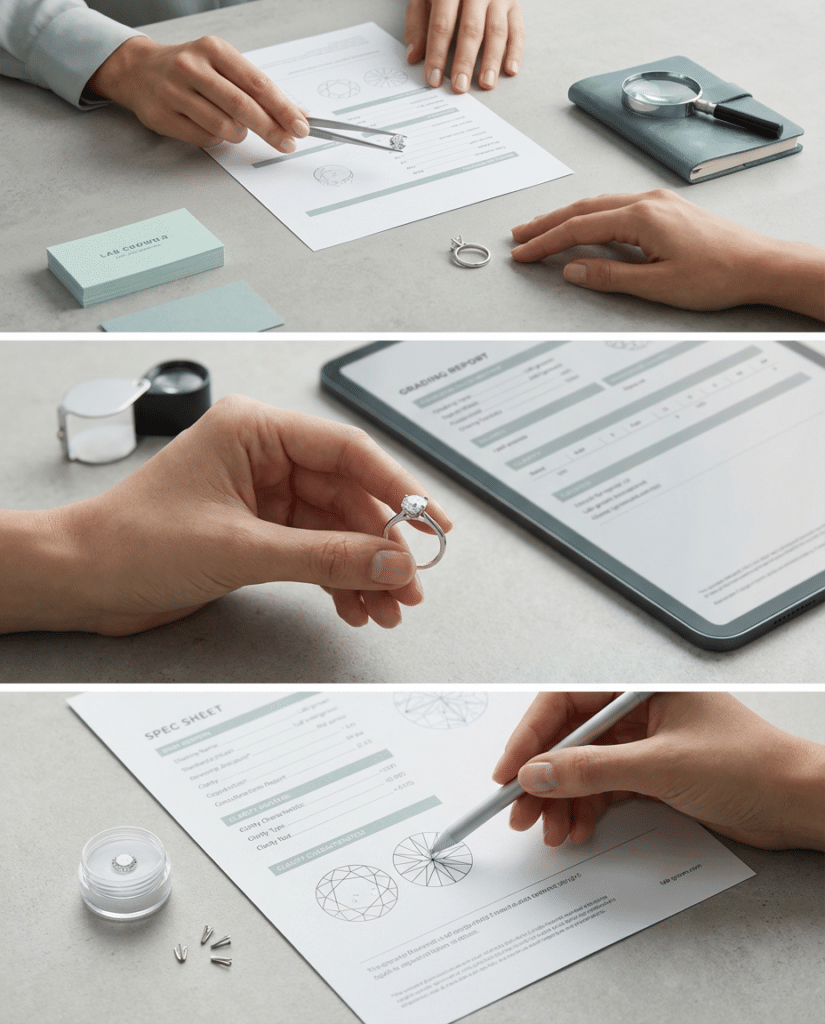
Show core specs and report details clearly, so shoppers can compare diamonds without feeling buried in jargon. Shape, carat, color, clarity, cut, measurements, fluorescence, and report number should be easy to understand before a decision is made. Clear information helps customers know what they are comparing, not just what looks attractive on paper.
Practical Guidance, Not Pressure
Help customers understand trade-offs instead of pushing them toward the highest possible grade by default. A higher grade is not always the smarter choice if the visible difference is small or the budget could be better used elsewhere. Good guidance should explain where quality matters most and where a balanced choice may create better overall value.
Selection With Context
Connect report information with real visual goals such as size, sparkle, value, and overall balance. A diamond should not be judged by one grade alone, but by how the full combination works in the final jewelry design. The right choice depends on how the stone looks in the selected shape, metal, setting, and wearing context.
Support for Custom Decisions
For custom rings, help customers evaluate the diamond together with setting style, metal choice, stone size, and final presentation. The goal is to choose a diamond that looks beautiful in the actual piece, not only impressive on paper. This makes the process more practical, visual, and easier to trust.
Common Questions About Diamond Certification
These are some of the questions shoppers most often have when comparing certified lab-grown diamonds.
Do all lab-grown diamonds come with certification?
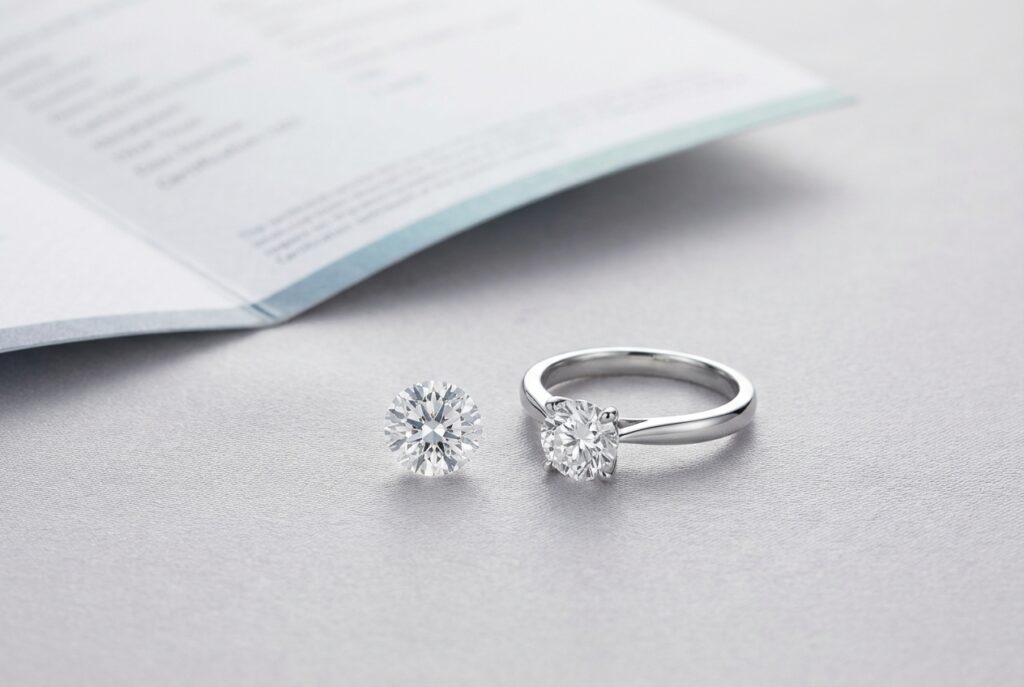
Many lab-grown diamonds are offered with grading information, but presentation can vary by seller and product format. What matters most is whether the diamond is being shown with clear, usable grading details.
Is IGI certification enough for a lab-grown diamond?
IGI is widely seen in the lab-grown diamond market. For most shoppers, the more important issue is understanding the report itself and evaluating it alongside the diamond’s presentation and seller transparency.
Does certification guarantee beauty?
Not completely. Certification provides important quality information, but visual beauty still depends on factors such as light performance, proportions, face-up appearance, and personal preference.
What is laser inscription?
Laser inscription is a microscopic marking, often placed on the girdle, that may correspond to the report number. It adds another layer of traceability between the diamond and its documentation.
Can two diamonds with similar certificates still look different?
Yes. Two stones with similar reports can still differ in spread, proportions, facet behavior, and overall visual impression in different lighting.
Should I choose a diamond based on the report alone?
A report is an important tool, but it works best when used alongside clear images or video, setting context, and honest seller presentation.
Use Certification as a Starting Point—Then Compare the Whole Diamond
A grading report is most valuable when it helps you compare clearly, ask better questions, and connect the numbers on paper with the diamond’s actual appearance, setting plans, and long-term wear.
Compare with clarity, or build with more guidance.