 Get a Quote
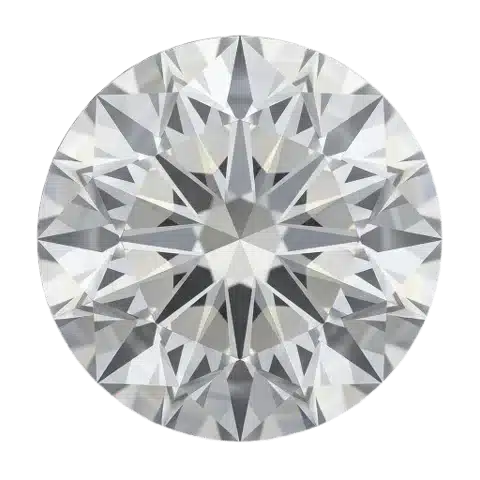 Loose lab-grown diamonds10 shapes · IGI, GIA or NGTC reports
What Are Lab-Grown Diamonds? A Complete Guide
- The basics in one table
- How lab-grown diamonds are grown
- From growth to a finished stone
- A short history
- Lab-grown, mined and simulants
- How lab-grown diamonds are graded
- Why lab-grown costs less
- Colors
- Common myths
- Who chooses lab-grown, and who chooses mined
- Checks before you buy
- Lab-grown diamond questions
- Get a lab-grown stone with a report you can check
A thermal diamond tester touches a 1.00 ct round and beeps: diamond. It gives the same answer for a mined stone and a lab-grown one, because both are the same material. It would also beep for a moissanite, which is not diamond at all. Which of the three is in the ring is a question for a gemological laboratory, and the answer is printed on the report.
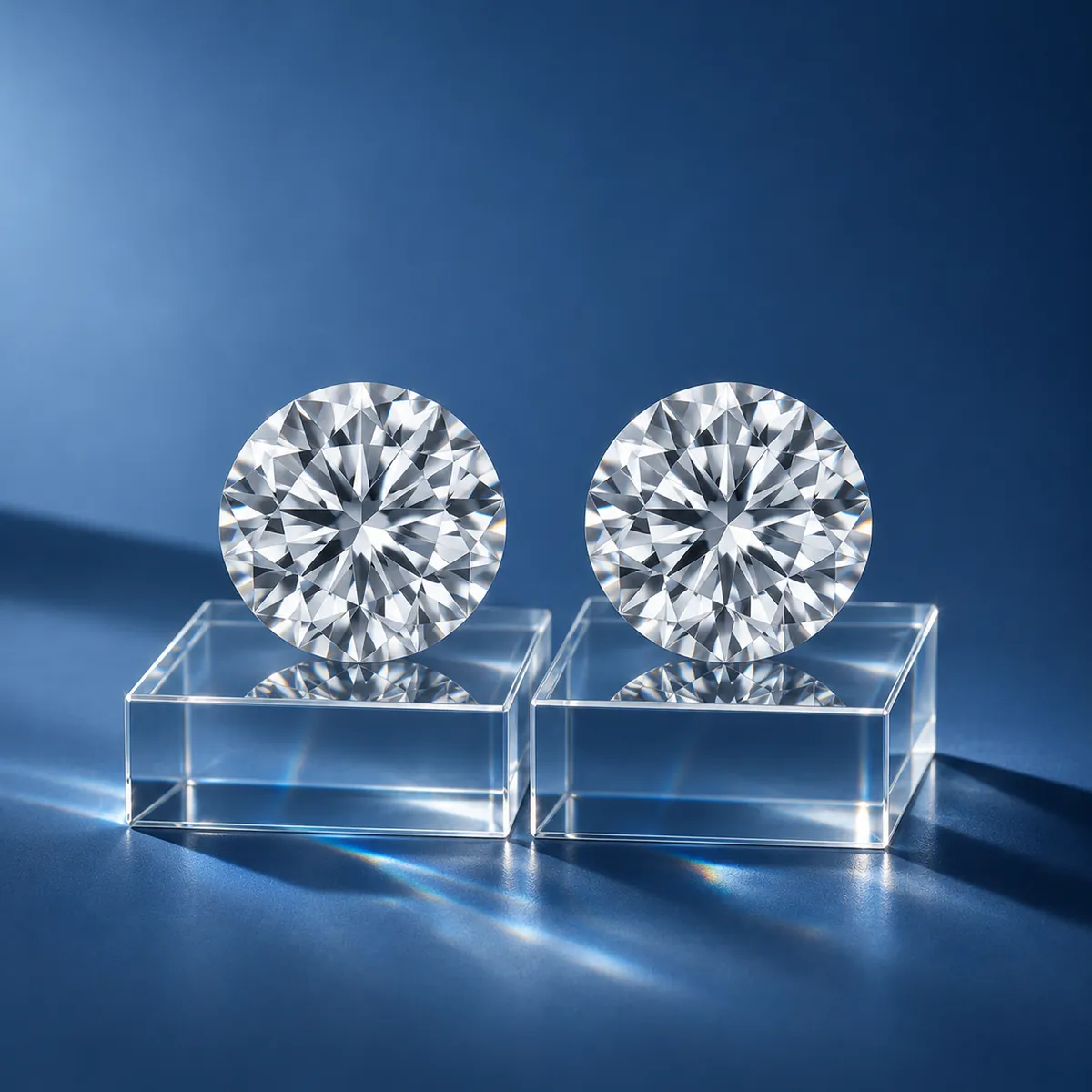
A lab-grown diamond is carbon crystallized in the diamond structure, grown in a press or a reactor instead of deep underground. Under the US FTC Jewelry Guides, a diamond is “a mineral consisting essentially of pure carbon crystallized in the isometric system”, with a hardness of 10 and a refractive index of 2.42. Lab-grown diamonds meet that definition. They are also sold as lab created diamonds, lab diamonds or man-made diamonds; all three names mean the same thing. What sets them apart is origin, and the rules require that origin to be stated every time the stone is sold.
The basics in one table
How lab-grown diamonds are grown
Neither method makes a better diamond by itself. Both produce excellent and poor stones, and the grade and report matter more than the process. See how lab-grown diamonds are made, HPHT vs CVD and Zhecheng, China’s lab-grown diamond hub.
From growth to a finished stone
- GrowthA press or reactor produces rough crystals
- Treatment, if anyAnnealing to improve color; it must be disclosed
- Planning and cuttingThe rough is mapped and sawn into shapes
- PolishingThe facets are finished
- GradingA laboratory issues a report and usually inscribes the girdle
- SaleSold loose or set in jewelry, described as lab-grown
A short history
Diamond was first grown in the laboratory in the 1950s: General Electric’s HPHT work and early CVD experiments both date from that decade, though the two GIA accounts give different firsts. The first gem-quality crystals came from General Electric in the 1970s, and CVD growth became reproducible in the late 1980s. For decades lab-grown diamond was mostly an industrial abrasive; gem production grew quickly only in the last ten years.
Lab-grown, mined and simulants
- Material
- Carbon
- Mohs hardness
- 10
- Look
- Diamond
- Thermal tester
- Reads diamond
- Graded as a diamond
- Yes
- Material
- Carbon
- Mohs hardness
- 10
- Look
- Diamond
- Thermal tester
- Reads diamond
- Graded as a diamond
- Yes
- Material
- Silicon carbide
- Mohs hardness
- 9¼
- Look
- More than twice diamond’s fire; facet edges look doubled
- Thermal tester
- Reads diamond
- Graded as a diamond
- No
- Material
- Zirconium dioxide
- Mohs hardness
- 8.5
- Look
- Slightly more fire, less brilliance; yellows over time
- Thermal tester
- Reads not diamond
- Graded as a diamond
- No
A stone that is not diamond may not be called “diamond” without a qualifier. See lab-grown diamonds vs simulants and are lab-grown diamonds real diamonds?
How lab-grown diamonds are graded
IGI and NGTC grade lab-grown stones on the same D–Z color and FL–I clarity scales as mined stones. GIA stopped giving letter grades to lab-grown diamonds on October 1, 2025. A stone now gets a Premium assessment (D color, VVS clarity or better, Excellent polish and symmetry) or a Standard one (E–J, VS or better, Very Good), and stones below Standard get no assessment.
What to read on any report:
- The words “laboratory-grown” in the description.
- The growth method, where the lab states it.
- The treatment comment. On IGI reports, “As Grown – No indication of post-growth treatment” means the lab found no treatment.
- The report number, which you look up on the laboratory’s own website.
See how to read a report and certification knowledge.
Why lab-grown costs less
A mined diamond’s price reflects geological scarcity and the cost of finding and mining it. A lab-grown diamond’s price reflects production cost, and production can be added as demand grows. More presses, reactors and sellers have pushed prices down: lab-grown wholesale prices fell 26% across 2025, according to the Edahn Golan data JCK reported in July 2026, though there were signs of stabilizing by mid-2026. See the price comparison.
Colors
Most lab-grown diamonds sold for jewelry are colorless to near-colorless. Yellow, blue and pink stones are also produced. Some get their color during growth, from nitrogen or boron, and others from treatment after growth, which has to be disclosed. See fancy color lab-grown diamonds.
Common myths
Swipe the table to see more →
| Myth | What is true |
|---|---|
| “Lab-grown diamonds are fake.” | They are diamond. Simulants are the imitations |
| “They are all flawless.” | They have inclusions and are graded on the same clarity scale |
| “They turn cloudy or yellow.” | A diamond’s color and clarity do not change in normal wear |
| “A jeweler can tell by looking.” | Origin needs laboratory instruments |
| “They are always more sustainable.” | It depends on the energy source and process. Ask for specifics |
Who chooses lab-grown, and who chooses mined
Which fits you?
Mined diamonds suit buyers for whom geological origin, rarity, tradition or resale matters more than size. See lab-grown vs natural.
Checks before you buy
Brands buying in volume also need to agree how each parcel is specified and checked. See bulk loose stones.
Lab-grown diamond questions
Do lab-grown diamonds test as diamonds?
Yes, on thermal testers, which cannot separate them from mined diamonds. GIA notes that most screening devices sold to the trade give only a “pass” or “refer” result, and some can wrongly pass a simulant. Origin needs a laboratory.
Do lab-grown diamonds last?
Yes. They are as hard and durable as mined diamonds.
How long does it take to grow one?
Usually days to weeks, depending on the method and the size.
Can a seller call them “cultured diamonds”?
Only with a clear qualifier, such as “laboratory-created”, that tells the buyer the stone was not mined.
Get a lab-grown stone with a report you can check
Send the shape, size range and quality you want, or a report number you are considering. NUVU grows HPHT lab-grown diamonds in Zhecheng, Henan, supplies loose stones and finished jewelry, can arrange IGI, GIA or NGTC reports and can provide proof of no post-growth treatment on request. We reply within one business day. Send your requirements or message us on WhatsApp / WeChat at +86 19118403930.
Sources
- FTC Jewelry Guides (16 CFR Part 23)
- GIA: Updated laboratory-grown diamond services (Aug 2025)
- GIA Gems & Gemology: Update on laboratory-grown diamonds (2024)
- GIA: Simulants, moissanite and lab-grown diamonds
- GIA: CVD-grown synthetic diamonds, part 1: history
- GIA: Imitation diamonds
- IDEX Online: lab-grown market report (Sep 2025)
- JCK: Lab-grown diamond prices show signs of stabilizing (Jul 2026)

12+ years in lab-grown diamond grading, identification and quality assurance for both HPHT and CVD stones.
About NUVU. NUVU is the international brand of New Perspective Superhard Materials Co., Ltd. in Zhecheng, Henan, China. We grow HPHT lab-grown diamonds in-house and cut, polish and match stones in our own workshop.
Related Guides
Lab-grown diamond education
Every NUVU lab-grown diamond guide in one place: 4Cs, certificates, HPHT vs CVD, prices, shapes, engagement rings…
Read more →Education4Cs guide
The 4Cs for lab-grown diamonds in one page: which cut, color, clarity and carat to choose for your shape and metal…
Read more →EducationLab vs natural comparison
Lab-grown vs natural diamonds compared on six points: what they are, how they look, price, resale, how to tell them…
Read more →